REVIEW · POMPEI CAMPANIA
Pompeii: Small-Group Tour of Pompeii and Herculaneum
Book on GetYourGuide →Operated by Askos Tours · Bookable on GetYourGuide
Two ruins. One day. Huge Roman shock. In this small-group Pompeii and Herculaneum tour, you get an archaeologist guide walking you through the streets that were frozen in time by Vesuvius. I like the focus on real on-site context, not just standing around reading signs, and I especially like the up to 20 people pace that keeps the route from turning into a blur.
One possible drawback: the day is long on foot, and the time to eat after Pompeii can feel tight—often around a 30-minute break—especially when it is hot.
In This Review
- Key points to know before you go
- Why this Pompeii and Herculaneum combo works so well
- Finding the meeting point at Porta Marina Inferiore (and not panicking)
- Pompeii Archaeological Site: 2 hours of tragedy, technology, and everyday life
- The 30-minute break: how to eat well without losing the day
- Circumvesuviana to Ercolano: a short ride that changes the mood
- Herculaneum Archaeological Site: smaller city, better preserved details
- Why the guide quality matters more than you think
- Pacing, crowding, and comfort: what to plan for
- Tickets, headsets, and the value angle
- Who should book this tour
- Should you book this Pompeii and Herculaneum small-group tour?
- FAQ
- How long is the Pompeii and Herculaneum small-group tour?
- What’s the group size?
- Do I need to buy entry tickets?
- Is there transportation between Pompeii and Herculaneum?
- Where do we meet the guide?
- Where does the tour end?
- What should I bring?
Key points to know before you go
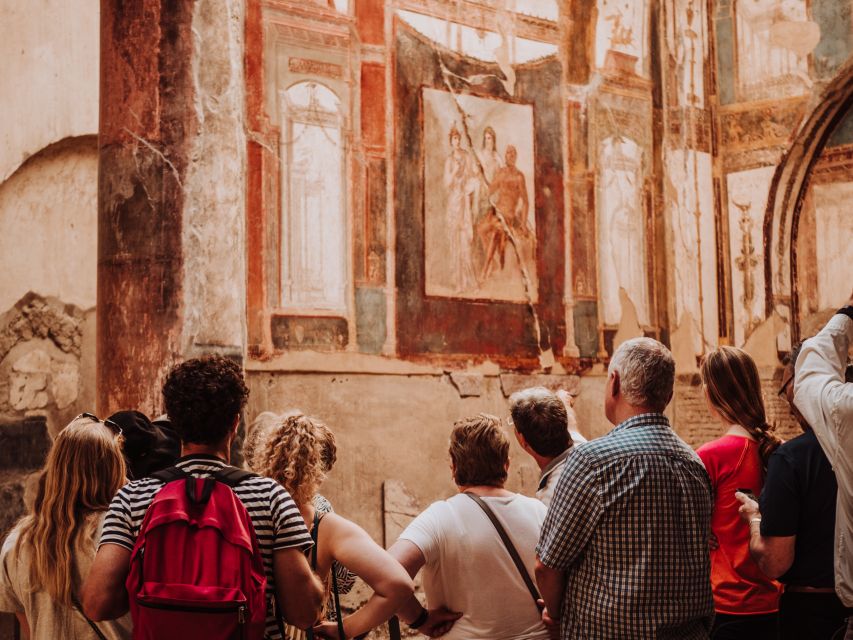
- Archaeologist-led walking route through both sites, with explanations tied to what you’re seeing.
- Small group size (max 20) plus headsets for larger groups, so you can actually hear the guide.
- Pompeii and Herculaneum feel like two different worlds, because preservation happened in very different ways.
- A short train transfer to Ercolano keeps the momentum going without extra planning on your end.
- Tickets are handled for you, so you don’t waste time hunting for entry lines or payment counters.
- At the end you finish in Ercolano, not back at Pompeii—plan your onward ride accordingly.
Why this Pompeii and Herculaneum combo works so well
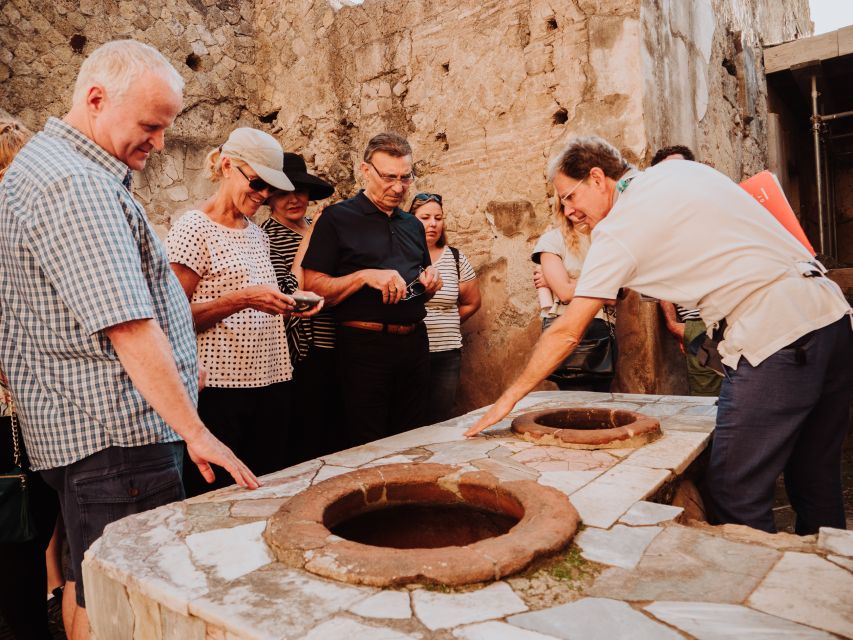
If you only have a half day in Campania, this is the kind of pairing that actually makes sense. Pompeii is the famous one, but Herculaneum is the one that often makes people go quiet. Put together with a working archaeological guide, you get the contrast fast: a city buried under ash versus a city wrapped in mud, with different kinds of objects preserved in each place.
The format also helps your brain. Instead of bouncing between disconnected ruins and guessing what you’re looking at, you’re led through themes—daily life, wealth, buildings, and why certain rooms and artifacts survived. That guidance matters because Pompeii and Herculaneum can feel overwhelming on your own. The guide’s job is to point, explain, and keep you oriented as the crowds and ruins blend together.
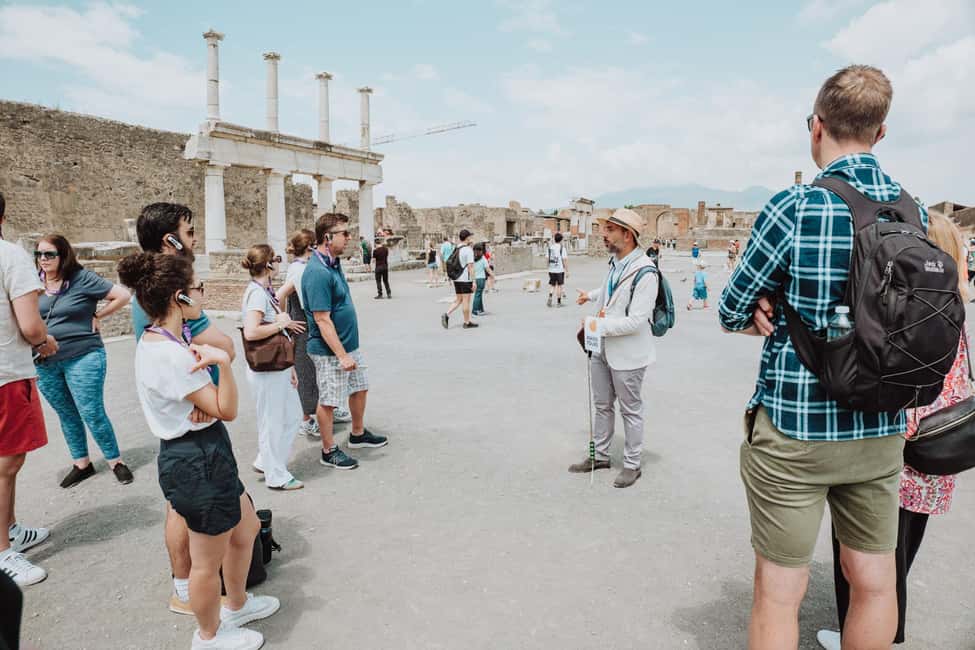
Also, this is built for real listening. For groups over 10, you receive headsets, so you’re not stuck craning your neck while trying to hear over walkers, buses, and the general buzz of an active site. It is a small thing that changes everything.
If you're still narrowing it down, here are other tours in Pompei Campania we've reviewed.

Finding the meeting point at Porta Marina Inferiore (and not panicking)
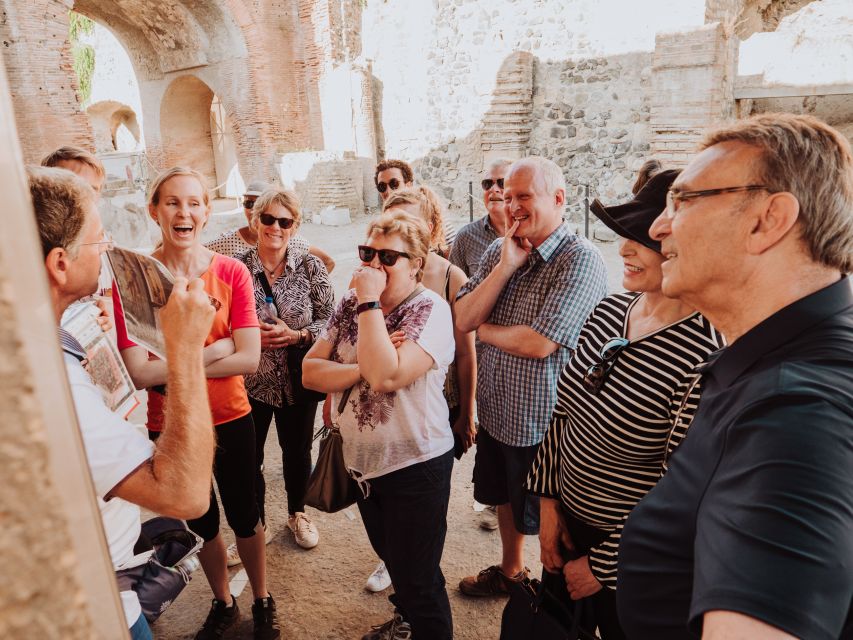
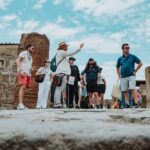
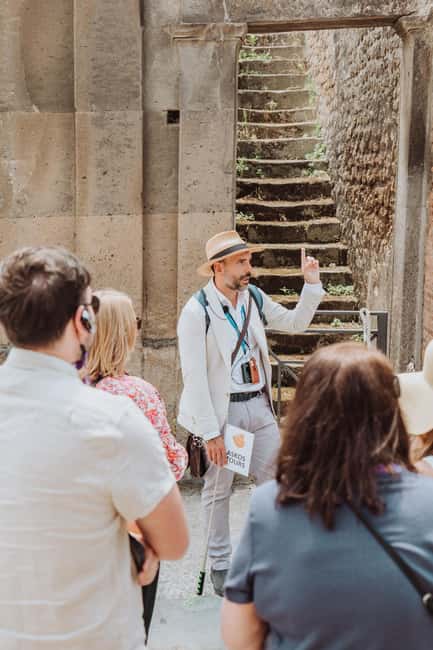
You meet at Piazza Porta Marina Inferiore, 1, at the left side of the Pompeii entrance near the “Arte bus” stop. Your guide holds a sign that says Askos Tours, which is helpful—but only if you know what you’re looking for.
My practical advice: arrive a few minutes early and do a quick look for the sign before you decide you must be in the wrong spot. The area around Pompeii entrances is busy, and there are several tour groups circulating. Being early saves stress and keeps the first part of your day smooth.
From there, you begin right where the action starts: at the edge of the Pompeii archaeological zone, not somewhere far away. That means more time inside and fewer logistics headaches at the start of your trip.
Pompeii Archaeological Site: 2 hours of tragedy, technology, and everyday life
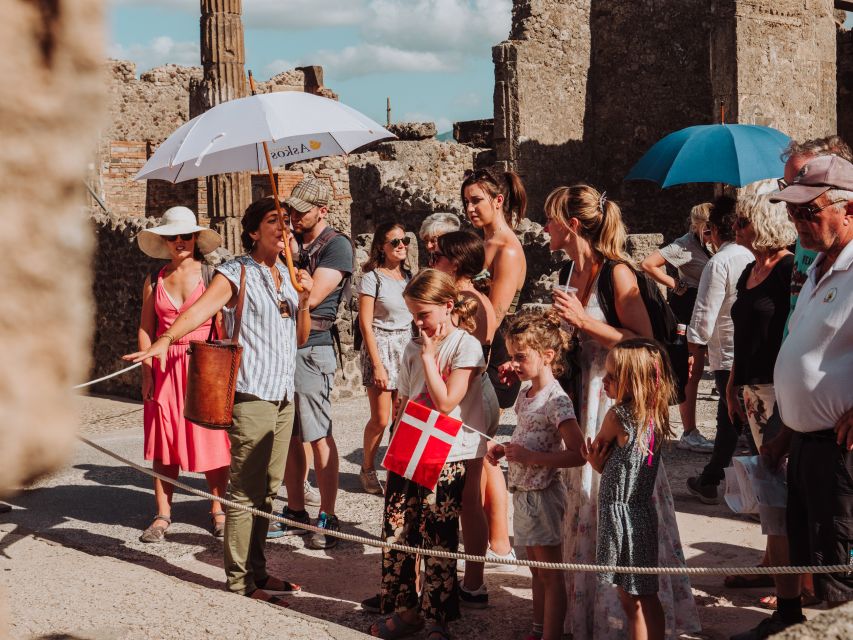
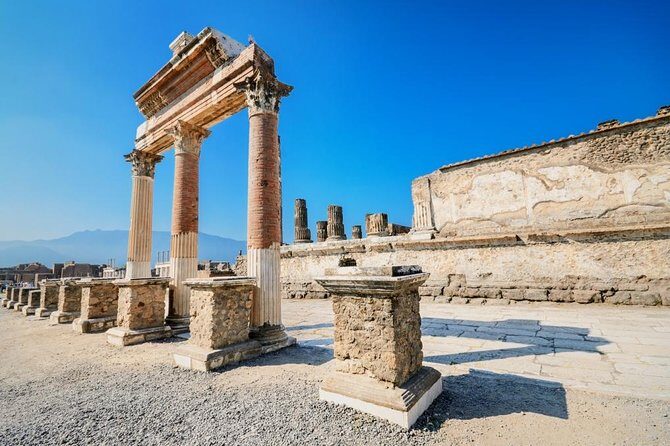
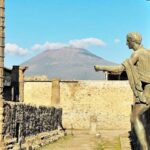
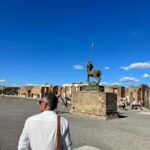
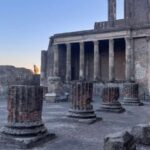
Pompeii is where the emotion hits first. You see how the city layout was designed, how people moved through streets and buildings, and what the volcanic event did to daily routines. The big story is the eruption of 79 A.D., when Pompeii and its inhabitants were buried under pumice and volcanic ash. The ash is what helped preserve so much—sometimes in shocking detail.
With an archaeologist guide, you don’t just get a list of famous buildings. You get interpretation. The route usually focuses on sections that show how Roman city life worked: how wealthy households lived differently from others, how spaces were arranged, and why certain discoveries turned up the way they did.
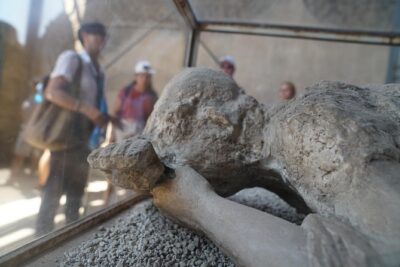
One of the most memorable Pompeii moments for many people is seeing plaster casts connected to victims discovered later. They make the scale of the event feel immediate. It is not just history in the abstract. It becomes human again, fast.
Time-wise, plan on about 2 hours in Pompeii. That’s enough to get a solid overview with guidance, but not enough to wander freely once you’re done. If you’re the type who likes to stop and read every inscription, you’ll want to save a little energy for that after the tour.
The 30-minute break: how to eat well without losing the day
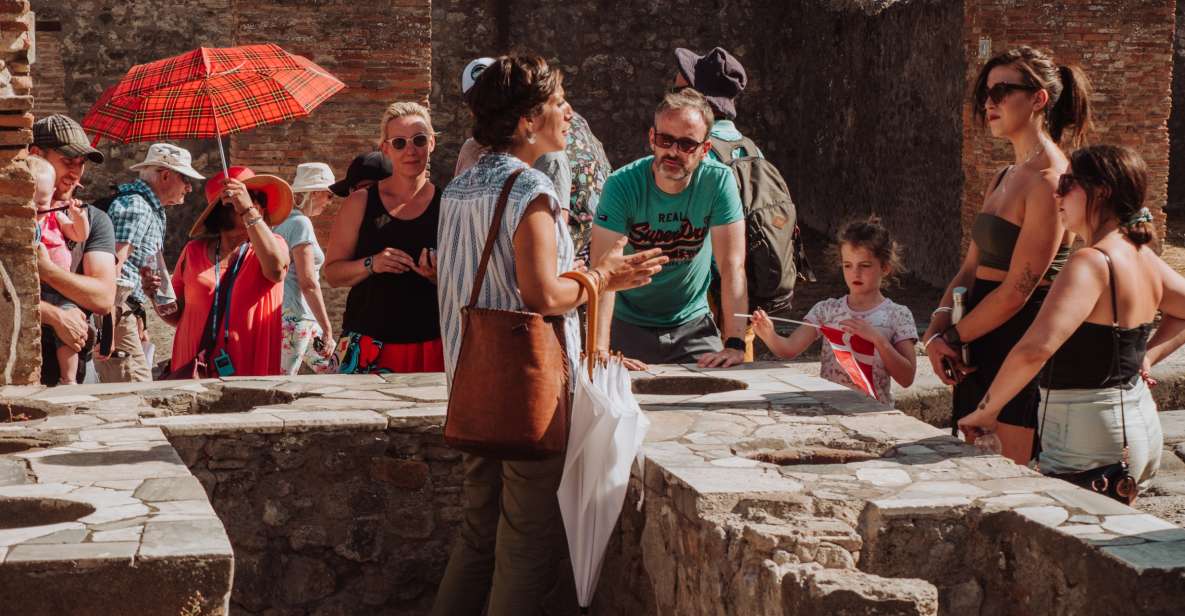
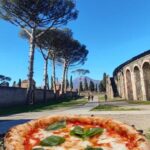
After Pompeii, there is a 30-minute break. You can grab lunch near the ruins or use the surrounding shops and amenities. This is also your moment to reset—water, bathroom, and a quick shade break if the sun is brutal.
Here’s the trade-off: 30 minutes is workable for a grab-and-go sandwich, but it is not built for a slow sit-down meal. If you want an actual rest at a table, you’ll likely feel rushed. That is the main drawback people notice.
If you want this break to work for you, do this simple plan:
- Eat first, then shop or browse.
- Drink water before you feel thirsty.
- Don’t wait until you are famished. Heat speeds up decision-making.
Also, both Pompeii and Herculaneum have free luggage storage, which can be a lifesaver if you’re day-tripping and don’t want to carry bags all day.
Circumvesuviana to Ercolano: a short ride that changes the mood
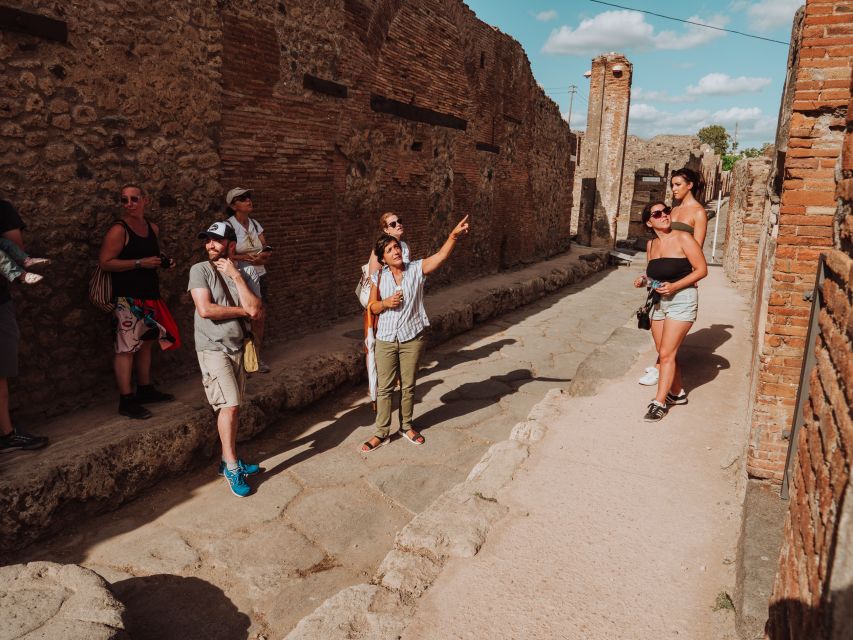
Then you move on to Herculaneum by train. The tour uses the Circumvesuviana service to reach Ercolano, with about a 20-minute train trip. The total transfer slot is listed as 30 minutes, which accounts for getting on, getting off, and regrouping.
This matters because it’s not just transportation—it’s a rhythm shift. Pompeii often feels loud and crowded. Herculaneum tends to feel more intimate and, because of the preservation, emotionally heavier. Riding over gives you a moment to transition from one kind of shock to another.
Practical note: you end the day at Parco Archeologico di Ercolano, not back at Pompeii. So if you’re mapping your next step—train to Naples, a taxi, a private driver—start planning for the finish location now. A few people find this different from what they expected.

Herculaneum Archaeological Site: smaller city, better preserved details
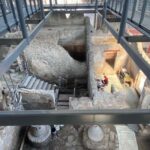
Herculaneum is smaller than Pompeii, but it delivers the kind of close-up detail you can’t fake. The reason is the volcanic deposit: Pompeii was covered in several meters of ash, while Herculaneum was buried under a much thicker layer of mud, described as around 20 meters. That mud sealed the site differently, and it helped preserve objects in ways ash did not.
When you walk Herculaneum with your guide, the preservation story becomes visible fast:
- Second floors of buildings are still there in ways you can understand from street level.
- Carbonized wooden objects turn up as part of the preserved evidence.
- Intact paintings and mosaics are still visible and displayed.
That is why Herculaneum often steals the show. You aren’t just seeing walls. You’re getting a sense of surfaces, rooms, decoration, and daily comfort. It is easier to picture how people lived, ate, worked, and entertained because so many visual clues survived.
Guides also tend to connect what you see to wealth and lifestyle. Herculaneum gives you a vivid impression of the opulent Roman life enjoyed by the wealthier citizens of the empire. And because the site is more preserved, the contrast between “wealth” and “ordinary life” feels less like theory and more like evidence.
The guided time here is another 2 hours, finishing strong enough that you still feel like you understand the site—not like you just speed-walked past it.
Why the guide quality matters more than you think
This tour’s real engine is the archaeologist guide, not the route itself. Archaeologists are trained to interpret fragments and patterns: why a wall collapsed here, why certain materials survived, what a room function likely was, and what the evidence suggests versus what it can’t prove.
And you can hear that difference in the way guides handle questions. In the experience, guides like Diego, Alfredo, Sergio, Antonio, Paulo, Julia, and Vincenzo come up across the group. The common thread is clarity: they explain complex topics in plain language and point you toward the most meaningful sights instead of hoping you stumble onto them.
Another detail that makes the tour feel smoother: headsets are provided for groups larger than 10. That means the guide can keep moving and still be heard. It also prevents that annoying split where some people are lagging behind because they can’t hear what matters.
Pacing, crowding, and comfort: what to plan for
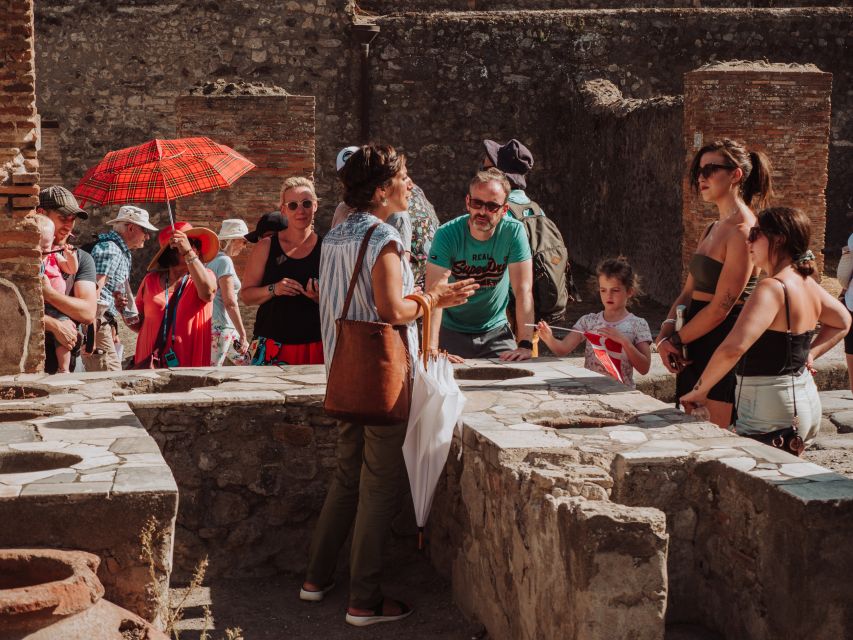
This is a walking tour. You’ll be on your feet through both sites, and the day is designed around guided routes plus one break. Comfort comes down to the basics:
- Wear comfortable shoes.
- Bring water, sunglasses, and a hat in summer.
- Add a raincoat or poncho in case showers pop up.
The sites can be crowded, and Pompeii in particular is busy. A good guide helps you avoid wasting time in the heaviest bottlenecks and keeps you pointed at the sections that connect to the bigger story.
If you’re sensitive to long days, treat this as a full outing. Around 5.5 hours sounds short on paper, but it’s enough to be tiring, especially in heat.
Tickets, headsets, and the value angle
This tour handles the things that usually steal time: entry tickets and ticket line skipping. In practical terms, that means you spend your limited hours inside the ruins, not standing in queues doing math with ticket booths.
You also get clear logistics built in: the train transfer between Pompeii and Ercolano, plus guided time at both archaeological zones. You’re paying for a guided structure that turns two scattered ruins visits into one coherent story.
One helpful concrete detail: entry to Herculaneum is listed as 16.00 euros for adults, and 2.00 euros for EU citizens aged 18–25. Your tour experience states that you’re provided tickets for both sites, which reduces your planning burden.
Just be honest about your priorities. If you want maximum freedom to linger in every corner, this guided format may feel slightly structured. If you want the biggest payoff per hour—especially first time in Pompeii or Herculaneum—this is the right kind of “planned day” value.
Who should book this tour
Book it if:
- You want Pompeii and Herculaneum in one half-day without wrestling with transport.
- You care about understanding what you’re seeing, not just photographing walls.
- You prefer small-group pacing so the guide can keep the group together.
- You’re okay walking a lot and staying on schedule.
Skip it (or rethink) if:
- You need wheelchair access or mobility accommodations. The tour is not suitable for mobility impairments or wheelchair users.
- You strongly need a long lunch sit-down. The break after Pompeii is about 30 minutes.
Should you book this Pompeii and Herculaneum small-group tour?
I think you should book this tour if you want the fastest path to real understanding. Pompeii gives you the famous shock and emotional weight; Herculaneum gives you the intimate, preserved details that make Roman life feel tangible. Put together with an archaeologist guide, the time adds up.
You’re trading total freedom for momentum and interpretation. If that trade feels fair—and you pack the essentials for heat and comfort—this is a smart use of limited time in Campania. And if you’re already excited about Pompeii, I’d add one honest nudge: plan to let Herculaneum change your mind. It often does.
FAQ
How long is the Pompeii and Herculaneum small-group tour?
The tour lasts about 5.5 hours.
What’s the group size?
It’s a small group with a maximum of 20 people.
Do I need to buy entry tickets?
You are provided entry tickets for both sites as part of the experience, and you skip the ticket line.
Is there transportation between Pompeii and Herculaneum?
Yes. After Pompeii, you take the Circumvesuviana train to Ercolano, which is about a 20-minute trip.
Where do we meet the guide?
Meet at Piazza Porta Marina Inferiore, 1, at the left side of the Pompeii entrance near the Arte bus stop. The guide holds an Askos Tours sign.
Where does the tour end?
The tour ends at Parco Archeologico di Ercolano.
What should I bring?
Bring a passport or ID card. Wear comfortable clothes, and in warm weather bring sunglasses, a hat, and water. Bring a raincoat or poncho if rain is possible.