REVIEW · POMPEI CAMPANIA
Pompeii: Skip-the-line-Ticket and Guided Tour
Book on GetYourGuide →Operated by TOURISTATION · Bookable on GetYourGuide
Pompeii is short on mercy and long on meaning. This 2-hour, archaeologist-led visit makes the UNESCO site feel readable, with skip-the-line entry so you spend time looking instead of waiting. I love the close-up frescoes, mosaics, and artworks you actually get to see, and I love how the guide turns the ruins into everyday life in Roman times. The main drawback: it’s only two hours, so if you want to linger in one spot, you’ll have to choose.
You’ll also want to be ready for a bit of walking through uneven stone and busy paths. The tour is not suitable for wheelchair users or people with mobility impairments, and you’ll need your ID on hand. I think the tour is best if you come with curiosity and accept a smart, guided pace instead of a slow wander.
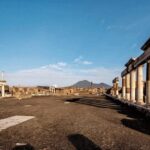
You start at Porta Marina Superiore, move through the city’s core like the Forum, then work your way past baths, temples, a bakery, the great theater, and a brothel. You’ll also get views of Mount Vesuvius beyond the city, which helps everything click.
In This Review
- Key takeaways before you go
- Pompeii makes sense faster with a real guide
- Price and what you’re really paying for
- Meeting point near Chalet Donna Lucia: arrive early, plan for one extra turn
- Porta Marina Superiore: the gate that sets the tone
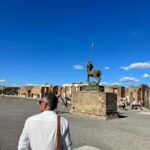
- The Forum: where Pompeii’s public life lived
- Baths and temples: daily routine, not just big stone
- A bakery stop that makes the city feel real
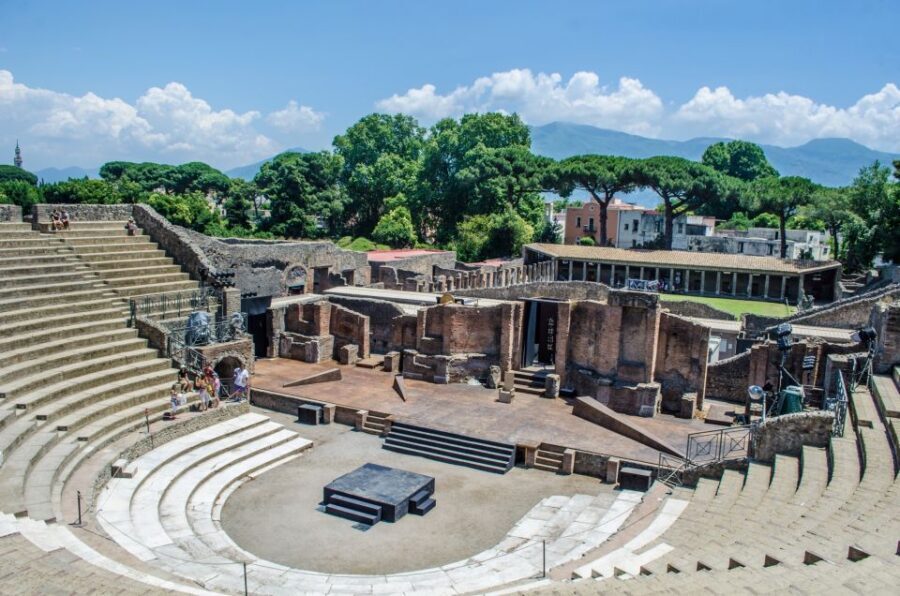
- Great theater and a brothel: entertainment and social rules
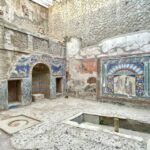
- Frescoes, mosaics, and artworks: the payoff up close
- Mount Vesuvius views: where the story snaps into focus
- What 2 hours feels like on the ground
- Practical rules you should know before you arrive
- Languages and guide quality: pick your comfort level
- When this Pompeii tour is the best fit
- FAQ
- How long is the Pompeii guided tour?
- Is skip-the-line entry included?
- What does the tour include besides the guide?
- Is Villa dei Misteri included?
- Where do I meet the group?
- Is this tour suitable for wheelchair users or limited mobility?
- Should you book this Pompeii skip-the-line guided tour?
Key takeaways before you go
- Skip-the-line ticket saves you from Pompeii’s worst delays
- Archaeologist guide explains what you’re seeing, from streets to social life
- Headset included helps you follow along even when the group shifts
- Mount Vesuvius views add context to the volcanic story
- Semi-private option (max 12) can feel more personal and easier to hear
Pompeii makes sense faster with a real guide
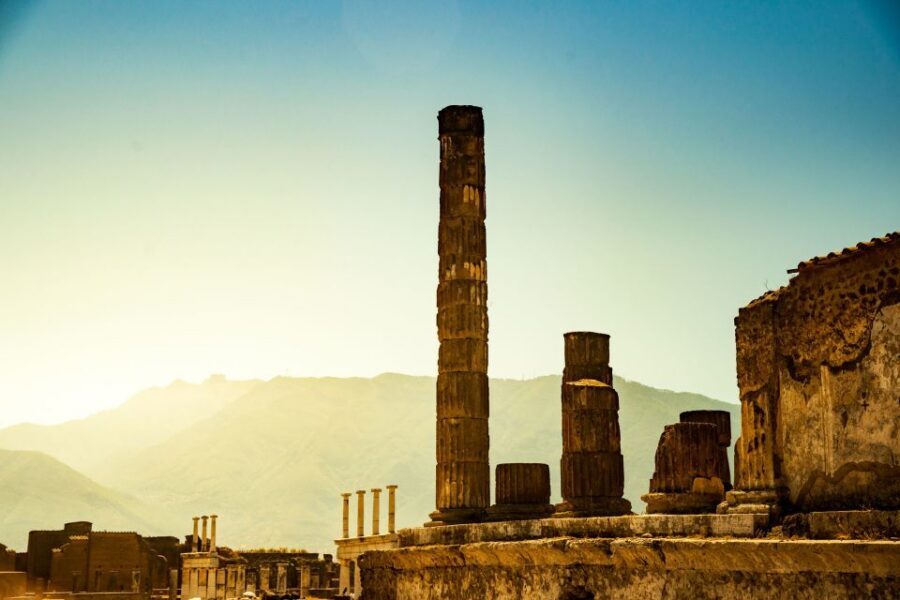
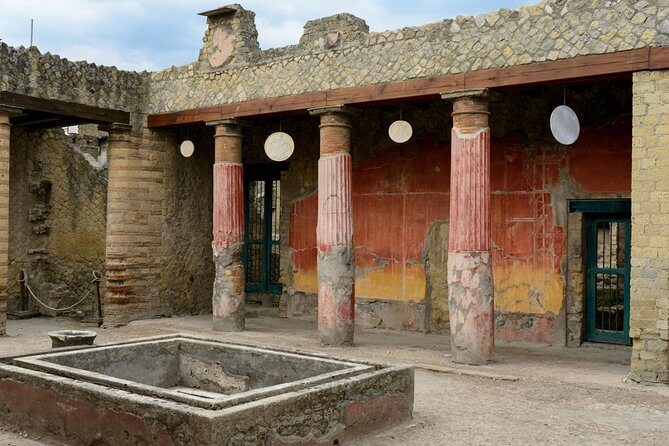
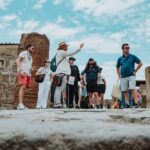
Pompeii looks like an open-air museum until someone connects the dots for you. With an archaeologist guide, you start to recognize patterns: where people shopped, where they went to bathe, where they went to watch shows, and where social life happened. Instead of staring at stone and trying to guess, you get the why behind the buildings and wall paintings.
I also like the structure of a guided visit here. In two hours, you can hit the highlights without wandering into dead ends or getting stuck waiting for a crowd to thin out. Skip-the-line entry matters because Pompeii can get slow at the gate, and time inside the ruins is what you’re really buying.
One more reason this works well: you’re seeing art and city design together. The tour isn’t only about major monuments. You spend time on preserved frescoes, mosaics, and artworks, which is where Pompeii becomes unusually human.
Other skip-the-line Pompeii tickets and tours


Price and what you’re really paying for
At about $64 per person for a 2-hour guided tour that includes the Pompeii area skip-the-line ticket, you’re paying for three things: entry speed, expert interpretation, and a tight route.
Here’s how I’d judge the value. If you’re the type who reads captions slowly and loves context, a guided Pompeii visit is often worth it because you’ll understand far more than a self-guided stroll. If you’re mostly there for photos and you already know the basics, you might feel it’s pricey for only two hours. The best middle ground is this: treat the tour like your Pompeii “starter pack,” then use any extra time afterward to go back for the spots that grabbed you.
Also note the tour is non-refundable, so pick a time you’re confident you can keep. If your train or schedule is fragile, build in buffer.
Meeting point near Chalet Donna Lucia: arrive early, plan for one extra turn
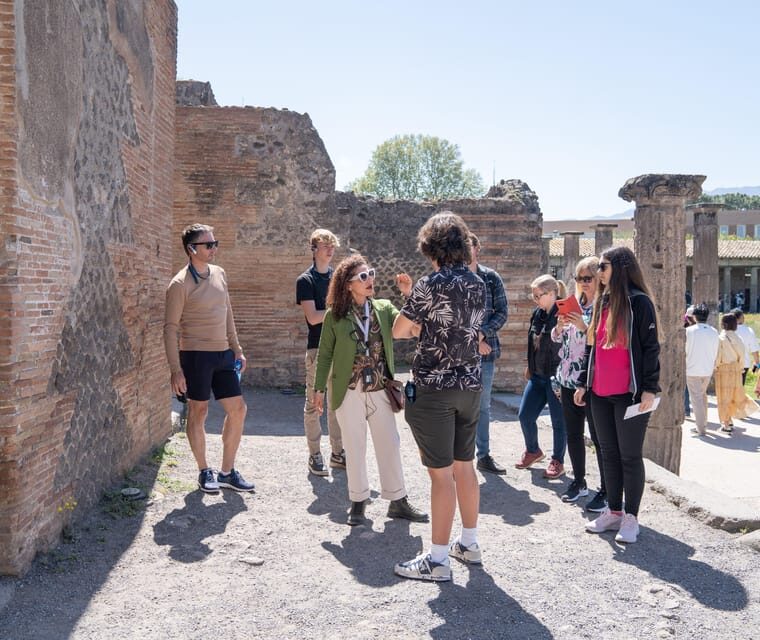
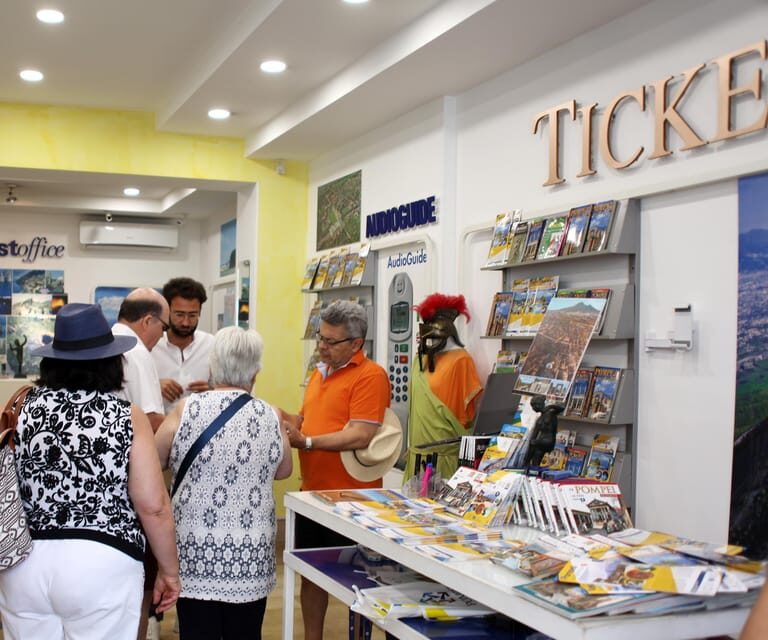
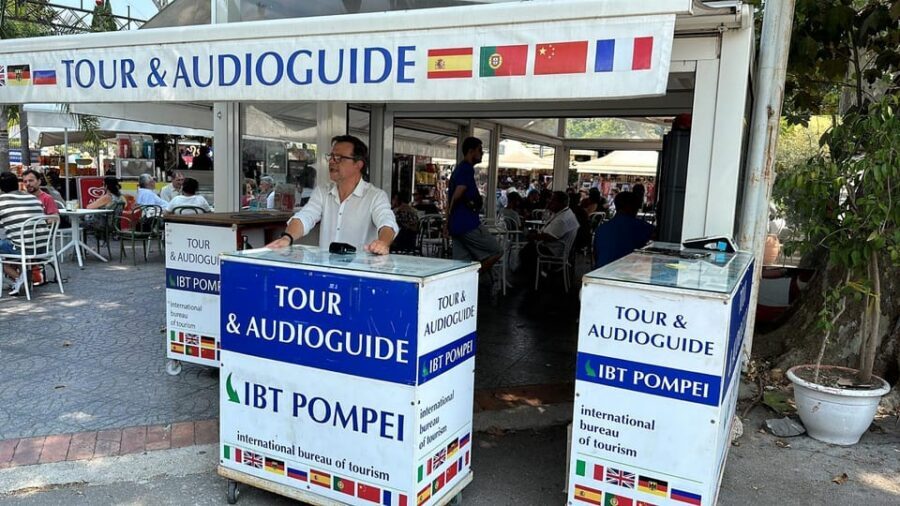
You’ll meet at the Office IBT Center/Touristation, located next to Chalet Donna Lucia. The starting location listed is Piazza Esedra, 11, but your real move is to find that tourist office.
I recommend arriving early because this meeting spot can be a little tricky if you’re expecting it to be right by the biggest entrance. When people miss the start, it’s usually because they’re still searching. If you’re traveling by train, don’t assume the tour timing matches your arrival perfectly. In past experiences, people have waited a long time for the next available tour when timing didn’t align.
Porta Marina Superiore: the gate that sets the tone
The tour begins at Porta Marina Superiore, one of Pompeii’s city gates. Gates sound boring until you use them as a mental frame. This is where you start imagining arrival: goods moving in, people coming and going, and the flow of the city before you even reach the Forum.
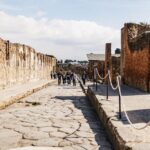
From this point, the guide’s job is to get you oriented fast. You’ll walk main streets and start seeing how Pompeii is laid out like a working town, not a pile of ruins.
Drawback to know: the tour route is designed to cover key places in a short window. That means you won’t stop for long photography marathons at every corner—though you will get plenty of moments to look closely when the guide brings attention to specifics.
The Forum: where Pompeii’s public life lived
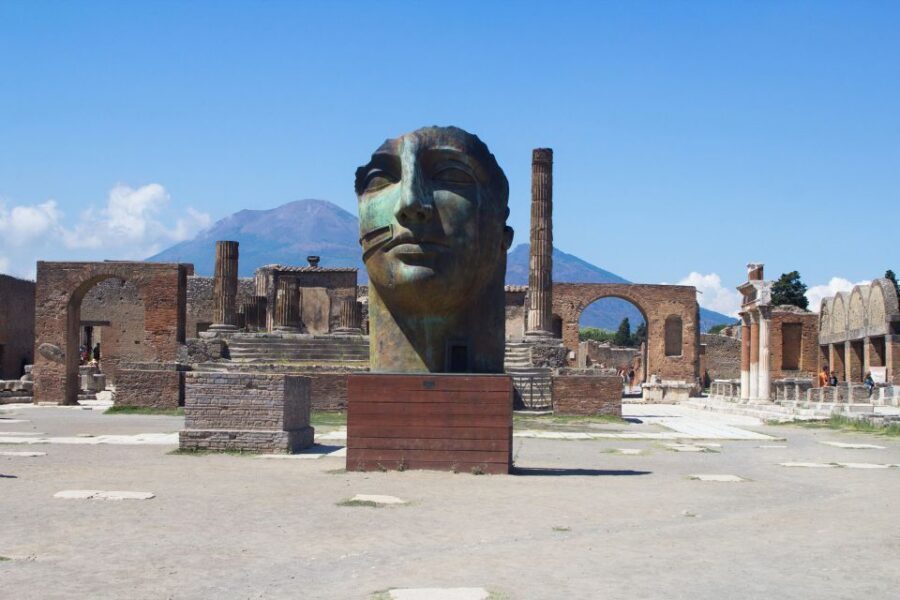
Next comes the forum, the heart of Pompeii. This area is what turns Pompeii from an archaeological site into a city with jobs, rules, and everyday routines.
When a guide points out the forum’s purpose, it changes how you read everything around it. You start noticing how buildings relate to civic life: movement through the square, where people likely gathered, and how important structures would have shaped daily routines.
If you like “how people actually lived” history, this is one of the best parts of the tour. The forum is not just impressive—it’s explanatory.
A few more Pompei Campania tours and experiences worth a look



Baths and temples: daily routine, not just big stone
The tour includes baths and temples. These stops are powerful because they show Roman life wasn’t only about politics and war. You get a sense of how routine spaces worked—where hygiene happened, where people practiced religion, and how architecture supported community.
The best part of this section is the guide’s storytelling style. Different guides—like Ester and Roberta in English or other languages—have been praised for keeping the explanations clear and engaging. Even if your language skill is limited, the visual cues plus the headset help you keep up when the group moves.
Practical note: expect to walk between clusters of buildings. Pompeii has uneven ground and some tight passages, so wear shoes you trust.
A bakery stop that makes the city feel real
You’ll also see a bakery. This might sound like a “small” stop, but it’s one of the most human parts of Pompeii.
Food is daily life. A bakery gives you a way to picture labor, supply chains, and the rhythms of feeding a town. When a guide connects that space to the wider city, it helps you understand Pompeii’s scale and practicality—Roman life wasn’t abstract; it was production, distribution, and routine.
Great theater and a brothel: entertainment and social rules
Two stops you’ll likely remember are the great theater and a brothel.
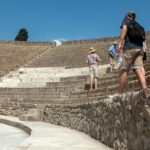
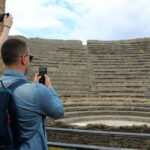
The theater helps you see public entertainment as a social event, not just a performance space. The brothel is different: it introduces the social side of Pompeii—what people talked about, how morality was navigated, and how commerce mixed with everyday life.
These aren’t just shock-value moments. With an archaeologist guide, the point is context: what these places meant in the city’s social system and how they fit into daily patterns.
Frescoes, mosaics, and artworks: the payoff up close
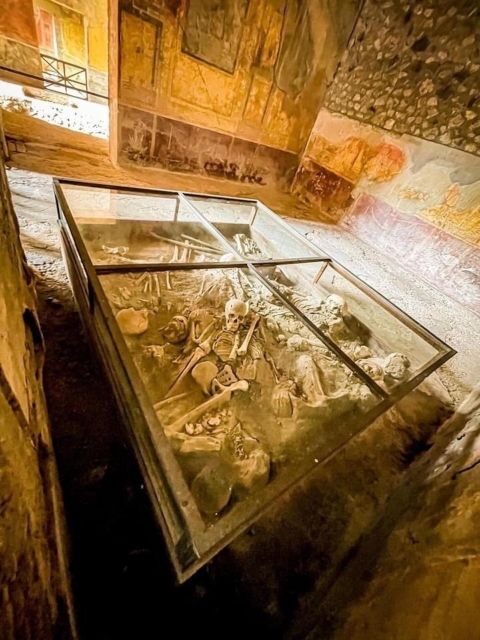
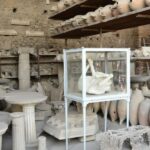
The main reason people want a guided Pompeii tour is what you see on the walls and floors. This experience is built around preserved frescoes, mosaics, and artworks throughout the site.
Up close, you stop thinking of them as decoration and start seeing them as messages: tastes, status, myths, and identity. You’ll also understand why some parts are preserved and others aren’t—so your attention lands on what matters instead of guessing.
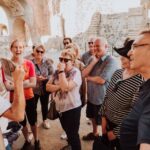
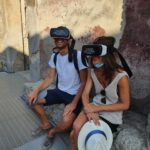
Headset included, and you’ll get checked at the start. That matters because Pompeii is noisy in bursts: groups crossing paths, wind, and footsteps. If you’ve ever struggled to hear a guide in open ruins, this is a big improvement.
Mount Vesuvius views: where the story snaps into focus
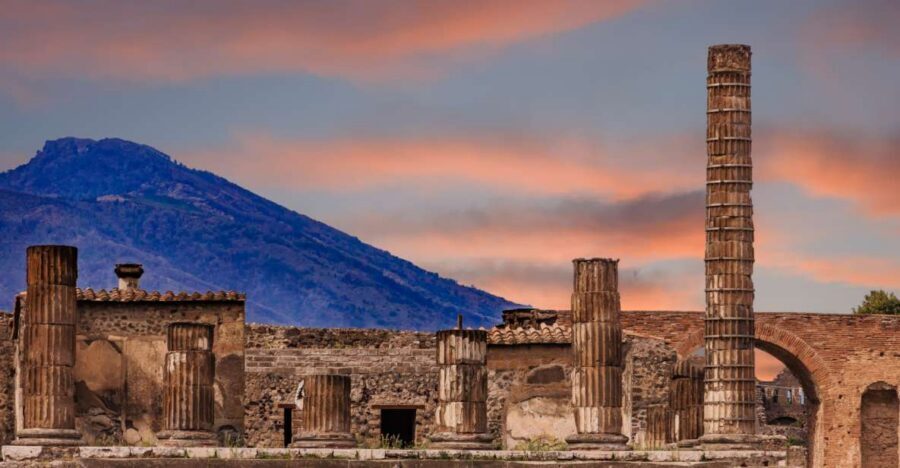
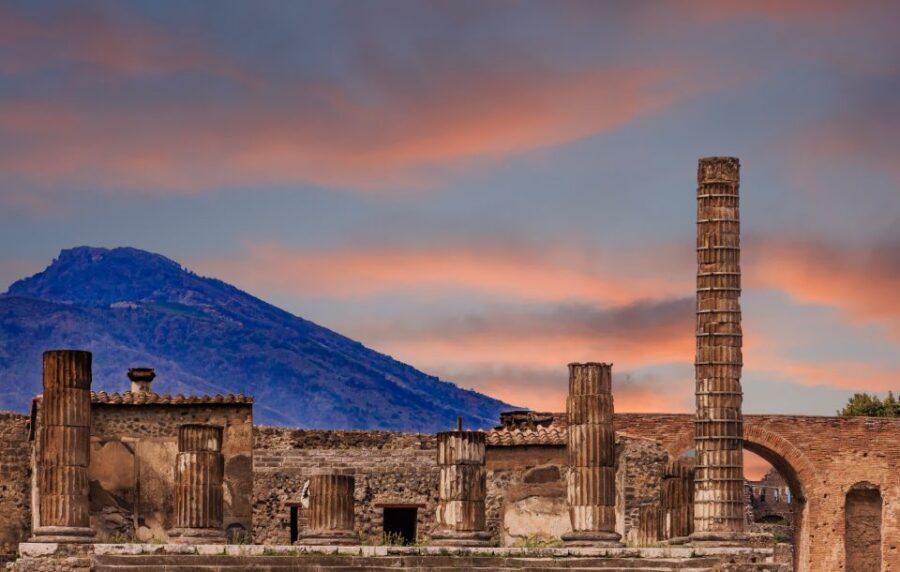
You’ll have views of Mount Vesuvius beyond the city. This is more than a photo stop. It anchors the biggest event in Pompeii’s story and helps you understand the geography that shaped everything.
Even if you know the broad outline, seeing the mountain from the city makes the timeline feel more real. You understand how the ash catastrophe turned normal town life into frozen history.
This also helps you mentally organize the route: Pompeii isn’t random. It’s a city built in a specific place, and the eruption turned that place into a time capsule.
What 2 hours feels like on the ground
The total time is 2 hours. That’s enough to get a solid overview of major sectors—gate to forum to public spaces—while still leaving you time afterward to explore if you want.
But be honest with yourself about expectations. Two hours does not mean you’ll study every wall painting. It means you’ll get the key route, the main buildings, and the explanations that help you decide what to revisit.
Group size can also matter for how you experience this. The semi-private option caps the group at 12 people, which tends to make it easier to hear and easier to keep a comfortable pace. On larger groups, you may feel the shuffle more.
Practical rules you should know before you arrive
This is the part that saves your day. The tour doesn’t allow smoking, luggage or large bags, umbrellas, oversize luggage, or pets.
If you’re traveling with a dog, small dogs are permitted inside the archaeological area, but they must stay on a leash and be carried when inside buildings. Also bring your passport or ID card—ID is required for all participants.
From the included stuff: you get a city map, headset, Wi-Fi, and assistance at the tourist office. Hotel pickup and drop-off are not included, so you’ll want to plan your transport to the meeting point.
Languages and guide quality: pick your comfort level
You can choose a live guide in Italian, French, Spanish, or English. You’ll hear praise for multiple guides across languages—examples include Paul, Liliana, Marcela, and Valentina—with special mentions of how they kept tours moving and how easy the headset made it to follow along.
Two honest considerations. First, if you’re booked in English, you still may experience accent challenges with any live guide. Second, you should expect a structured route that prioritizes key highlights, so the tour is best when you’re happy to follow directions rather than set your own pace.
When this Pompeii tour is the best fit
This is a strong choice if you:
- Want a clear overview of Pompeii in a short visit
- Love Roman daily life details, not only monuments
- Appreciate art and want help understanding what you’re seeing
- Prefer a planned route with a headset and skip-the-line entry
It’s not the best fit if you:
- Need wheelchair-friendly access or have mobility limitations
- Want a long, quiet, self-paced walk with no guidance
- Are depending on tight train timing with no buffer
FAQ
How long is the Pompeii guided tour?
The guided tour lasts 2 hours.
Is skip-the-line entry included?
Yes. Your Pompeii archaeological area skip-the-line ticket is included.
What does the tour include besides the guide?
Headsets, a city map, assistance at the Tourist Office, and Wi-Fi are included.
Is Villa dei Misteri included?
No. Entrance to Villa dei Misteri is not included.
Where do I meet the group?
Report to the Office IBT Center/Touristation next to Chalet Donna Lucia.
Is this tour suitable for wheelchair users or limited mobility?
No. It is not suitable for people with mobility impairments or wheelchair users.
Should you book this Pompeii skip-the-line guided tour?
If you want to understand Pompeii instead of just walking through it, I’d book this. The skip-the-line entry, headset, and archaeologist-led route make the two hours count, especially for the Forum, baths/temples, theater, and the restored wall art you’ll see along the way.
If you’re set on a slower, self-led visit, or you need accessibility support, you’ll likely be happier with another format. For everyone else—this is a smart way to turn Pompeii into a story you can actually follow.