REVIEW · POMPEI CAMPANIA
Pompeii: Skip-the-Line Entrance Ticket with Audio Guide
Book on GetYourGuide →Operated by Tempio Travel Pompei Tickets · Bookable on GetYourGuide
Pompeii works best when you avoid friction. With a skip-the-line ticket and an audio guide, you can step into the UNESCO ruins faster and roam in your own rhythm. You get a map to keep your bearings, and the audio narration is there when you want context on what you’re seeing.
I especially like the combo of skip-the-line entry plus self-paced touring. You can target big sights like the Roman amphitheater and public gym, then slow down for daily-life spaces and banqueting areas. I also like that the package includes both an audio guide and a map, which matters because Pompeii is huge and easy to misread.
One key consideration: even with skip-the-line access, you may still face some waiting at the entrance area, and the walk is hot and long—go in with water and good timing. Heat is part of the experience, not a side note.
In This Review
- Key highlights to know before you go
- Skip-the-line entry: where you trade the voucher in Pompei
- Your day at Pompeii: how the self-guided audio route really works
- The biggest sights you’ll hit: amphitheater, small theater, and public gym
- Roman amphitheater: spectacle meets stone
- Small theater: a different kind of performance
- Public gym: everyday civic life, not just entertainment
- Roman daily life and banquets: turning houses and streets into stories
- Frescoes, casts, and the human side of Pompeii
- Audio guide + map tips: avoiding common “where is it?” moments
- Practical planning: tickets, timing, bags, and what to bring
- What to bring
- What’s not allowed
- Food and drinks
- Optional guided upgrades: when a 2-hour leader makes sense
- Who this ticket is perfect for (and who should think twice)
- Value check: is $39.97 worth it?
- Should you book this Pompeii skip-the-line ticket?
- FAQ
- Where do I exchange my voucher for Pompeii tickets?
- Is this ticket really skip-the-line?
- Do I get an audio guide and a map?
- Do I need to bring headphones?
- What languages are available for the audio guide?
- Is food or drinks included?
- Are large bags or luggage allowed inside?
Key highlights to know before you go

- Skip-the-line voucher exchange at Circumvesuviana (first floor) so you can get to the ruins fast.
- Audio guide in multiple languages plus a map so you’re not guessing your route.
- Core Pompeii set pieces on your path: Roman amphitheater, small theater, and public gym.
- Daily life + banquets + frescoes turn the city into something you can picture, not just rubble.
- Plaster casts included in the experience flow, including figures of citizens and even pets.
- Headphones aren’t included, so bring what you’ll use for the audio device.
Skip-the-line entry: where you trade the voucher in Pompei

This ticket is all about saving time where it counts: at the start. Your voucher gets exchanged at a specific provider office inside the Circumvesuviana train station, on the first floor (Via Villa dei Misteri, 1, 80045 Pompei NA). That’s a big deal because the station is where most people arrive, and it puts you close to the entrance area afterward.
Plan to collect your ticket on arrival, then head straight into the site flow. The entrance is near the station zone, so you don’t have that extra transfer step some attractions require. You’ll also be able to return to the same meeting point at the end of the activity, which makes the whole day feel less scattered.
If you’re driving (or renting a car as a rare indulgence), the info notes a chance for free parking at Osteria Nonna Cherubina (Via Andolfi 46) if open and if available. That’s the kind of “maybe” detail you should treat realistically—still, it’s worth knowing before you commit to paid parking elsewhere.
Bottom line: your time saved isn’t just theoretical. It’s the difference between spending your morning stuck at a ticket desk versus walking toward Pompeii’s main streets.
Other skip-the-line Pompeii tickets and tours

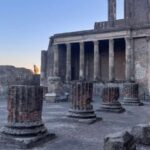

Your day at Pompeii: how the self-guided audio route really works

The big promise here is simple: you explore at your own pace. Instead of being locked into a set group schedule, you use the audio guide and map to decide where to spend time.
In practice, that flexibility helps for two reasons:
1) Pompeii can pull you toward different interests. Some days you’ll want big-show spaces like arenas and theaters. Other days you’ll get hooked by smaller street corners, shop fronts, or wall paintings. With audio, you can switch gears without feeling behind.
2) The site is spread out. The map isn’t optional in spirit. Even if you’re a confident navigator, you’ll want something to keep turns straight and avoid wandering in circles just to reach the next highlight.
A few notes that affect how smoothly this goes:
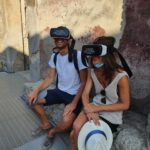
- Headset is not included, but you are told to bring headphones. Bring your own, ideally something comfortable for long walking.
- Pompeii is presented through narration, and the value is in what the audio helps you connect: what you’re looking at, how Romans used the space, and why certain areas matter.
Language coverage is solid: the audio guide is available in French, German, Italian, English, and Spanish. That’s helpful if you’re traveling with mixed-language groups or if you want the audio in your strongest language for detail.
The biggest sights you’ll hit: amphitheater, small theater, and public gym

Even though you’re self-guided, most people naturally build a route around major public spaces first. This ticket’s experience flow includes standout stops such as:
Roman amphitheater: spectacle meets stone
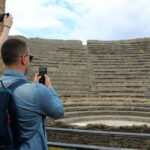
The Roman amphitheater gives you a clear sense of how public life was staged. It’s not just a big wall of rock—you can still feel the structure meant for crowds and events. When you pair this with audio context, you’re more likely to notice how the space would have shaped noise, sightlines, and behavior.
Small theater: a different kind of performance
Next comes the small theater. It changes the mood. Where an amphitheater feels broad and loud, a smaller theater feels more intimate and focused. It’s a good “breather” stop, especially on hot days when you want shade nearby.
Other Pompeii entry tickets and audio guides


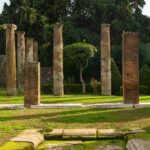



Public gym: everyday civic life, not just entertainment
The public gym is one of those stops that makes Pompeii feel real. Romans didn’t just gather for events—they also trained, socialized, and lived routine civic life in spaces like this. If you’re the type who likes to understand daily routines rather than only dramatic moments, this is a highlight.
Practical tip: when you’re using audio, pause long enough at each public site to look around. Don’t rush to the next corner immediately. Pompeii rewards the slow scan—how entrances align, how rooms relate, and how crowds would move.
Roman daily life and banquets: turning houses and streets into stories
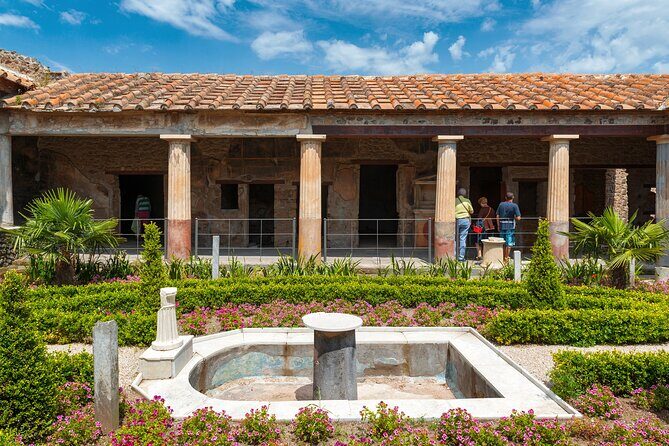
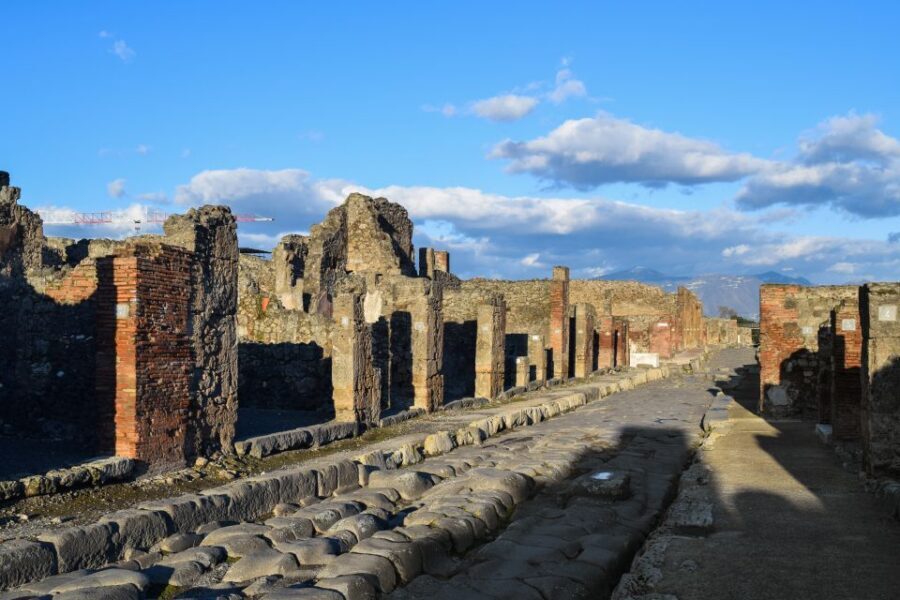
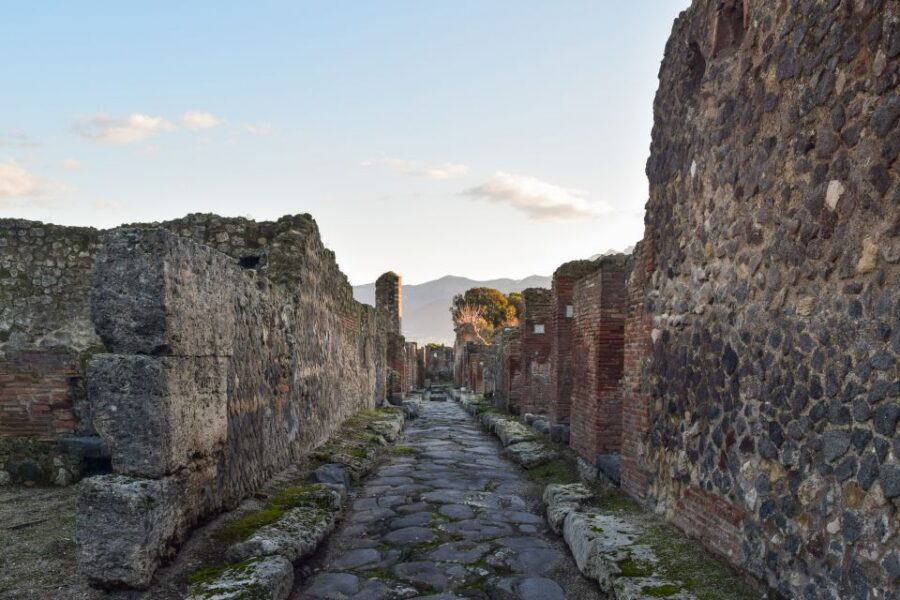
The most powerful part of Pompeii isn’t a single artifact. It’s the way the city layout helps you understand what everyday life looked like—rooms, streets, gatherings, and routines.
This experience includes narration and stops around places where Romans lived daily life and held banquets. That means you’re not only looking at structures; you’re learning how people used them socially.
Here’s why I think this matters for your visit:
- Pompeii has a habit of turning into “cool ruins” if you treat it like a museum of objects.
- Audio-driven storytelling turns it into a place where activities make sense—where you can imagine a household day, not just a list of buildings.
And if you like to make your day active, the self-guided format lets you linger at rooms that catch your eye. Some people want to move fast to see everything. Others want to camp out for wall art and room layout. This ticket supports both styles.
Frescoes, casts, and the human side of Pompeii
Pompeii’s frescoes are the star for a reason: they show everyday expression in color. The description highlights frescoes “frozen in time,” and when you’re actually standing in front of them, that phrase stops sounding poetic and starts sounding accurate.
These paintings do something technical ruins can’t do. They hint at taste, status, and how people wanted their walls to feel. In other words, frescoes turn the city into culture, not only tragedy.
The experience also includes moving casts of citizens and pets. Even if you’ve heard about Pompeii before, casts tend to land differently because they’re physical, human-scale reminders. Audio narration helps you understand what you’re looking at, instead of just noticing shapes behind glass or in designated display areas.
If your goal is an emotional visit: plan extra time around the frescoes and the cast viewing points. The rest of the day can be brisk, but these parts are the reason Pompeii is unforgettable.
Audio guide + map tips: avoiding common “where is it?” moments
Most people handle the audio guide smoothly, but the site has a way of making you feel lost even when you’re close to the action. The map helps, and the audio device should guide you—but don’t assume it’ll be instantly intuitive.
A few practical pointers drawn from real on-the-ground issues people run into:
- Some setups hand you a mobile phone as the audio guide and give you a map. If that’s your case, bring your own headphones that work with what you have (and consider having the right aux-style connection if your phone needs it).
- You might not be sure where the audio guide is at first. When you arrive, take a minute to ask directly at the exchange point so you don’t waste time later inside the ruins.
Also, a small note on pacing: you can build an efficient day, but don’t try to “beat” Pompeii. Even an optimized route turns into a slow walk because you’ll stop often.
Practical planning: tickets, timing, bags, and what to bring
This is a 1-day activity, with starting times you choose based on availability. If you can, aim earlier rather than later. Morning hours usually mean better comfort and less crowd pressure. Late-day plans are still fine—Pompeii is worth it—but you’ll work harder in heat.
What to bring
You’re explicitly advised to bring:
- Passport or ID card
- Driver’s license
- Headphones
That driver’s license detail is unusual, but it’s listed as required. I’d rather you show up with it than spend your morning hunting for it.
What’s not allowed
- Luggage or large bags are not allowed.
So travel light. If you’re coming from Naples, pack like you’re boarding a day hike: small backpack, essentials only.
Food and drinks
Food and drinks aren’t included. One review notes there’s very limited cafe availability on-site, so don’t count on easy food fixes during your walking hours. Treat Pompeii like a place you’ll eat before you arrive or bring your own strategy.
Optional guided upgrades: when a 2-hour leader makes sense
This ticket is self-guided, but you might be offered an added guided option at the site. One example mentioned a 2-hour guided tour available for about €10 extra per person, and multiple guide names came up, including Alfonso, Alfonso-Marie, and Astrid.
If that offer appears and you’re on the fence, here’s a sensible way to decide:
- Choose the guided upgrade if you want someone to organize the maze for you, explain what’s important first, and help you avoid missing major context.
- Skip it if you’re the kind of traveler who enjoys wandering and building your own connections with audio narration.
Either way, you keep control afterward, which is the best part: even if you add guidance at the start, you can still return to self-paced time for slower sections like frescoes.
Who this ticket is perfect for (and who should think twice)
This Pompeii skip-the-line + audio setup is especially good if:
- You hate standing in line for basic services and want to use your time inside the ruins.
- You want flexibility to set your own pace across a large site.
- You’ll enjoy learning through narration while you walk—rather than committing to a full guided tour format.
- You’re traveling with people who have different interests (public spaces, daily life, art).
You might think twice if:
- You strongly prefer a live guide at every moment and don’t want any “on your own” component.
- You’re very sensitive to heat and long walking without frequent breaks.
Still, the self-paced design is the core value. It lets you match Pompeii to your energy level.
Value check: is $39.97 worth it?
At $39.97 per person you’re paying for three things: skip-the-line entry, an audio guide, and a map. Headphones aren’t included, and food isn’t included, but the main cost covers the time-saving and the learning tools.
Here’s how I see the value:
- Skip-the-line is most valuable when your time in the area is tight. Pompeii is famous, so delays are common. Paying a bit more to avoid one of the obvious bottlenecks often makes the day feel calmer.
- The audio guide and map are not “extras.” They’re part of how you navigate and understand what you’re looking at, especially at a site this spread out.
- The $39.97 price works best if you actually use the audio and take the self-paced route seriously. If you plan to sprint through with no listening, you’ll feel the cost more than the benefit.
Also, the overall rating is strong—around 4 out of 5 from 2,500+ ratings—which lines up with the most repeated praise: easy ticket pickup and helpful narration.
Should you book this Pompeii skip-the-line ticket?
I’d book it if you want an efficient start and a flexible day. You get a real head start from the Circumvesuviana exchange point, plus the tools that help you enjoy Pompeii instead of just surviving it: audio guide + map.
Book it especially if:
- You’re going for the main highlights but also want time to linger over frescoes.
- You prefer self-guided walking but still want context delivered clearly.
- You’re traveling with mixed interests and want one ticket that works for different rhythms.
If you’d rather have someone shepherd you step-by-step from the first minute, consider adding a guided option if one is available when you arrive.
FAQ
Where do I exchange my voucher for Pompeii tickets?
You exchange your voucher at the activity provider’s office located on the first floor of the Circumvesuviana train station, Via Villa dei Misteri, 1, 80045 Pompei NA, Italia.
Is this ticket really skip-the-line?
Yes. The ticket includes skip-the-line entry so you avoid the long ticket-office lines when you arrive.
Do I get an audio guide and a map?
Yes. The experience includes an audio guide and a map.
Do I need to bring headphones?
Yes. A headset is not included. You’re advised to bring headphones.
What languages are available for the audio guide?
The audio guide is available in French, German, Italian, English, and Spanish.
Is food or drinks included?
No. Food and drinks are not included.
Are large bags or luggage allowed inside?
No. Luggage or large bags are not allowed.