Pompeii feels different when the sun drops. This private guided tour is built for cooler sunset hours and a smooth route through the most meaningful parts of the ruins. I like that you’re led by an official tourist guide with clear storytelling, and you’ll get a smart sequence of stops instead of wandering. One practical catch: the main Pompeii admission for the archaeological park is not included, so you’ll want to budget for that on top of the tour price.
I also like how the itinerary keeps you moving without turning the experience into a marathon. You cover big “must-see” zones—Forum spaces, bath areas, major roads, theaters, entertainment sites, and homes with famous mosaics—while still having short, human-sized time blocks to look around.
The main consideration is logistics inside Pompeii: you’ll be walking through an active archaeological site for about 2 to 3 hours, so plan for uneven ground and bring comfortable shoes.
In This Review
- Key highlights you’ll care about
- Sunset timing in Pompeii: cooler steps, better light, less chaos
- Price and what you really get for $95.31
- Meet at Porta Marina and keep the day efficient
- Stop-by-stop at Pompeii Archaeological Park: the core route at golden hour
- What to look for while you’re in the park
- Potential drawback in the park
- Temple of Apollo: a preserved anchor point
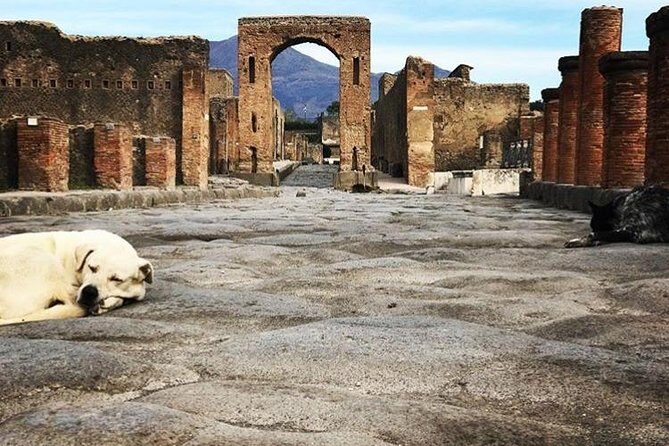
- The Foro de Pompeya (main square): where daily life and civic power meet
- Granai del Foro (museum stop): storehouses that explain the city
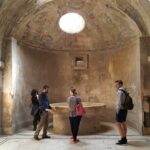
- Terme del Foro: the baths that show Roman social life
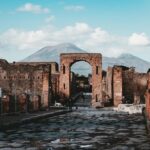
- Via dell’Abbondanza (main road): Pompeii’s street-level view
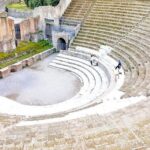
- Teatro Grande: comedies, tragedies, and how people gathered
- Lupanar: understanding entertainment with sensitivity
- Casa del Poeta Tragico: mosaics that make the home feel real
- Casa del Cinghiale: mosaics and architecture in a quick snapshot
- Tempio di Venere and Tempio di Giove Capitolino: finishing with the Forum’s spiritual layer
- 2–3 hours that leave you with meaning, not just photos
- Who this private Pompeii sunset tour is best for
- Should you book this Pompeii sunset tour?
- FAQ
- Is this tour guided?
- How long is the Pompeii sunset tour?
- Do I need to buy an entrance ticket?
- Where is the meeting point?
- Is the tour private or shared?
- What is the cancellation policy?
Key highlights you’ll care about
- Sunset timing helps you beat heat and crowds compared with peak daytime visits
- Official guide in English keeps the story clear even when details get technical
- Skip-the-line included to reduce waiting time once you have the needed entry
- Targeted stops focus on Forum life, entertainment, baths, and standout mosaic homes
- Temple of Apollo + Forum-area sites include admission while the main park ticket is separate
- Private tour format means your group stays together and sets the pace
Sunset timing in Pompeii: cooler steps, better light, less chaos
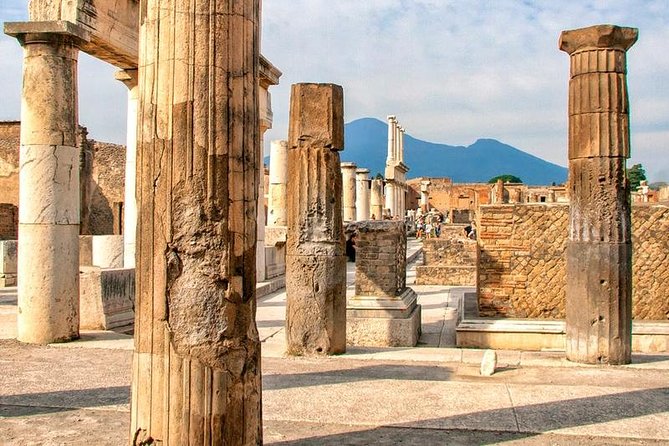
Pompeii can feel punishing in hot months. This tour is designed around the shift into evening, when temperatures usually ease and the ruins look more dramatic. Even if you’ve seen photos before, sunset light changes how you read the spaces—especially open plazas like the main square and the long street sections.
I also like that the schedule is short: about 2 hours (with up to 3 hours depending on pace). That matters because Pompeii rewards attention, not fatigue. You can slow down for a mosaic panel or a carved detail, then move on before you’re fully worn out.
One more thing: the tour doesn’t try to cover every single corner of Pompeii. It focuses on the parts you’ll most likely want to remember afterward, with just enough time at each stop to connect the dots.
If you're still narrowing it down, here are other tours in Pompeii we've reviewed.


Price and what you really get for $95.31
At $95.31 per person for a private guided tour, this isn’t a “bargain bus” deal. It’s more like paying for less friction: an official guide, English explanations, and skip-the-line support.
Here’s the value math that makes sense:
- You get official guidance (not just a self-guided audio plan).
- You get a structured route, which helps you spend your time looking instead of guessing where to go next.
- You get skip-the-line, which is usually where people burn time when they show up on their own.
The one cost you should factor in early: entrance ticket to the Pompeii excavations isn’t included. The good news is that some later stops include admission ticket coverage (more on that in a minute). Still, you should plan on paying for the main Pompeii Archaeological Park entry separately.
If you want Pompeii done thoughtfully in a few hours—especially in warmer seasons—this price starts to look reasonable.
Meet at Porta Marina and keep the day efficient
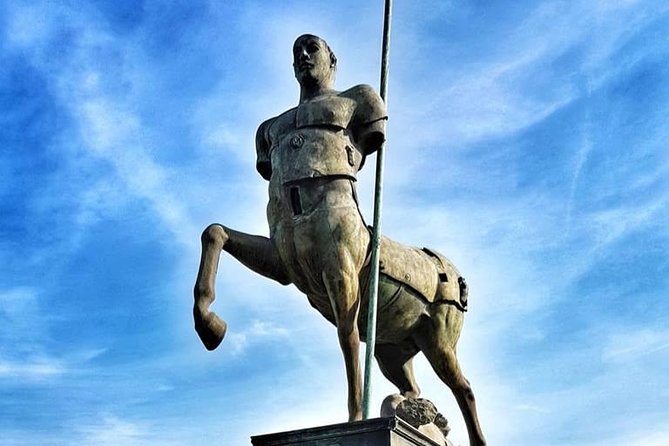
The tour starts and ends at Pompei-Porta Marina (scavi80045), Pompei. That’s helpful because you’re not hunting for a different pickup point half the day. It also makes the “come back the same way” part easier to handle.
It’s a private tour, meaning only your group participates. That matters because Pompeii requires constant small navigation decisions—where to stand, how to frame a view, when to move with the flow of people. Private pacing lets you stop for questions without a large crowd pushing you along.
Practical comfort tip: since the tour runs during the late day window, it’s smart to wear layers. The air can cool down quickly after sunset, and you’ll likely spend time both inside more open ruins and near shaded areas.
Stop-by-stop at Pompeii Archaeological Park: the core route at golden hour
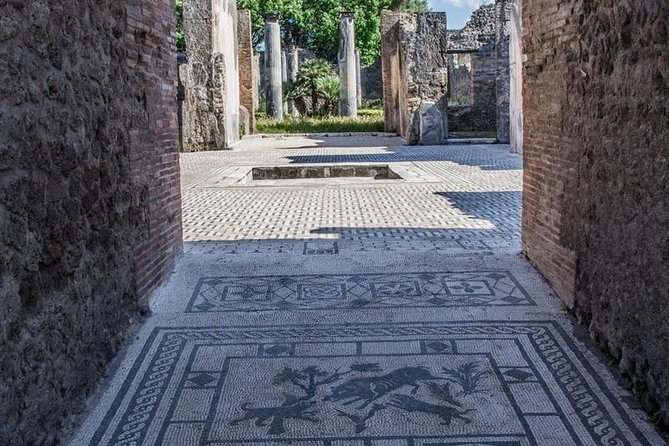
The main portion of your tour happens at Pompeii Archaeological Park, with about 2 hours allocated here. This is where you’ll get the big Pompeii story: public life, home life, and the places where people worked and relaxed.
Even though the main park admission isn’t included, the tour does provide the guided flow and skip-the-line help. Once you’re inside, expect the guide to connect the buildings to how people actually lived—where they shopped, ate, cooked, bathed, watched performances, and socialized.
What to look for while you’re in the park
You’ll cover a mix of major “themes,” and it’s worth going in with a game plan:
- Look for the Forum area energy: Pompeii’s civic heart shows up again and again in how streets align and how spaces open.
- Pay attention to bath and spa design: Roman bathing spaces weren’t just hygiene; they were social spaces.
- Keep an eye on artwork in everyday places like mosaics and frescoes. These weren’t museum pieces. They were part of daily movement.

Potential drawback in the park
Because the tour is built to be efficient, the guide may keep stops moving fairly quickly. If you’re the type who wants long, quiet “stand and study” time, you might feel slightly rushed. The compromise: use your short moments at each landmark to pick one detail to photograph and one detail to remember.
Temple of Apollo: a preserved anchor point
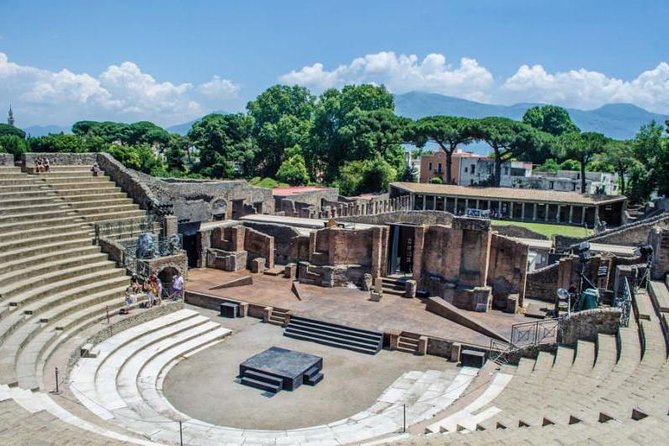
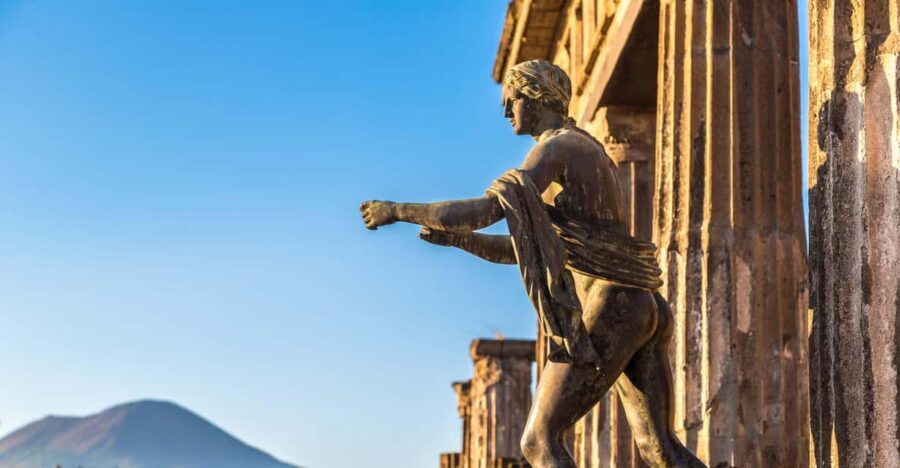
Next is the Temple of Apollo, a preserved temple stop. You’ll have around 10 minutes here, and admission for this stop is included.
This short stop works well because it gives you a clear architectural and religious anchor. Temples in Pompeii help you understand that the city wasn’t only about trade and home life. It also revolved around public worship and civic identity.
If you want to get more out of a 10-minute temple stop, stand where you can see how the space frames itself. Even small angles reveal how the building was meant to be viewed, not just entered.
The Foro de Pompeya (main square): where daily life and civic power meet
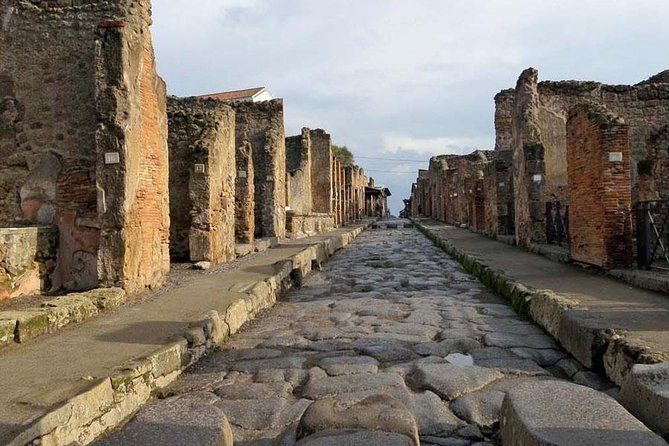
You’ll spend about 20 minutes at the Foro de Pompeya, the main square. Admission is included for this stop.
The Forum is the kind of place where everything makes sense once you see it in context. It’s where public authority, movement, and social presence overlap. In a short tour format, this stop is key because it helps you interpret the rest of Pompeii you’ll see later.
A practical note: plazas can get busy depending on your timing, even at sunset. Your advantage is that your guide is helping you pace the group, so you’re not stuck standing in the least useful spots.
Granai del Foro (museum stop): storehouses that explain the city
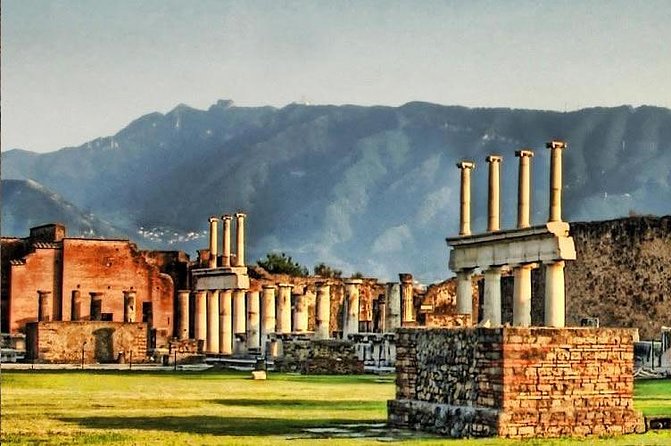
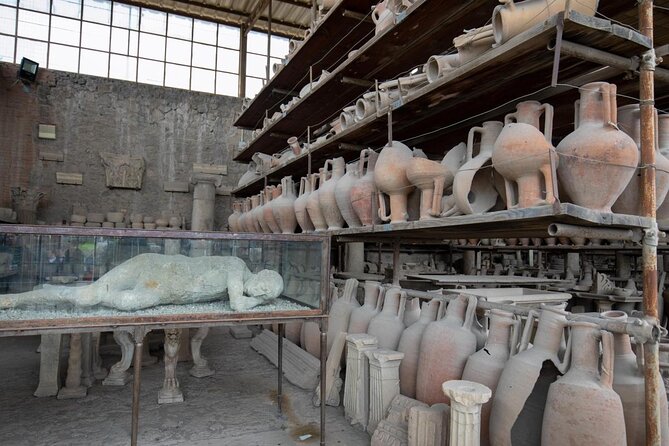
The tour includes Granai del Foro, a museum-like stop, for about 15 minutes, with admission included.
Grain storehouses sound boring until you connect them to the city’s survival. Food supply, trade routes, and civic planning all tie back to these kinds of spaces. This is the type of stop that helps you feel Pompeii as a functioning system instead of only a collection of ruins.
If you’re curious about the “how did this city run?” side of Pompeii, this is one of the most valuable segments in the route.
Terme del Foro: the baths that show Roman social life
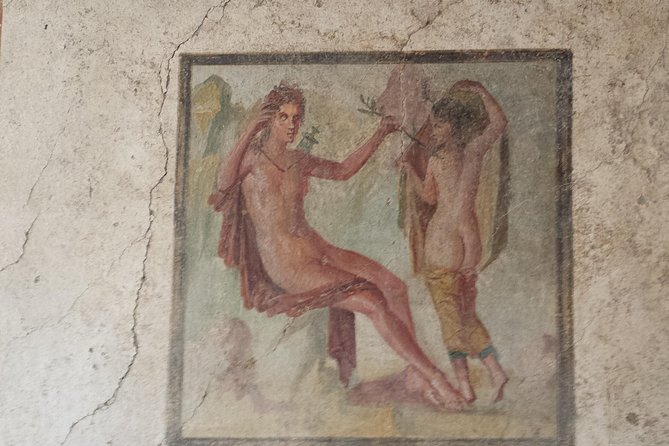
At the Terme del Foro, you’ll have about 20 minutes, and admission is included. Baths were central to Roman life, but the best part is how baths blend practicality and social culture.
Look for the way the spaces are organized—how you move between zones and how the layout supports routines. Even without deep architectural knowledge, you’ll start to feel the rhythm of daily bathing and conversation.
Downside to watch for: bath areas can be visually complex. In a short time window, you may need to choose one or two features to focus on rather than trying to absorb everything at once.
Via dell’Abbondanza (main road): Pompeii’s street-level view
You’ll spend about 20 minutes at Via dell’Abbondanza, the main road, with admission included.
This is where Pompeii clicks for many people. Streets aren’t just pathways; they’re the arteries of commerce and neighborhood identity. Your guide can help you connect storefront logic, street placement, and how people would have navigated the city day-to-day.
If you like walking tours, this section is usually satisfying because you’re seeing Pompeii as a lived-in place, not only as a set of monuments.
Teatro Grande: comedies, tragedies, and how people gathered
At Teatro Grande, the tour allocates 20 minutes. Admission is included for this stop.
Theaters are perfect for a guided sunset walk because you can imagine movement: people arriving, finding seats, and gathering attention in one place. This stop is more than “a building remains.” It’s about what the city did for entertainment and public storytelling.
If you’re a theater fan, try to read the space like an audience would. Even with limited time, you can spot how sightlines and open areas guide attention.
Lupanar: understanding entertainment with sensitivity
The Lupanar (an ancient house of entertainment) is another 20-minute stop, with admission included.
This is the part of Pompeii that’s hardest to talk about casually, but it’s also one of the most historically revealing. Your guide’s role matters here: good explanations help you understand the context without turning it into shock value. In a private setting, you can ask questions and keep the tone grounded.
Considerations:
- This stop can feel intense if you’re sensitive to adult-themed history.
- In a short tour, you won’t get a full scholarly lecture, but you will get enough to connect the site to how the city functioned socially.
Casa del Poeta Tragico: mosaics that make the home feel real
Next is Casa del Poeta Tragico with about 10 minutes, admission included. This stop is known for its mosaics, and the short time box works because it encourages you to focus on the artwork rather than touring every corner.
Mosaics weren’t only decoration; they communicated identity, taste, and story. If you keep your eye on how floor art relates to foot traffic and room placement, you’ll get a clearer sense of how daily life moved through the space.
Casa del Cinghiale: mosaics and architecture in a quick snapshot
You’ll have about 10 minutes at Casa del Cinghiale, admission included. This is another mosaic-and-architecture stop.
Because the time is short, you’ll get the most from this stop by picking one feature to “read.” For example, focus on the mosaic panel you find most striking, then connect it to the room it sits in. Your guide should help you interpret what you’re seeing, so you don’t just treat it like a photo stop.
Tempio di Venere and Tempio di Giove Capitolino: finishing with the Forum’s spiritual layer
The tour includes two quick temple stops:
- Tempio di Venere (about 5 minutes, admission included)
- Tempio di Giove Capitolino (about 5 minutes, admission included), described as part of the Forum’s temple zone
These are brief, but they help you close the loop. You see how the Forum wasn’t only civic space—it also had a spiritual layer that reinforced authority and communal identity.
In 5 minutes, you’re not trying to become an expert. You’re trying to notice placement and how temples relate to streets and gathering spaces.
2–3 hours that leave you with meaning, not just photos
A sunset Pompeii tour works best when it helps you assemble the city into themes. This one does that by pairing big civic and street landmarks with homes and entertainment sites.
By the end, you should feel like you can answer questions like:
- Where did people gather and act as a community?
- How did the city support daily routines like bathing, shopping, and entertainment?
- How did homes project identity through art like mosaics and frescoes?
If you want your first Pompeii visit to feel organized, this format is strong. You’ll see major areas without turning it into an exhausting whole-day hike.
And if you return later for deeper wandering, you’ll know what to hunt for.
Who this private Pompeii sunset tour is best for
This experience is a good match if you:
- Want Pompeii at sunset to ease heat and crowd pressure
- Prefer an English-speaking official guide who can explain what you’re seeing
- Like a structured route that hits the essentials in 2 to 3 hours
- Want a private group so you can ask questions and move at a comfortable pace
You might choose something else if:
- You’re the type who wants long, slow exploration without time boxes
- You plan to spend extra hours shopping or stretching the day well past sunset
- You’re trying to do Pompeii extremely cheaply (since guide value and skip-the-line support cost money)
Should you book this Pompeii sunset tour?
Yes, if you want Pompeii to feel readable. The price makes sense when you value an official guide, a tight route, and reduced waiting through skip-the-line support—especially in warmer months when sunset timing matters.
Be sure you plan for the one big variable: the main Pompeii Archaeological Park entry ticket isn’t included. If you handle that up front, the tour becomes a smooth, focused way to see the Forum core, bath areas, major streets, and the mosaic-rich homes that people remember.
If you’re celebrating a first visit, coming with limited time, or you simply hate wasting time standing around in a line, this private sunset approach is a smart bet.
FAQ
Is this tour guided?
Yes. You get a guided tour with an official tourist guide in English, and it is private to your group.
How long is the Pompeii sunset tour?
It runs about 2 to 3 hours (approx.).
Do I need to buy an entrance ticket?
You do need an entrance ticket for Pompeii Archaeological Park (the main stop). Tickets are included for several later stops such as the Temple of Apollo, the Forum, Granai del Foro, Terme del Foro, Via dell’Abbondanza, Teatro Grande, Lupanar, and multiple temple and house stops.
Where is the meeting point?
The tour starts at Pompei-Porta Marina (scavi80045), Pompei, Metropolitan City of Naples, Italy, and ends back at the meeting point.
Is the tour private or shared?
It’s private. Only your group will participate.
What is the cancellation policy?
You can cancel for a full refund up to 24 hours before the experience start time. Free cancellation is available, and service animals are allowed.