REVIEW · POMPEII
Discover Pompeii on this Guided Walking Tour of the Buried City
Book on Viator →Operated by Gray Line I Love Rome by Carrani Tours · Bookable on Viator
Pompeii hits fast when you have a guide. This 2-hour walking tour is built for people who want the big picture quickly: you get skip-the-line entry plus an expert walkthrough of the UNESCO-listed ruins and the disaster that froze daily Roman life in time.
What I like most is the combination of a professional guide in your language and headsets, so you’re not squinting across a crowd just to catch one sentence. One thing to plan for: language options can depend on minimum participant numbers (especially for French and German), so I’d double-check your chosen language close to departure.
In This Review
- Key things to know before you go
- Pompeii, in 2 hours: what you actually get out of this format
- Where the tour starts and how the pacing stays manageable
- Pompeii Archaeological Park: the setting that makes the story click
- Early cultures and a city that grew by mixing peoples
- Learning Roman daily life without feeling lost among the stones
- Vesuvius context: the volcano behind the plateau
- Language options and headsets: how to protect your experience
- Price and value: what $63 buys you in real time
- Practical tips so your Pompeii walk stays enjoyable
- Should you book this Pompeii guided walking tour?
- FAQ
- How long is the Pompeii guided walking tour?
- What’s included in the ticket price?
- What languages are available for the guided tour?
- Are audio guides available, and in which languages?
- Where do I meet the tour, and where does it end?
- Is pickup and drop-off included?
- What is the cancellation window for a full refund?
Key things to know before you go
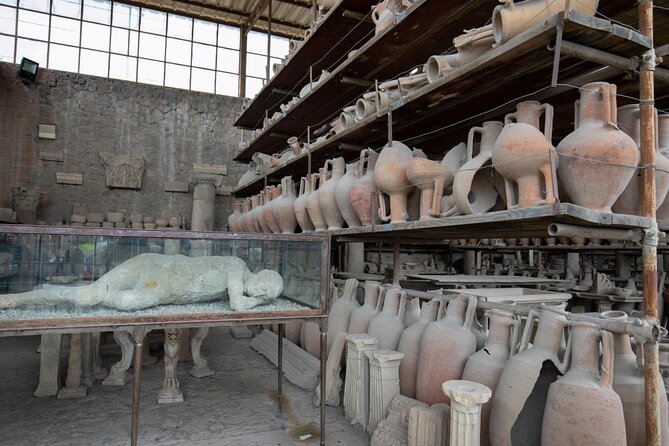
- Skip-the-ticket-line setup so you lose less vacation time
- Max 15 people for a small-group feel
- Headsets included, which really matters in busy ruins
- Guides available in English, Spanish, German, French
- Audio guides in extra languages depending on the season
- Mobile ticket plus admission included for a smoother start
Pompeii, in 2 hours: what you actually get out of this format
A short guided walk can be the best way to enjoy Pompeii, if your goal is understanding, not just wandering. With this tour, you’re not trying to decode everything alone. Instead, you follow a guide through the remains of the city and come away with a clearer sense of how the Roman world worked day to day.
You’ll also get context for why Pompeii is so unforgettable. Your guide ties the city to the volcano that caused the catastrophe, so the ruins don’t feel like random stone blocks. They feel like a place with a location, a population, and a timeline.
One practical upside: because the tour is only about 2 hours, you’re far less likely to get “ruin fatigue.” You’ll still see plenty, but you’ll keep moving with a purpose.
If you're still narrowing it down, here are other tours in Pompeii we've reviewed.



Where the tour starts and how the pacing stays manageable
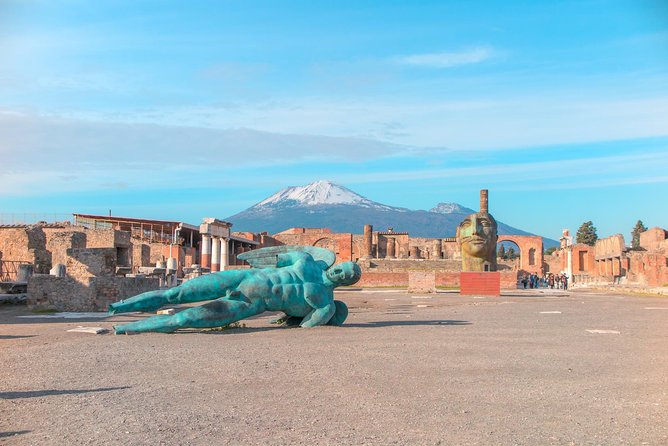
The meeting point is Piazza Esedra, 2, 80045 Pompei NA, Italy, and the tour ends back there. That round-trip “back to base” format helps you plan your day, especially if you have Naples on your schedule right afterward.
The time investment is straightforward: about 2 hours walking. That’s long enough to feel like you had a real Pompeii experience, but short enough that you’re not stuck all afternoon in your feet. For many people, that’s the sweet spot.
Also note the group size limit of 15. Smaller groups tend to move more smoothly in tight areas. It’s not silent or private, but it usually avoids that chaotic, accordion-style crowd shuffle you get with very large tours.
Pompeii Archaeological Park: the setting that makes the story click
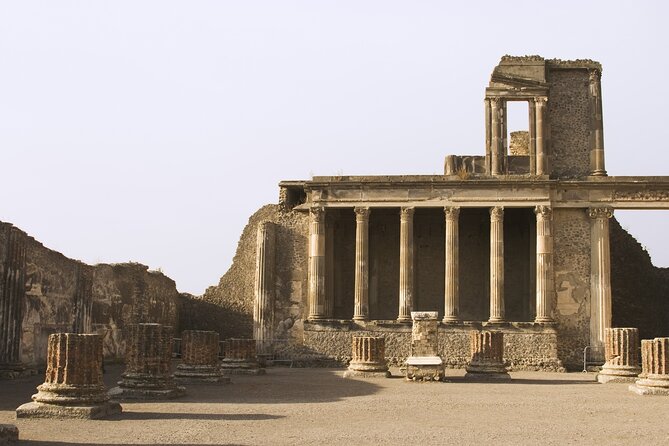
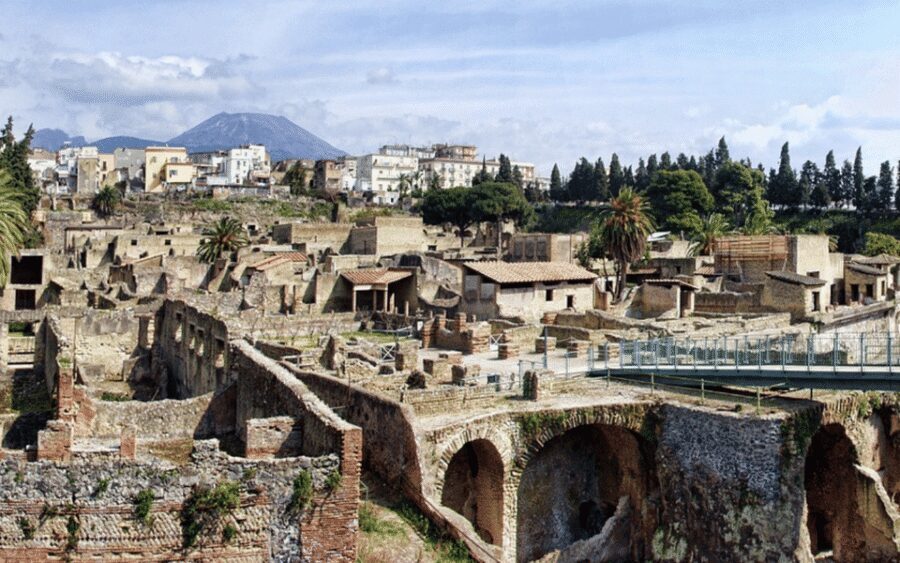
Your guide starts you at the Pompeii Archaeological Park, and the opening explanation matters. Pompeii is described as a city on a plateau formed by Vesuvius lava flows. That one detail helps you understand why the city looks the way it does and why this spot became so important in antiquity.
You’ll also hear how Pompeii shaped itself around the wider geography. The city dominated the valley around the Sarno River, and the river delta—right by the coast—hosted a busy port. So Pompeii wasn’t just inland life. It was connected to trade and movement, which is part of why people lived, worked, and built there in a big way.
Then comes the “wait, how did it begin?” piece. The origins of the city aren’t fully certain, but the oldest traces point to the 7th–6th centuries BC, when tuff walls (called pappamonte) were built to enclose about 63.5 hectares. That gives you a scale: this wasn’t a tiny village that later became famous. It had structure early.
Early cultures and a city that grew by mixing peoples
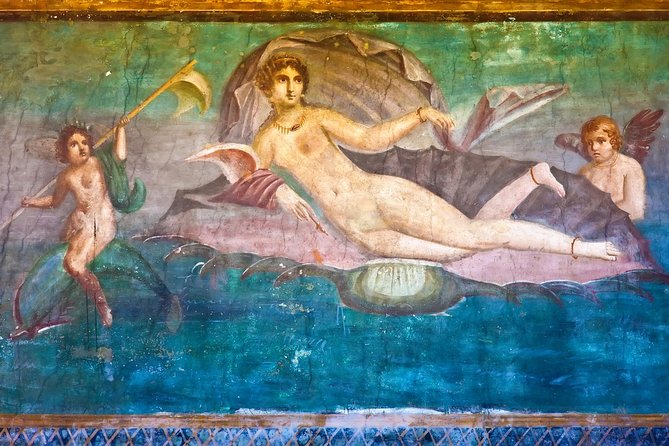
One of the most useful things a guide can do in Pompeii is explain how a city becomes a city. Here, you’re given that background: Pompeii’s development involved a mixed population that included Etruscans, Greeks, and other Italic peoples.
For you, this matters because Pompeii isn’t just one culture frozen in stone. It’s a real place where influences layered over time. When your guide talks about the city’s layout and purpose, it makes more sense once you know it grew through cultural mixing rather than one “single starting point.”
You’ll also get a sense of the timeline: earliest traces in the 7th–6th centuries BC, then centuries of life leading up to the eruption. That framing makes the ruins feel less like a museum display and more like a living community that had momentum.
Learning Roman daily life without feeling lost among the stones
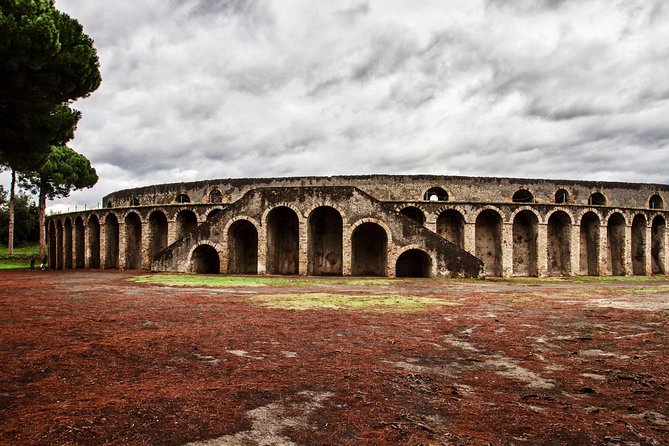
This is billed as an “insider’s look” at the Romans’ daily lives, and the way it’s delivered is key. Because your route is guided, the story is organized for you. You’re not just staring at remains; you’re following an explanation that connects people, place, and routine.
At Pompeii, that kind of narration is everything. Ruins can look similar from a distance, especially when you’re moving quickly. But when a guide connects what you’re seeing to how Romans lived, you start noticing patterns: how daily life fit into the city’s setting and how the city functioned as a whole.
And because the ruins are part of a UNESCO-listed area, your guide is also effectively translating significance. The site isn’t only about tragedy. It’s about preservation—how the eruption stopped normal life and left a snapshot for modern visitors to interpret.
Small timing note: the tour is about 2 hours, so you won’t get an all-day, every-corner scan. Instead, you’ll get the most important themes explained clearly.


Vesuvius context: the volcano behind the plateau
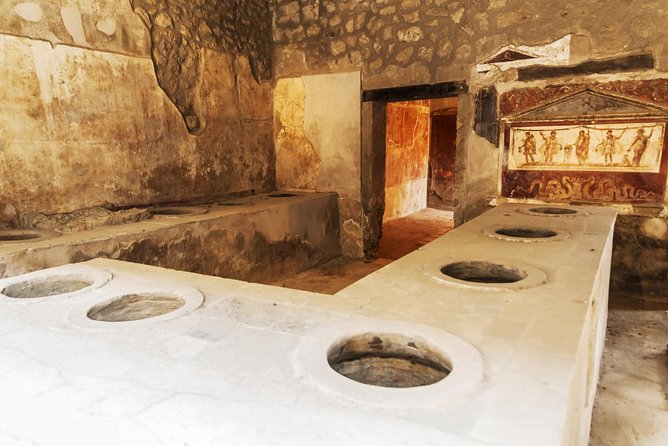
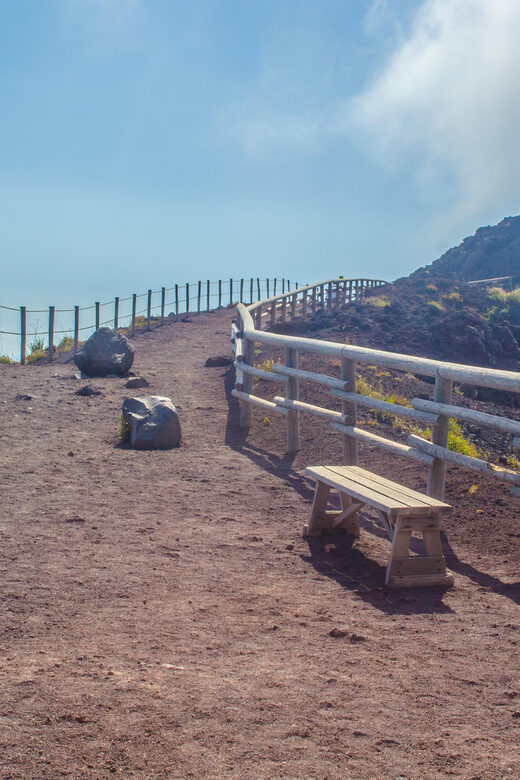
Even though Pompeii is the main focus, Vesuvius is the unavoidable character in the story. The tour description explains Vesuvius as a somma-stratovolcano on the Gulf of Naples in Campania, roughly 9 km (5.6 mi) east of Naples.
You’re also told the shape of the volcano isn’t simple. Vesuvius is described as a large cone partly encircled by the steep rim of a summit caldera, formed by the collapse of an earlier, much higher structure. In practice, this means your guide isn’t just repeating that Vesuvius erupted. You’re given a clearer model of what kind of volcano it is and why the eruption mattered to the landscape.
Why this helps you: when you understand the volcano’s structure and its lava connection to Pompeii’s plateau, the ruins stop feeling random. They become a direct result of geology and location, not just a dramatic historical caption.
Language options and headsets: how to protect your experience
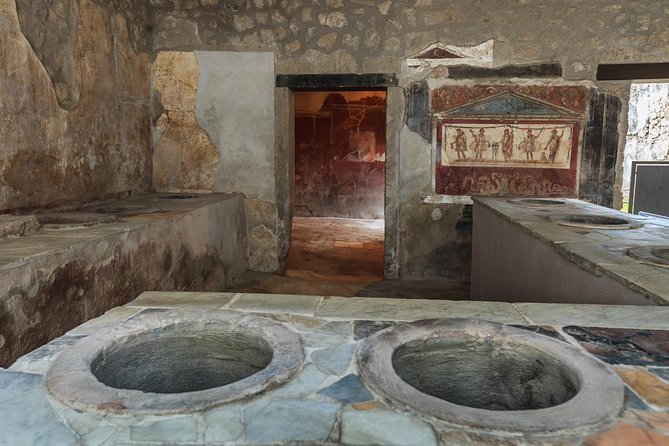
This tour runs with professional guides in English, Spanish, German, and French. On top of that, headsets are included, which is a big deal in a busy archaeological area. It means you can hear your guide without constantly fighting for position.
Audio guides are also included in additional languages, but the availability shifts by season:
- November to March: audio guides in Italian, Portuguese, Chinese, Russian, Japanese
- April to October: audio guides in Italian, German (Mondays to Fridays), French, Portuguese, Chinese, Russian, Japanese
So if you want language coverage beyond the live guide, plan around the time of year you’re going. That’s an easy way to avoid disappointment.
One more language consideration is explicitly stated: for French and German, a minimum of 10 participants is required to confirm the tour in that language. If the minimum isn’t met, the tour is conducted in English. That’s not something you want to learn after you’re already there, so if you’re counting on a specific language, keep an eye on the language confirmation timeline.
Also, you’ll be asked for full passenger names at booking and you should bring a valid ID/passport for entry verification. That’s the kind of detail that keeps your morning smooth.
Price and value: what $63 buys you in real time
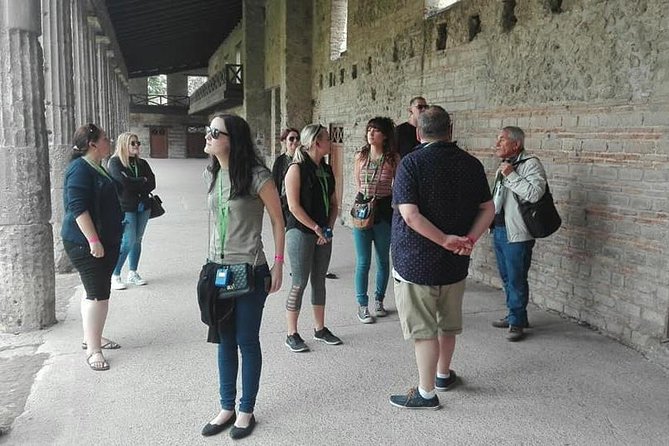
At $63 for an experience that’s about 2 hours, the value is mainly in three things you get included:
- Admission ticket included
- Headsets included
- A professional guide in multiple languages
The skip-the-line promise also matters. If you’ve ever wasted time at a major site where tickets are the bottleneck, you already know why this is valuable. Even if the difference isn’t huge in minutes, it’s the difference between arriving on a relaxed schedule versus starting your Pompeii day stressed.
This tour is a good fit if you want to understand Pompeii instead of only collecting photos. If you’re someone who benefits from a guided storyline—who wants to know what you’re looking at and why—it’s a fair way to spend time without trying to “DIY” the entire site.
If you’re mainly there for unstructured wandering, you might prefer a different approach. But for most people, a short guided format is the best use of limited vacation hours.
Practical tips so your Pompeii walk stays enjoyable
A few small moves can help you get more out of the time you’re given:
- Wear comfortable shoes. Pompeii involves a lot of uneven surfaces, and the tour is only 2 hours, so you won’t have a long recovery break.
- Use the headsets right away. If they feel awkward at first, adjust them early so you don’t miss the opening context.
- If your language matters, treat the French/German minimum-participant rule seriously and confirm as instructed.
- Bring your ID/passport and ensure the names on your booking are correct. It’s listed as required for entry verification.
And mentally, go in with the right goal: you’re not trying to “see everything.” You’re trying to understand the city’s place in the Roman world and the disaster that preserved it.
Should you book this Pompeii guided walking tour?
I’d book it if you want Pompeii explained in a guided, time-efficient way. The combination of a small group (up to 15), headsets, admission included, and a guide in English/Spanish/German/French makes it practical, especially if you hate ticket-line delays.
Skip booking only if you’re specifically planning for an ultra-custom, slow, independent itinerary and don’t care about guided context. For everyone else, this is one of the more sensible ways to get a meaningful Pompeii experience in a short window.
FAQ
How long is the Pompeii guided walking tour?
It lasts about 2 hours.
What’s included in the ticket price?
Your ticket includes the Pompeii admission and you also get headsets and a professional guide.
What languages are available for the guided tour?
Guides are available in English, Spanish, German, and French.
Are audio guides available, and in which languages?
Yes. Audio guides are available in Italian, Portuguese, Chinese, Russian, and Japanese (November to March), and in Italian, German (Mondays to Fridays), French, Portuguese, Chinese, Russian, and Japanese (April to October).
Where do I meet the tour, and where does it end?
You meet at Piazza Esedra, 2, 80045 Pompei NA, Italy, and the tour ends back at the same meeting point.
Is pickup and drop-off included?
No. Pick up and drop off are not included.
What is the cancellation window for a full refund?
You can cancel up to 24 hours in advance for a full refund.