REVIEW · POMPEII
Guided Private Tour in Pompeii
Book on Viator →Operated by Capri Top Tours · Bookable on Viator
Pompeii gets real with the right guide. This private tour uses an archaeologist’s lens to show how ordinary Romans ate, bathed, shopped, and debated, block by block. You don’t just see ruins—you follow the rhythm of a Roman day.
I especially like two things: the queue-smart entrance at Porta Marina Inferiore, and the way the route stays grounded in daily life rather than random highlights. It’s the kind of guiding that helps the place click.
The only real catch is time. At about 2 hours 30 minutes, you’ll cover major areas, but you won’t linger for an extended study of every single room or fresco.
In This Review
- Key points to know
- Entering Pompeii Through Porta Marina Inferiore
- What an Archaeologist Guide Changes (and Why You’ll Feel It)
- A 2.5-Hour Route That Hits Real Roman Priorities
- The Streets, Theatres, and the First Sense of Entertainment
- Temple of Isis, a Found-Reason House, and Pompeii as an Archaeology Story
- Termopolio di Vetuzio Placido: Roman Fast Food with Frescoes
- Stabian Baths: How Romans Spent Time, Not Just Water
- Piccolo Lupanare: The Brothel District, Straight and Historical
- Casa del Fauno and the Roman Villa Pause with Wine
- Basilica, Apollo’s Sanctuary, Venus, and the Forum’s Religious Pulse
- Jupiter’s Sanctuary, the Macellum Market, and the Real Food Picture
- The Main Square: Foro de Pompeya and the City’s Daily Center
- Price and Logistics: Does $326.72 Per Group Make Sense?
- Who This Tour Fits Best
- Should You Book This Pompeii Private Tour?
- FAQ
- Where do we meet for the tour?
- How long is the guided private tour?
- How many people are in a group?
- Is the Pompeii entrance ticket included in the price?
- What’s included besides the guide?
- What are the opening hours for this experience?
- Can I cancel and get a full refund?
Key points to know
- Archaeologist guide: you get expert context and site-specific explanations, not generic storytelling
- Smart start at Porta Marina Inferiore: designed to help you avoid the worst lines and get a good initial view
- Roman “day” stops: baths, street food, a market, the forum area, and a villa garden break
- Theatre view, not full access: the Big and Little Theatres are seen from a panoramic point since access isn’t available
- Even the uncomfortable parts: the Piccolo Lupanare is included as a brothel-area stop
- Max 5 people: private format with enough flexibility to match your pace
Entering Pompeii Through Porta Marina Inferiore
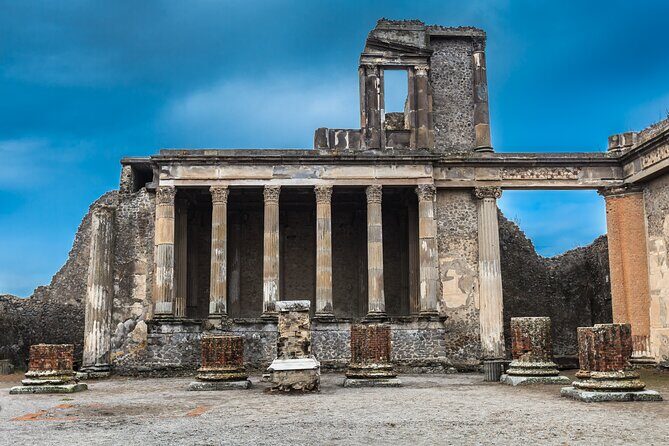
Your tour starts at Ristorante Suisse in Piazza Esedra (10/13), right in the Pompeii area where it’s easy to orient yourself. From there, you’re set up to enter Pompeii through Piazza Esedra and the Porta Marina Inferiore entrance. That’s a practical choice. Pompeii can have bottlenecks, and arriving via a route designed to reduce waiting time means you spend more of your limited hours walking and less standing still.
Before you even get into the deeper streets, you get that early “I’m here” moment: you can see the ancient port area from the approach. It matters because Pompeii isn’t an isolated museum. It was a city tied to trade and movement. Seeing that connection early helps the forum and markets later feel like part of one system, not a list of disconnected stops.
If you’re trying to maximize your first visit, this kind of start also gives you momentum. You’ll be in motion quickly, and once you’re moving, the rest of the tour’s pacing makes more sense.
Other private and VIP Pompeii tours
What an Archaeologist Guide Changes (and Why You’ll Feel It)
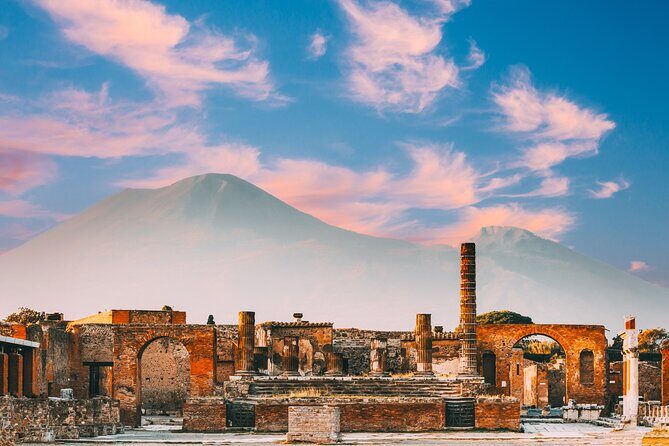
This is led by an authorized archaeologist guide for about 2.5 hours, and that difference shows up in how the stops are explained. Instead of treating Pompeii like a set of pretty backdrops, your guide uses what you’re seeing to explain Roman life—everyday routines, public spaces, and what people did for fun, food, and community.
One good sign here: the tour is built around function. You’ll walk from where people talked and voted (the forum area) to where people washed up and socialized (public baths). You’ll go to a place associated with street food and frescoed interiors, then shift to the food market. The goal isn’t to cram. It’s to show cause-and-effect: where you ate, where you shopped, where you rested, and where politics and religion shaped daily behavior.
In the feedback, Toni is repeatedly credited for making the city “click” through story-driven explanations and careful preparation. That’s the kind of guiding that reduces the mental effort of trying to interpret ruins on your own. You’ll follow along because you’ll know what you’re looking at and why it existed in the first place.
A 2.5-Hour Route That Hits Real Roman Priorities
Pompeii is huge, so the value of this tour is not just access—it’s prioritization. In about 150 minutes, you’ll cover a lot of ground across different parts of the city: entertainment, worship sites, baths, a brothel district area, luxury housing, and the core public forum spaces.
The route also makes smart tradeoffs. For example, the theatre stop is set up as a panoramic view rather than full access, because access isn’t available at the moment. That’s a common reality at Pompeii, where some areas can be closed or restricted. The tour doesn’t pretend around it; it adjusts so you still get the sightline and the context without wasting your time.
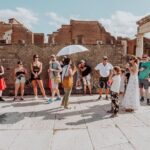
This is where small-group format helps. You’re capped at up to 5 people, so you can ask questions and keep moving at a pace that works for you. If you like a brisk, efficient visit, you’ll appreciate that structure. If you want more back-and-forth, private setup makes that possible.
The Streets, Theatres, and the First Sense of Entertainment
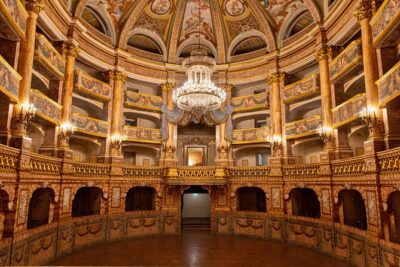
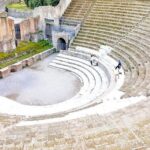
The tour includes the Teatro Grande and Teatro Piccolo area from a panoramic viewpoint. Even with limited access, you still get the sense of how important entertainment was. Roman cities ran on spectacle: performances weren’t an optional luxury. They were part of community life.
From this viewpoint, you can start imagining the space functioning—where people sat, where sound carried, and how crowds gathered. A theatre stop like this is useful early in the tour because it gives you a “culture lens.” After that, when you move toward temples and forum buildings, it’s easier to see how public life fit together: religion, politics, and entertainment all occupied the same urban stage.
If you’re expecting a full theatre walk-through, manage expectations. The tour’s approach is visual and interpretive, not a long linger in seating sections.
Temple of Isis, a Found-Reason House, and Pompeii as an Archaeology Story
Next up is Tempio di Iside. What makes this stop interesting is that you don’t just look at the temple setting—you also visit a house right in front of it, tied to why important materials were found. The wording is a bit clunky in the tour description, but the point is clear: Pompeii’s archaeological story is part of the experience here.
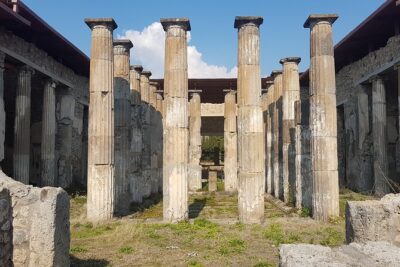
That matters because it changes your mindset. Pompeii isn’t only about what Romans did. It’s also about how modern archaeologists figured out what happened and where. By linking the temple area to the discovery context, your guide can explain how digs and finds shape our understanding of daily life.
In practice, this is one of those stops where a good guide prevents “standing and guessing.” You’ll have a reason for what you’re seeing and a framework for interpreting the nearby remains.
Other guided tours in Pompeii

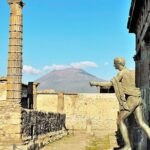
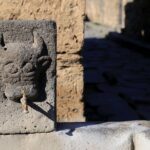
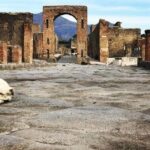
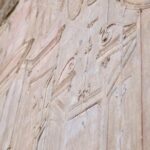
Termopolio di Vetuzio Placido: Roman Fast Food with Frescoes
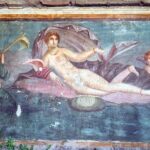
Then comes one of my favorite types of stops in Pompeii: the street-food angle. The Termopolio di Vetuzio Placido is included as a fast-eat stop with impressive frescoes. Termopolia weren’t fine dining. They were quick, casual places for meals—easy stops for workers and locals.
This is also where you’ll understand Roman tastes in a more concrete way. The tour is designed to include a local bakery experience too, with freshly baked bread and Roman-style snacks. The guide connects it back to ingredients and cooking techniques used in ancient Rome, so you’re not just eating—you’re learning what those foods likely represented.
When you visit a termopolio, look for the painted surfaces and the layout that supports speed. Even if you don’t read every detail, the structure tells you how food was served and consumed. Pair that with your bakery tasting, and it becomes one of those “oh, that makes sense” moments.
Stabian Baths: How Romans Spent Time, Not Just Water
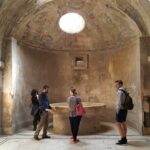
At the Stabian Baths (Terme Stabiane), you’ll get about 20 minutes. This is a public spa healing complex, and the framing is practical: how people stayed safe and comfortable in Roman life, through bathing routines and communal spaces.
Public baths weren’t only about hygiene. They were social hubs. People met, talked, cooled off, and passed time. A guided visit helps you interpret the building without needing a background in Roman engineering.
Here’s the practical reason I like this stop: Pompeii can be overwhelming. Baths give you a clear “routine” anchor. Once you understand how a bath complex worked, other parts of the city—like where people gathered in public—start feeling more connected.
Wear comfortable shoes. Bath areas can involve uneven ground and steady walking, and this stop is timed so you can take it in without rushing through.
Piccolo Lupanare: The Brothel District, Straight and Historical
Next is the Piccolo Lupanare, presented as the red-light district and a brothel-area visit. This part of Pompeii can feel uncomfortable, but it’s also one of the most historically informative stops on any route.
A good guide keeps it factual. You’re not there for shock value. You’re there to understand the social reality of the city, including how sex work operated in an urban setting and how the Romans built and organized spaces for it.
This is also a reminder that Pompeii wasn’t a sanitized past. It was a real city with real behaviors and real public life. If you’d rather avoid explicit framing, give your guide a heads-up. But if you want the full picture, this stop gives it to you.
Casa del Fauno and the Roman Villa Pause with Wine
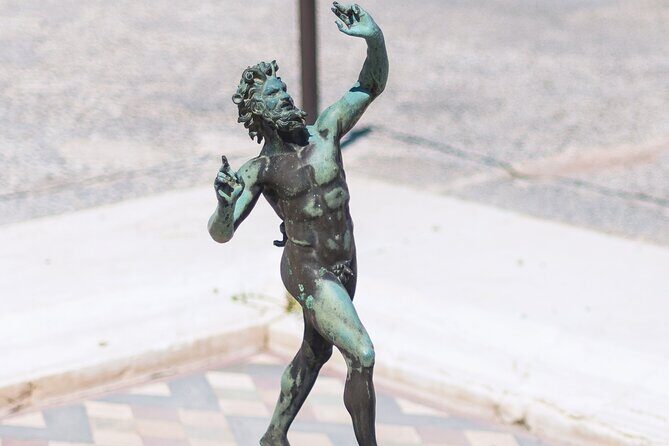
Then you hit the luxury end at Casa del Fauno—one of Pompeii’s standout examples of an upscale house. This is where the tour shifts from public city life to domestic life: decoration, comfort, status, and how wealth translated into architecture.
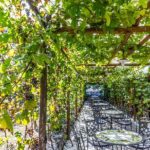
And there’s a specific experience built into this portion: time for a pause in the garden of a Roman villa, with frescoes on the walls and a glass of wine while you reflect on what you’ve seen so far. That garden moment matters because it breaks the “walk-only” tempo. Pompeii is heavy on ruins and context. A short rest helps your brain file everything into a coherent picture.
It also provides a useful contrast. When you just spent time at baths, street food areas, and market zones, a villa garden feels like a different world—even though the city is the same.
If you’re traveling with someone who loves architecture and art details, Casa del Fauno is a strong match for that.
Basilica, Apollo’s Sanctuary, Venus, and the Forum’s Religious Pulse
After the luxury-house stop, the tour heads into the kind of spaces where public power and religious meaning blended.
You’ll see Pompei La Basilica, described as the Roman parliament with high-style marble decoration. Even if parts are worn, the scale and design help you picture civic authority and public order.
Then comes Temple of Apollo (Apollo’s Sanctuary) and Tempio di Venere (Venus’ Sanctuary). These stops give you a religious “map” of the city. Romans didn’t separate worship from public life the way we tend to. Temples were part of how people organized time, identity, and community.
As you move through them, try to connect the dots: temples link civic space to belief systems; belief systems link to festivals and social cohesion. A guide’s job is to point out these connections, not only describe stone.
Jupiter’s Sanctuary, the Macellum Market, and the Real Food Picture
Next you reach Tempio di Giove Capitolino—Jupiter’s sanctuary—with a reference to public speeches in the Roman forum. This reinforces that the forum area wasn’t just a place to pass through. It was where voices mattered.
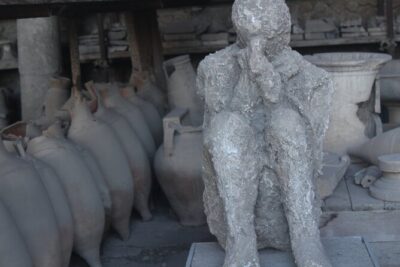
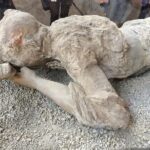
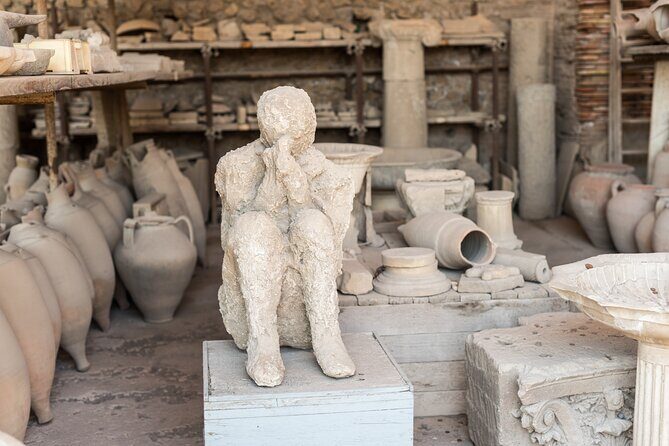
Then you transition to the everyday economy at the Macellum—the food market. You’ll spend about 15 minutes here. What makes this stop especially compelling is the inclusion of high-end fresco decoration and body casts. Those casts help you visualize what the catastrophe meant in human terms, not only as a dramatic date on a timeline. In this kind of stop, your guide’s pacing matters so the focus stays respectful and informative.
If you like food and how cultures eat, you’ll appreciate the blend of market viewing plus the earlier bakery and termopolio components. You start recognizing different eating levels: casual street meals, prepared market foods, and the daily movement of goods.
The Main Square: Foro de Pompeya and the City’s Daily Center
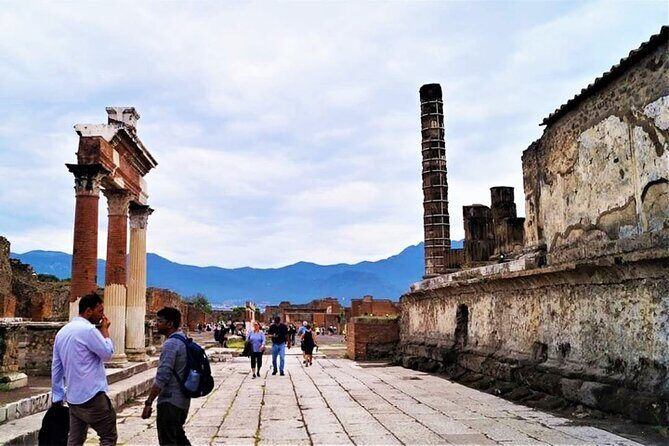
Finally, you close with Foro de Pompeya, the heart of the city and the center of activities. The forum works like a final synthesis stop. Everything you’ve seen—entertainment, temples, baths, food, and homes—starts to feel like it all belonged to one daily system.
This is also where you get a last chance to make sense of scale. Pompeii’s streets can feel like they’re all the same until you stand in the civic core. In the forum, it becomes clearer how crowds moved, how announcements and decisions happened, and why certain buildings were built to impress.
This stop tends to linger with you, because it’s the most “human” space. You can almost picture people doing regular things: meeting, arguing, eating nearby, and worshiping where they lived and worked.
Price and Logistics: Does $326.72 Per Group Make Sense?
The tour is priced at $326.72 per group for up to 5 people, lasting around 2 hours 30 minutes, with a mobile ticket included for your tour experience. The big separate line item is Pompeii Archaeological Park admission: 18 euros per person (free under 18). Tips are not included.
So is it value? Here’s the simple math.
- If you fill the group at 5 people, the guide cost works out to roughly $65 per person before the 18-euro admission ticket.
- If you’re a smaller group, like 2 people, you’re paying more per person for the private guide portion.
Where it shines is flexibility and focus. For Pompeii, paying for a guided route often beats trying to manage everything yourself in a short window—especially if you care about understanding what you’re seeing, not just taking photos.
Also, Pompeii’s entry logistics can cost time. Starting with a queue-smart approach helps you protect that limited visit window. If you hate wasting vacation hours standing in lines, this matters.
Who This Tour Fits Best
This private Pompeii tour fits best if you want:
- A guided, story-driven visit focused on daily Roman life, not random highlights
- A small group experience that works with your pace
- A route that covers major public spaces plus food and domestic life in a tight time box
It’s a strong pick for couples, small families, and friends who don’t want a bus-and-brochure experience. It also works well if you have limited hours in Pompeii and want a plan that hits the big areas without turning the day into sprint mode.
Should You Book This Pompeii Private Tour?
Book it if you want a guided Pompeii visit that explains how the city functioned day to day—baths, street food, markets, temples, and a villa break with wine. The archaeologist-led approach and small-group pacing give you better context per minute, which is exactly what you want in Pompeii.
I’d think twice if you’re the type who loves spending half a day in one detailed area, or if you’re counting every euro because admission tickets are extra (18 euros per person) and tips aren’t included. Also, the theatre area is panoramic rather than fully accessible, so adjust expectations if theatre access is your top priority.
FAQ
Where do we meet for the tour?
Meet at Ristorante Suisse, Piazza Esedra, 10/13, 80045 Pompei NA, Italy.
How long is the guided private tour?
It runs about 2 hours 30 minutes (approx.).
How many people are in a group?
It’s a private tour for your group, up to 5 people.
Is the Pompeii entrance ticket included in the price?
No. The Pompeii Archaeological Park admission ticket is not included. It’s 18 euros per person (free under 18).
What’s included besides the guide?
The tour includes an authorized archaeologist guide service, a private tour format, and highlights across the best examples of each type of building. A mobile ticket is also included.
What are the opening hours for this experience?
From 05/28/2025 to 06/16/2026, it runs Monday through Sunday from 9:00 AM to 3:00 PM.
Can I cancel and get a full refund?
Yes. You can cancel up to 24 hours in advance for a full refund. If you cancel less than 24 hours before the start time, you won’t receive a refund.