Pompeii teaches fast, then asks questions. This private tour with an expert guide is built around priority admission, so you spend less time in lines and more time inside the ruins. I also like how the guide turns daily life into a clear walk-through, with room for your questions. One catch: Pompeii admission fees are not included, and with only about 2–3 hours, you’ll need to focus on what matters most.
I really appreciate the custom pace. You’re not stuck with a rigid script, and the tour is set up for Q&A as you move between highlights, which helps a lot when you want answers fast instead of later Googling. In the best cases, guides like Romolo (and others such as Sophia or Francesco on similar tours) bring a personal energy that makes even well-worn ruins feel specific and real.
You’ll meet at Via Villa dei Misteri, 2, and the tour ends back at the same place, which makes logistics simpler than you’d think for a site this big. Expect comfortable walking footwear and a bit of sun-smart planning; even a “short” Pompeii tour is still a lot of ground.
In This Review
- Key things you’ll notice on this Pompeii private tour
- Why a Pompeii private tour beats the DIY shuffle
- Priority admission (and the ticket detail that matters)
- The 2–3 hour route: what you actually see at Pompeii
- Starting at Via Villa dei Misteri and getting your bearings
- Theatres, the square, and streets: learning the city’s rhythm
- Lupanare House: one of Pompeii’s most talked-about stops
- Roman villas and recently open areas: the bonus you’ll be glad you paid for
- Thermal baths: seeing daily wellness and routine
- Q&A time: how private pacing makes Pompeii feel personal
- Guides like Romolo, Sophia, and Francesco: why names keep coming up
- Price and value: is $98.51 per person worth it?
- Meeting logistics and getting on time without stress
- Who should book this Pompeii private tour?
- Practical tips for a smoother Pompeii visit
- Should you book? My honest take
- FAQ
- How long is the Pompeii private tour?
- Is this tour private or shared?
- Is the tour in English?
- Where do we meet for the tour?
- Are Pompeii admission fees included in the price?
- What’s included in the tour price?
- Do I need to bring a mobile ticket?
Key things you’ll notice on this Pompeii private tour
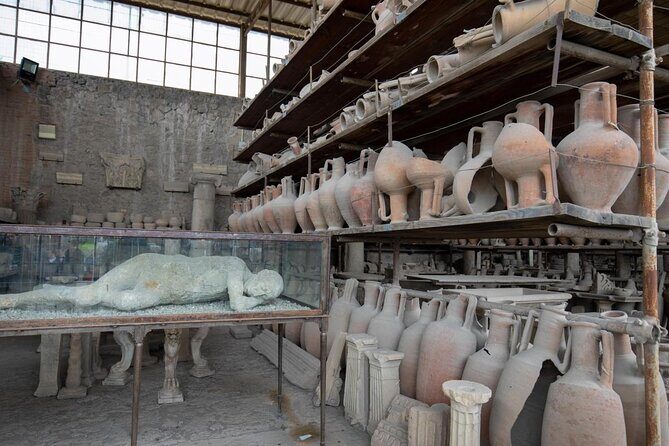
- Priority admission helps you get moving sooner and spend your limited time among the best stops.
- Expert guide stories connect monuments to everyday life, from street life to public buildings.
- Private, group-only experience means you control the pace, not the clock or a bus group.
- Room for questions makes the visit feel interactive instead of just photo stops.
- A practical 2–3 hour window that’s perfect for first-timers or anyone short on time.
- Tickets are separate because admission fees are not included, so plan that spend.
Why a Pompeii private tour beats the DIY shuffle

Pompeii is not a museum you casually wander. It’s a real city that got frozen mid-life, and that makes it both thrilling and easy to get lost in. When you go without a guide, you can still enjoy the ruins, but you often miss the “why does this matter” part that turns stone into people.
With a private expert guide, you get a structured walk that still feels personal. You’re shown major areas like theatres, the square, streets, and key houses and baths, and you’re not left to guess what you’re looking at. You also get the big advantage of time management: in Pompeii, the lines and wandering can steal minutes fast, especially if you’re trying to see the highlights before lunch.
This tour is built for a focused visit rather than an endless one. If you’re the type who likes to understand what you’re seeing while it’s right in front of you, the guided format is a win.
Other private and VIP Pompeii tours

Priority admission (and the ticket detail that matters)
Priority admission is the headline for a reason. Pompeii can have bottlenecks at entry points, and those delays are especially painful when your tour window is around 2 hours (or up to about 3, depending on your group and pacing).
Here’s the practical part: admission fees to the ruins are not included. So you’ll still need to sort your Pompeii entry tickets. The tour includes the guide service, plus the priority-arrival benefit that helps you get inside faster.
In real-world terms, I like this setup because it reduces the most annoying time-waster: standing around. One traveler described having guides like Sophia help with handling day passes and skipping the ticket line during a tight schedule, which is exactly the kind of stress you want removed when you’re paying for a guided experience.
Bottom line: bring your ticket plan. If you’re staying in the area for multiple days, you might consider how often you’ll realistically return, since you’re paying for admission either way.
The 2–3 hour route: what you actually see at Pompeii
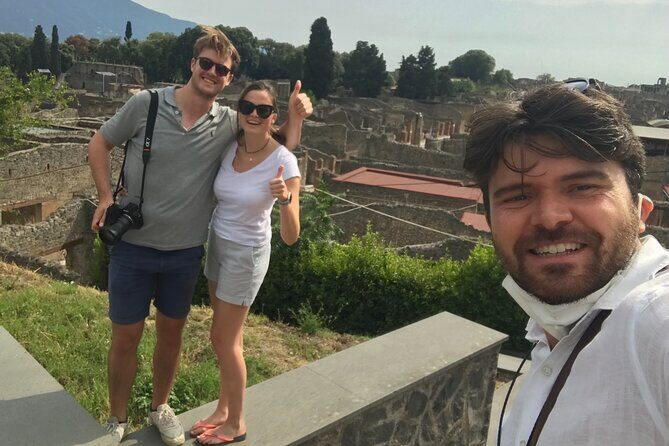
This is a single main stop tour: Archaeological Park of Pompeii. You start at Via Villa dei Misteri, 2, and you stay within the park with your guide until you circle back to the same meeting point.
Within that tight timeframe, the experience is designed to hit Pompeii’s “greatest hits” plus a few high-interest add-ons. You’ll cover major public and residential areas and learn how the city worked in daily life. It’s not a slow, leisurely stroll through everything. It’s a guided highlights pass, with enough flexibility for your group to slow down where you care most.
If you have mobility limits, ask for pacing adjustments ahead of time. One review praised how a guide accommodated older family members who needed to take it more slowly—exactly the kind of value you can’t count on with larger group tours.
Starting at Via Villa dei Misteri and getting your bearings
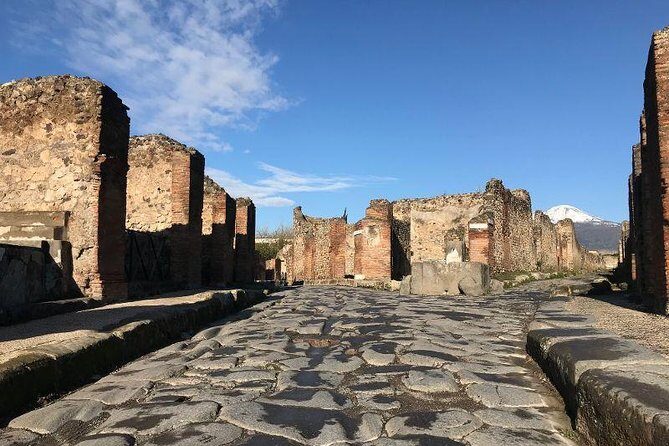
The meeting point is Via Villa dei Misteri, 2, 80045 Pompei NA, Italy. That detail sounds boring—until you show up and realize how easy it is to waste time figuring out where everyone funnels in.
Because the tour starts and ends at the same spot, it also helps you manage the rest of your day. You’re not stuck planning for a complicated end location. It’s a small thing, but it reduces the mental load when you’re already juggling trains, buses, or tickets.
When you arrive, take a minute to hydrate and check your footwear. Pompeii’s ground can be uneven, and even with a guided route, you’ll still walk between highlights. The guide can help keep your effort efficient, but your shoes still do the heavy lifting.
Theatres, the square, and streets: learning the city’s rhythm
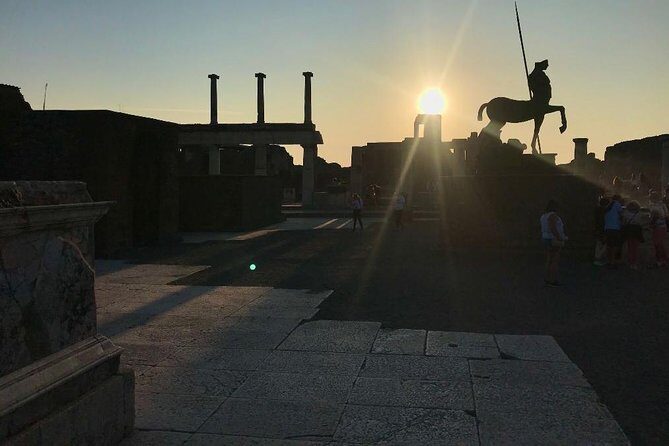
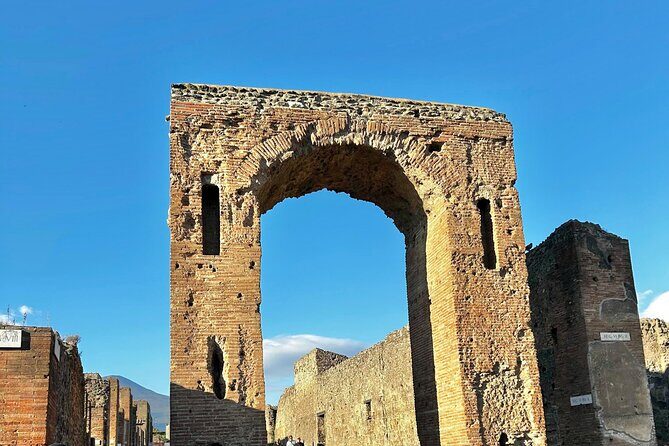
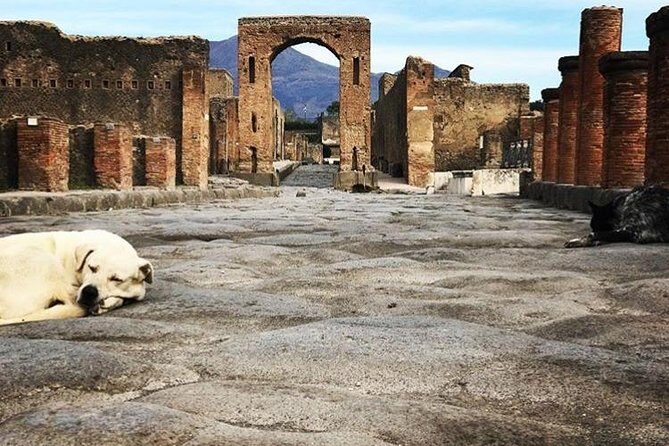
One of the strongest reasons to book a guided Pompeii tour is that the city’s layout starts to make sense when someone connects the dots for you. On this route, you’ll see the theatres, the square, and streets—places that help you understand how people moved, met, worked, and spent time.
Theatres matter because they show civic life. You’re not just looking at seating and stone walls; you’re learning what public gatherings meant in a Roman city. The square helps you imagine the flow of daily errands and social interaction. And the streets? That’s where the “it’s a living city” feeling kicks in, because roads and shop-front style spaces tell you how people experienced the city block by block.
In short: this section is how you stop thinking of Pompeii as random ruins and start seeing it as a functioning place with habits and routines.
Other guided tours in Pompeii






Lupanare House: one of Pompeii’s most talked-about stops
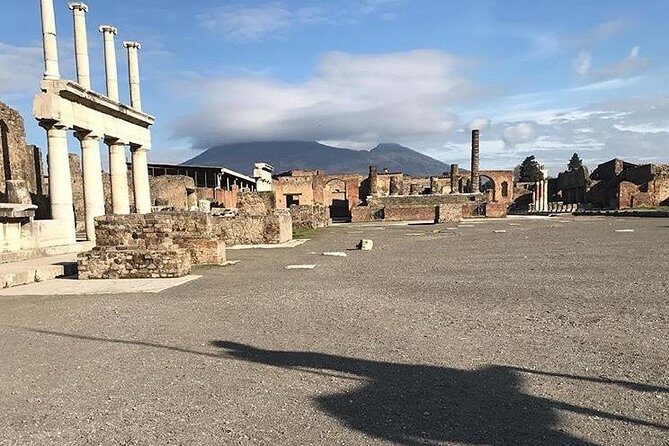
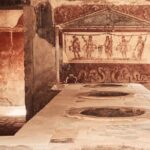
You’ll also visit the Lupanare House. This is one of those Pompeii areas that sparks curiosity fast, because it’s tied to the subject matter Pompeii is known for—commercial sex work in Roman times.
The value of a guide here is tone and context. Without interpretation, it can turn into a quick gawk-and-move stop. With a good guide, it becomes part of a broader picture: how Pompeii’s neighborhoods worked, how people used private and public spaces, and how the city’s economy shaped daily life.
If you’re traveling with teens or a mixed-age group, you might want to flag ahead of time what level of detail you want. The tour is private, so it’s more adjustable than you’d find on a larger group run.
Roman villas and recently open areas: the bonus you’ll be glad you paid for
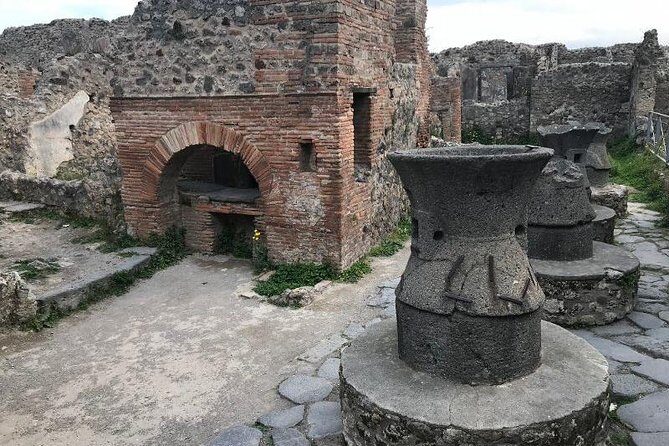
The itinerary notes Roman villas and areas recently open. That’s a real advantage if you’ve already done Pompeii on your own at least once, or if you’ve only seen the most famous postcard zones.
Newer or recently opened areas tend to change the feel of the visit. Instead of repeating the same handful of highlights, you get additional context for how Pompeii’s wealthy lived, worked, and hosted. Villas also help you compare social classes. Pompeii isn’t only about public buildings and street life; it’s also about homes, status, and architecture choices.
In one example described by a traveler, a guide helped show how areas connected to the sea and the broader geography of the bay area. Even when you know Pompeii is near the water, having someone connect the ruins to the surroundings makes it feel less abstract.
Thermal baths: seeing daily wellness and routine
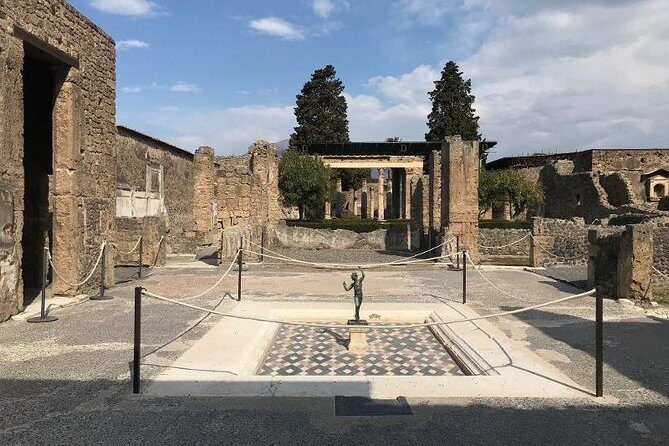
Thermal baths are another key highlight on the route. Even if you’re not a history buff, baths are one of the easiest places to understand because they’re about routine—washing, relaxing, social time, and community norms.
A guide helps you read what you’re seeing: which spaces relate to bathing, where movement would have happened, and how the layout supported that everyday rhythm. It’s the kind of stop where questions come naturally, because you’re looking at a functional system, not just ruins.
If you like learning by doing mental visualization—where people sat, stood, walked, waited—this stop is a strong one. It’s also a good reset point in a tour that otherwise piles on visuals fast.
Q&A time: how private pacing makes Pompeii feel personal
A standard tour can feel like speed-walking. This one is designed to slow down at least some of the time. The format explicitly includes time for Q&A as you take in the highlights.
That matters more than it sounds. When Pompeii throws you a curveball—symbols, architecture oddities, signs of daily work—you don’t want to wait until the end to ask. You want the explanation while you’re standing in the exact place that made it possible.
This is where I see the best value: the guide customizes to your group’s pace and interests. If you have older relatives, a wide age range, or just a preference for architecture over personal stories (or the other way around), a private setup gives you flexibility.
If you’re the type who reads signs and wants meaning, you’ll likely leave feeling like you understood more than you expected in a short visit.
Guides like Romolo, Sophia, and Francesco: why names keep coming up
From the guide examples shared in real experiences, Romolo clearly stood out for passion and depth of knowledge, plus a talent for responding to questions with meaningful context. People describe him as energetic and tailoring the pace, including when time was tight.
Sophia was praised for smooth meeting logistics and for steering visitors to areas that add perspective on Pompeii’s geography and how the sea would have factored into daily life. Francesco also received strong praise for making the experience unforgettable.
I’m not saying you must book a specific person to get a great day. What I am saying: this tour’s quality often hinges on the guide. When a guide truly cares, Pompeii feels less like a checklist and more like a guided conversation.
Price and value: is $98.51 per person worth it?
Let’s talk money plainly. The price is $98.51 per person, and the duration is about 2 to 3 hours. Pompeii admission fees are not included, so plan for that separate cost.
So is it worth it? For me, the value comes from three things you’re paying for:
- Time savings through priority admission
- Interpretation that turns ruins into a connected city story
- Private pacing, meaning fewer compromises for mixed-age groups or people who want more stops
If you can only spare a few hours at Pompeii, paying for interpretation is often cheaper than you think compared with the cost of a second day—or the frustration of feeling like you rushed through without understanding.
If you’re an advanced Pompeii enthusiast who already knows the site extremely well, you might not need a guide for every corner. But for most first-timers (or anyone returning and wanting fresh context), this price point usually lines up with getting more out of fewer hours.
Meeting logistics and getting on time without stress
The tour starts at Via Villa dei Misteri, 2, and returns there. That’s helpful because Pompeii can be disorienting once you’re inside the park area.
Also note: the experience is near public transportation. That matters if you’re arriving by bus or train and don’t want to build a parking plan into your day.
Bring a little buffer. Even if you’re good with directions, you’ll likely need time to get through any entry steps before the tour actually starts. When you’re using priority admission, you still want to be at the meeting point early enough to use that advantage.
Who should book this Pompeii private tour?
This tour fits best if you want a highlights-focused Pompeii visit with real guidance. It’s a smart choice if:
- you’re short on time and want the major monuments covered
- you like asking questions and getting answers on the spot
- you’re traveling with multiple ages and need flexible pacing
- you want a private experience where the route can shift toward your interests
It may be less ideal if your goal is to wander for hours at your own speed with zero structure. Pompeii rewards curiosity, yes, but it also rewards understanding. This tour gives you both—just within a tight window.
Practical tips for a smoother Pompeii visit
Keep it simple, and you’ll enjoy it more.
- Wear shoes you trust on uneven stone. You’ll walk more than you think.
- Bring water and plan for sun. Even winter visits can feel bright and hot once you’re in exposed areas.
- If you have questions you care about—daily life, architecture, Roman civic culture—bring them to the guide early. The Q&A time is one of the best parts.
- Plan for admission fees separately, since the guide service doesn’t include entry.
If you’re traveling in a group, share your priorities before you start so the guide can steer the route efficiently.
Should you book? My honest take
If you’re going to Pompeii once and you want to understand it without wasting time, I’d book this. Priority admission plus a private expert guide is a strong combination for a 2–3 hour visit, especially if you care about context, not just photos.
I’d also book it if your group has mixed ages or different walking needs. The private format gives you a real chance of getting a tour that feels made for your pace, not someone else’s.
The only clear reason to hesitate is the admission fees not being included. If you’re trying to build a very strict budget or you haven’t planned your entry tickets yet, that separate cost can catch you off guard. Plan that part, and the rest works well.
FAQ
How long is the Pompeii private tour?
The tour lasts about 2 to 3 hours.
Is this tour private or shared?
It is private. Only your group will participate.
Is the tour in English?
Yes, the tour is offered in English.
Where do we meet for the tour?
You start at Via Villa dei Misteri, 2, 80045 Pompei NA, Italy.
Are Pompeii admission fees included in the price?
No. Admissions fees to the Pompeii ruins are not included.
What’s included in the tour price?
The included item is the tour guide service.
Do I need to bring a mobile ticket?
A mobile ticket is provided as part of the experience.