REVIEW · POMPEII
Pompeii Archaeological Area Entrance Ticket
Book on Viator →Operated by Weekend in Italy · Bookable on Viator
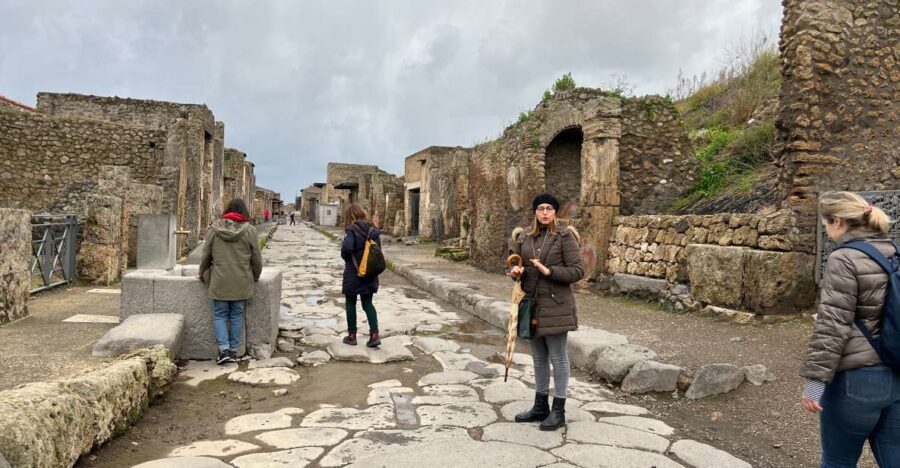
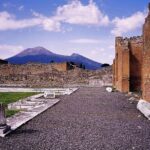
Buried cities make great time travel. This Pompeii entrance ticket turns the UNESCO ruins into a walkable, self-guided day plan, with time slots and key stops ready when you arrive. You’ll see streets, houses, and everyday details preserved by ash from Vesuvius in 79 AD.
I really like two things here. First, the ticket is designed for guaranteed skip long lines, so you can spend your limited time inside the site instead of standing around. Second, you can build your own route through the Forum, Theatre, and Lupanare (the famous brothel with erotic frescoes).
One caution: the process can be picky on the ground. If your voucher or entry instructions do not show up clearly at the ticket area, you may lose time sorting it out, and Pompeii’s signage can feel a bit chaotic once you’re in the zone.
In This Review
- Key Things I’d Focus On
- Pompeii in a Timed Ticket: What You’re Really Buying
- Choosing Your Entrance: Porta Marina vs Piazza Esedra vs Piazza Anfiteatro
- Porta Marina side
- Piazza Esedra side
- Piazza Anfiteatro side
- Porta Marina Loop: Walls, Apollo, Basilica, and Eumachia
- Piazza Esedra Highlights: Forum Baths, Houses, Thermopolium, and Fullonica Stephanus
- Anfiteatro Side Loop: Amphitheater, Odeion, Great Theater, and Temple of Isis
- Making the Most of 2–3 Hours: A Simple, Realistic Plan
- The Rules That Matter Most (Yes, You’ll Feel It)
- Price and Logistics: Is $54.44 Worth It?
- Should You Book This Pompeii Entrance Ticket?
- FAQ
- Is this a guided tour?
- How long should I plan for Pompeii with this ticket?
- Do I choose a time slot to enter?
- Where can I get a map?
- What are the main highlights I shouldn’t miss?
- What should I do if I have limited mobility?
- Are bags, backpacks, or umbrellas allowed inside?
- Can I take photos or film?
- Is this ticket refundable if I cancel?
Key Things I’d Focus On
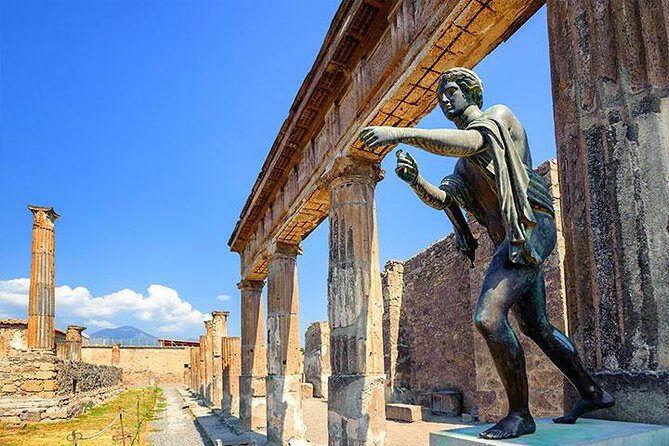
- Timed entry slots help you avoid the worst bottlenecks and start your loop sooner
- Self-guided wandering works well because Pompeii is spread over 66 hectares (163 acres)
- Route maps at the entrance help you choose a manageable path instead of getting lost
- Don’t miss the major anchors: Forum, Theatre, and the Lupanare brothel
- Plan for real logistics: voucher clarity and on-site navigation matter more than you’d expect
Pompeii in a Timed Ticket: What You’re Really Buying
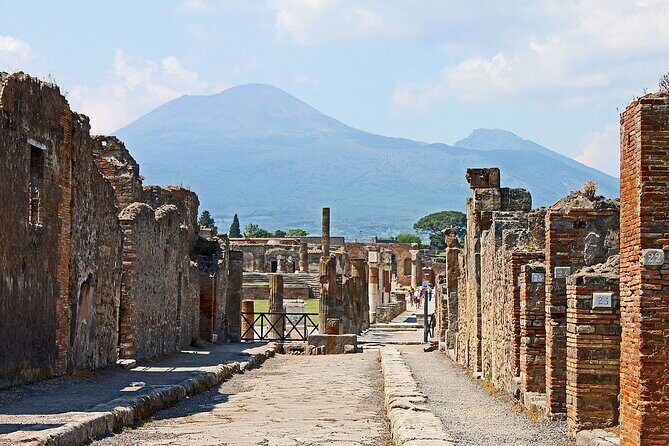
You’re not buying a guided tour here. You’re buying access—on a chosen time slot—with help getting past the slowest parts of the queue. That distinction matters. Pompeii is huge, and a rigid tour can feel like a sprint. With this ticket, you enter, grab what you need, and then explore at your own pace.
The price is $54.44 per person for entry. Whether that’s a steal or a splurge depends on how you handle two things: (1) how smoothly your ticket gets recognized on arrival, and (2) whether you actually use the time slot you booked. On a bad day—if you’re stuck waiting to sort voucher details—your “skip-the-line” value can shrink fast. On a smooth day, the value is strong because you get to spend those saved minutes walking rather than waiting.
Duration is listed as about 2 to 3 hours, but Pompeii doesn’t really do “fast.” It covers 66 hectares, and even a focused route can feel long because there’s so much to read with your eyes and absorb with your feet. If you like to stop, look closely at inscriptions, and wander into side areas, plan for closer to half a day.
Other Pompeii entry tickets and audio guides
Choosing Your Entrance: Porta Marina vs Piazza Esedra vs Piazza Anfiteatro
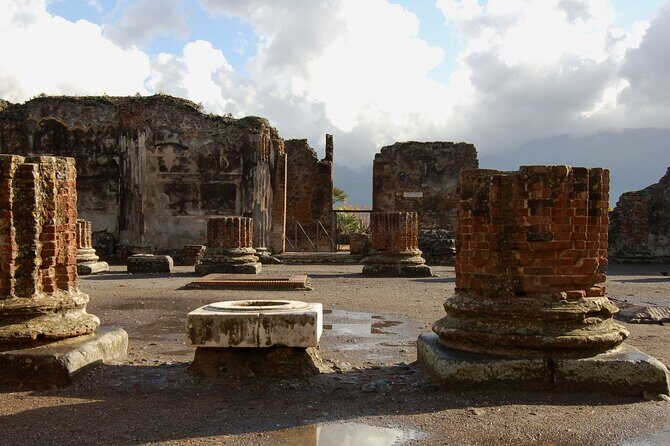
Pompeii is easier when you treat it like a set of workable loops. The ticket experience gives you a route map inside the entrance area, plus there are multiple entrance times throughout the day. The real trick is picking the starting point that matches your interests and your energy level.
Here’s how I’d choose:
Porta Marina side
This entrance sets you up for a classic “city boundary to temples” feel. You’ll pass through Porta Marina and the walls, then move into major religious and civic structures like the Temple of Apollo, Basilica, and Public Administration Buildings. It’s a good start if you want the big monuments early, before the crowds thicken and your brain starts buffering from too much Roman stone.
Piazza Esedra side
This is the “core city life” approach. You’ll start near spots connected to public life and daily routine, including the Forum Baths, Temple of Fortuna Augusta, and multiple houses (like the House of Faun and House of Cecilio Giocondo) plus commercial spaces such as a Thermopolium (a place for hot food). If you’re into how people lived, ate, shopped, and worked, this loop makes sense.
Piazza Anfiteatro side
This entrance is built for an entertainment-and-ritual day. You’ll head toward the Amphitheater, the Great Theater and Small Theater (Odeion), and you’ll also pass through areas tied to faith and streetscape around temples like Temple of Isis and the Doric Temple. It’s also the recommended entry for people with limited mobility: enter from here and limit your visit to the surroundings of the Amphitheater.
You’re also on the clock with daylight and heat. Pompeii has plenty of stone and open areas, so even when the buildings are impressive, the sun can be stubborn. Pick an entrance point, commit to a loop, and move.
A few more Pompeii tours and experiences worth a look
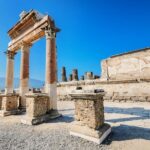

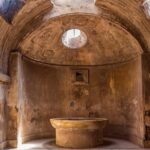
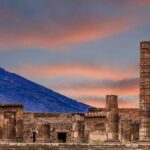
Porta Marina Loop: Walls, Apollo, Basilica, and Eumachia
Starting from Porta Marina gives you an early sense of how Pompeii organized itself—city edges, then civic spine, then the big names. You begin with Porta Marina and the walls, which helps you understand this was a defended city, not just a set of ruins.
From there, your walk trends toward major public anchors:
- Temple of Apollo: A strong “religion first” stop that sets the tone for the area’s ceremonial role.
- Basilica: Pompeii’s civic architecture shows up clearly here. Even without a guide, the scale tells you it mattered.
- Public Administration Buildings: This is the government-meets-everyday-life vibe. You’re seeing the spaces that kept the city running.
- Building of Eumachia: Another prominent structure that fits the pattern of wealthy benefactors and public visibility.
This loop is a good choice if you like symmetry and big structure. The downside is that it can feel monument-heavy. If you’re the type who wants houses and street details more than grand public buildings, you might spend extra time detouring. Still, detours are part of Pompeii’s charm. Just do them deliberately.
Piazza Esedra Highlights: Forum Baths, Houses, Thermopolium, and Fullonica Stephanus
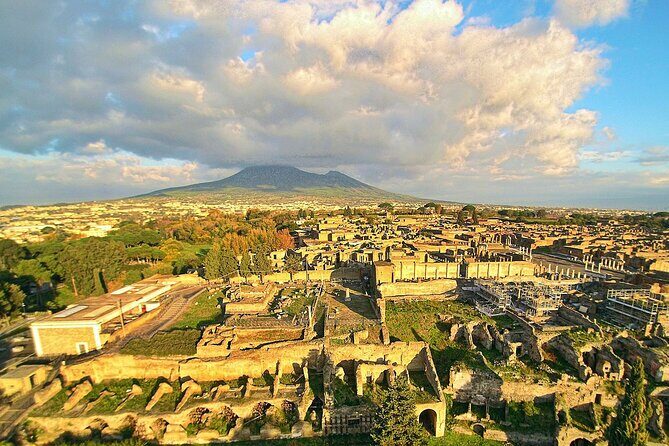
If your idea of a great Pompeii visit includes how people ate and spent money, Piazza Esedra is your friend. This starting point lines you up with public life and domestic spaces in a way that feels natural: baths and temples, then houses, then commerce and work.
Key stops on this side include:
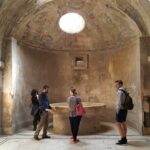
- Forum Baths: A reminder that everyday Romans built routines around bathing. Even as ruins, you can read the logic of a daily schedule here.
- Temple of Fortuna Augusta: A religious stop that complements the baths and public buildings nearby.
- House of Pansa and House of the Tragic Poet: Houses that let you shift from public space to private space fast.
- Thermopolium: A must-see if you like the food angle. This was a spot for hot food, which makes Pompeii feel less like ancient theater and more like real life.
- House of the Faun and House of Cecilio Giocondo: More evidence of how home life was designed, decorated, and status-driven.
- House of Citharist: Another house that keeps the “what daily life looked like” theme going.
- Fullonica Stephanus: A cloth-launderer site. You’re not just seeing fancy stuff. You’re seeing labor.
This loop also makes it easier to work in Pompeii’s biggest headline attractions. The Forum and the Theatre are central to a lot of routes, and the famous Lupanare (brothel) is one of the most talked-about sights on the site. You can plan your time so those anchors don’t become last-minute stress.
Possible drawback: this side can make you “route-bind.” Once you commit to houses and street-level stops, it’s easy to get swept up and forget you still have the major sights ahead. Keep moving. Use the map. Allow stops, but don’t turn every doorway into a ten-minute archaeology lecture.
Anfiteatro Side Loop: Amphitheater, Odeion, Great Theater, and Temple of Isis
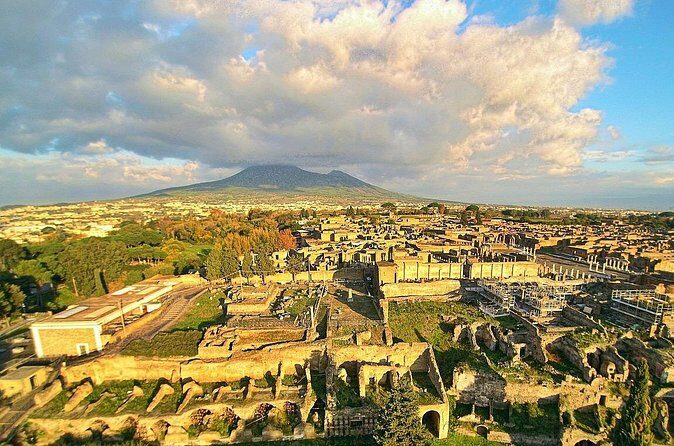
Starting at Piazza Anfiteatro shifts your Pompeii day toward public performance and ritual settings. You begin moving toward the Necropolis of Porta Nocera and Porta Nocera and walls, which adds a cemetery-and-boundary feeling before you reach the entertainment cluster.
Then comes the star area:
- Garden of the Fugitives: A memorable stop that adds a story-like element to the walk.
- House of the Garden of Hercules and House of Octavius Quartio: More domestic stops that keep the city human.
- House of Venus in the shell: A standout name that signals a strong decorative style and a house worth lingering near.
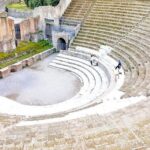
- Amphitheater: The anchor. You see why this city staged crowds and spectacle.
- Small Theater (Odeion) and Great Theater: Two stages, two scales. It’s a neat way to compare how Romans entertained different kinds of audiences.
- Temple of Isis: A faith setting that broadens the picture beyond the local civic order.
- Triangular Forum and Doric Temple: Smaller anchors that help you keep structure in your route rather than zig-zagging constantly.
This loop works especially well if you want the “see it all” feeling without racing between distant points. It’s also the one recommended for limited mobility: enter from here and limit your visit to the surroundings of the Amphitheater.
If you’re short on time, one caution is that the entertainment cluster can keep you too long. It’s easy to think, I’ll just take a quick look at the amphitheater and then move on. Then you realize you’ve been circling for a while. Set a personal rule: pick one major stop, then move on to the next anchor before the heat and crowds press in.
Making the Most of 2–3 Hours: A Simple, Realistic Plan
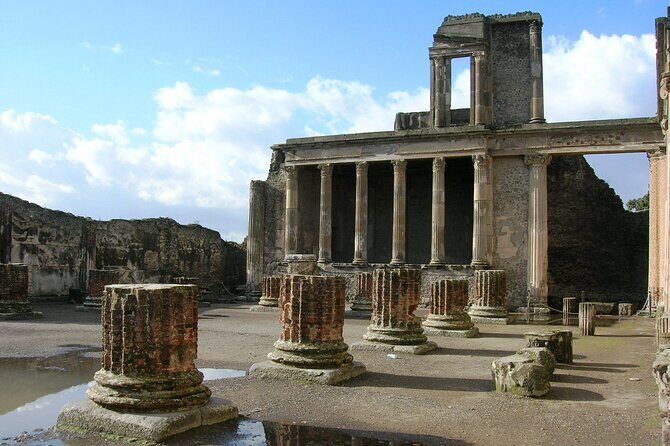
Pompeii isn’t “one attraction.” It’s a city-scale site. The ticket sets you up to explore freely, but your success depends on how you manage time on a place this big.
Here’s a practical way to approach it:
- Choose an entrance and stick to it for the first half. Pick Porta Marina, Piazza Esedra, or Piazza Anfiteatro and get your first big set of sights done.
- Use the map inside the entrance to pick 6 to 10 priority stops. With Pompeii, “wandering” works better when you wander inside a defined loop.
- Plan one slow moment. I like building in time to view things that need reading and close looking. Pompeii includes casts of victims’ bodies, and it also contains fresco-covered spaces like the brothel. These don’t work as quick-photo stops.
- Keep moving between clusters. It’s better to lose 10 minutes walking with purpose than to spend 10 minutes re-orienting yourself.
Also: weather. The site is open and stone-heavy. The practical move is to go early in the day (your slot matters) and bring water even though food and drinks aren’t included with this ticket. There’s a picnic area near Porta Nola, but that’s after you’ve worked up the appetite.
The Rules That Matter Most (Yes, You’ll Feel It)
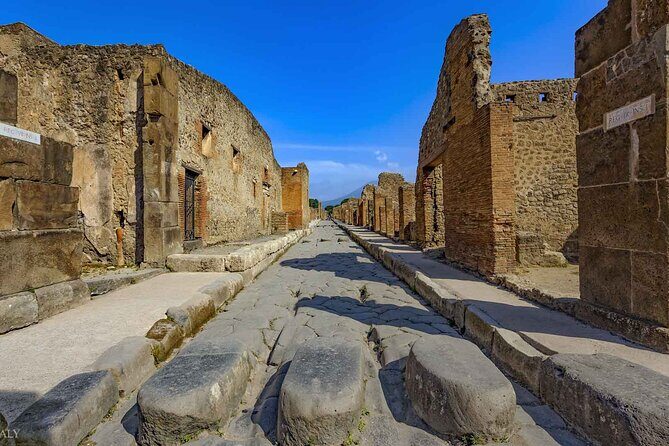
Pompeii is fragile. And the rules aren’t just for show. They protect the site and, honestly, keep you from injuring yourself on uneven stone.
These are the big ones you should take seriously:
- Walk carefully. Don’t stop on the edges of excavations and don’t climb on walls.
- No bulky items: leave bags, backpacks, umbrellas, and other bulky items at the wardrobe.
- Wear flat soles. The ground can be rough, and you want grip for all those turns.
- No smoking on site.
- Photography is for private use only. If you want to use a tripod, flash, artificial light, or you’re doing commercial filming, you need to contact the Office of the Superintendent.
- Stay respectful. Avoid shouting, writing on walls, and dispersing waste. Use the right bins.
One extra reality check: there can be stray dogs that have gotten past perimeter defenses. If you see them, don’t try to befriend them. Stay away and keep moving.
The site can also feel crowded in pulses. Even if you’re entering at a booked time, keep your pace steady and avoid stopping in bottlenecks. Pompeii is popular for a reason, and the best experience comes when you act like the ruins matter (because they do).
Price and Logistics: Is $54.44 Worth It?
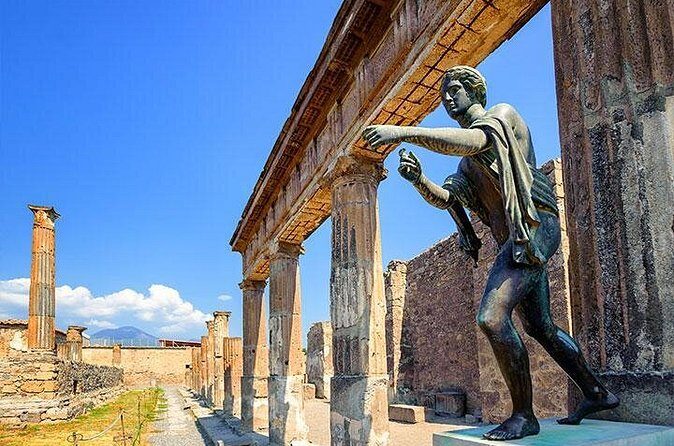
At $54.44, you’re paying for three things: timed access, entry convenience, and the ability to self-guide. The value is best if your ticket is recognized smoothly at the gate and you actually use that time slot rather than arriving late.
Here’s how to think about the cost:
- If you have to spend your early minutes waiting at a ticket area to sort voucher details, the “skip-the-line” promise loses power.
- If you show up prepared, enter quickly, grab the map, and start your loop, the price feels fair. Pompeii’s scale makes time-saving meaningful.
One more cost reality: this is not a guided tour. If you want a deeper story about one neighborhood, one family, or one major event, you’d need to arrange a guide separately. The ticket gives you access; it doesn’t add interpretation.
My take: this ticket is a solid buy when you’re comfortable navigating on your own and you want the freedom to stop where you care. If you need every step managed by a person, you’ll probably feel happier with an actual guided tour option.
Should You Book This Pompeii Entrance Ticket?
I’d book it if you:
- want self-guided freedom and a route you can shape yourself
- enjoy major anchors like the Forum, Theatre, and the Lupanare without being herded
- can follow basic on-site instructions, walk on uneven ground, and respect limits
I’d hesitate if you:
- hate logistics and worry about voucher recognition at the ticket area
- have very limited time and want the day built for you, stop by stop
- need a lot of help with navigation and pace
Tip before you go: make sure you can access your ticket details before you leave (not after you’re already at the site). Pompeii rewards preparedness. Once you’re inside, it’s one of the best places in Europe to understand how a whole city looked, worked, and lived. And yes, it will take more than a casual stroll to truly feel it.
FAQ
Is this a guided tour?
No. This is an entrance ticket. You explore the Pompeii ruins independently after you enter.
How long should I plan for Pompeii with this ticket?
The experience is listed as about 2 to 3 hours. Pompeii is large, so you may want more time if you like to linger.
Do I choose a time slot to enter?
Yes. You book your preferred entrance time, and there are multiple entrance times throughout the day.
Where can I get a map?
You can collect a complimentary map inside the gate, and a route map is available at the entrance.
What are the main highlights I shouldn’t miss?
Key highlights mentioned include the Theatre, the Forum, and the Lupanare brothel with erotic frescoes. You can also see casts of victims’ bodies.
What should I do if I have limited mobility?
People with limited mobility are advised to enter from Piazza Anfiteatro and to limit their visit to the surroundings of the Amphitheater.
Are bags, backpacks, or umbrellas allowed inside?
No. You should leave bags, backpacks, umbrellas, and other bulky items at the wardrobe.
Can I take photos or film?
Photography and filming are allowed for private use only. For tripod, flash, artificial light, or commercial/other uses, you need to contact the Office of the Superintendent.
Is this ticket refundable if I cancel?
No. The experience is non-refundable and cannot be changed for any reason.