REVIEW · POMPEII
Private Awesome Pompeii Family Tour + Guide, Transport & Tickets
Book on Viator →Operated by Leisure Italy · Bookable on Viator
Pompeii can feel like a million places at once. This private family tour keeps it human-sized with a guide who can slow down, speed up, and answer questions as you go. I especially like the family-friendly pacing and the fact that the Pompeii park admission is included, so you spend your time walking and learning instead of queue-watching. One thing to keep in mind: it’s still Pompeii—plan for moderate walking and bring sun gear in May to September.
You’ll spend about 4 to 5 hours seeing the big story points of Pompeii: the street life, public buildings, baths, markets, villas, and even a view of the volcano from below (no need to climb up top). The format is also genuinely practical for families: private means your kids can ask why things are shaped a certain way, and you won’t be stuck following a loud group that all moves at different speeds.
In This Review
- Key highlights I’d plan around
- Pompeii with a private guide: why this tour feels easier
- Getting from Naples or Sorrento: flexible pickup that saves time
- Your Pompeii walk: how the main sights fit together
- Archaeological Park of Pompeii (your core 2 hours)
- Porta Marina e cinta muraria: gates and walls
- Basilica: the city’s justice and business center
- Temple of Apollo: religion tied to public life
- Forum: politics, commerce, and meeting up
- Macellum: the indoor market beat
- Terme del Foro: Roman baths as a social hub
- Luxury homes, main streets, and the theatre
- Casa del Fauno: a mansion with real visual impact
- Via dell’Abbondanza: the main commercial street
- Insula dei Casti Amanti: the city from above
- Teatro Grande: culture you can picture instantly
- Antiquarium di Pompei: connect the ruins to the people
- The volcano view: smart photos without the climb
- Price and value: what $457.02 per person gets you
- Timing, crowd sense, and how to plan your day
- Who this tour is best for
- Should you book this Pompeii family tour?
- FAQ
- How long is the Pompeii private family tour?
- Where does pickup happen?
- What language is the guide?
- Is the Pompeii admission ticket included?
- Is this tour private?
- Do I need a mobile ticket?
- What should I wear or bring?
- Is there free cancellation?
Key highlights I’d plan around
- Private guide for Pompeii at a comfortable pace, with room to ask questions freely
- Park ticket included for the main Archaeological Park of Pompeii time block
- Pickup flexibility: meet anywhere in the Naples and Sorrento area
- Family-friendly route that hits forum, baths, theatre, villas, and markets without rushing
- Volcano photos from the bottom, so you get the drama without the strenuous climb
- Mobile ticket and a private setup where only your group participates
Pompeii with a private guide: why this tour feels easier
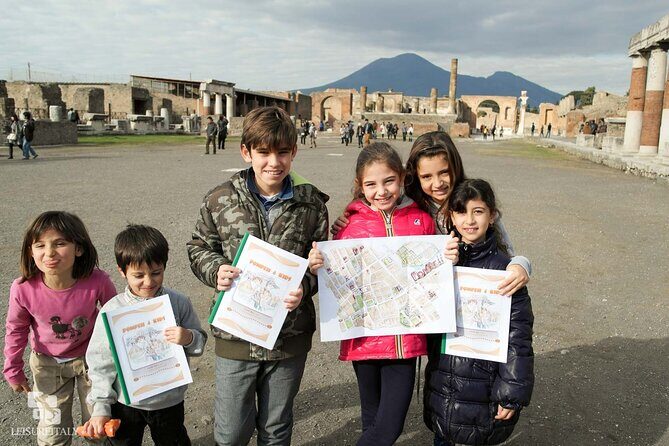
Pompeii isn’t hard to visit, but it can be hard to understand. With a private guide, you’re not trying to decode ruins while juggling kid stamina, stroller decisions, or the constant problem of Where are we again?
The best part is how your guide can keep the day comfortable. You’re not stuck in a fixed, one-size-fits-all loop, and you can linger when something catches your attention—like mosaics, bath details, or the way street corners connect to public spaces. If you get a guide along the lines of Fabrizio (or the similarly named Fabio from past bookings), you’re likely to get clear explanations that fit kids as well as adults.
A drawback to be aware of: this is a compact, high-information site. Even with a private guide, you’ll want good walking shoes and realistic expectations about how much you can see in 4 to 5 hours.
Other family and kids Pompeii tours
Getting from Naples or Sorrento: flexible pickup that saves time
One practical reason I like this option: the meeting setup is flexible. You can specify pickup anywhere within the Naples and Sorrento area, which cuts down on the stress of figuring out rail or multiple transfers.
That matters because Pompeii days get eaten by logistics fast. If your family is already spending time traveling along the Amalfi Coast corridor, being able to start the tour near where you’re staying can keep the day calmer and more predictable.
Your Pompeii walk: how the main sights fit together
Most Pompeii visits jump from highlight to highlight. This route is built to show how the city worked as a whole—so you come away with the feeling of a lived-in place, not just “cool ruins.”
Archaeological Park of Pompeii (your core 2 hours)
You begin with the Archaeological Park, where your guide leads at a comfortable pace through major streets and public spaces. This is the big time block—around 2 hours—with the admission ticket included.
This is where you’ll connect the dots: where people walked, where they ate, where they gathered, and how the city’s layout makes more sense once someone points out the patterns. For families, the value is simple: your guide can explain the what and the why without treating kids like they’re forced to sit through an adult lecture.
Porta Marina e cinta muraria: gates and walls
Next up is Porta Marina, one of Pompeii’s key gateways. It’s a smart early stop because a gate tells you what the city looked like to outsiders—then your guide helps you picture how movement flowed between trade routes and everyday life.
Right next to it, you’ll also see the defensive wall context. It’s not just “old stone.” It’s a clue about how Pompeii protected itself and how important the city was to the surrounding region.
A few more Pompeii tours and experiences worth a look


Basilica: the city’s justice and business center
In the Basilica, your guide frames it as the place where legal and commercial life happened. Think contracts, disputes, negotiation—public work wrapped inside grand architecture.
This stop helps families understand that Romans weren’t only building temples and homes. They were also running the machinery of daily civic life in big, formal spaces.
Temple of Apollo: religion tied to public life
At the Temple of Apollo, you’ll get a sense of how public religion showed up in a very visible way. This temple was dedicated to music, prophecy, and the arts, and the viewpoint gives you a clear look at columns, altar spaces, and surrounding decorations.
What I like here is that your guide can connect worship to politics and public rituals. It’s easy to think religion is separate from daily life, but Pompeii makes the overlap hard to ignore.
Forum: politics, commerce, and meeting up
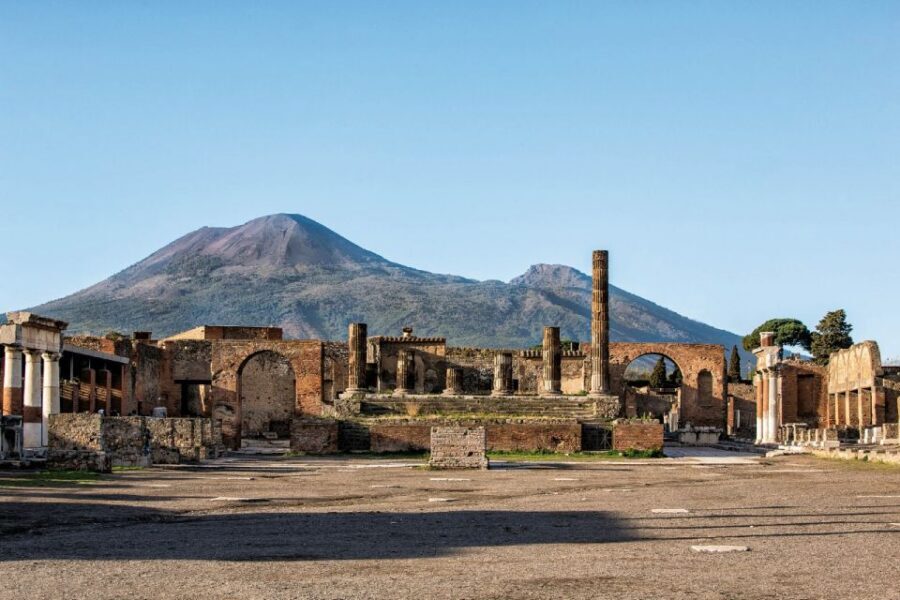
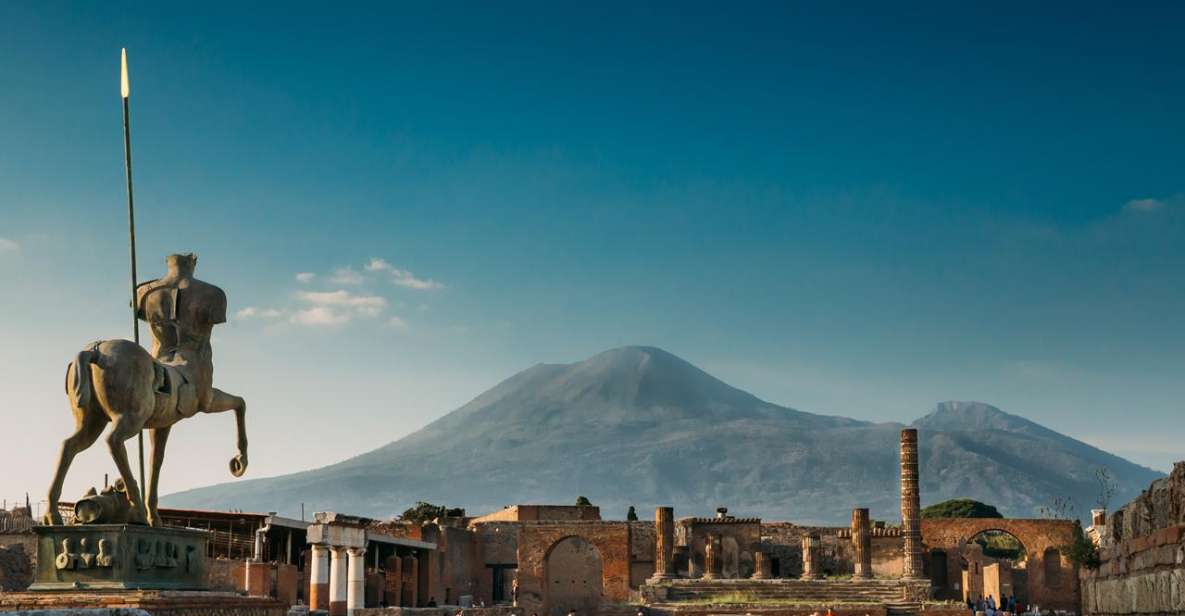
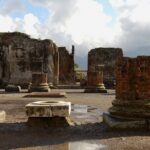
The Forum is the heart of Pompeii’s public world. From this central area, your guide explains how political, religious, and commercial activities converged in one main square.
If you’re traveling with kids, this is a great stop because you can point out the “why here?” logic. The Forum wasn’t random—it was built for gathering, trading news, and handling civic matters.
Macellum: the indoor market beat
At the Macellum, you get a different flavor: food and everyday shopping. This is the indoor market scene, where you can see how ingredients were displayed and traded.
This is one of those stops that makes Roman life feel close to modern routines. Even if the products are different, the idea—buying daily essentials in a structured market space—lands fast for families.
Terme del Foro: Roman baths as a social hub
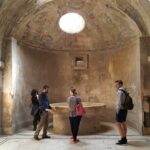
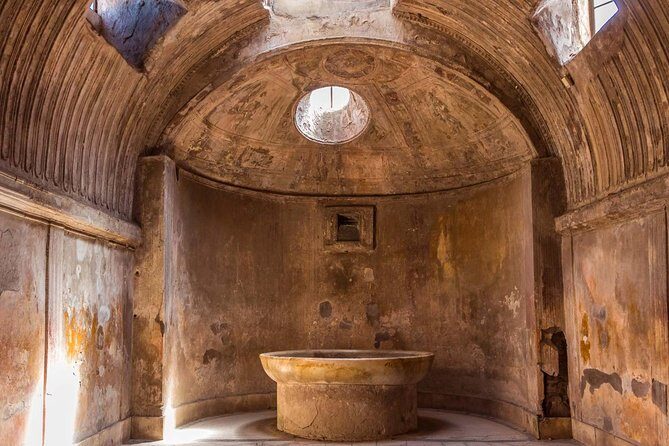
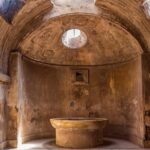
The Forum Baths (Terme del Foro) bring the tour into “people stuff.” Baths weren’t just for cleaning. Your guide shows heated rooms, preserved decorative elements, and spaces for changing and washing.
The practical value here: it helps kids picture a routine beyond monuments. You can almost hear the conversation level rising as you walk through the bath complex, because that’s exactly how Romans used these spaces.
Luxury homes, main streets, and the theatre
After you’ve built the framework of public life, the route shifts into how different Pompeians lived—elite, working, and everything in between.
Casa del Fauno: a mansion with real visual impact
At the House of the Faun, you’re stepping into wealth and art. Your guide points out courtyards, the famous mosaics (including the Alexander Mosaic), and how elite families showed status through design and decoration.
This stop is worth it if you have kids who like “wow” visuals. It’s also one of the better places to see how Pompeii’s private spaces connected to daily social events like hosting and banquets—so it doesn’t feel like a frozen exhibit.
Via dell’Abbondanza: the main commercial street
Walking Via dell’Abbondanza gives you the pulse of the city’s commercial side: workshops, bakeries, taverns, and homes packed along a busy route.
Your guide also connects the street layout to practical infrastructure—like how water systems worked and how raised stepping areas helped people move around. It’s the kind of detail that makes you stop thinking of Pompeii as “ruins” and start seeing it as “a functioning town.”
Insula dei Casti Amanti: the city from above
At the Insula of the Chaste Lovers, you’ll get an elevated viewpoint. This helps a lot if you have trouble imagining how the neighborhood fits together.
From above, you can spot the block layout: courtyards, working spaces, and how homes nest close together. It’s also a smart viewpoint for families because it can break the walking rhythm while still feeling educational.
Teatro Grande: culture you can picture instantly
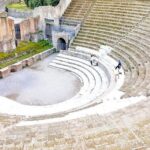
The Grand Theatre is one of Pompeii’s most atmospheric stops. You’ll sit on the original stone tiers, and your guide helps you imagine the sound carrying across the open-air stage.
This is where the Pompeii story shifts from chores and commerce to entertainment and public performance. For families, it’s often the easiest stop to understand quickly because theatre is a familiar concept, even if the plays and politics were Roman.
Antiquarium di Pompei: connect the ruins to the people
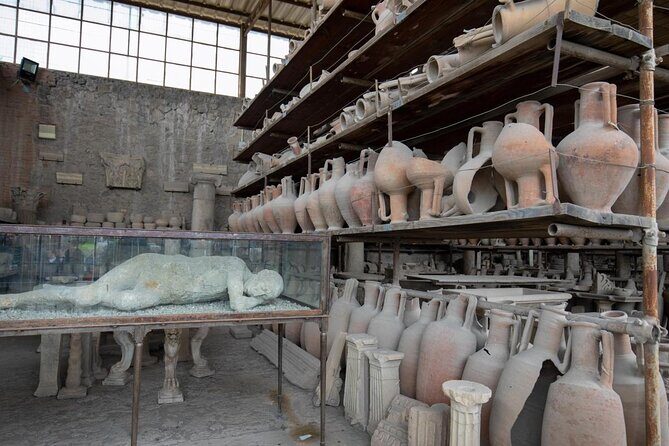
Before you finish, you’ll visit the Antiquarium di Pompei. This is a modern exhibit area that helps connect the outside ruins to the objects that came from Pompeii’s daily life.
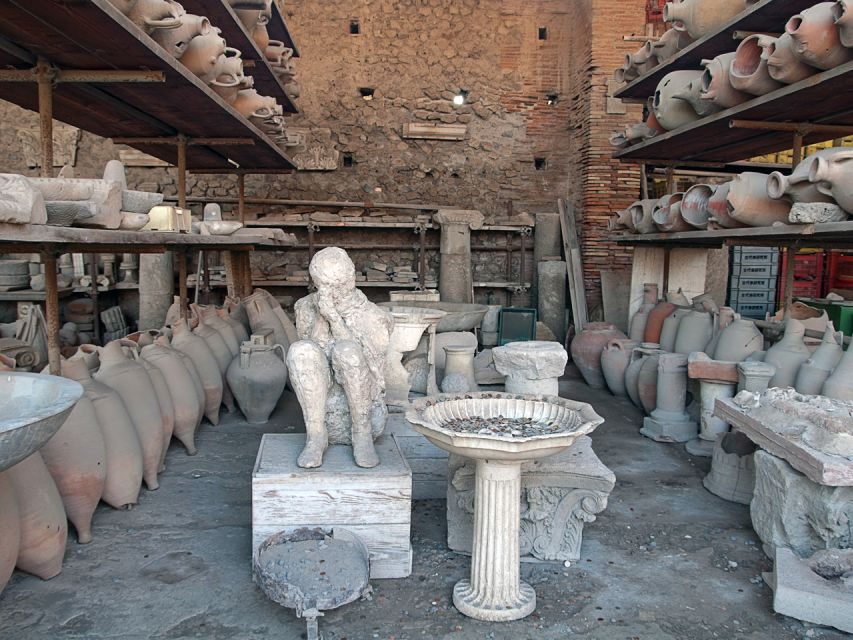
You’ll see statues, frescoes, everyday items, and powerful casts of victims. The emotional tone here is heavier than many of the outdoor stops, but it adds context that makes the rest of the site hit harder.
If your family likes “why this matters,” this is the stop that delivers it. If you have very young kids, you can still make it work—just keep an eye on energy levels, since this portion can feel more intense.
The volcano view: smart photos without the climb

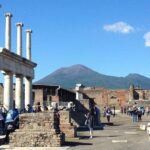
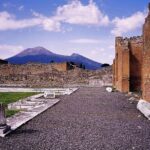
One of the neat choices in this experience is that you’ll see the volcano from the bottom for photos. You’re not driving up to the top, so you’re not trading your Pompeii time for a strenuous extra outing.
That works well if your priorities are ruins and storytelling first. You still get the dramatic setting and can frame the day with the eruption story context—without adding a high-effort detour.
Price and value: what $457.02 per person gets you

At $457.02 per person, this isn’t a budget tour. But it’s also not just “a guide standing next to you.”
You’re paying for a private setup, English guidance, transport/pickup, and ticket coverage for the main Archaeological Park time block. Plus, because it’s private, you’re paying for time that can be adjusted to your family’s needs—lingering, asking questions, and moving at a pace that doesn’t require keeping up with everyone else.
So the real question isn’t whether it’s expensive. It’s whether your family benefits from privacy. If you’re traveling with kids (and especially if they tire easily), the structure can pay off quickly because the experience doesn’t fall apart when attention spans do.
Timing, crowd sense, and how to plan your day
This tour runs about 4 to 5 hours. That’s a good length for Pompeii because you can cover the core highlights and still avoid feeling like you’re sprinting from stop to stop.
Also note that this experience is often booked well in advance (on average, about 187 days). That’s a sign the timing matters—if you want a specific start window, earlier booking helps.
For families, my best advice is simple:
- Start with good shoes and water plans.
- In May to September, bring sun gear as recommended.
- If your family has nap needs, plan around the fact that Pompeii can be tiring even when it’s fun.
Who this tour is best for
This works especially well if:
- You want a private family Pompeii visit instead of a group scramble
- You’d like an English-speaking guide who can explain at a pace kids can handle
- You prefer seeing major Pompeii zones in one route without constantly checking maps
If you’re the type of traveler who loves to wander on your own and you don’t mind figuring things out via signage, you might not need private help. But if you want clarity, flow, and a day that stays manageable for a mixed-age group, this is a strong match.
Should you book this Pompeii family tour?
I’d book it if your goal is to leave Pompeii feeling like you truly understood the city—not just “saw a lot of stones.” The private guide, included park admission time, and structured route through public life, markets, baths, homes, and the theatre make it a smart use of a short visit.
I’d think twice if you’re sensitive to walking time or you’re traveling with someone who can’t handle uneven ancient surfaces. The tour is flexible in pace, but Pompeii still requires footwear and stamina. And at $457.02 per person, it’s a decision that works best when privacy and guided context are priorities for your family.
FAQ
How long is the Pompeii private family tour?
It lasts about 4 to 5 hours.
Where does pickup happen?
Pickup is flexible, and you can meet anywhere within the Naples and Sorrento area. You’ll need to specify your pickup place.
What language is the guide?
The tour is offered in English.
Is the Pompeii admission ticket included?
Yes. Admission to the Archaeological Park of Pompeii is included for the main stop.
Is this tour private?
Yes. It’s a private tour/activity, and only your group will participate.
Do I need a mobile ticket?
Yes, a mobile ticket is included.
What should I wear or bring?
Wear appropriate walking shoes. From May to September, bring sun gear.
Is there free cancellation?
Yes. You can cancel up to 24 hours in advance for a full refund.