REVIEW · POMPEII
Pompeii 3 Hours Walking Tour Led by an Archaeologist
Book on Viator →Operated by Askos Tours · Bookable on Viator
Pompeii can feel unreal on foot. This archaeologist-led private walk through the ruins nails two things I really like: clear explanations of daily Roman life and smart, stop-by-stop routing that keeps you from wandering. My only caution is the park is exposed, so the lack of shade means you’ll want a hat and sunscreen.
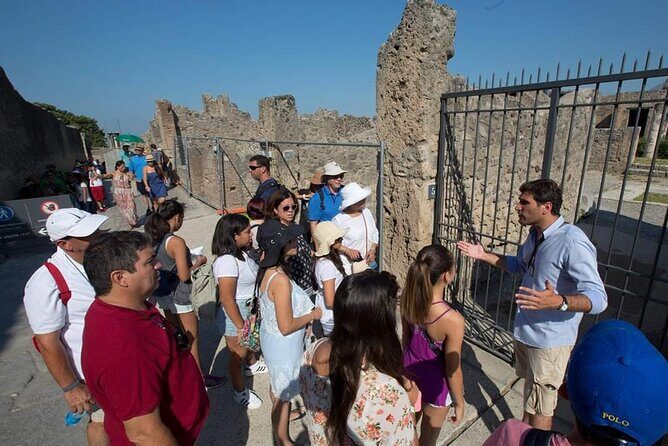
You start at the main entry for the Pompeii Archaeological Park (Porta Marina Superiore), with your guide holding an Askos Tours sign. A free luggage store at the meeting point is handy, especially if you’re coming from a train or larger day of sightseeing. And because it’s rain or shine, you’re not stuck trying to improvise last-minute plans when the weather turns.
The tour runs about 3 hours and stays focused on the big, memorable areas: the Forum, major baths, standout homes, and both the smaller and main theaters. You’ll cover a lot of ground, so wear good shoes. The upside is that you get to connect the dots in a way that a map can’t do.
In This Review
- Key highlights to look for on this Pompeii walk
- Meeting at Porta Marina and getting your bearings fast
- Basilica and the Forum: where Roman life kept moving
- Granaries of the Forum: marble details, fountains, and the casts
- House of Menander and the bigger homes lesson
- Stabian Baths: the oldest thermal complex you can walk through
- Lupanar brothel stop and the House of the Faun contrast
- Odeon (Teatro Piccolo) and Teatro Grande: two theatres, one city’s rhythm
- Why the 3-hour format works (and where it doesn’t)
- Professional guide value at $256.99 per person
- Who should book this Pompeii archaeologist walking tour
- Should you book it? The quick decision guide
- FAQ
- How long is the Pompeii walking tour?
- Is this a private tour?
- What does the tour include?
- Where do we meet the guide?
- Are admission tickets included for all stops?
- Is the tour cancelled if it rains?
- Is there a place to store luggage during the tour?
- Can I cancel for a full refund?
Key highlights to look for on this Pompeii walk
- Real specialists leading the discussion: an archaeologist guide with the technical side covered, plus clear historical storytelling.
- Private group pacing: only your group participates, which usually means more Q&A and fewer pauses.
- Forum to theatres route: you get the civic center, everyday spaces, and entertainment venues within a tight timeframe.
- Thermal baths you can picture: Stabian Baths get special attention as the city’s oldest thermal complex.
- Powerful Pompeii cast details: the Granaries stop includes casts connected to the eruption, plus even a dog and tree.
- Admission built into the plan: ticket fees are included where required, while several sites on the route are free to enter.
Meeting at Porta Marina and getting your bearings fast
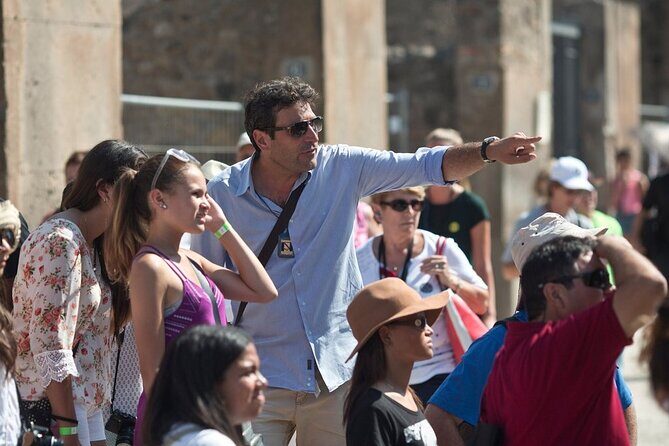
Your tour begins at the Pompeii Archaeological Park with the guide meeting you at Porta Marina Superiore. You’ll find them by the main entrance holding a sign for Askos Tours. The meeting address is Via Villa dei Misteri, 1, and the tour ends back in the same place.
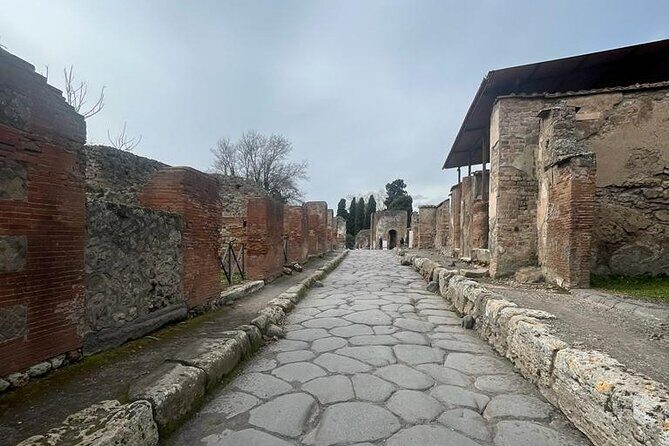
This start matters more than it sounds. Pompeii is vast, and getting pointed in the right direction early saves time and energy. On a self-guided day, it’s easy to lose the logic of the city; on a guided route, the city’s layout becomes a story you can follow.
One small practical win: there’s a safe free luggage store at the meeting area. If you’re traveling light, you can probably just keep your bag with you, but if you’re not, this makes the tour feel smoother.
Finally, plan for walking in open sun. The park has minimal shade, so bring a hat and sunscreen. If you tend to burn quickly, treat this as a “midday risk” day, not a gentle morning stroll.
Other Pompeii tours with an archaeologist


Basilica and the Forum: where Roman life kept moving
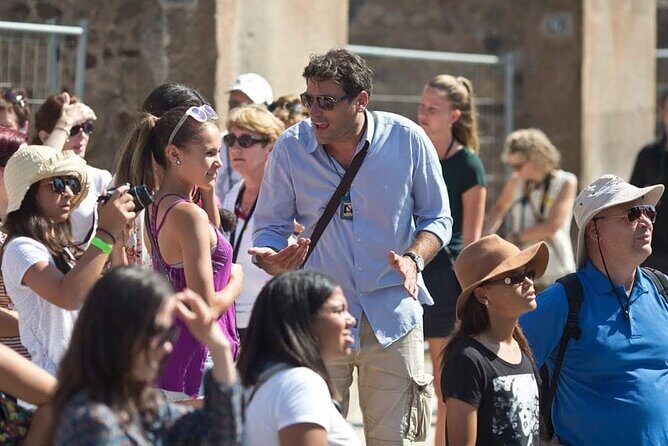
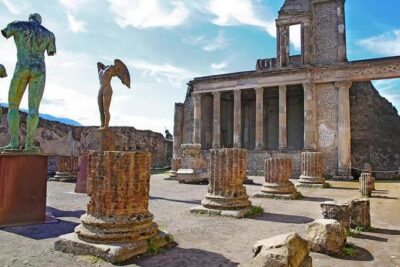
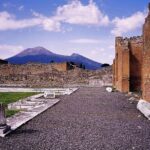
After the ticketed start at the archaeological park entrance, you head to the Basilica. This wasn’t a church the way we think of one today. It was an open portico that sheltered merchants and other activities, basically the Romans’ covered public-work hub.
In a short tour like this, the Basilica stop is your shortcut to understanding the “who did what” of the city. From there, you move to the Foro de Pompeya, the ancient main square. Think of it as the core stage where civic life, commerce, and crowd energy would have happened daily.
Both stops are about 20 minutes each, which is a good pace. You get enough time to look around without turning the ruins into a rushed checklist. If you like structure and context, this is where the guide’s explanations really help.
Also, these locations are among the easier-to-read parts of Pompeii’s layout. Even if you’ve seen photos, standing in the spaces helps you grasp distances, sightlines, and how people would have used the area.
Granaries of the Forum: marble details, fountains, and the casts
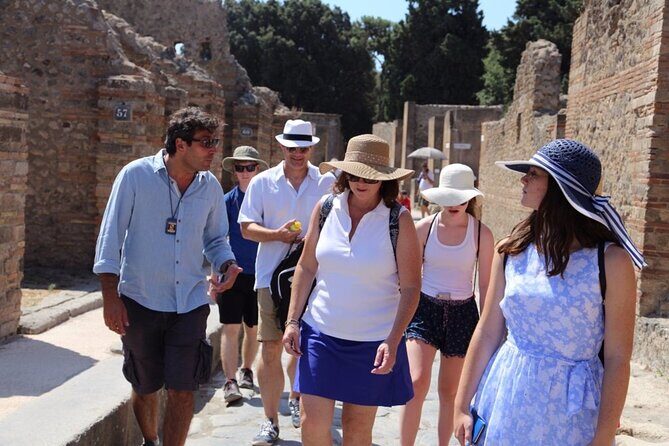
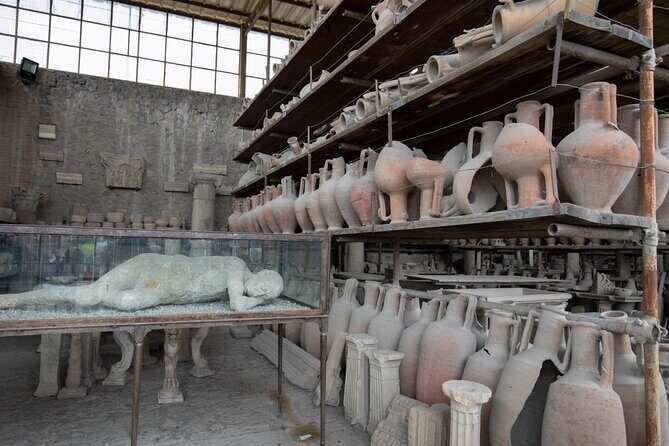
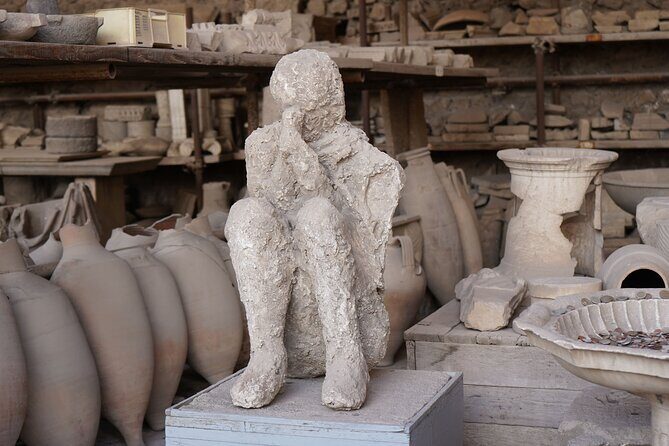
Next comes the Granaries of the Forum, a stop that packs in both everyday detail and emotional weight. Here, you’ll see marble tables and features connected to fountain setups, including baths for fountains that adorned entrances of houses.
That’s the “daily life” angle. Pompeii wasn’t just grand buildings and dramatic streets; it was also people arranging their homes, water, and thresholds in ways that felt permanent. The marble elements help you see that craftsmanship wasn’t reserved for palaces.
Then the stop turns to the eruption’s aftermath through casts. You’ll also encounter casts of victims as well as a dog and a tree. This shift can hit hard, so it helps to have an expert guide explaining what you’re seeing and why those casts matter for understanding the disaster.
Time here is about 20 minutes, and that’s just enough to take in the main points without getting numb. If you’re sensitive to heavy history, you might want to pace yourself a bit—pause, look, then move on at your own speed.
House of Menander and the bigger homes lesson
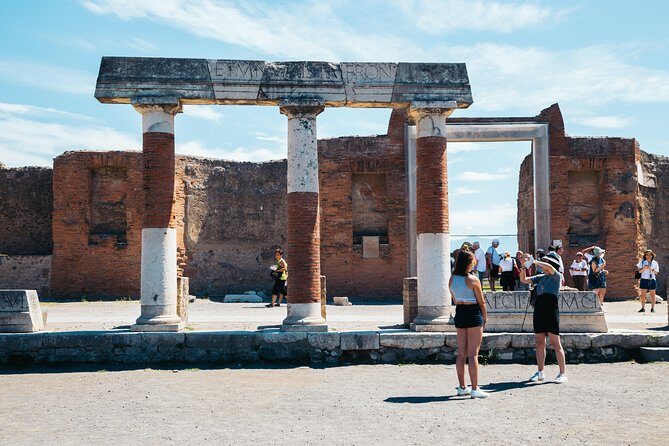
Pompeii’s private houses are where the city stops being just “ruins” and starts feeling like a place with personalities. The House of Menander is one of the richest and most impressive residences in the city, especially for its architecture, decoration, and contents.
You spend about 20 minutes there. That’s a sweet spot: long enough to notice decorative choices and layout differences, but not so long that you lose the thread of what the guide is connecting to Roman social life.
This is also a chance to understand how wealth worked in Pompeii. It’s not only about who owned a house; it’s about how the house communicated taste and status to visitors. A skilled guide can point out how decoration and space weren’t random—they were statements.
The tour later adds another strong home stop (the House of the Faun), so Menander works as a good “first taste” of domestic grandeur.
Stabian Baths: the oldest thermal complex you can walk through
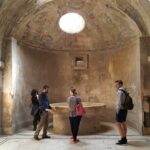
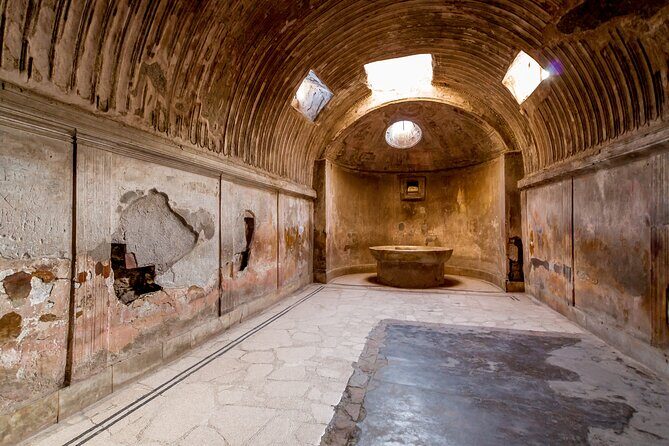
Thermal baths in Pompeii weren’t just about hygiene. They were a social engine—people gathered, talked, relaxed, and traded news. This tour gives the Stabian Baths (Terme Stabiane) about 25 minutes, highlighting them as the oldest thermal complex in the city.
This matters because baths explain how routine life had structure. You’re not only seeing stone and steps; you’re imagining the flow: where people entered, where they cooled down, and how space supported conversation and movement.
Stabian Baths cover a vast area, positioned between the Brothel lane, the Holconius crossroads, and the Via Stabiana. Seeing that placement on foot helps you connect neighborhoods and what types of activity might have happened nearby.
If you’re short on time in Pompeii, the baths are a smart use of your 3 hours. They reveal both engineering basics and the social habits that made city life feel alive.
Other half-day Pompeii tours



Lupanar brothel stop and the House of the Faun contrast
Then you hit two very different sides of Pompeii’s day-to-day world: the Lupanar and one of the city’s grand residences.
The Lupanar is the most famous brothel in the ruined Roman city. It’s about 20 minutes, and the point isn’t gossip. It’s urban reality—how commerce, entertainment, and human behavior showed up in a real neighborhood.
Right after that, the tour continues to the House of the Faun, one of the largest and most impressive private residences in Pompeii. You get about 20 minutes here too. The contrast is striking, and that’s the benefit of this route. You see how the city could feel at once gritty and luxurious, depending on where you stood.
If you’ve heard guides like Daniela Mantice explain the way Pompeii’s painted surfaces and materials interacted with the eruption, the home stops are often where those stories land best. A house isn’t just walls—it’s decoration that tells you what people cared about and what they wanted to project.
And if you’re wondering why this part works on a 3-hour tour: because it turns Pompeii into a social map, not a pile of major monuments.
Odeon (Teatro Piccolo) and Teatro Grande: two theatres, one city’s rhythm
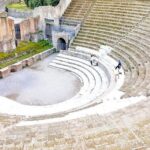
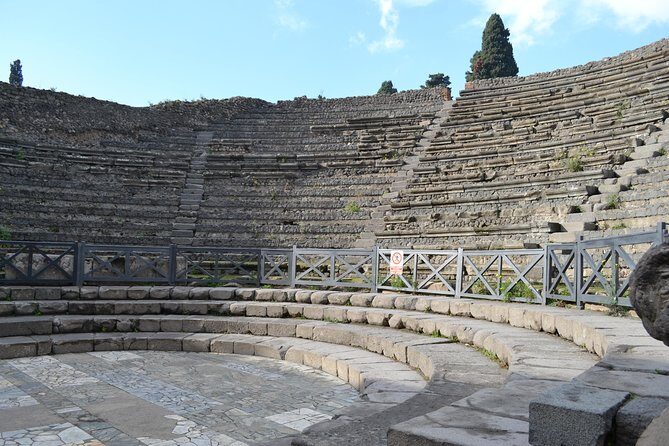
Before the main theater, you get a quick look at the Odeon, also called the Teatro Piccolo. It’s a short stop—around 5 minutes—but it helps you understand Pompeii’s entertainment options beyond just the big venue.
Then you move to Teatro Grande, the most important theater in Pompeii, with about 20 minutes dedicated to it. This is the anchor stop for the entertainment side of Roman life.
The theatre stop is where you start seeing how Pompeii worked as a community. Large public spaces weren’t only for performance. They were also meeting points, shared experiences, and a way to build civic identity.
Even without specialized architectural training, a good guide can point out the scale and explain what the theatre would have meant to the daily rhythm of the city. That’s the difference between looking at ruins and understanding why they mattered.
Why the 3-hour format works (and where it doesn’t)
The tour’s 3-hour length is the sweet spot for first-timers. You cover the Forum area, baths, major homes, and the theatres. That’s a lot for one outing, and it’s why it’s popular.
You’ll also like the structure of the route. Each stop has a purpose: civic life (Basilica and Foro), everyday infrastructure and the eruption aftermath (Granaries), personal status (houses), and public leisure (the theatres and smaller Odeon).
The main downside is obvious once you’ve walked Pompeii for a while: time is limited, and you’re moving between areas in an open environment. If you want to linger for photos for every courtyard detail, you may feel the pace a bit. Bring water and plan for sun time, not shady “museum time.”
The tour takes place rain or shine, which is both great planning and a reality check. If it’s stormy, expect the ground to be slick, and if it’s bright, expect heat.
Professional guide value at $256.99 per person
At $256.99 per person for a private 3-hour walk, this isn’t a budget tour. But it can be good value if you care about understanding what you’re seeing, not just checking off places.
Here’s why the price can make sense. You get a professional archaeologist guide and admission ticket fees included for required entries. Several stops on the route are free to enter, which helps your overall cost feel more balanced against a tour that forces you to pay at every gate.
You’re also paying for privacy. Only your group participates, and private time is often what turns Pompeii from a chaotic place into a readable one. More Q&A, fewer bottlenecks, and a guide who can answer your questions in context.
One more practical sign that this is in demand: it’s often booked around 50 days in advance on average. If you’re visiting during busy weeks, don’t wait for the last minute.
If you’re traveling solo and comparing costs, decide what you value most. If you want maximum personal attention and explanation, this format fits. If you only want to walk through famous stops and you’re comfortable reading signs, a cheaper self-guided approach might be enough.
Who should book this Pompeii archaeologist walking tour
This tour is best for you if you:
- Want an archaeologist-led experience in English and you like real explanations, not just “look at this wall” pointing.
- Appreciate structure and a route that hits the Forum, baths, houses, and theatres in one session.
- Prefer a private group size over crowd pacing.
- Know you’ll learn more if someone frames the ruins for you.
It also fits families with a catch: children must be accompanied by an adult. Given Pompeii’s sun exposure and walking time, it’s a better choice for families who have the stamina for uneven, outdoor terrain.
If you’re extremely heat-sensitive or you can’t handle several stops with minimal shade, think carefully. The tour includes sunscreen and hat guidance for a reason.
Should you book it? The quick decision guide
Book this tour if you want Pompeii to feel intelligible—Roman daily life, civic spaces, bathing culture, domestic wealth, and the emotional weight of the casts—without spending your whole day trying to sort it out yourself.
Skip (or pair with lighter self-guided time) if you hate walking in the sun or you need a slower pace with long photo sessions at every corner. In Pompeii, 3 hours can fly, and the tradeoff for focus is less lingering.
If your goal is to make the city click in one visit, this private archaeologist-led route is a strong bet.
FAQ
How long is the Pompeii walking tour?
The tour lasts about 3 hours.
Is this a private tour?
Yes. It’s a private tour/activity, and only your group participates.
What does the tour include?
It includes a professional archaeologist guide and admission ticket fees.
Where do we meet the guide?
Meet at Porta Marina Superiore, the main entrance of the Pompeii Archaeological Park, and the guide will be holding an Askos Tours sign. The listed meeting address is Via Villa dei Misteri, 1, 80045 Pompei NA, Italy.
Are admission tickets included for all stops?
Not all stops are ticketed. Admission ticket fees are included for some stops, and several other stops are free to enter.
Is the tour cancelled if it rains?
No. The tour takes place rain or shine.
Is there a place to store luggage during the tour?
Yes. There is a safe luggage store at the meeting point for free.
Can I cancel for a full refund?
Yes. You can cancel up to 24 hours in advance for a full refund. Cancellation less than 24 hours before the experience start time isn’t refunded.