REVIEW · POMPEII
Pompeii tour with LOCAL GUIDE and SKIP THE LINE entrance
Book on Viator →Operated by Gennaro Balzano · Bookable on Viator
Pompeii feels like a time jump. You get skip-the-line priority entry plus a local English guide, so you’re not stuck wasting your limited daylight in queues before the real Roman-world details begin. It’s a compact route through some of Pompeii’s most talked-about spaces, from everyday streets to the Forum and the thermal baths.
I especially like two things. First, the local guide service keeps the ruins readable, not just impressive. Second, the stop choices hit both the “high life” (Casa del Menandro) and the public pulse of the city (the Forum and baths), so you get a balanced snapshot of daily Roman life.
The main drawback is time. At about 2 hours 30 minutes, you’ll see a lot, but it’s still a sprint—so if you want to linger in every frescoed room, plan to stay inside after the tour ends.
In This Review
- Key highlights at a glance
- Skip-the-Line Entry at Pompeii’s Entrance (Why It Matters)
- The 2.5-Hour Route Problem: When a Tight Tour Works
- Pompeii’s Archaeological Park: Streets Frozen by Ash
- Casa del Menandro: Frescoes, a Playwright, and a Hidden Cache
- Lupanar Brothel Complex: Roman Sex Work, Room by Room
- Foro de Pompeya: The City’s Civic Engine
- Stabian Baths (Terme Stabiane): The Oldest Thermal Complex
- The Local Guide Experience: What You’re Paying For
- Mobile Ticket and Timing: Making the Most of Your Start
- Value for $66.38: Is This Worth It?
- Who Should Book This Pompeii Skip-the-Line Tour?
- Should You Book This Pompeii Tour?
- FAQ
- How long is the Pompeii tour?
- Does the ticket include the entrance fee?
- Is the tour in English?
- Where do I meet the guide?
- How big is the group?
- Can I stay in Pompeii after the guided part?
- Is this experience refundable?
Key highlights at a glance
- Skip-the-line priority service so you can start walking sooner instead of waiting
- Small group size (max 14) that helps the guide keep things organized
- Casa del Menandro with Iliad and Odyssey fresco scenes and the story behind the Menander portrait
- The Lupanar brothel complex explained with details about rooms, pricing, and inscriptions on the walls
- Foro de Pompeya laid out so you can picture commerce, justice, and the city’s civic axis to Vesuvius
- Stabian Baths as the oldest thermal stop in Pompeii, rediscovered after the ash buried it
Skip-the-Line Entry at Pompeii’s Entrance (Why It Matters)
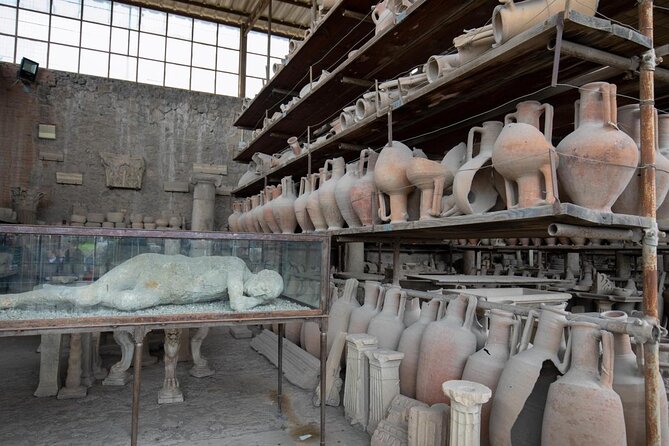
The biggest practical win here is priority entry. Pompeii can feel like it’s constantly busy, so anything that shortens the time between ticket purchase and first steps through the ruins is money well spent.
This tour also starts by appointment near Via Villa dei Misteri, close to the entrance area and a few meters from the station/car-park zone. In real terms, that means you’re not trekking across town trying to find the group once you finally arrive.
If you're still narrowing it down, here are other tours in Pompeii we've reviewed.



The 2.5-Hour Route Problem: When a Tight Tour Works
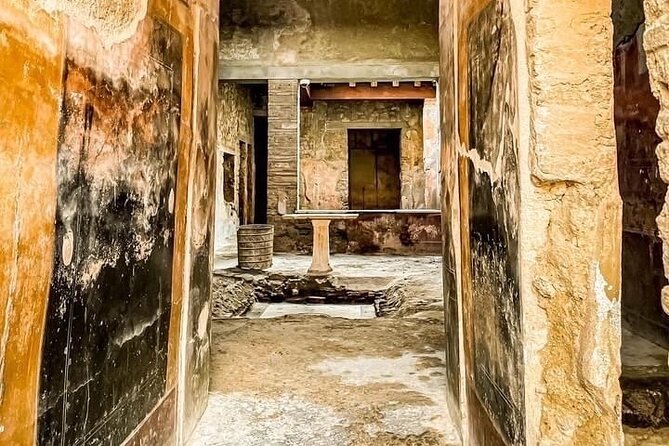
A 2.5-hour guided visit is ideal when you want a guided framework fast. You’ll get a clear story of what you’re looking at—how Roman streets functioned, where major civic life happened, and what daily routines looked like across different classes.
But the tradeoff is simple: you won’t have the luxury of slow wandering. One shortcoming that comes up with this kind of timing is not seeing enough of the site in depth, even if the guide is great. If you’re chasing the “I could stay here all day” feeling, you’ll likely want either a longer guided option or time to explore on your own afterward.
Good news: after the guided portion, you can remain inside the excavations to keep going at your own pace. That’s a smart way to stretch a shorter tour into a fuller visit.
Pompeii’s Archaeological Park: Streets Frozen by Ash
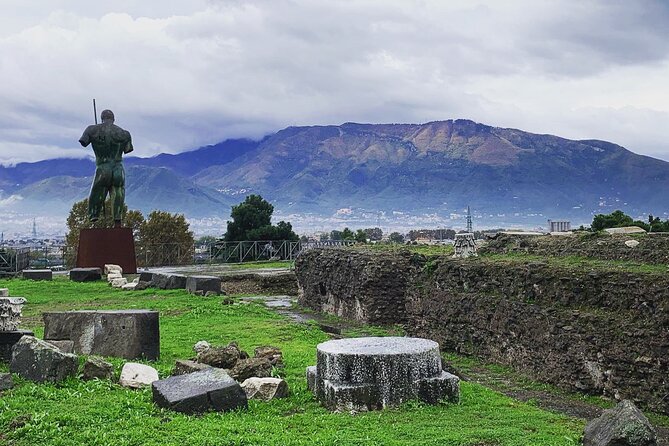
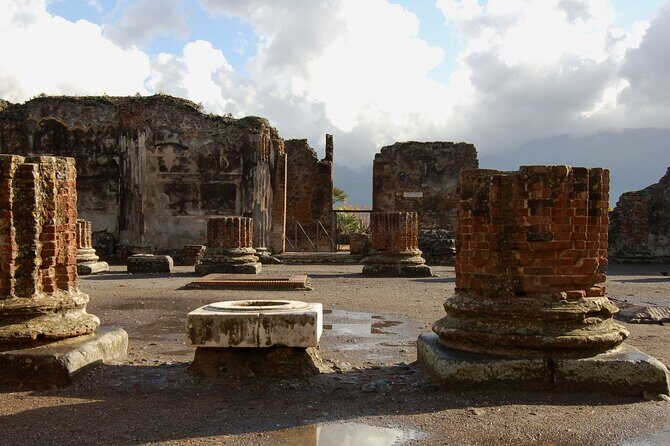
You begin at the Archaeological Park of Pompeii, and you’ll walk through streets that still feel eerily immediate. Pompeii is famous because volcanic ash preserved the city and its inhabitants in a way that gives historians a vivid picture of life about 2,000 years ago.
What helps on a guided walk is the “sense of place.” You’re not just looking at stones; you’re imagining daily motion: commerce, foot traffic, and public routine. The site has been excavated since the 18th century, and after roughly 250 years, about 75% has been uncovered—so you get a true sense of scale, not a partial glimpse.
You’ll also get a feel for why Pompeii can make you forget time. The ruins aren’t abstract; they’re arranged like a lived-in city, with corners and doorways that make it easy to picture people moving through them.
Casa del Menandro: Frescoes, a Playwright, and a Hidden Cache
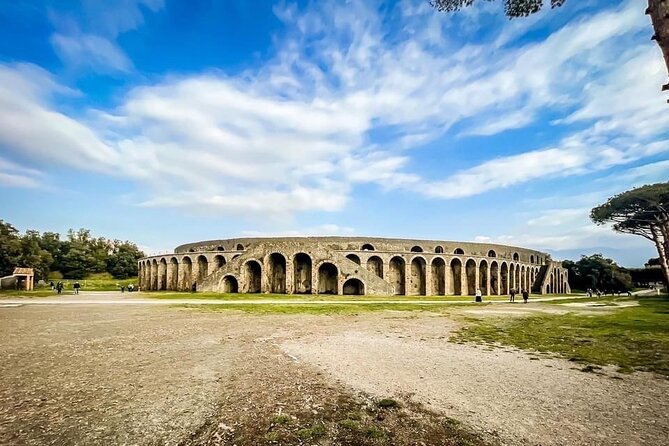
Casa del Menandro is the kind of stop that changes how you see “houses.” This wasn’t a small villa—it’s a home tied to a high-ranking family, with changes from complex building events that make the property feel layered.
One reason I like this stop is the storytelling detail. The atrium is frescoed with scenes from the Iliad and the Odyssey, so you’re not only seeing decoration—you’re seeing cultural signaling. The peristyle is described as a “rhodium” type, and the northern side being higher becomes one of those small architectural cues that helps you read how the space was built to function.
Then there’s the personal touch: the house’s name comes from a portrait of Menander, an Athenian playwright, placed in the porch. That’s a strong example of how Pompeii interiors weren’t just practical; they also displayed taste and identity.
Under the surface, the intrigue gets even better. There’s mention of an underground room—possibly a cellar—with a chest that held 118 pieces of silverware, now exhibited in Naples. Even if you can’t picture the silver itself in your head, the idea is unforgettable: the household’s best serving pieces were hidden, then recovered later.
What to watch for: you’ll also see details tied to banquets, including pottery forms for pouring wine and utensils. That turns the house from “pretty ruins” into a window on meals, hosting, and status.
Lupanar Brothel Complex: Roman Sex Work, Room by Room
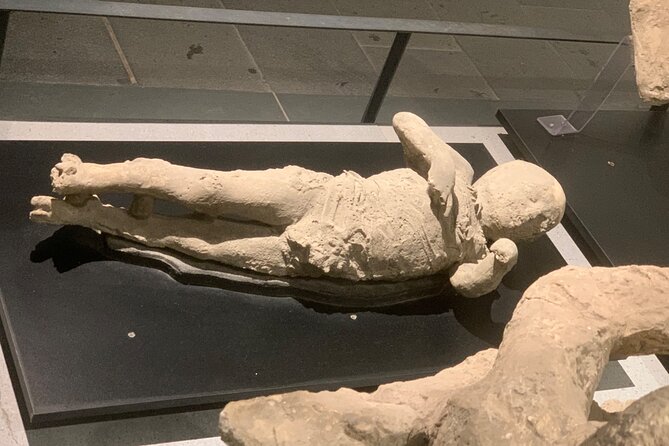
The Lupanar stop is short, but it’s handled with specifics. You’re looking at a brothel building where prostitutes—often described as Greek and Oriental slaves—worked for two to eight asses, with a wine cost noted at one ass.
What makes this place more than shock-value is the layout. The building has two floors: upper areas linked to owners and slaves, and lower rooms—five of them—each arranged along a corridor. Built-in beds are integrated into the rooms, and curtains closed the spaces, which helps you understand how privacy and transaction were managed in the architecture.
You’ll also get orientation cues: at the end of the corridor is a latrine, under the stairwell. That may sound grim, but it’s exactly what makes Pompeii so educational—this was a working space with daily infrastructure, not a theatrical set.
The walls include small erotic depictions along the central corridor, used like visual advertisements. Even the name matters: it comes from the Latin lupa, referring to a prostitute.
Practical consideration: this stop can be uncomfortable for some people. If you’d rather keep your Pompeii visit more family-neutral, you can still learn a lot from the architecture and pricing details, but it helps to mentally prep for the subject.


Foro de Pompeya: The City’s Civic Engine
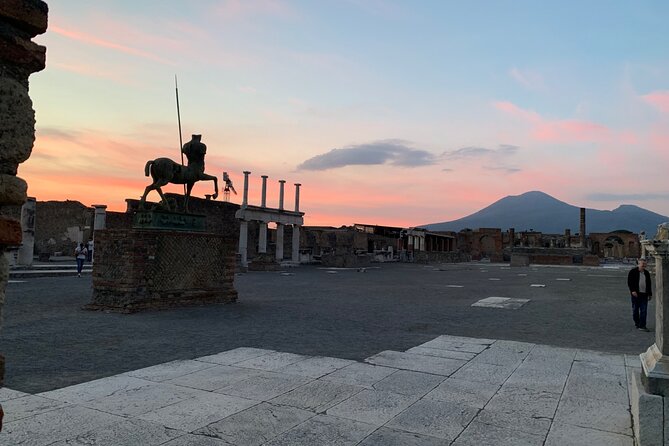
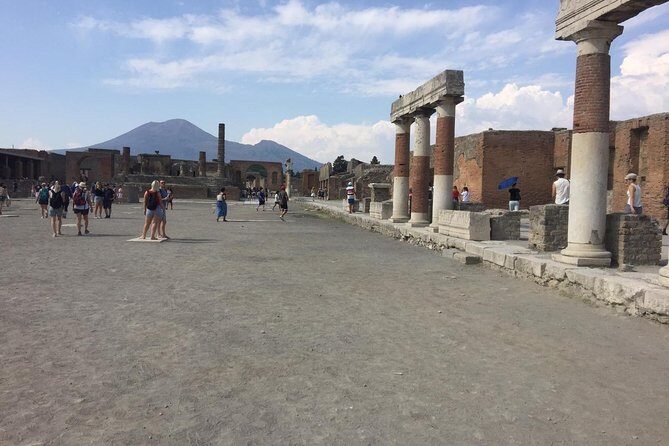
The Foro de Pompeya is where Pompeii’s public life becomes clear. This civic forum functioned as the center of daily activities, surrounded by major buildings for administration, justice, and commerce. In other words, it’s the place where public decisions met money and street-level business.
You’ll see how the square looked and changed. Originally it was a relatively simple open area of regular-ish shape with rammed earth, and there were anchor points: the Sanctuary of Apollo on one side and shops along the other.
Later, between the 3rd and 2nd centuries BC, it was modified into a more formal civic space. The square became regularized with arcades and a paved base of tuff slabs, and the axis of the square was aligned with the facade of the Temple of Jupiter, positioned in line with Vesuvius. That’s a big idea in Roman design—buildings weren’t just for function; they were arranged with astronomy, power, and identity in mind.
During the imperial age, the forum was again paved, this time with travertine slabs. Some slabs no longer in place show recesses made to hold bronze letters from a large inscription—so you’re literally reading the evidence of how messages and laws were displayed.
Tip for your visit: treat this stop like your “map lesson.” Once you understand what the forum was, the rest of the city starts to feel more organized in your head.
Stabian Baths (Terme Stabiane): The Oldest Thermal Complex
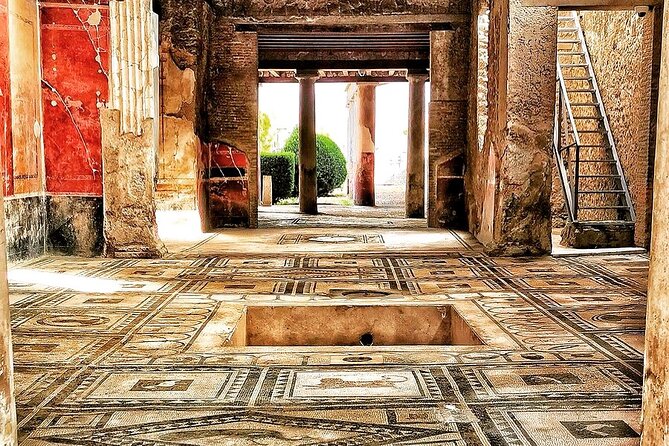
The Stabian Baths are a highlight if you want Roman life as routine. This thermal complex was buried by Vesuvius in 79 and later rediscovered during excavations. It’s described as the oldest building of its kind in Pompeii, which makes it a smart stop for context.
Even when you only get a short visit, baths tell you how people relaxed, cleaned up, and socialized. Pompeii isn’t just about dramatic tragedy; it’s also about how a city functioned day to day, and bathing was part of that routine.
If your travel style leans toward understanding daily habits, you’ll appreciate how quickly this tour points you toward the lived experience of the Romans, not just monumental architecture.
The Local Guide Experience: What You’re Paying For

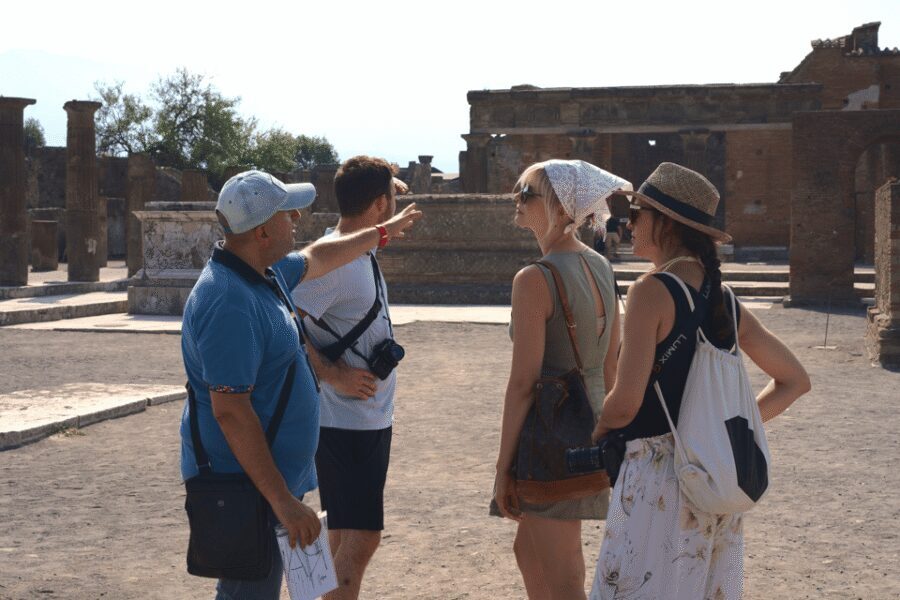
You’re not just buying a ticket into Pompeii. You’re paying for someone to connect the dots while you’re there—especially in spaces where there’s a lot to look at and not much signage that tells the story in plain language.
The guides tied to this experience have been praised for keeping things organized and for being helpful with questions. Names that have come up include Sasa, Antonio, Gennaro, and Anna, and I’d treat those as a sign that the operator values guide quality and the ability to pace a group without feeling rushed.
The tour also caps the group size at 14 travelers, which matters. Smaller groups usually mean you spend less time waiting at corners and more time moving through spaces while the guide’s explanations are still fresh.
If you’re planning to bring family or teens, it helps that some guides are described as patient and good at making the ruins make sense. That’s a real skill in Pompeii, because the site can feel confusing if you’re just reading stones.
Mobile Ticket and Timing: Making the Most of Your Start
This tour includes a mobile ticket, which is practical in a place where timing is everything. You’ll also meet near the entrance area at Via Villa dei Misteri, 3, and the tour ends back at the same meeting point.
That “return to start” detail matters because it keeps your day simple. You can plan lunch or your next stop without needing to reverse-track across the site to find your way back to transport.
What I’d watch for: meeting point confusion happens. If you want to avoid stress, get there early and keep your phone handy in case the guide sends an update or if your group schedule changes due to safety conditions.
Value for $66.38: Is This Worth It?
At $66.38 per person, the value comes down to what’s included and how efficiently the tour uses time.
You get:
- entrance ticket included
- priority service to skip the line
- authorized local guide service
- a Time Machine add-on
- the tour is about 2 hours 30 minutes
When you factor in skip-the-line entry and a local guide, it’s not just “paid for access.” It’s more like you’re paying for a structured way to see the site without losing half your visit to queue time and route guessing.
The only real value risk is the duration. If you’re the type who wants to sit in a room and absorb every detail, you may wish you booked a longer format. In that case, consider using this tour as your backbone, then staying longer after the guided portion to finish your own must-sees.
Who Should Book This Pompeii Skip-the-Line Tour?
This fits best if you:
- want a guided overview that makes Pompeii easier to understand
- are short on time but still want major stops
- like small groups and Q&A moments
- enjoy seeing how both the wealthy homes and public spaces worked
It might not be your best pick if you:
- want hours of unhurried wandering and deep photo time
- hate uncomfortable topics (the Lupanar stop is part of the route)
- need very quiet, slow pacing (this itinerary moves at a tour pace)
If you want the best of both worlds, book this and then plan to stay inside afterward. That’s how you turn “structured visit” into “full-day satisfaction.”
Should You Book This Pompeii Tour?
If you want an efficient, guide-led Pompeii experience with skip-the-line entry, I think this is a solid choice. The route covers the major story threads: preserved city life, elite domestic detail at Casa del Menandro, the unsettling-but-educational Lupanar, the Forum as civic center, and the Stabian Baths for daily routine.
I’d only hold back if 2.5 hours sounds too short for how you travel. If you know you’ll want extra time in specific locations, build that flexibility into your day so you can linger after the guide wraps up.
FAQ
How long is the Pompeii tour?
The tour lasts about 2 hours 30 minutes.
Does the ticket include the entrance fee?
Yes. Entrance tickets are included, along with priority service for skip-the-line entry.
Is the tour in English?
Yes, the tour is offered in English.
Where do I meet the guide?
Meet at Via Villa dei Misteri, 3, 80045 Pompei NA, Italy. The tour ends back at the meeting point.
How big is the group?
The tour has a maximum of 14 travelers.
Can I stay in Pompeii after the guided part?
Yes. After the guided tour, you can remain inside the excavations.
Is this experience refundable?
Cancellation is non-refundable and cannot be changed. If it’s canceled due to poor weather, you’ll be offered a different date or a full refund.