REVIEW · POMPEI CAMPANIA
Pompeii: Skip-the-Line Private Tour with Archaeologist Guide
Book on GetYourGuide →Operated by Rosaria all around naples · Bookable on GetYourGuide
Pompeii can feel like a time machine. This private skip-the-line tour with a local archaeologist helps you spend your limited time seeing what matters most, not waiting at the ticket office. I especially love the way the guide frames the site through daily Roman life, and the chance to admire frescoes and mosaics up close. The main drawback to consider is the tight 2.5-hour pace, so you’ll want to be ready to focus instead of wandering freely for hours.
You’ll meet the guide at the entrance to the excavations (they hold a sign with your names), get priority access, then finish back at the meeting point. After the guided portion, you’re free to explore the archaeological area on your own, which is a smart setup for combining expert context with your own pace.
In This Review
- Key Highlights You’ll Care About on a Pompeii Private Tour
- Pompeii Makes More Sense When You Have an Archaeologist Explaining It
- Skip-the-Line Priority Entrance: What It Actually Changes for Your Day
- The Core Pompeii Circuit: Forum, Baths, Gymnasium, and Amphitheater
- The Forum: Pompeii’s Social and Public Heart
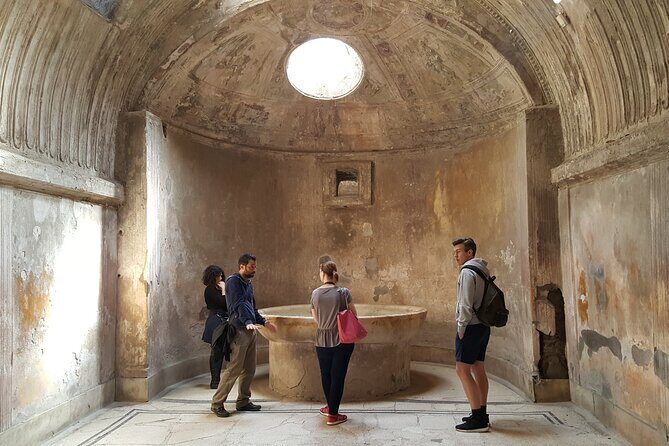
- Baths and Gymnasium: Where Body and Community Met
- The Amphitheater: Spectacle in Stone
- Brothel and Everyday Shops: Seeing Pompeii as a Working City
- The Ancient Brothel: Off-Limits in Many Museum Narratives
- Ancient Shops You’ll Recognize in Today’s Terms
- Domus with Mosaics and Frescoes: The “Private” Side of Pompeii
- What the Tour Feels Like in Real Time: Private Group, 2.5 Hours
- After the Guide: How to Use Your Independent Time Wisely
- Value and Price: Is $192.58 Worth It for Pompeii?
- Who Should Book This Pompeii Skip-the-Line Private Tour
- First Sunday Free Entry: A Helpful Option with a Real Catch
- Should You Book This Pompeii Tour?
- FAQ
- Is the entrance ticket included in the tour price
- How long is the Pompeii tour
- Where do I meet the guide
- What languages are the tour guide speaking
- What does skip-the-line mean here
- Is the tour wheelchair accessible
- What should I bring for Pompeii
- Is Pompeii free on the first Sunday of each month
Key Highlights You’ll Care About on a Pompeii Private Tour
- Priority entrance to the ticket office so you lose less time to queues
- An archaeologist guide who explains what you’re seeing in Roman terms, building by building
- Big public sights like the amphitheater, baths, gymnasium, and forum
- Mosaic and fresco stops that turn decoration into evidence of everyday life
- An ancient brothel and working-city shops (laundry, bakery, fast-food style) that add real context
- Private-group format for a calmer route and time spent with your guide, not around a crowd
Pompeii Makes More Sense When You Have an Archaeologist Explaining It
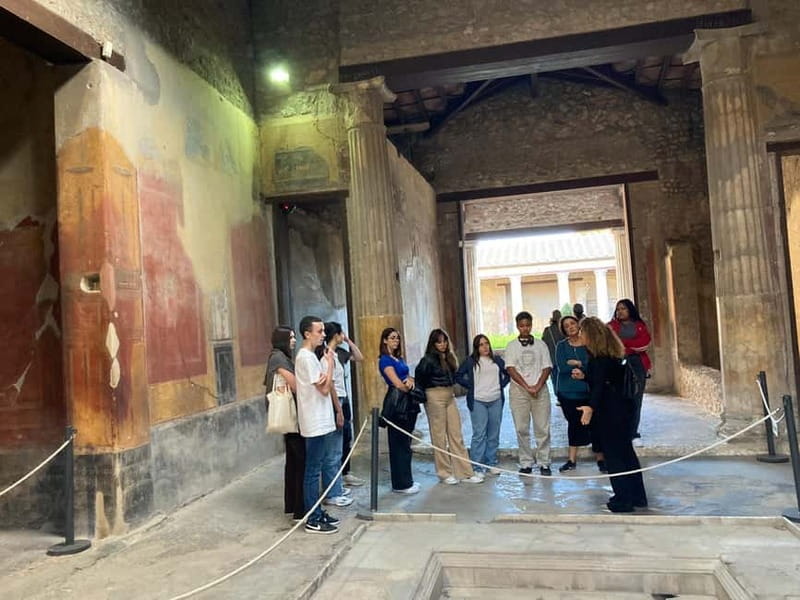
Pompeii is famous, sure. But what makes this tour worth your time is the way the guide teaches you to read the place like a living city that stopped mid-day. You’re not just looking at ruins; you’re learning how different spaces would have functioned—where people gathered, where they exercised, where they bathed, where they bought food, and where they spent their evenings.
I like that the guide’s focus stays practical: you’ll move through major public buildings and then see private spaces (like domus) with decorative art, including mosaics and frescoes. That approach helps you connect the dots between what the city looked like and how it likely felt for the people who lived there.
From the reviews, the most praised moments are the guide’s ability to adapt the visit to the group and help you avoid crowds while sharing expertise and passion. That matters because Pompeii is big, and a private guide can steer you toward the best learning rhythm.
If you're still narrowing it down, here are other tours in Pompei Campania we've reviewed.


Skip-the-Line Priority Entrance: What It Actually Changes for Your Day
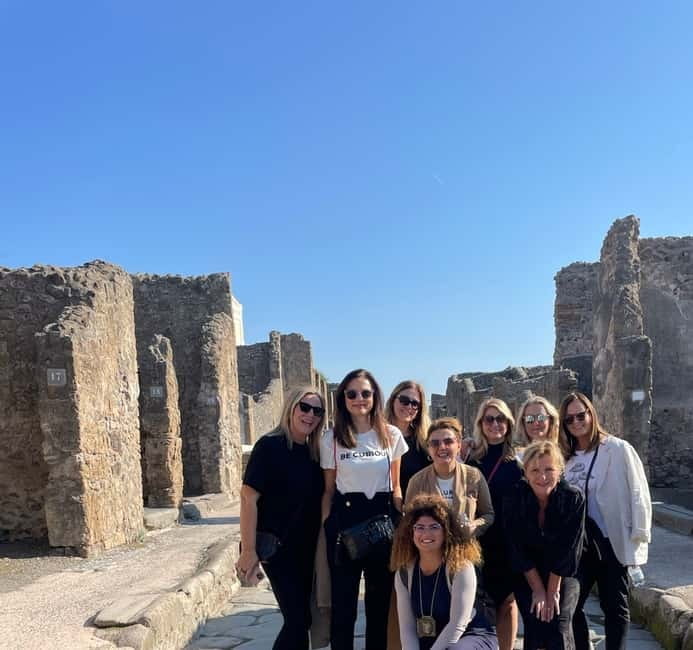
This tour’s skip-the-line feature is specifically about priority entrance to the ticket office. In practical terms, it means you should spend more of your 2.5 hours on the site itself, and less time trapped in the start-of-visit bottleneck.
That time is valuable because Pompeii rewards momentum. When you’re moving efficiently, you get more of the story while the buildings are still close together in your mind. When you’re delayed early, the visit can feel like a series of hurried stops. Priority entrance helps protect your energy and keeps the tour from turning into logistics.
One more timing note: start times vary (you check availability). If you want better light for photos and a calmer pace, you’ll generally do best with earlier entry, but your best choice depends on what times are available when you book.
The Core Pompeii Circuit: Forum, Baths, Gymnasium, and Amphitheater
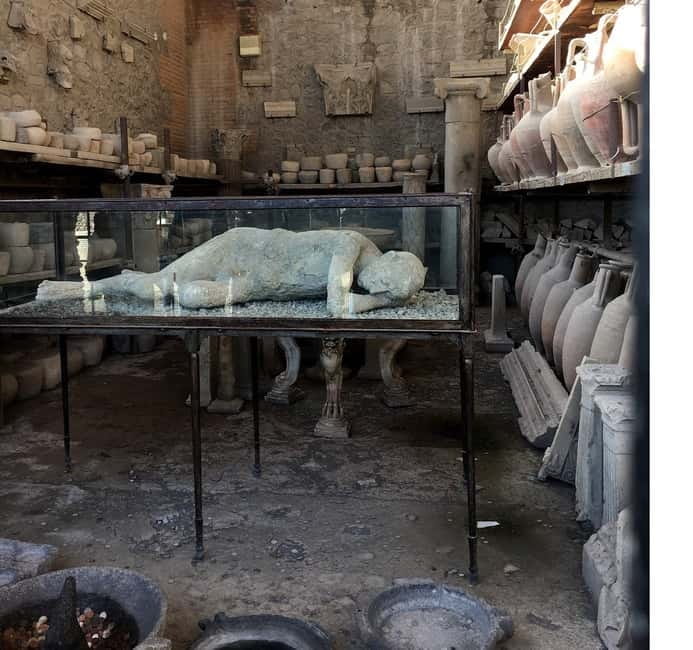
During the guided portion, you’ll focus on the public Pompeii highlights that shape how you understand the city. These stops work like a framework. Once you grasp them, the rest of Pompeii starts to feel coherent instead of random.
The Forum: Pompeii’s Social and Public Heart
The forum is where you’d expect public life to concentrate—meeting, speaking, handling business, and seeing the city’s pulse. On a guided visit, the forum isn’t just a big open space. It becomes a reference point for everything else.
If you’re the type who likes to understand a place’s role in the daily routine, you’ll probably appreciate this stop. A quick glance might feel like “stone and columns,” but with an archaeologist guide you get the context that turns it into a real social map.
Baths and Gymnasium: Where Body and Community Met
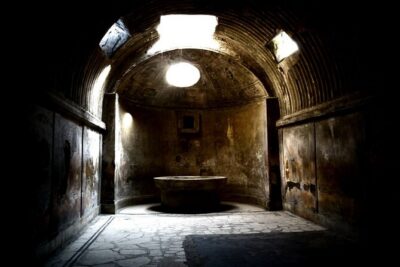
Pompeii’s baths and gymnasium show off how strongly Roman life organized around physical space. The baths aren’t only about cleanliness; they’re about routine, status, and social interaction.
In a 2.5-hour tour, this section is often where you’ll notice how the city’s layout guides movement. Even if you only spend a short time at each area, the explanations help you picture how people would have used these spaces.


The Amphitheater: Spectacle in Stone
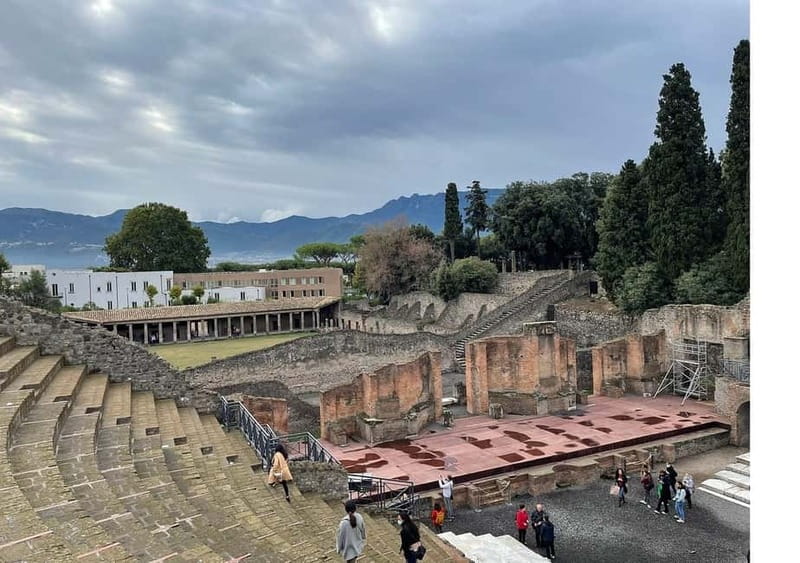
The amphitheater is a natural highlight because it’s dramatic and easy to recognize. What makes it special with a guide is the interpretation: you learn how this kind of entertainment fit into a daily rhythm and why a place like this mattered in public life.
You’ll still want to look around for how circulation and views work from different angles. A guide can help you notice details you’d otherwise miss.
Brothel and Everyday Shops: Seeing Pompeii as a Working City
One of my favorite things in the description of this tour is that it doesn’t stop at the grand public buildings. You also get the more unusual, very human parts of Pompeii—places tied to commerce and everyday needs.
The Ancient Brothel: Off-Limits in Many Museum Narratives
This tour includes the ancient city brothel. It’s not a theme everyone expects, and that’s part of why it lands well. It gives you a fuller sense of the city’s social reality, not just the dignified public face.
The value here is balance. You’re seeing Pompeii as a place where people worked, spent money, and made choices—sometimes in ways that feel uncomfortable now, but realistic for the time.
Ancient Shops You’ll Recognize in Today’s Terms
The tour also points out shops that feel surprisingly modern in function: laundry, fast-food style food spots, and a bakery. That doesn’t mean the details match today. It means the needs are the same—clean clothes, quick meals, bread—just with different technology and local flavors.
This is where I find the mind shift happens. When a guide compares function rather than just naming ruins, you start to understand why a street corner mattered. It stops being a sightseeing route and becomes a city plan.
Domus with Mosaics and Frescoes: The “Private” Side of Pompeii
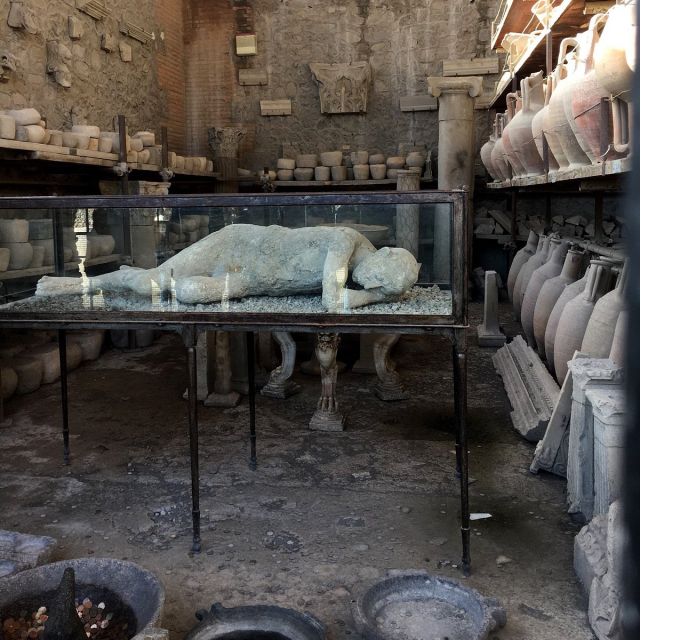
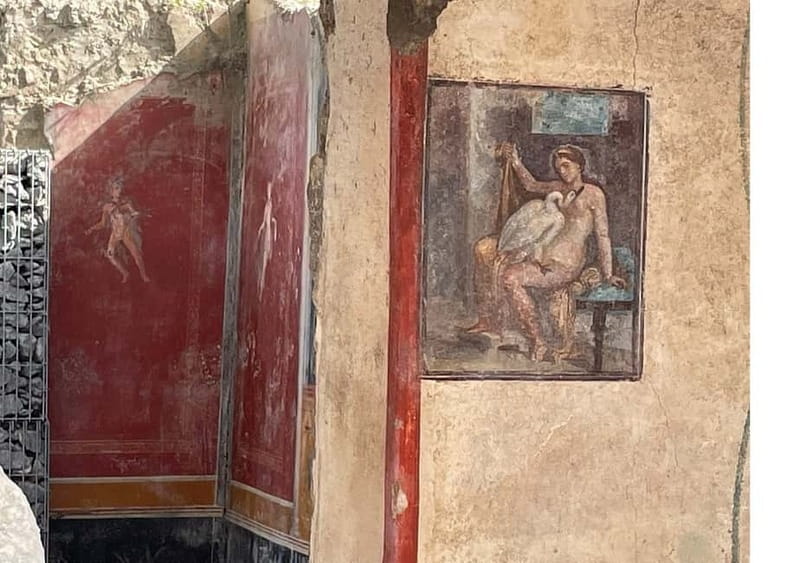
The domus section is where Pompeii stops being only public-life drama and becomes something quieter and more personal. You’ll see ancient homes with original mosaics and frescoes.
I love this part because decorative art isn’t just pretty. In Pompeii, mosaics and frescoes can act like statements—about wealth, taste, and how residents wanted their home to communicate. A guide who is also an archaeologist can explain what you’re seeing in a way that goes beyond, That’s a colorful wall.
Look for how the floor patterns and painted surfaces shape space. Even if you don’t memorize details, you’ll feel the difference between a house meant for everyday routine and a home meant to impress. That contrast is one of the best reasons to choose a guided stop here rather than doing Pompeii as a self-guided checklist.
What the Tour Feels Like in Real Time: Private Group, 2.5 Hours
This is a private group tour, and the group size is up to 20 per group. That’s a workable number for a private experience, especially if your guide is good at pacing and steering you away from crowds.
From the strong reviews, one theme repeats: the guide adapts to the group. In real terms, that means you’re more likely to get a route that fits your pace, not a rigid script. It also helps you avoid the worst congestion points, which is a major quality factor at Pompeii.
The duration is 2.5 hours. That’s enough time to cover the biggest named areas and understand the logic of the city, but it’s not enough time to linger for long at every corner. If you love slow museum-style wandering, plan to use your free explore time after the tour to go back for extra viewing.
After the Guide: How to Use Your Independent Time Wisely
After your guided portion, you’re free to explore the archaeological site independently. This is the best part for many people, because you can choose what to revisit based on what the guide sparked in your mind.
Here’s how I’d use that time:
- Go back to the mosaic/fresco areas you found most compelling and take a second look without listening for explanations.
- Spend extra time near the public buildings that gave you the framework (forum, baths, amphitheater) so it all “locks in.”
- If you’re curious about the more everyday stops, circle back to the shop areas so you connect the city’s labor with the decorative art and major monuments.
Also, plan your energy. Wear comfortable shoes, bring a sun hat, and carry water. Pompeii can be sunny and uneven, and comfortable footwear is what keeps you enjoying the site instead of counting minutes until you sit.
Value and Price: Is $192.58 Worth It for Pompeii?
The price is listed as $192.58 per group up to 20, for a tour length of 2.5 hours. Whether it’s a great deal depends on your group size.
- If you’re traveling as two or four people, the cost can work out reasonably compared with individual tours, especially since you’re paying for an archaeologist guide plus priority entrance.
- If your group is close to the upper limit (near 20), the per-person value tends to get very strong, since the guiding cost stays the same for the group.
The big value piece isn’t only skip-the-line. It’s the expert interpretation of multiple major Pompeii areas in a short visit. If you’re short on time or want the city to make sense fast, this format is built for you.
And since the tour includes freedom to explore after the guided portion, you’re getting both guided structure and self-paced time.
Who Should Book This Pompeii Skip-the-Line Private Tour
This tour is a strong fit if:
- You want Pompeii to feel understandable and cohesive, not like random ruins
- You like learning directly from someone with archaeology expertise
- You prefer a calmer route with a guide who can adapt to your group and avoid crowd trouble spots
- You want a “greatest hits” mix plus some of the less expected realities (like the brothel and working shops)
It may be less ideal if:
- You’re the type who wants to spend half a day drifting without a plan
- You need deep accessibility accommodations, because the listing includes both wheelchair accessibility and a note that it’s not suitable for people with mobility impairments. With that contradiction on the details page, you should verify fit before booking.
If you’re visiting Campania and want an honest, Roman-life-focused Pompeii tour, this one is built for that.
First Sunday Free Entry: A Helpful Option with a Real Catch
On the first Sunday of each month, entrance is free of charge. The important twist is that tickets can’t be reserved ahead of time, so entry is not guaranteed.
If you’re planning around that date, build a backup plan. The skip-the-line feature helps with the ticket office priority, but free entry day changes the usual rhythm.
Should You Book This Pompeii Tour?
I’d book it if you want a guided Pompeii visit that prioritizes the main public structures, adds the darker and more everyday corners of life (brothel and shops), and then gives you a clear path to domus mosaics and frescoes. The best reason to choose it is that you’re not just seeing more—you’re understanding more in less time.
I’d skip it or rethink it if you know you’ll be upset by a strict 2.5-hour window. Pompeii rewards time. This tour is designed to make the most of the time you have, but it won’t replace a longer, wander-all-day visit.
If you book, go in with one goal: learn how a Roman city worked, then use your independent time to revisit what grabbed you most.
FAQ
Is the entrance ticket included in the tour price
No. The tour includes the guided portion and priority entrance to the ticket office, but entrance tickets are not included.
How long is the Pompeii tour
The duration is listed as 2.5 hours. Starting times depend on availability.
Where do I meet the guide
You meet at the entrance to the excavations. The guide will wait with a sign displaying the clients’ names.
What languages are the tour guide speaking
The live tour guide is listed as available in English, French, and Italian.
What does skip-the-line mean here
It refers to priority entrance to the ticket office, so you avoid long waits before you get into the site.
Is the tour wheelchair accessible
The activity information lists wheelchair accessible, but it also states it is not suitable for people with mobility impairments. Because those details conflict, it’s smart to confirm what will work for your specific needs before booking.
What should I bring for Pompeii
Bring comfortable shoes, a sun hat, and water.
Is Pompeii free on the first Sunday of each month
Entrance is free on the first Sunday of each month, but tickets can’t be reserved ahead of time, so entry is not guaranteed.
If you want, tell me your travel month and your group size, and I’ll suggest the best way to balance this 2.5-hour guided visit with extra time on your own.