REVIEW · POMPEI CAMPANIA
Pompeii Tour with Archaeological Expert and Lunch
Book on GetYourGuide →Operated by Angelo (Travelcampania) · Bookable on GetYourGuide
Pompeii hits you fast, and this tour keeps it focused. You get a guided walking tour of the city’s big sights, plus priority entrance so you lose less time to lines. I especially like how the route connects monuments to real daily life, from public spaces to private homes and shopfronts, and I also love the stop at the Lupanare frescoes—this isn’t just sightseeing, it’s storytelling you can see.
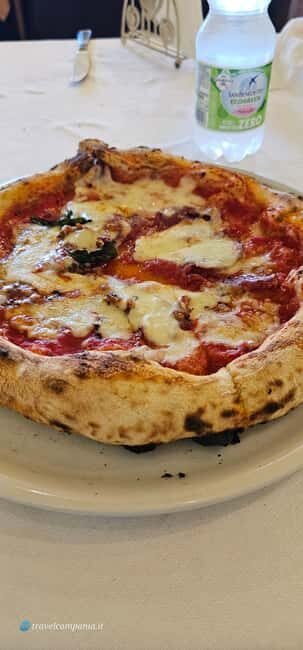
The lunch is a practical win too: you finish with a margherita pizza or cherry-tomato spaghetti and water near the park entrance. If you’re sensitive to walking, keep in mind the tour is not suitable for wheelchair users, and the itinerary can shift with crowds and weather.
This is also where the human touch shows. In my tour experience, the guide (Paolo) was engaging and clear, and Angelo from Travelcampania helped keep things running smoothly; one guest even noted the restaurant owner arranged a lift so they could catch their train on time.
In This Review
- Key things I’d circle on this Pompeii tour
- First stop: Finding the guide and getting into Pompeii quickly
- Teatro Piccolo: Roman entertainment in miniature form
- Terme Stabiane: The city’s rhythm through daily life
- The Lupanare frescoes: where history feels uncomfortably real
- Streets, shops, temples, and the way the city fits together
- Foro Civile di Pompei: the city’s power center in walking distance
- Wrap-up and lunch: pizza or cherry-tomato spaghetti with water
- Price and value: why $82 makes sense for a short, guided highlights run
- Who this Pompeii tour is best for
- Booking decision: should you book this Pompeii tour?
- FAQ
- How long is the Pompeii tour with lunch?
- Where do I meet the guide?
- Does the tour include skip-the-line entry?
- What is included with lunch?
- Are alcoholic or carbonated drinks included?
- Is this tour wheelchair accessible?
Key things I’d circle on this Pompeii tour
- Skip-the-line entry and express security so you start your walk sooner
- A guided route that hits the city’s power and daily life, not just a couple of highlights
- Teatro Piccolo and public spaces that help you picture what people did all day
- The Lupanare frescoes showing how the eruption preserved ordinary, human details
- Foro Civile di Pompei as the clearest “this is where civic life happened” moment
- Lunch on-site with margherita pizza or spaghetti plus water, not a random off-site stop
First stop: Finding the guide and getting into Pompeii quickly
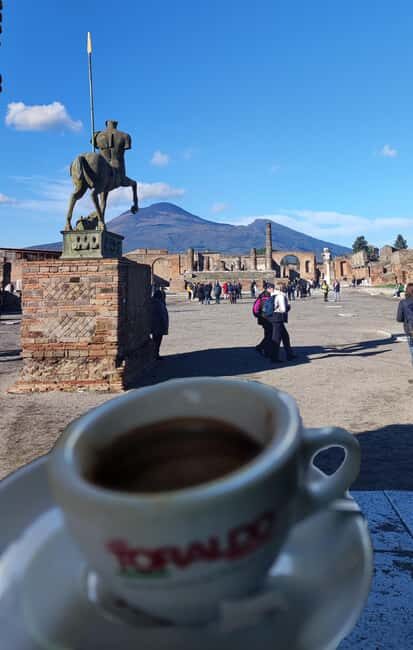
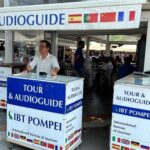
You’ll meet your guide at the Wellcome box area in Pompeii, right by the EUROPARKING lot. From there, your guide handles the tickets for you and helps you move through the skip-the-line flow, including an express security check. That matters because Pompeii is popular, and waiting around is the opposite of fun.
Once you’re through, you begin right away with a guided orientation on what you’re looking at and how the city worked before Vesuvius changed everything in 79 AD. In a short 2-hour format, that quick start is key: you don’t just walk—you build a map in your head as you go.
Practical tip: wear shoes you can walk in for a while. Pompeii ruins involve uneven ground, and your route may change slightly depending on crowd levels and weather. A sun hat and reusable water bottle are worth it, since you’ll be outside for parts of the walk.
A few more Pompei Campania tours and experiences worth a look
Teatro Piccolo: Roman entertainment in miniature form
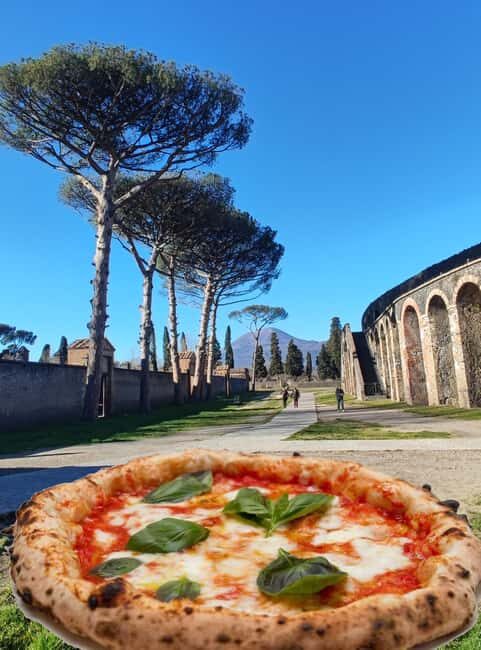
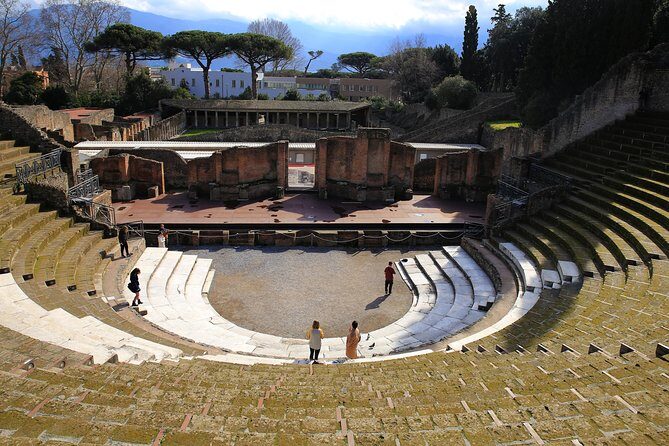
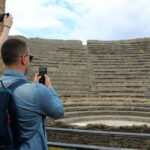
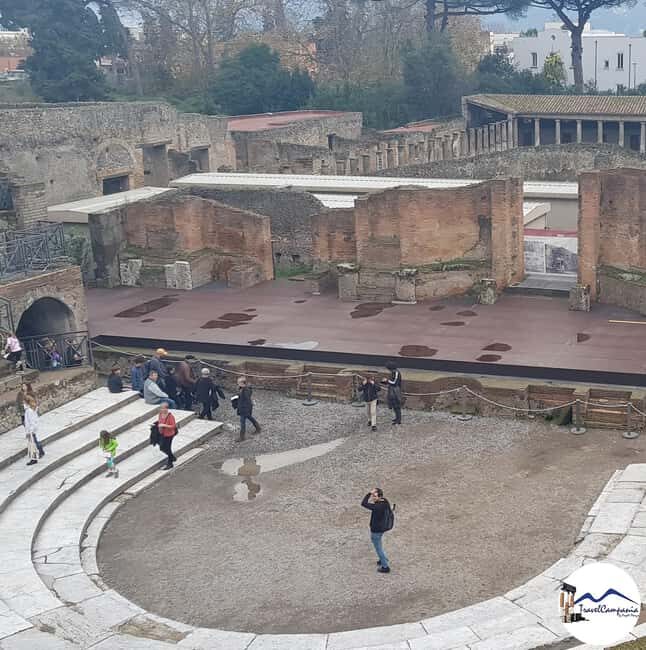
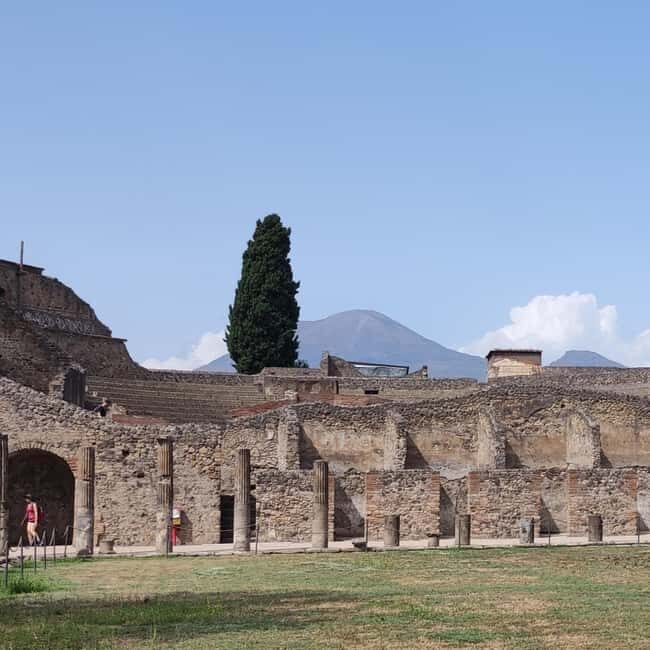
One of the early structure stops is Teatro Piccolo. This smaller theater helps you get a sense of how Romans organized leisure. Even if you’re not a theater person, the shape and layout give you something tangible: where people sat, how events were watched, and how performance space fit into street life nearby.
Your guide uses the stop to connect architecture to behavior. That’s what turns ruins from “cool rocks” into a place where you can picture real people moving around, waiting their turn, and gathering for events.
A possible drawback here: like many Pompeii stops, it can be photo-friendly but crowded depending on the hour. If you want quieter photos, keep an eye on when your group is moving versus stopping.
Terme Stabiane: The city’s rhythm through daily life
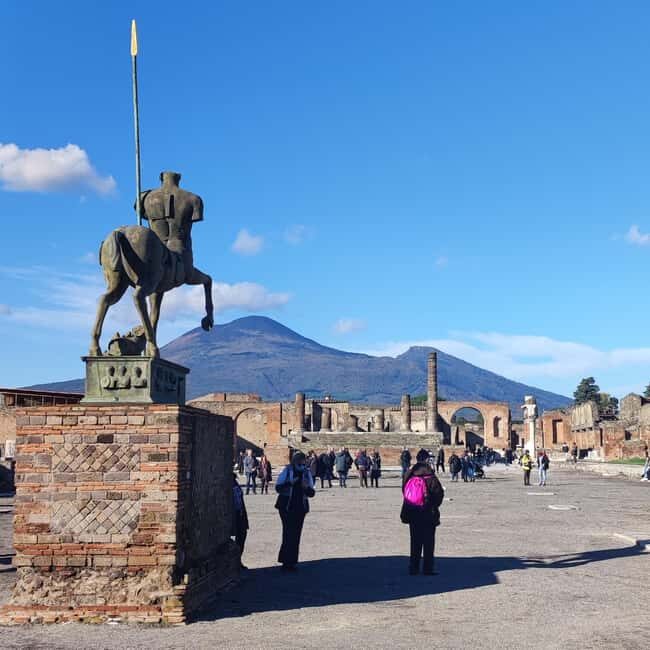
Next up is Terme Stabiane, Pompeii’s bath complex area. Even in just a brief guided segment, baths are a smart focus because they weren’t only about hygiene. They were social hubs—people met, talked, and spent time in routines that were as normal then as a café meetup is now.
The guide’s job is to help you read the ruins without getting lost in details. You’ll see how a large civic building could include areas with different functions, and how public life shaped the city’s layout.
For you, the payoff is perspective. When you later see private homes, shops, and temples, you’ll understand that Pompeii wasn’t a single “dead city.” It was a working system of public and private spaces tightly connected.
The Lupanare frescoes: where history feels uncomfortably real
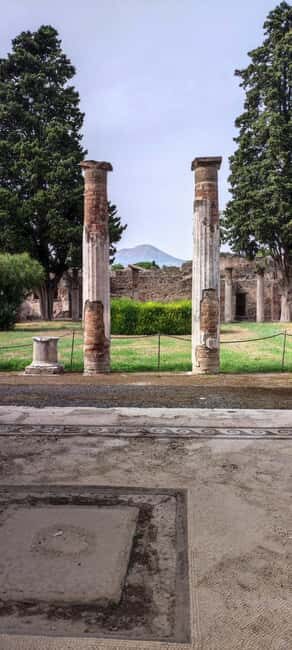
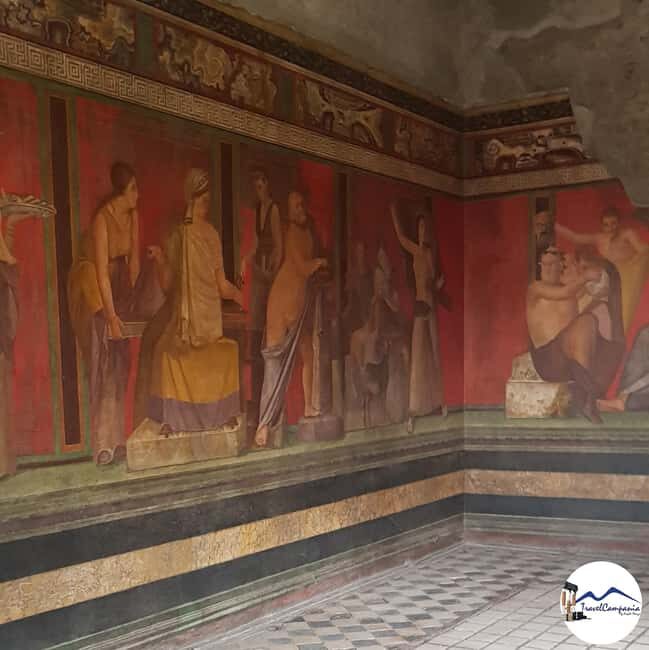
Then comes the standout emotional stop: the Lupanare. This was a brothel, and the reason it’s such a focus on guided tours is preservation. The eruption protected frescoes that depict scenes linked to the building’s function, giving you a rare window into private, everyday realities.
It’s important to keep expectations realistic. This is not a polished museum exhibit. It’s an ancient site that can feel direct and even awkward, especially if you’re expecting only grand temples and forums. But that’s also why it’s powerful. You learn that Pompeii was made of ordinary behaviors too—advertising, routines, and how people navigated relationships.
Your guide also uses this stop to connect the dots back to Vesuvius and the city’s tragic fate. You’ll walk through streets that were covered in lava after the eruption in 79 AD, and the Lupanare helps make that preservation meaningful rather than abstract.
If you’re traveling with someone who prefers only “grand” ruins, this is the moment where you’ll either love the honesty or steer away from the details. Either way, it’s one of the clearest examples of how the city’s death also became a time capsule.
Streets, shops, temples, and the way the city fits together
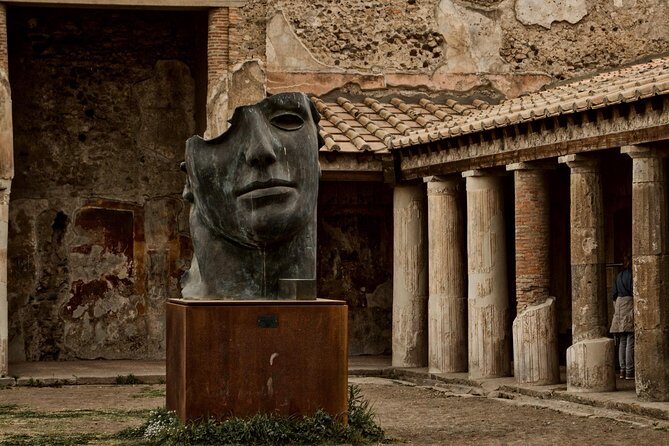
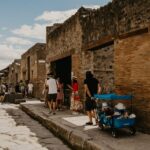
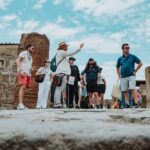
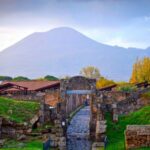
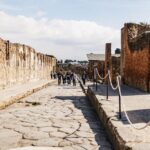
Between major monuments, you’ll spend time walking Pompeii’s streets—covered in lava after Vesuvius—to get the sense of scale and flow. This is where the tour earns its value: you don’t only stop at big-ticket sites. You move through corridors of daily life—private homes, shops, and temples—so you can understand how the city felt underfoot.
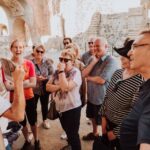
Your guide also stops at various points for photos. That’s a practical benefit in a place where you’ll otherwise keep moving and forget to document what you’re seeing.
One key consideration: the route’s exact path may vary. That’s not a problem by itself, but it does mean you shouldn’t plan on a perfectly identical sequence of stops if you’re comparing with someone else’s photos.
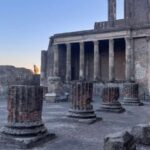

Foro Civile di Pompei: the city’s power center in walking distance
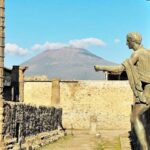
The Foro Civile di Pompei is one of the most important moments of the tour because it’s where civic life and authority show up in architecture. The forum area helps you understand how public decision-making, ceremonies, and daily movement were organized around shared spaces.
If Basilica and Roman Forum are on your “I really want to see that” list, this is the section that tends to click. Your guide helps interpret what you’re looking at so it doesn’t feel like a pile of stone columns. The goal is to make you recognize the difference between domestic spaces (homes), commercial life (shops), and civic power (forum areas).
This part can also be the most visually impressive, especially when light hits the ruins and you’re standing where people once stood to look at each other and conduct business. In a short tour, this is where you get the clearest big-picture payoff.
Wrap-up and lunch: pizza or cherry-tomato spaghetti with water
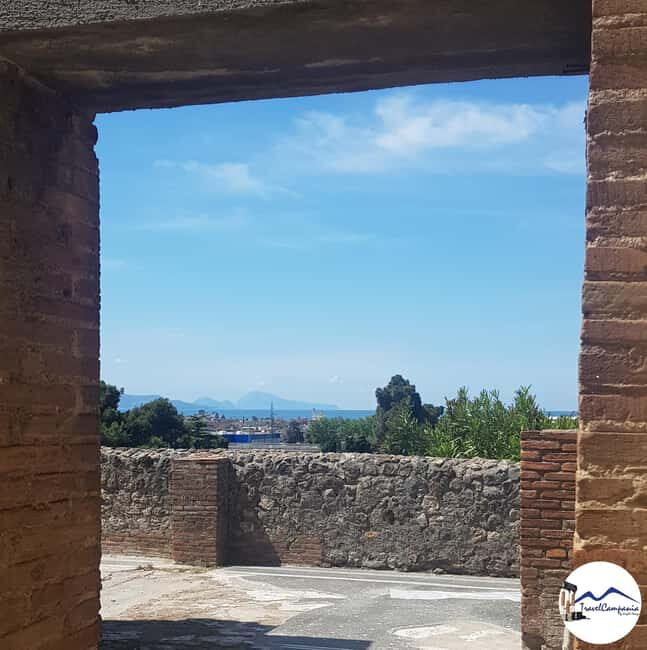
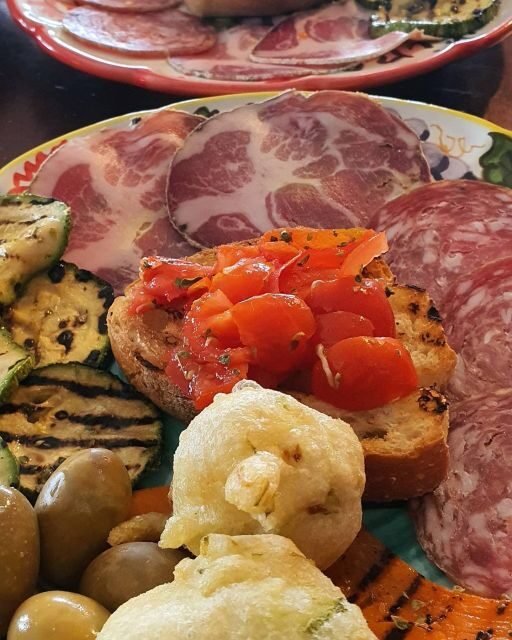
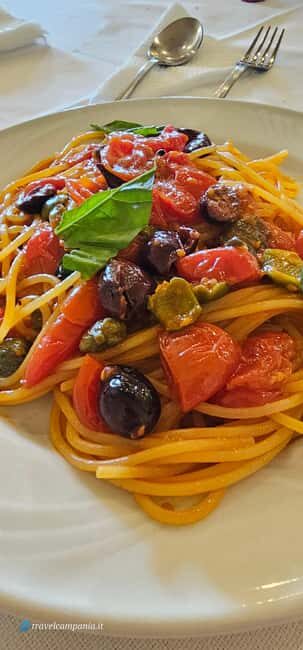
After your walking portion, you head to Ristorante pizzeria Turistico near the entrance to the archaeological park of Pompeii. Your included meal is margherita pizza or spaghetti with cherry tomatoes, plus water. It’s simple food, but that’s part of the value: you get fed without hunting for a place at the end of a long walk.
This also means you avoid the common travel trap of arriving hungry, eating late, and losing momentum. You finish the tour, recharge, and then plan your next move with your energy still intact.
One bright note from the on-the-ground experience: Angelo was described as friendly and helpful, and the restaurant owner was kind enough to help at least one guest coordinate a lift to the station so they wouldn’t miss their train. That kind of practical kindness is exactly the sort of small win that can make a day feel smoother.
Price and value: why $82 makes sense for a short, guided highlights run
At $82 per person for a 2-hour Pompeii tour with skip-the-line entry, a live guide, and lunch, you’re paying for two things: time saved and interpretation. Pompeii is big. Even if you’ve visited before, walking without guidance can turn into a hit-or-miss experience where you miss the stories that connect each ruin.
This package includes priority entrance, ticket handling by your guide, and express security. Those details sound small, but in Pompeii they can shave off the kind of delays that drain your attention. Then you get a structured route that focuses on major sites like the Roman Forum, the Lupanare frescoes, and key areas like Teatro Piccolo and Terme Stabiane.
You’re also not stuck eating on your own right after you finish. The meal choice is straightforward—pizza or spaghetti with cherry tomatoes, plus water—so it’s easy to decide without sorting a menu in a rush.
For me, the value works best if you want an organized highlights tour rather than a self-guided marathon. If you prefer hours of wandering and deep independent exploration, you might consider spending more time on your own and customizing your route. But for a compact day-plan, this is a strong match.
Who this Pompeii tour is best for
This tour fits you well if:
- You’re visiting Pompeii for the first time and want the main stops plus context
- You’d rather spend energy learning and walking than figuring out where to go next
- You want lunch included without planning a separate meal stop
It may be less ideal if:
- You need wheelchair-friendly access (it is not suitable for wheelchair users)
- You want a totally flexible route with no guided structure
- You get uncomfortable with the specific content related to the Lupanare
Booking decision: should you book this Pompeii tour?
I’d book it if you want a clear route through Pompeii’s most important areas in a short window, with an actual guide doing the connecting-the-dots work. The skip-the-line setup plus ticket handling is a real time-saver, and the lunch near the entrance keeps the day from dragging at the end.
I’d skip or adjust expectations if you’re planning to see Pompeii at a slow pace on your own, or if mobility issues make walking difficult. Also, if the idea of touring the Lupanare sounds like a deal-breaker, you’ll want to weigh that before committing—because it’s one of the tour’s signature stops.
If you’re aiming for a confident, efficient Pompeii day—history you can see, places you can locate, and a meal waiting at the finish—this one delivers.
FAQ
How long is the Pompeii tour with lunch?
The tour lasts 2 hours, with lunch (food tasting) included for about 1 hour.
Where do I meet the guide?
You meet your guide at the Wellcome box in Pompeii. You’re also directed to meet in front of the EUROPARKING parking lot.
Does the tour include skip-the-line entry?
Yes. You get priority entrance and you also pass through an express security check.
What is included with lunch?
You’ll have a margherita pizza or spaghetti with cherry tomatoes, plus water.
Are alcoholic or carbonated drinks included?
No. Drinks like alcoholic and carbonated beverages are not included.
Is this tour wheelchair accessible?
No. It is not suitable for wheelchair users.