REVIEW · POMPEI CAMPANIA
Pompeii: AR Glasses Augmented Reality Tour
Book on GetYourGuide →Operated by AR Tour srl · Bookable on GetYourGuide
Pompeii feels different when the stones talk back. This AR glasses tour overlays how the city looked before the 79 A.D. eruption right onto today’s ruins, so you can compare then and now as you walk. I like that the experience is built around archaeologists’ reconstructions, and I really appreciate the multilingual audio that keeps you moving without needing to pause for every explanation. One thing to keep in mind: the AR effect depends on the 3D video/visuals and how clearly your device setup performs that day.
What I love most is the simple, practical flow: you get AR glasses, a tour assistant meets you on-site, and you’re guided through the site with help if anything feels off. I also like that the audio guide covers several languages—so you can pick what fits you instead of being stuck with just one option. The tour is also a good fit for families because it’s designed as a fun walking experience, not a long academic lecture.
My only caution is expectations around coverage. This tour focuses on major public areas and homes, but it does not include the suburban villa stops (so you won’t be seeing Villa dei Misteri). If that specific add-on is a must for you, you’ll want a different option.
In This Review
- Quick hits on Pompeii AR glasses
- Pompeii, but rebuilt on your walk
- Meeting point at Coffee Shop Vittoria (and how to spot your assistant)
- How the AR glasses overlay reality (and what to expect)
- Stop-by-stop: what you’ll actually see in 2 hours
- Your assistant and the live guidance you do get
- Audio guide languages: pick what keeps you comfortable
- Price and value: is $20 a good deal?
- What to bring so the walk feels easy
- Who this tour suits best (and who should look elsewhere)
- Tips to get the most from the AR effect
- Should you book this Pompeii AR glasses tour?
- FAQ
- Where does the Pompeii AR glasses tour start?
- How long is the tour?
- Is the Pompeii entry ticket included?
- What languages are available for the audio guide?
- Do you provide a live guide?
- Can people who already wear eyeglasses use the AR glasses?
- Is the tour suitable for children?
- What should I bring, and is it rain or shine?
Quick hits on Pompeii AR glasses
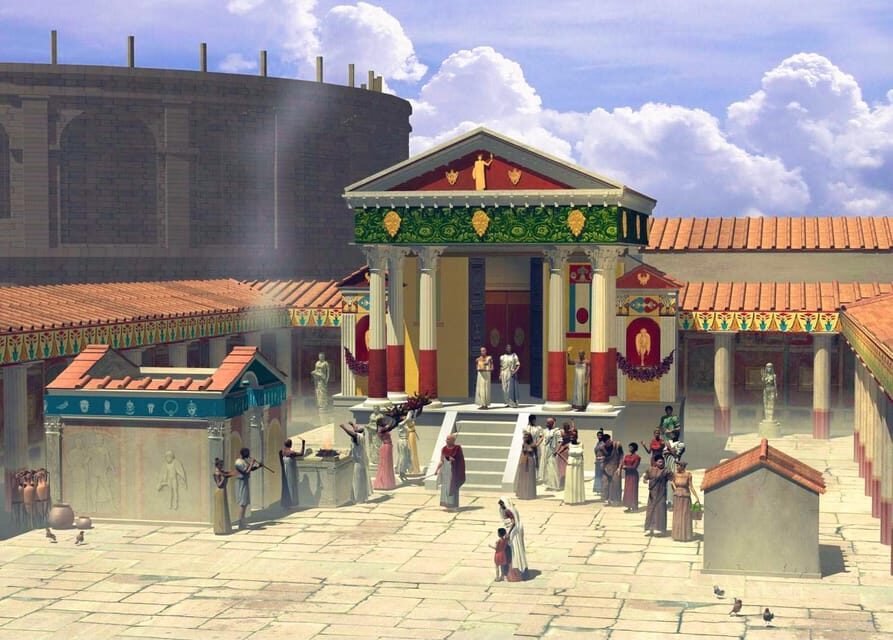
- Holographic reconstructions over real ruins so you can see the city as it was before the eruption
- Then-and-now overlap makes it easier to understand what you’re looking at
- Tour assistant with you the whole time to handle equipment and keep the route smooth
- Audio guide in many languages (English, French, Italian, Spanish, German, Portuguese)
- Designed for a small-group walk that works for a wide range of ages
- No Villa dei Misteri on this route, so plan accordingly
Pompeii, but rebuilt on your walk
Pompeii is already powerful on its own. You can stand in a theater, look at a doorway, and feel the weight of what happened in 79 A.D. This tour adds a second layer: the city as it once looked. With AR glasses, you see holographic reconstructions superimposed on the existing ruins, which turns “I think that used to be a temple” into “I can actually see where it stood and what it might have looked like.”
The best part is how fast your brain adjusts. Instead of reading about Pompeii at a museum pace, you’re walking through the site and watching major structures appear and disappear in place. The tour is built around the most significant areas—temples, theaters, houses, squares, and other key buildings—so the AR visuals match what most people want to understand.
Is it the same as a site guide pointing out tiny details from 3 inches away? Not exactly. But it’s a smart trade. You get a quick mental map of the city’s layout, and you keep moving at the pace of the walk.
If you're still narrowing it down, here are other tours in Pompei Campania we've reviewed.


Meeting point at Coffee Shop Vittoria (and how to spot your assistant)
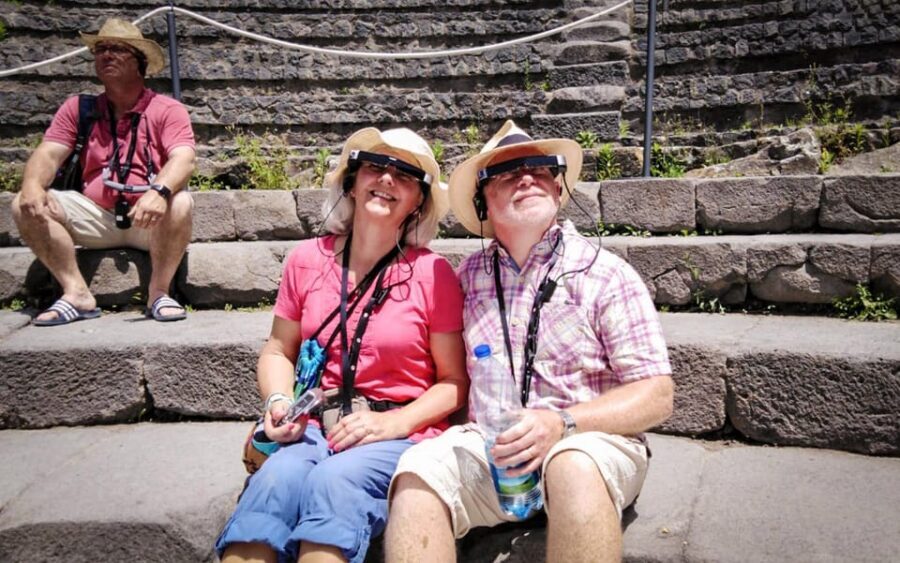
The tour starts at Coffee Shop Vittoria in Piazza Esedra (Porta Marina Inferiore), right next to the entrance. Your Tour Assistant will be holding a sign that says AR Tour, so you’re not hunting for someone in a crowd.
This meeting point matters more than it sounds. Pompeii can feel like one long blur when you’re trying to find the correct entry area. Starting at a clear, identifiable spot next to the entrance helps you settle in fast and get your equipment without scrambling.
If you’re running late, you’ll be waited on for a maximum of 5 minutes, then the tour starts out of respect for other participants. So if you’re unsure you’ll be there on time, it’s better to arrive a bit early and use the coffee shop area to get your bearings.
How the AR glasses overlay reality (and what to expect)
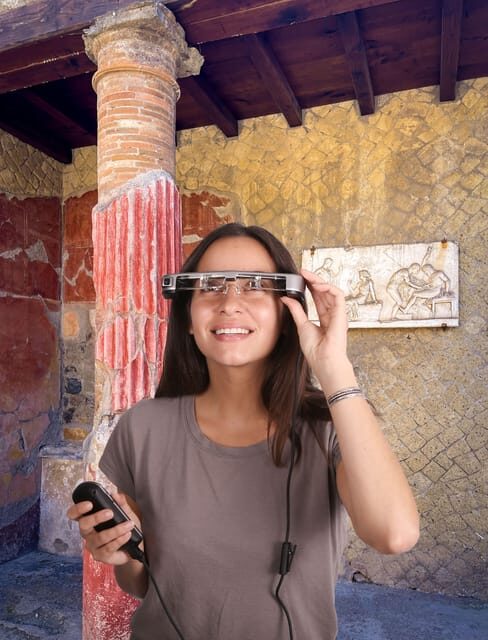
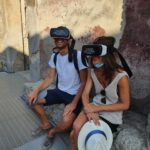
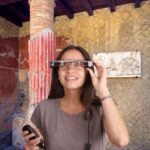
The core experience is simple: you put on AR glasses, and holographic reconstructions appear over the current ruins. The tour is designed specifically to let you see “before the eruption” in the same spot where you’re standing now.
You’ll also get guided context through audio descriptions. The AR visuals are paired with explanations about the city’s history and what daily life may have looked like before 79 A.D. It’s not just a slideshow. The design pushes you to connect what you’re seeing in front of you with the story you’re hearing through the audio guide.
If you wear eyeglasses already, that’s not a deal-breaker. The AR glasses can also be worn by participants who have eyeglasses. Bring comfortable clothing and sun protection too—because the walk is outdoors and runs rain or shine.
One small practical note: because this is AR, the “wow” moment depends on the quality of the 3D video/visuals and how well the equipment is set up for you. In other words, it’s still a tech experience, not magic.
Stop-by-stop: what you’ll actually see in 2 hours
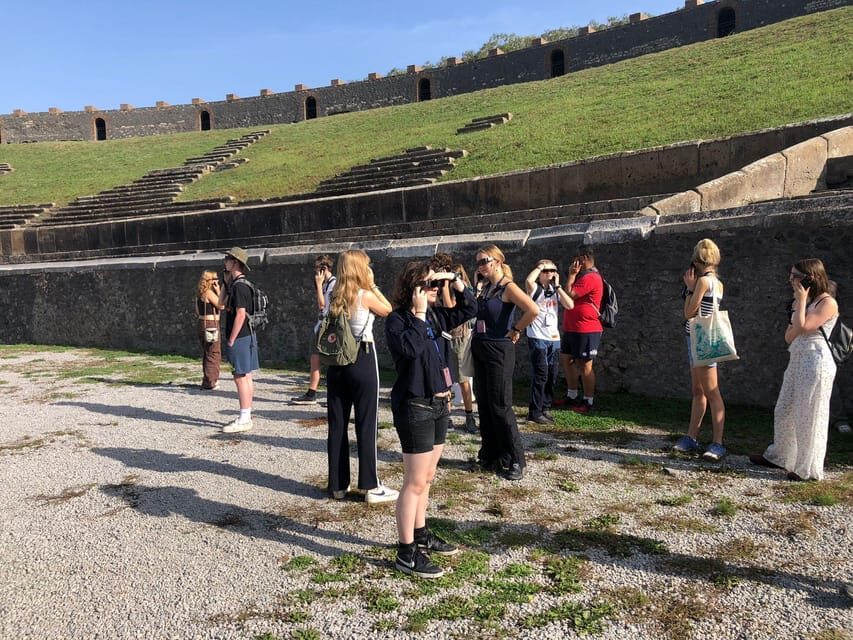
This is a 2-hour guided walking tour with a start and finish back at Coffee Shop Vittoria. The route includes guided segments through Pompeii where you see major reconstructions placed over existing ruins.
Here’s what you can expect the tour to focus on:
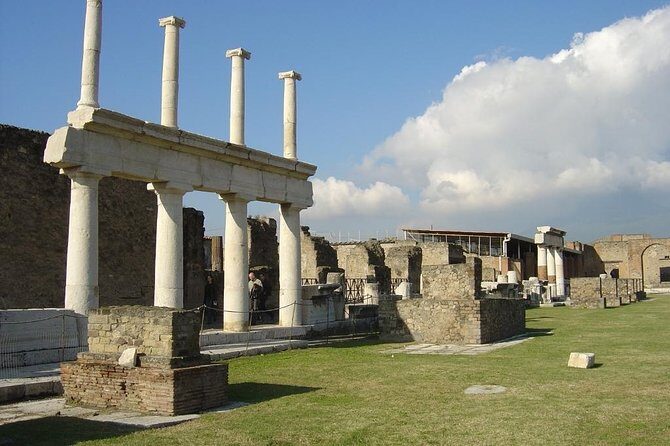
- Temples and big public buildings: You’ll see them both as ruins and as reconstructed structures, which helps you understand scale.
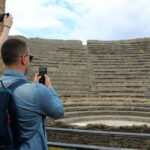
- Theaters: Pompeii theater spaces are easier to read when the AR layer shows what the area looked like before it collapsed.
- Houses and residential areas: The overlay makes it easier to picture how rooms and courtyards might have been arranged.
- Squares and key streets: Seeing a reconstructed public space makes the city feel less like scattered stones and more like a working place.
The reconstructions are developed by teams of archaeologists and experts. That’s important for you because it means the goal isn’t a generic fantasy city. The AR is meant to reflect a research-based version of how the buildings and key parts of Pompeii may have looked before the eruption.
Drawback to note: the tour does not include suburban villas, including Villa dei Misteri. So if your priority is that specific site, you’ll need to add it separately.
Your assistant and the live guidance you do get
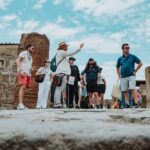
Even though the experience uses AR and a detailed audio guide, you’re not on your own. A Tour Assistant meets you at Coffee Shop Vittoria, hands over the necessary equipment, explains how to use the AR glasses, and walks with you during the entire tour.
A good guide makes a difference here because AR can feel confusing if you have to troubleshoot alone. The assistant is there so you can keep your place in the route and make sure your device is working the way it should.
The live tour guidance is provided in English and Italian, and the audio guide includes additional languages. That pairing is a smart design: live help for questions and setup, plus audio depth so you’re not relying on one language alone for the full story.
If you’re someone who likes learning but doesn’t want to sit through a long talk, this hybrid approach is a strong match. You’re walking and learning at the same time.

Audio guide languages: pick what keeps you comfortable
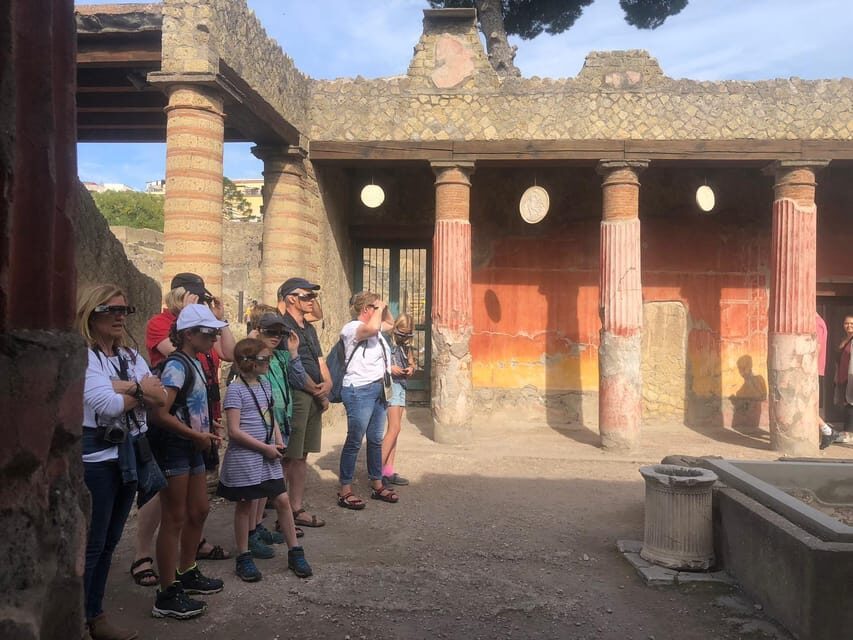
You’ll have an audio guide with descriptions available in English, French, Italian, Spanish, German, and Portuguese. The tour itself also includes live guidance in English and Italian.
For practical travel planning, that’s a big deal. It means you can choose the language that lets you follow details without constantly translating in your head. You’ll also keep your focus on the ruins instead of stopping to read notes.
Also, the audio is described as detailed, and it’s timed to what you’re seeing as the AR overlays appear. That’s what makes the experience feel connected rather than like two separate parts: visuals on one side and facts on the other.
Price and value: is $20 a good deal?
At $20 per person for a 2-hour Pompeii experience, this is priced like a value-focused guided walk. What you’re paying for is not the archaeological entry ticket (that’s separate), but the AR glasses experience, the tour assistant support, and the audio guide system.
So your real budget looks like:
- the tour price
- plus Pompeii entry ticket (not included)
Is it worth it? In my view, it can be—especially if you want a clearer sense of how Pompeii worked as a city. The AR layer helps turn confusion into understanding fast, particularly around big structures like theaters and temples where the ruin alone can be hard to visualize.
If you already know Pompeii well and want ultra-fine detail, you might find that a traditional ticketed tour with a specialist guide could feel more exact. But for most visitors, the AR overlay offers a shortcut to comprehension without slowing down your day.
What to bring so the walk feels easy
This is an outdoor walk, and it runs rain or shine. Pack for comfort first, then for the sun.
Bring:
- Comfortable shoes (you’ll be walking on uneven ground)
- Sunglasses
- Sun hat
- Sunscreen
- Water
- Weather-appropriate clothing
And keep your bag situation simple. Luggage or large bags are not allowed.
Also, if you’re used to traveling light, this helps you pack smarter. You’re not weighed down by oversized items, and you can focus on the AR experience and the route.
Who this tour suits best (and who should look elsewhere)
This is a fun walking tour suitable for all ages, but there are clear limits: it is not suitable for children under 8 years, and it is not suitable for wheelchair users.
It’s a great fit if you:
- want a clear “then and now” understanding of Pompeii
- enjoy tech-aided learning without turning it into a museum day
- prefer guided movement through a site rather than wandering alone
- travel with mixed comfort levels for walking and language
It may not be the best fit if:
- you specifically want Villa dei Misteri or suburban villas
- you need full wheelchair accessibility (this option isn’t listed as suitable)
- you dislike AR/3D video style explanations and want only traditional, in-person pointing
Tips to get the most from the AR effect
A few practical tweaks can make a noticeable difference.
First, arrive ready to listen. The audio descriptions are part of the experience, and you’ll get more out of it if you treat them as the main guide rather than background noise.
Second, keep your head position steady. With AR overlays, you’ll get better results when you’re not constantly craning around while the hologram tries to align.
Third, don’t try to rush. If you hurry through the stops, you miss the chance to compare the ruin’s current state with the reconstructed layer.
Finally, bring the right sun setup. Even in “rain or shine,” bright light and heat can affect your comfort. Sunglasses, hat, and water keep you in the moment instead of thinking about your discomfort.
Should you book this Pompeii AR glasses tour?
I’d book it if you want a fast, clear way to understand what you’re seeing at Pompeii—especially if you’re the type who enjoys learning through visuals and a guided route. The combination of AR reconstructions, a tour assistant to help with gear, and detailed audio in multiple languages is a strong value for $20, as long as you’re also planning to buy your Pompeii entry ticket separately.
I’d skip it (or look for another add-on) if Villa dei Misteri is your main goal. This tour is focused elsewhere, and you don’t want to pay for an experience that leaves out the one thing you came for.
If you’re on the fence, think about your learning style. If you like connecting ruins to how they once looked, this AR overlay approach will likely click quickly.
FAQ
Where does the Pompeii AR glasses tour start?
The meeting point is Coffee Shop Vittoria in Piazza Esedra (Porta Marina Inferiore), right next to the entrance.
How long is the tour?
The guided tour lasts 2 hours.
Is the Pompeii entry ticket included?
No. The tour does not include the entry ticket.
What languages are available for the audio guide?
The audio guide is available in Italian, English, French, German, Portuguese, and Spanish.
Do you provide a live guide?
Yes. A live tour guide is available in English and Italian, and a Tour Assistant accompanies and assists you during the full tour.
Can people who already wear eyeglasses use the AR glasses?
Yes. AR glasses can also be worn by participants who already wear eyeglasses.
Is the tour suitable for children?
It is not suitable for children under 8 years.
What should I bring, and is it rain or shine?
Wear comfortable shoes, and bring sunglasses, a sun hat, sunscreen, water, and weather-appropriate clothing. The tour runs rain or shine.