REVIEW · POMPEI CAMPANIA
Pompeii Ruins: Virtual Tour 360° with Authorized Storyteller
Book on GetYourGuide →Operated by POMPEII DISCOVERY VIRTUAL TOUR 360° · Bookable on GetYourGuide
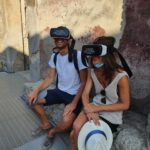
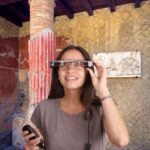
Pompeii goes from ruins to a working city. This tour pairs a live authorized local storyteller with 360° virtual reality headsets so you can picture everyday life right before Vesuvius, in 79 A.D.
I like the way the guide anchors you with real-world context, then the VR fills in what stone walls can’t. I also love the focus on specific places, not vague sweeping facts. One thing to plan for: the Pompeii entrance ticket isn’t included, so you’ll want to budget extra before you go.
In This Review
- What I think this tour gets right
- Quick hits: why this Pompeii VR tour is worth a look
- Pompeii Ruins, but with a storyteller holding the map
- Price and ticket reality: what you pay for (and what’s extra)
- How the VR guide experience works (and how to get the most from it)
- Stop 1: The Forum as the center of city life
- Stop 2: The imposing Basilica and what power looked like
- Stop 3: Baths that explain routine, not just romance
- Stop 4: House of the Faun or House of Menander
- Stop 5: The Bakery and how work kept the city going
- Stop 6: Large Theatre and performance as everyday culture
- Stop 7: Quadriporticus and gladiators training
- Stop 8: Lupanar nightlife and a guided reality check
- Stop 9: Shops in action and the feeling of a lived-in city
- The guide makes or breaks it (and this one has real praise behind it)
- Practical tips: what to bring and how to prepare
- Who this Pompeii VR tour suits best
- Who should rethink the headset experience
- Booking and timing: what you need to check before you commit
- Should you book Pompeii Ruins: Virtual Tour 360° with an authorized storyteller?
- FAQ
- What’s included in the Pompeii VR tour?
- Is the Ruins entrance ticket included?
- How long is the tour?
- What languages are available?
- Is it a private group tour?
- Which places of Pompeii are covered with VR?
- Is the tour wheelchair accessible?
- Is it suitable for children?
- Is it safe for people with epilepsy?
What I think this tour gets right
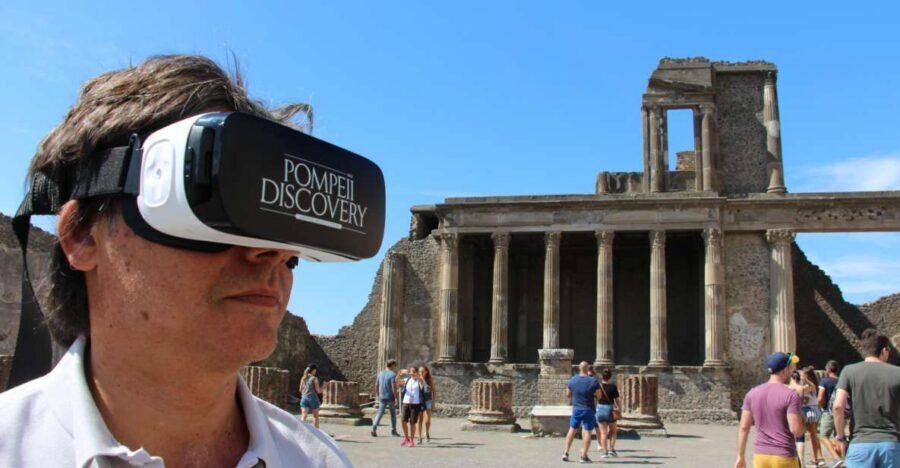
The big win is the combination of live narration and 3D scenes. With VR, you don’t just stand in the Forum and guess what happened there—you can watch activities around key spots as the storyteller leads you through the day’s rhythm.
My other favorite is that the tour doesn’t treat Pompeii as one long museum hallway. You’ll go from public buildings to homes, then to performance and nightlife, including the Lupanar. The consideration I’d keep in mind is that VR headsets mean this experience isn’t suitable for people with epilepsy.
Quick hits: why this Pompeii VR tour is worth a look
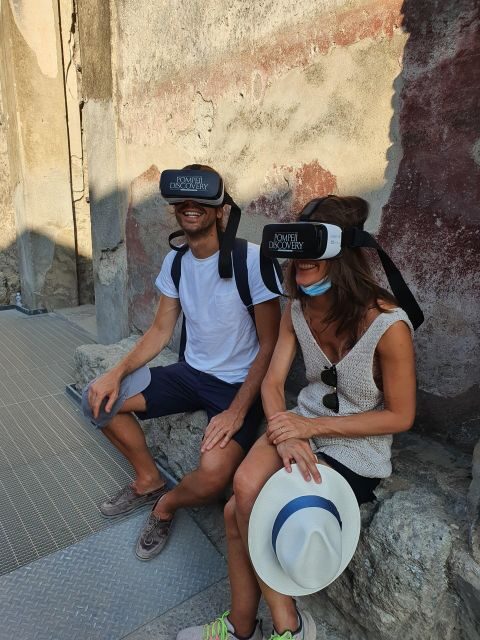
- A private-group experience with a live, authorized guide in English or Italian
- VR for each participant, not just a single demo headset
- Nine named Pompeii locations covered through 3D, including the Forum and the Lupanar
- Daily-life moments, like shops in action and a theatrical performance
- Quadriporticus + gladiator training, which helps the scale make sense
- Skip the ticket line, so you spend more time inside the site
If you're still narrowing it down, here are other tours in Pompei Campania we've reviewed.


Pompeii Ruins, but with a storyteller holding the map
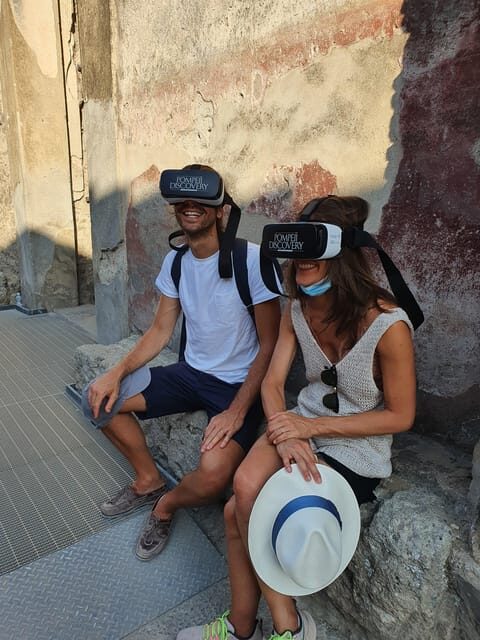
Pompeii is huge, and it’s easy to get lost in the details. This tour helps because the storyteller guides your attention in a practical order, while the VR adds the missing pieces you can’t fully reconstruct on foot.
You’ll be with a private group, so the pace and explanations tend to feel personal. That matters at Pompeii, where standing still too long can turn curiosity into fatigue.
Price and ticket reality: what you pay for (and what’s extra)
The cost is listed as $226.57 per group up to 2, and the tour runs with a validity of 1 day with starting times you’ll need to check. The price covers the live local guide, VR headsets for each participant, and the guided experience itself.
What’s not included is the entrance ticket to the ruins. In practice, that’s the one part you must add on top. If you compare the total cost to hiring a guide and paying for your own entry, the value is strongest when two people split the group price and you’re both keen on the VR component.
How the VR guide experience works (and how to get the most from it)
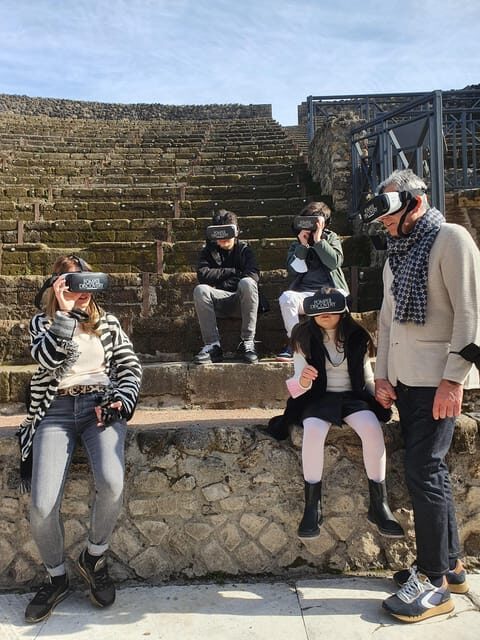
This isn’t a standalone VR show where you sit and watch. It’s a guided tour enriched by 3D virtual reality at nine major locations. That means the storyteller does the interpretation, and the VR helps you visualize how the city functioned before the eruption.
A practical tip: wear your comfortable shoes and keep your pace steady. You’ll move from stop to stop on uneven ground, and the VR moments work best when you’re not rushing to the next viewpoint.
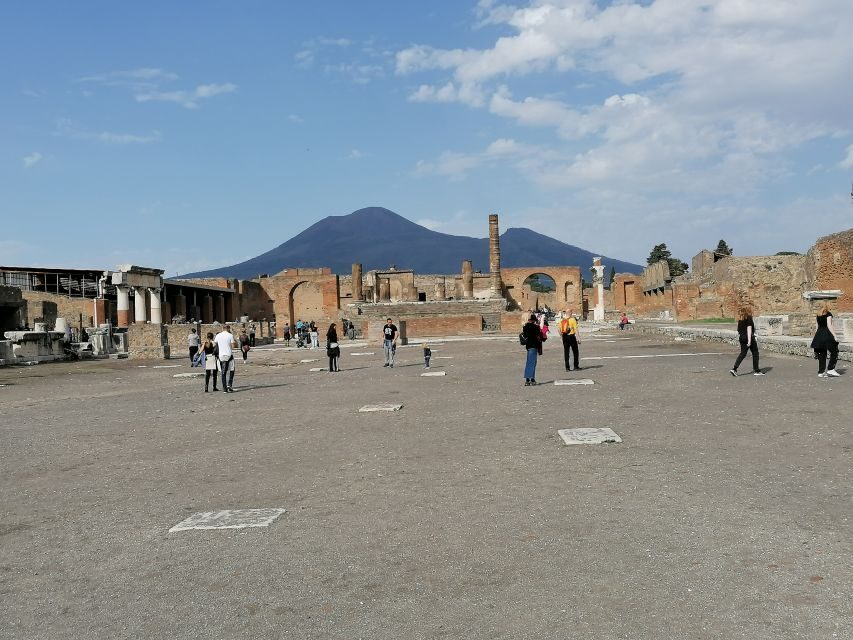
Stop 1: The Forum as the center of city life
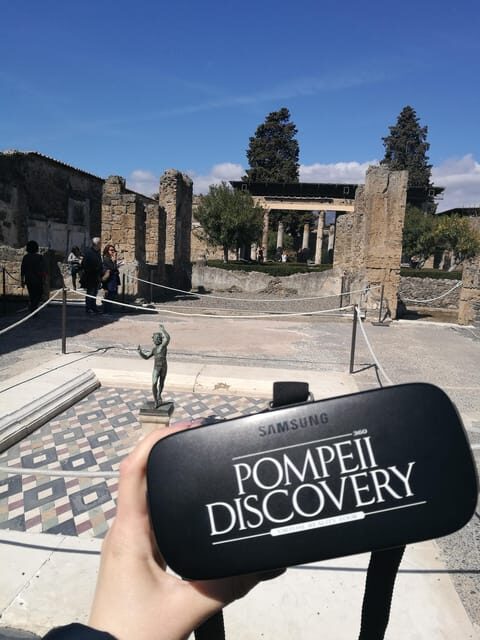
The Forum is where Pompeii’s public life would have felt concentrated. The tour leans into that by pairing the storyteller’s explanation with VR scenes that help you see the space as more than just columns and stone steps.
If you’ve ever visited ruins and thought, I know something happened here but what exactly, this is where the tour answers that feeling. You’ll get a clearer sense of movement through the civic core—who would meet, trade, and talk there.


Stop 2: The imposing Basilica and what power looked like
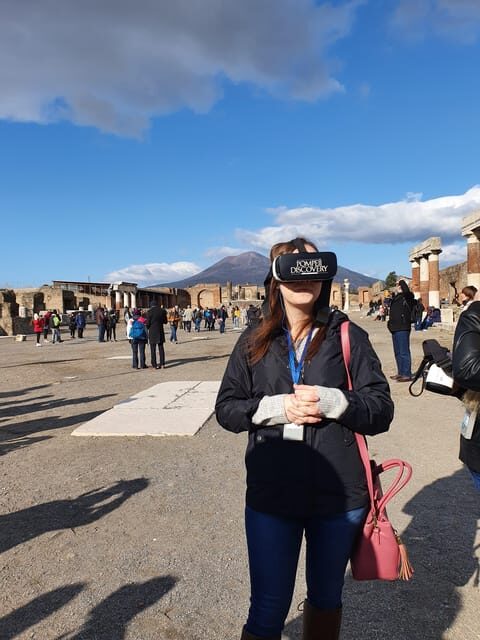
From the Forum, you move to the Basilica, one of Pompeii’s most commanding structures. The tour frames it as part of how people organized daily business and authority in the city.
The VR layer helps you connect the building’s scale to everyday use, not just architectural style. You’ll likely leave with a better grasp of why these public buildings dominated the skyline.
Stop 3: Baths that explain routine, not just romance
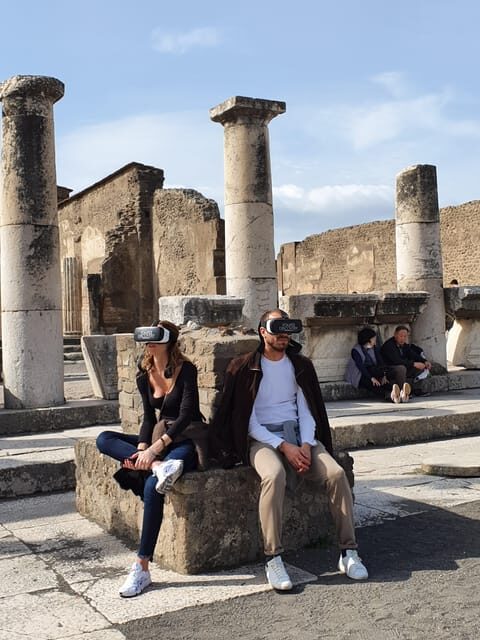
Pompeian baths aren’t only about soaking and leisure. They’re about routine, social time, and the way people structured their day around shared spaces.
On this tour, the VR additions make the baths feel more like a place with motion and purpose. You’ll be able to picture the flow through rooms and the atmosphere, rather than treating it like a static diagram.
Stop 4: House of the Faun or House of Menander
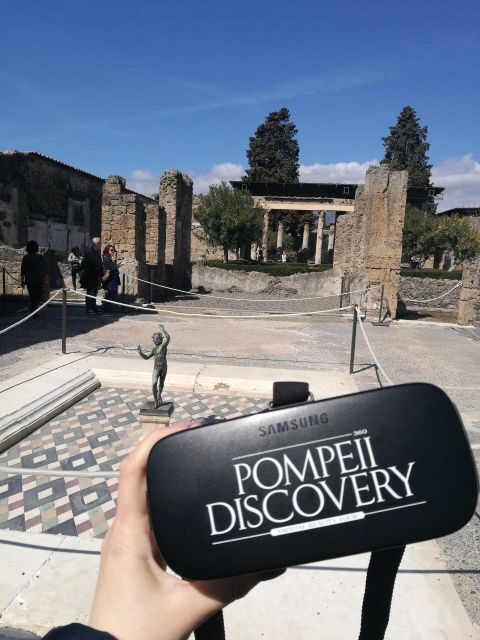
You’ll get one of two home stops, either the House of the Faun or the House of Menander. That choice matters because both houses help you contrast private life with the public world you saw earlier.
Even with the VR, houses in Pompeii don’t work as a simple wow-factor photo stop. The real value comes when the storyteller ties room layout and decoration to the people who lived there. You’ll come away thinking, These spaces weren’t staged for tourists—they were normal homes with social rules.
Stop 5: The Bakery and how work kept the city going
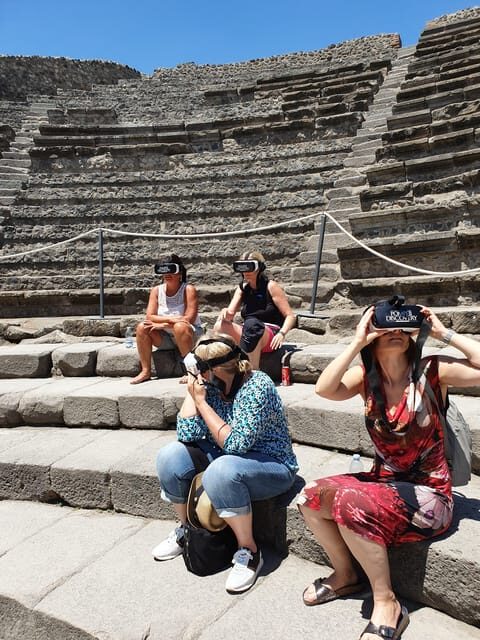
The tour includes a stop at the bakery, and this is one of the most useful switches in the whole experience. Pompeii isn’t only temples and theaters; it’s also production and food supply.
If you like understanding how a city actually worked, the bakery stop gives you that backbone. The VR element supports the idea that daily life depended on steady, practical jobs.
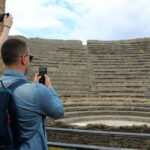
Stop 6: Large Theatre and performance as everyday culture
The Large Theatre brings a performance angle to the visit. Instead of turning theatre into a one-time event, this tour connects it to how culture played out for residents, not only how it looked in archaeology photos.
You’ll also have that sense of timing because the experience includes a theatrical performance tied to the VR storytelling. It’s the kind of moment that makes the space feel like it had a soundtrack and an audience—before you even leave the ruins.
Stop 7: Quadriporticus and gladiators training
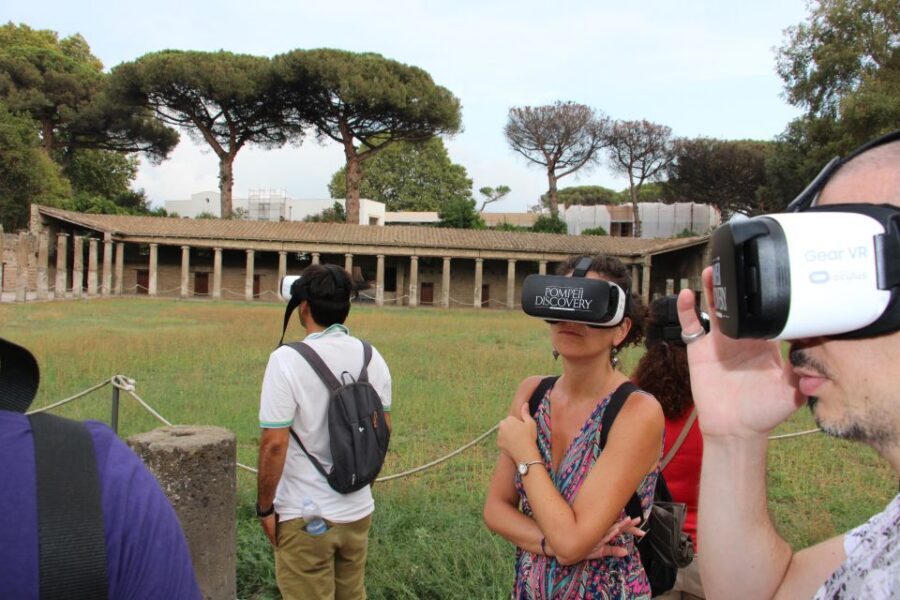
This is where the tour leans into spectacle in a way that helps the site make sense. The Quadriporticus stop includes the chance to see gladiators training through the VR layer.
For me, the practical value is clarity. Training spaces and arenas can feel abstract until you can visualize the activity in context. When the VR shows the training action, you better understand why the surrounding architecture mattered.
Stop 8: Lupanar nightlife and a guided reality check
The tour includes the Lupanar, Pompeii’s well-known brothel area. VR adds a “nightlife” feel around and inside the space, so you’re not stuck imagining what these walls might have meant.
I’d approach this stop with a mindset of historical context, not shock. This tour is built to explain Pompeii as a functioning city, which means you’ll see the human side of everyday life, even when it’s uncomfortable.
Stop 9: Shops in action and the feeling of a lived-in city
One of the most compelling parts of the experience is that you don’t just walk through sightseeing points. You also get moments that suggest commerce and street life—like activities of the shops—built into the VR experience as the storyteller guides you.
That focus matters. Pompeii can feel like a set of separate buildings unless someone connects them into a day-in-the-life map. This tour tries hard to do that.
The guide makes or breaks it (and this one has real praise behind it)
In the reviews, the guide comes through strongly, and one name stands out: Maria Novella. One review praises her professionalism and the way the virtual experience amplified the beauty of the archaeological site.
Another review highlights that the augmented/VR device complements the guide’s explanations and adds real value, not just added tech. And a group of four describes enjoying the narrative style of the virtual tour, crediting the storyteller for transforming the ruins into something that feels alive.
Practical tips: what to bring and how to prepare
You’ll want comfortable shoes. Pompeii’s ground can be rough, and you’ll be moving through multiple areas while switching between walking and headset moments.
You’ll also need an ID for children (passport or ID card). If you’re bringing anyone in the group, confirm everyone is within the tour’s age guidance: it’s not suitable for children under 8.
Who this Pompeii VR tour suits best
This is a smart fit if you want Pompeii facts, but you also want the city to make emotional sense. The VR and guided storytelling are especially helpful for first-timers who feel overwhelmed by how much there is to see.
It’s also a good choice for couples who want a private group vibe and can share the per-group price. If you’re traveling with someone less excited by archaeology details, VR scenes can bring them along.
Who should rethink the headset experience
The tour isn’t suitable for people with epilepsy, based on the activity’s stated limitations. That’s the main medical-style caution you should take seriously.
It’s also not a fit for kids under 8, so if you’re traveling as a family, you may need a different format. On the other hand, it is wheelchair accessible, which is a big plus if you’re planning around mobility needs.
Booking and timing: what you need to check before you commit
The tour is valid for 1 day, and you should check availability to see starting times. Pompeii has busy periods, so selecting the right start time can affect how comfortable the walking feels.
Also remember the entrance ticket is separate. If you want the skip-the-ticket-line benefit, line it up so your timing matches what the site expects.
Should you book Pompeii Ruins: Virtual Tour 360° with an authorized storyteller?
I’d book this if you want Pompeii with an actual narrative thread. The best part isn’t the headset by itself—it’s the combination of a live guide, VR at nine named stops, and moments that show daily life, performance, training, and nightlife.
You should pass or choose a different option if you’re only looking for a quick walk-through, or if the entrance ticket cost will push your budget too high once you add it on. If you’re a first-timer or you love guided interpretation, this tour offers strong value because it turns the ruins into something you can picture, not just something you can see.
FAQ
What’s included in the Pompeii VR tour?
It includes a local authorized guide in your language, virtual reality headsets for each participant, and the guided 360° virtual reality experience. The Ruins entrance ticket is not included.
Is the Ruins entrance ticket included?
No. The Pompeii entrance ticket is not included, so you’ll need to buy it separately.
How long is the tour?
It’s listed as a valid 1-day experience, with starting times depending on availability.
What languages are available?
The live tour guide is available in English and Italian.
Is it a private group tour?
Yes, it’s offered as a private group.
Which places of Pompeii are covered with VR?
The tour includes VR coverage at nine places: the Forum, the Basilica, the Baths, the House of the Faun or the House of Menander, the Bakery, the Large Theatre, the Quadriporticus, and the Lupanar.
Is the tour wheelchair accessible?
Yes, it is wheelchair accessible.
Is it suitable for children?
It is not suitable for children under 8 years.
Is it safe for people with epilepsy?
It is not suitable for people with epilepsy.