REVIEW · POMPEI CAMPANIA
2-Hour Pompeii Child-Friendly Tour
Book on GetYourGuide →Operated by Askos Tours · Bookable on GetYourGuide
Pompeii becomes kid-proof in two hours. This child-friendly Pompeii tour uses tablets, reconstructions, and multimedia so the buried city feels understandable, not just impressive. You’ll walk through key public spaces and peek into homes like you’re stepping into Roman daily life.
I love the balance here: you get big “wow” stops (temples and theaters) plus quieter house interiors that help kids connect the dots. I also like that the guide keeps the story moving for both parents and kids, using the tablet tools to answer the usual questions on the spot.
One consideration: at $212.41 per person, it’s a premium way to see Pompeii, so it pays to come ready to use the full two hours well.
In This Review
- Key things to know before you go
- Cost and value: what $212.41 buys you in 2 hours
- Where you start and how the walk actually flows
- Porta Marina Superiore: the welcome point that sets up the whole city
- Tip for families
- Temple of Apollo: why starting with a temple works for kids
- Foro Civile di Pompei, then the Basilica: the Roman public square feeling
- Drawback to consider here
- House of Menander: when a home becomes a story
- Forum Baths: the stop that makes daily life click
- House of the Faun: the bigger home moment
- Large Theatre: the family-friendly “performance” break
- House of the Vettii and the Thermopolium: where the day-to-day comes alive
- Tablets, reconstructions, and multimedia: why this tour keeps kids with you
- The route recap: every stop you’ll hit in order
- Who this Pompeii tour is best for
- Should you book the 2-Hour Pompeii Child-Friendly Tour?
- FAQ
- How long is the Pompeii 2-Hour Child-Friendly Tour?
- Where do we meet, and where does the tour end?
- Is admission included, and can we skip the ticket line?
- What language(s) is the live guide available in?
- What parts of Pompeii will the tour cover?
- Is the tour wheelchair accessible?
Key things to know before you go
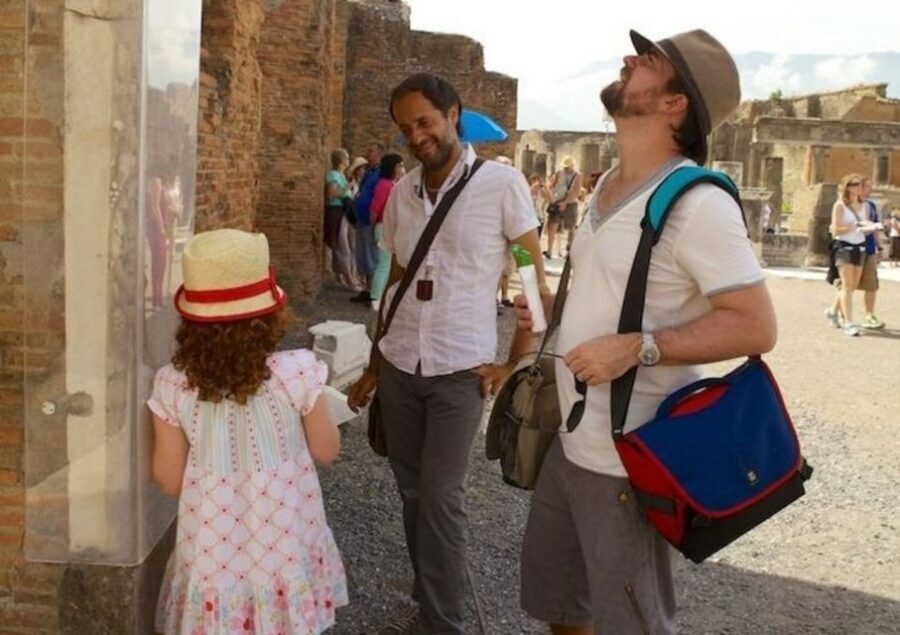
- Kid-paced route in just 2 hours that still includes major Pompeii highlights
- Porta Marina Superiore is the starting point, with guided stops at the forum, baths, and more
- Tablets and multimedia help children visualize what they’re seeing in the ruins
- Guided entry with admission included means less friction at the ticket moment
- Private group format keeps the visit more flexible and family-friendly
Cost and value: what $212.41 buys you in 2 hours
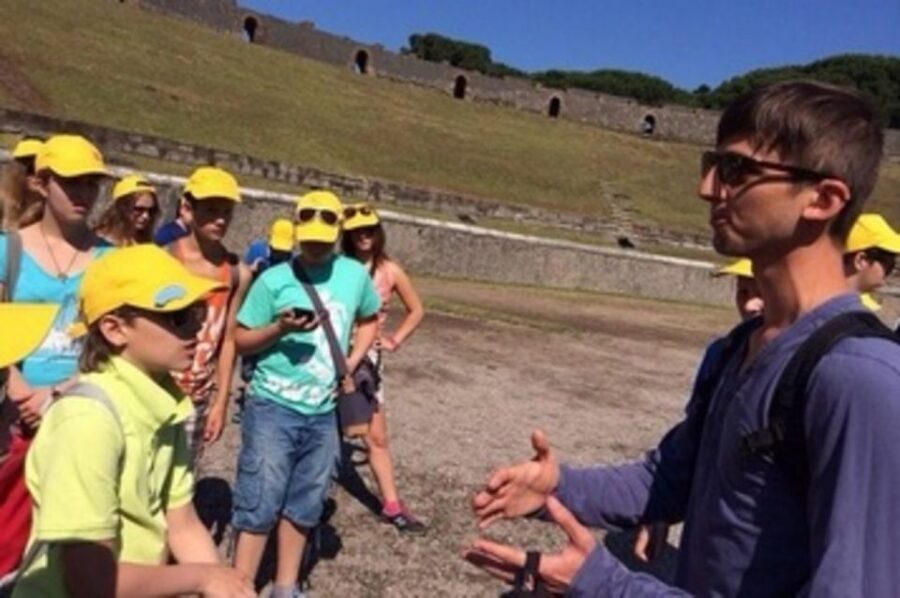
Let’s talk money, because Pompeii can be done cheaper on your own. This tour costs $212.41 per person, and that’s not pocket change. What makes it feel worth it is what you’re actually buying: a certified guide, admission fees included, and a tight two-hour route that’s built to hold attention rather than just cover ground.
In practice, you’re paying for four things:
- A guide who can steer the visit toward the most meaningful spots for families
- A skip-the-line experience where the guide handles ticket steps quickly (about 5–10 minutes)
- Tablet-based explanations and visual reconstructions that turn ruins into scenes
- A structured route that moves briskly enough that you don’t spend your day waiting for kids to catch up
If you’re visiting Pompeii with kids and want the stress level to stay low, this is the kind of “pay for time and focus” purchase that usually makes vacations run better.
Other half-day Pompeii tours
Where you start and how the walk actually flows
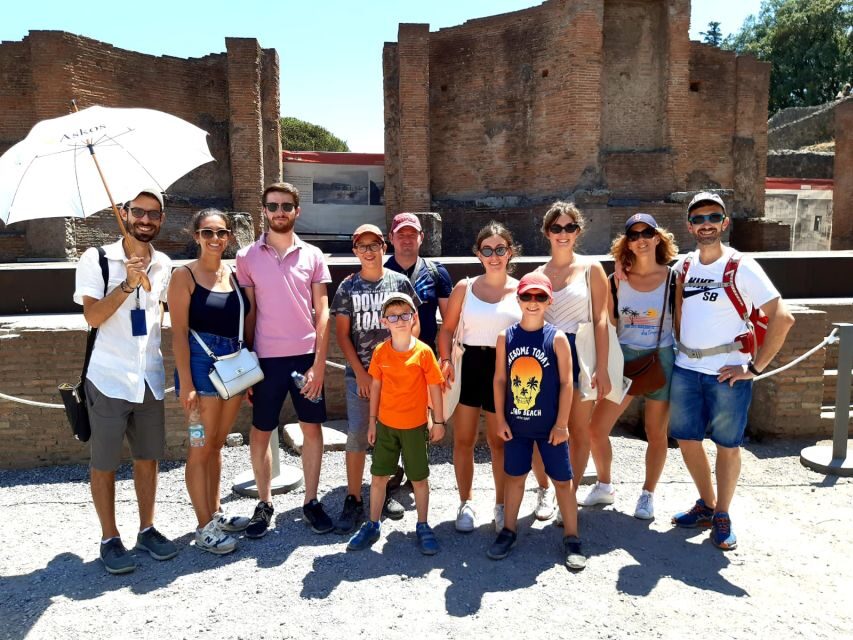
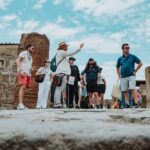
This tour begins at Via Villa dei Misteri, 2, at the main entrance called Porta Marina Superiore. The guide meets you at the entrance gate holding a sign with your name on it, opposite the bar-restaurant Hortus.
It ends back at the same starting area—no long shuttle, no surprise extra legs after you’ve already walked enough. Since it’s a true walking tour, you’ll want comfortable shoes and a plan for little legs. Two hours can feel short until you’re in a stone city with lots of stop-and-go points.
Porta Marina Superiore: the welcome point that sets up the whole city
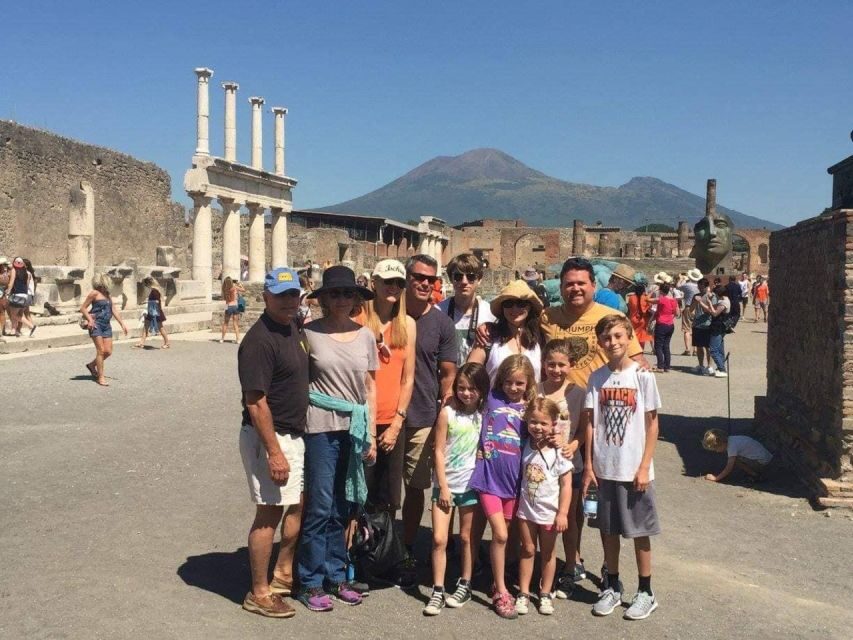
You start at Porta Marina Superiore, the main entry point for this route. Even though it’s technically just the beginning, it matters because the guide uses this moment to frame what you’re about to see.
From here, you shift into the Pompeii rhythm: brief guided segments, then quick visual meaning-making with the tablet tools. Kids tend to do better when the guide gives them a “what am I looking at?” cue before every major turn—and this tour is clearly built that way.
Tip for families
Have everyone in your group listen for the guide’s key word for the area. When you hear it again later (forum, baths, theater), you’ll notice kids making connections faster.
Temple of Apollo: why starting with a temple works for kids
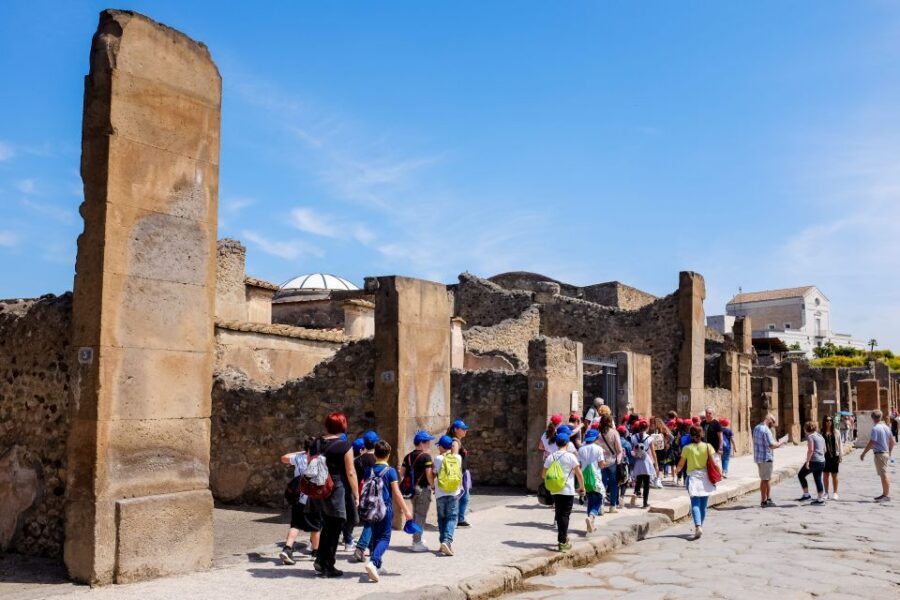
Next up is the Temple of Apollo, with about 10 minutes of guided time. Temples can sound like a lecture topic, but here the goal is simpler: show kids that Roman public life had religious places at the center of everyday routines.
You’ll get a focused look before moving into civic spaces. That sequence helps. Instead of jumping straight into “random ruins,” you build a mental map: worship first, then public life.
Also, temples are great “anchor stops” for families because they’re recognizable shapes—even in fragments—so kids can point and say, I see that again later.
Other family and kids Pompeii tours
Foro Civile di Pompei, then the Basilica: the Roman public square feeling
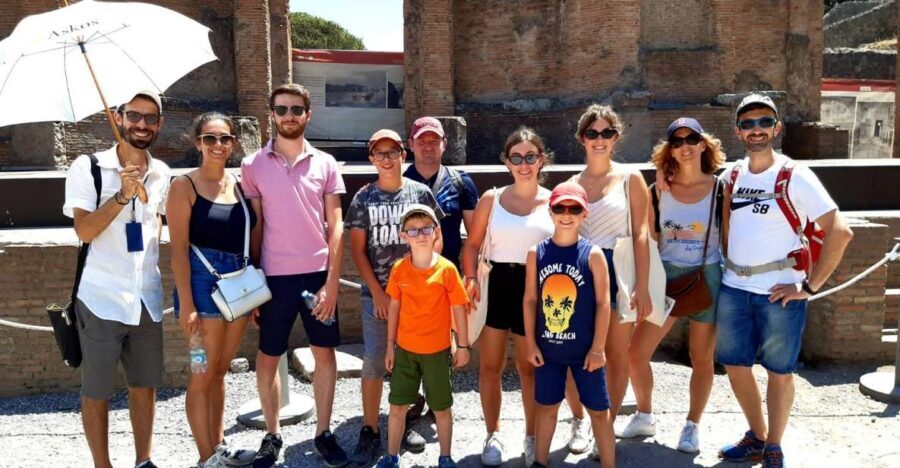
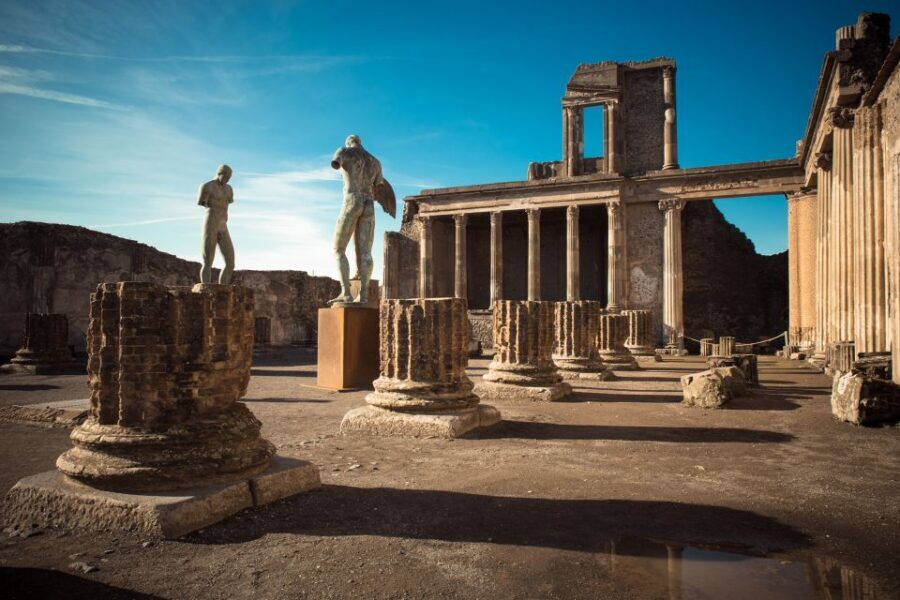
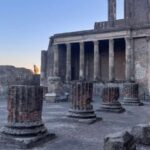
After the temple, you head to the Foro Civile di Pompei for about 20 minutes, then the Basilica for around 10 minutes.
This is one of the strongest sections for a child-friendly approach. The forum is the Roman version of a busy heart: public decisions, commerce, gathering, and the movement of people. Even though you’re walking through ruins, you’re learning the role each place played.
The Basilica (court house) adds the next layer: how rules worked, where important matters were handled, and why adults cared about being seen in public spaces. Kids usually don’t care about courts—until the guide explains them in human terms like disputes, fairness, and the big roles of officials.
Drawback to consider here
Some kids get restless when they’re asked to listen for too long. The upside is that this tour breaks time into short guided chunks, so you’re not stuck in one long speech.
House of Menander: when a home becomes a story
You’ll spend about 20 minutes at the House of Menander. This is where Pompeii stops being only about monuments and becomes about people.
A house like this is perfect for families because kids naturally imagine what they’d do inside: where you eat, where you relax, how rooms connect. The guide uses tablets, reconstructions, and multimedia tools to help you understand what’s missing and what the space likely looked like when it was alive.
This is also a practical moment for you as an adult: if you’ve ever struggled to make sense of Pompeii on your own, this kind of guided home visit gives you a usable model for interpreting the rest of the site.
Forum Baths: the stop that makes daily life click
Next is the Forum Baths for about 10 minutes. Baths are a smart pick for a family tour because they’re easy to visualize. Water, routines, social behavior—there’s always something relatable.
This stop often helps kids understand that Roman life wasn’t only public spectacle. People had habits: bathing, meeting, relaxing. For parents, it’s one of those stops that turns Pompeii from a cemetery of stone into a place with schedules and routines.
House of the Faun: the bigger home moment
You then visit the House of the Faun. The time slot isn’t specified in the details you provided, but it’s on the route and treated as a meaningful home stop.
Houses like this tend to be awe-inducing for kids because they feel like a whole world. What the guide does well is connect the scale to lifestyle: larger homes weren’t just bigger—they signaled status and daily comfort.
This part of Pompeii also gives you a chance to slow down for a second. Even with a tight route, homes are where families often regroup mentally, because they’re less about “one building” and more about “how a life could unfold.”
Large Theatre: the family-friendly “performance” break
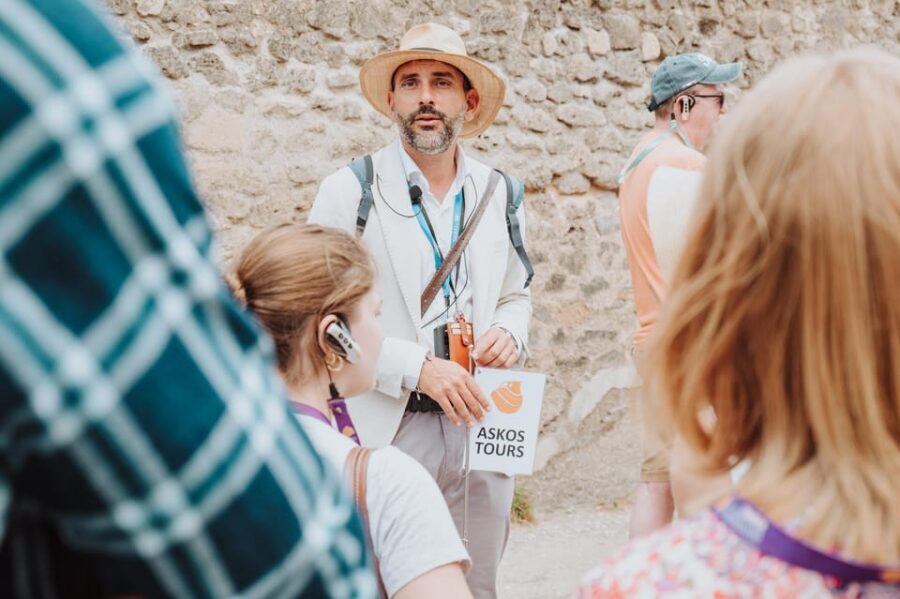
The Large Theatre is next, with about 10 minutes of guided time. The beauty of this stop for families is simple: it’s built for stories.
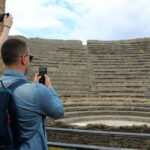
Kids understand performance. They also tend to remember places that have a seat-and-stage layout. Even if you’re standing in ruins, the guide can help you visualize how crowds gathered and how events would have played out.
For you, this is a high-payoff moment: theaters connect politics, culture, and community in one easy-to-follow package.
House of the Vettii and the Thermopolium: where the day-to-day comes alive
Two of the most memorable segments for families follow: the House of the Vettii, and then the Thermopolium.
- House of the Vettii: another home stop that keeps the focus on real living spaces (not just “tourist views”).
- Thermopolium: a quick look at a Roman fast-food style shop, where you can think about meals, street life, and what everyday people could buy.
These two stops work well back-to-back because they show you both sides of daily Roman life: private status at home and practical needs out in public.
Even in ruins, you can feel the logic: who had wealth in the House of the Vettii, and who depended on everyday food stops like the Thermopolium. The guide’s tablet tools and multimedia reconstructions help you interpret what you’re seeing instead of guessing.
Tablets, reconstructions, and multimedia: why this tour keeps kids with you
The big differentiator here is the way the tour uses technology and visuals designed for younger attention spans.
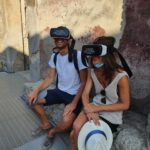
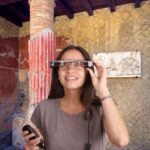
Instead of just pointing at stones and hoping kids will connect them to a story, you get tablets plus reconstructions and multimedia material for children. That matters because Pompeii is full of gaps. The ruins don’t automatically explain themselves.
The guide’s approach helps you and your kids:
- Understand what a place was used for
- See what’s missing and how it likely looked
- Stay oriented as the route moves through different parts of the city
This is also where private group dynamics help. With a smaller group, it’s easier for the guide to adjust explanations to what’s working in real time.
The route recap: every stop you’ll hit in order
Here’s the sequence you can expect from the start to finish, with the guided timing where it’s specified:
- Meet at Via Villa dei Misteri, 2
- Porta Marina (10 minutes)
- Temple of Apollo (10 minutes)
- Foro Civile di Pompei (20 minutes)
- Basilica (10 minutes)
- House of Menander (20 minutes)
- Forum Baths (10 minutes)
- House of the Faun
- Large Theatre (10 minutes)
- House of the Vettii
- Thermopolium (10 minutes)
- Return to Via Villa dei Misteri, 2
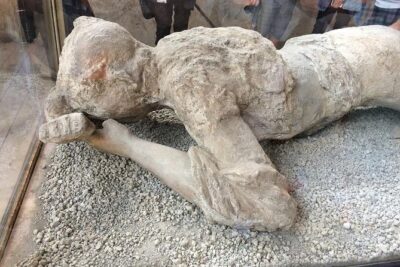
You’ll also cover the kinds of places families often want: houses, temples, the forum area, baths, theaters, and supporting visual materials like plaster casts (mentioned as part of what the tour includes for kids).
Who this Pompeii tour is best for
This tour is built for families with kids who want a guided, structured experience without spending the day decoding everything alone. It’s also a good fit if you:
- Want a tight 2-hour plan so your Pompeii visit doesn’t expand into a half-day ordeal
- Prefer a guide-led story rather than a self-guided wandering route
- Appreciate reconstructions and visuals that help children understand what ruins represent
- Like the idea of a private group instead of a crowd-control situation
If your group includes teens who crave lots of free time for exploring, you might find a guided route feels a bit scheduled. But if your priority is smooth family engagement, this format is one of the more sensible ways to do Pompeii.
Should you book the 2-Hour Pompeii Child-Friendly Tour?
If you’re bringing kids and you want Pompeii to feel like a real place instead of a long, confusing stone maze, I think it’s a smart booking. The guide-focused, tablet-supported approach is exactly the kind of structure that helps families keep moving with energy instead of frustration.
Book it especially if you value:
- A guided route that hits the core highlights quickly
- Tablet-based explanations and reconstructions that help kids stay engaged
- Admission included and a skip-the-line flow handled for you
Skip it if you’re mainly looking for the cheapest Pompeii ticket and you’re confident you can self-navigate without the “what am I looking at” support.
FAQ
How long is the Pompeii 2-Hour Child-Friendly Tour?
It lasts 2 hours, with starting times that vary based on availability.
Where do we meet, and where does the tour end?
You meet at the Pompeii main gate called Porta Marina Superiore, on the opposite side of the bar-restaurant Hortus. The tour ends back at the same meeting point on Via Villa dei Misteri, 2.
Is admission included, and can we skip the ticket line?
Yes. The tour includes admission fees, and the guide can buy the tickets for you to skip-the-line, typically in about 5 to 10 minutes.
What language(s) is the live guide available in?
The live tour guide is available in English and Italian.
What parts of Pompeii will the tour cover?
You’ll visit key areas including Porta Marina, the Temple of Apollo, the Foro Civile di Pompei, the Basilica, the House of Menander, the Forum Baths, the House of the Faun, the Large Theatre, the House of the Vettii, and the Thermopolium.
Is the tour wheelchair accessible?
The activity details say it is wheelchair accessible, but it also lists it as not suitable for wheelchair users. If mobility matters for your group, confirm directly with the provider before booking.