REVIEW · POMPEII
Pompeii Skip-the-Line Tour – Private and limited group options
Book on Viator →Operated by Towns of Italy · Bookable on Viator
Pompeii hits hard, in the best way. This skip-the-line guided visit pairs quick entry with an archaeologist explaining what you’re actually looking at, and why the city froze in time. I also like the small-group feel (including a private option) and how the tour is structured to keep the walking smart rather than random. The one watch-out: even with skip-the-line, you still face a required security check, which can slow things down at the start.
You’re paying for clarity and time. With a professional archaeologist leading you through the highlights, you get the full Pompeii picture without needing to do serious homework first. If you prefer a more spontaneous, no-rules day, the site rules (dress code, bag limits) may feel a bit strict.
In This Review
- Key things to know before you go
- Skip-the-Line Entry That Still Has a Security Check
- Meeting at Piazza Esedra and Getting a Real 2-Hour Route
- Pompeii’s Streets and Landmarks: What You’ll Actually See
- The 79 AD Story Behind the Ashes and the Shock of Preservation
- Archaeologist-Guided Explanations in English (and Tips to Keep Going)
- Rules, Dress Code, Bag Limits, and Other Small Things That Matter
- Price and Value: Is $40.43 a Good Deal for Pompeii?
- Who Should Book This Pompeii Skip-the-Line Tour?
- Should You Book This Pompeii Skip-the-Line Tour?
- FAQ
- How long is the Pompeii skip-the-line tour?
- Where does the tour start?
- Does the tour include skip-the-line entry?
- Is this tour private?
- What language is the tour offered in?
- Are audio devices included?
- Is hotel pickup included?
- What should I bring for the visit?
- Is the tour suitable for people with impaired mobility or heart conditions?
Key things to know before you go
- Skip-the-line access helps you get into the ruins faster than a standard entry
- Professional archaeologist guidance turns ruins into real places and real stories
- Small-group options include private tours and limited group sizes
- Audio devices for very small groups make it easier to hear on foot
- Security and dress rules still apply so plan for a smooth but organized start
Skip-the-Line Entry That Still Has a Security Check
The headline here is expedited entry into Pompeii. That matters because Pompeii can eat up your day if you get stuck waiting at entry points. This tour is designed to get you moving toward the ruins quickly, and it’s also nice to have someone handle the flow so you’re not guessing where to stand.
Still, the fine print matters: there’s a compulsory security check even when you have skip-the-line access. That means you’re not guaranteed instant entry, just faster entry compared with standard lines. I’d treat this like airport time. Come ready, expect a short delay, and you’ll feel calm instead of annoyed.
Also keep in mind the site has strict rules. Even before you reach the ruins, you’ll want your ID or passport ready. And if you show up with the wrong clothes or an oversized bag, you can end up losing time. The good news is that the rules are predictable—once you match them, the visit runs smoothly.
Other skip-the-line Pompeii tickets and tours


Meeting at Piazza Esedra and Getting a Real 2-Hour Route

This experience meets at Piazza Esedra, 80045 Pompei NA, Italy, and ends back at the same meeting point. The tour runs about 2 hours, which is a very workable amount of time for Pompeii if you’re not trying to see every single corner of the site.
What you’ll feel during those two hours is a guided “best-of” route, not a slow meander. You start in the excavated city and move through major public and everyday areas—streets, squares, sacred spots, and entertainment zones. With Pompeii, this pacing is smart. The archaeological park is huge, and if you don’t have a plan, it’s easy to wander and come away with only half a story.
One practical plus: the tour notes suggest good walking shoes and to skip flip-flops. Pompeii’s surfaces can be uneven and dusty, and you’ll walk enough that you don’t want to regret your footwear by stop two. Add a hat and sunscreen, and you’re set.
If you’re hoping for a perfectly punctual start, one caution is worth repeating: at the beginning, late arrivals for the tour can affect the timing. Two hours passes faster than you think once the route starts moving.
Pompeii’s Streets and Landmarks: What You’ll Actually See

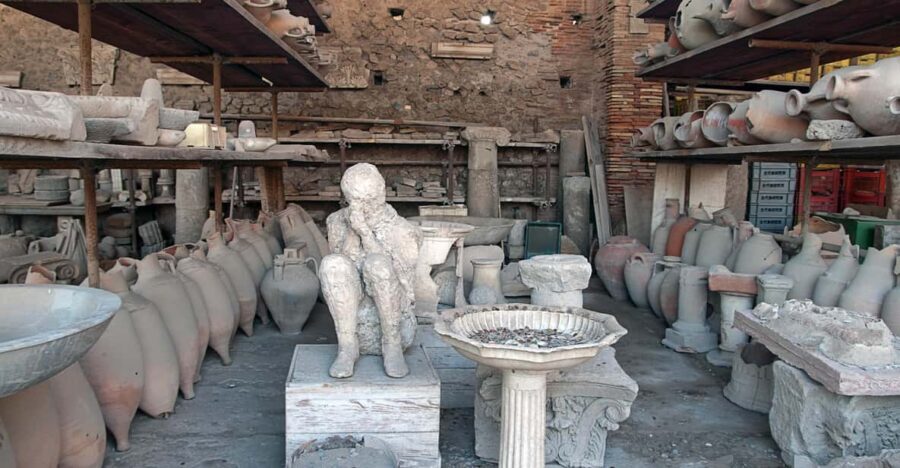
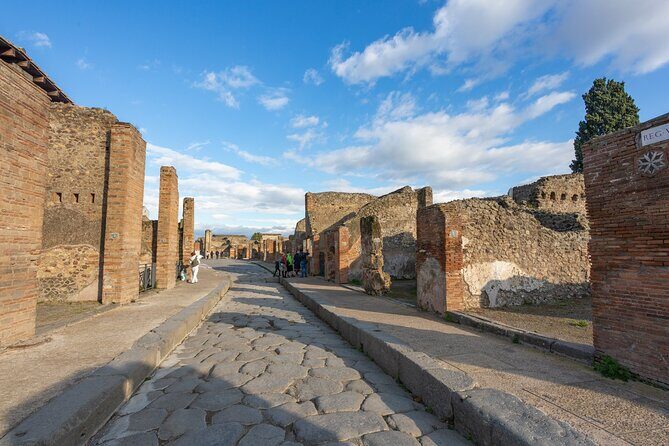
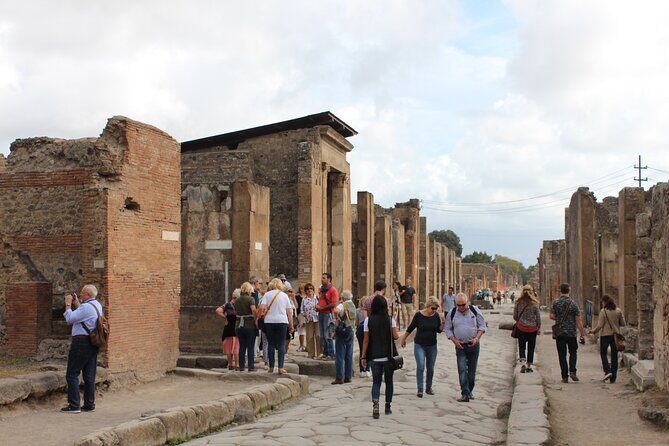
Pompeii is famous because so much survived. After the earthquake in 79 AD, the city was buried under a cover of ashes and lapilli about 6 metres high. That kind of accidental preservation is what makes the excavations so striking. You’re not just looking at “ruins.” You’re seeing the outline of real neighborhoods, shops, and daily life.
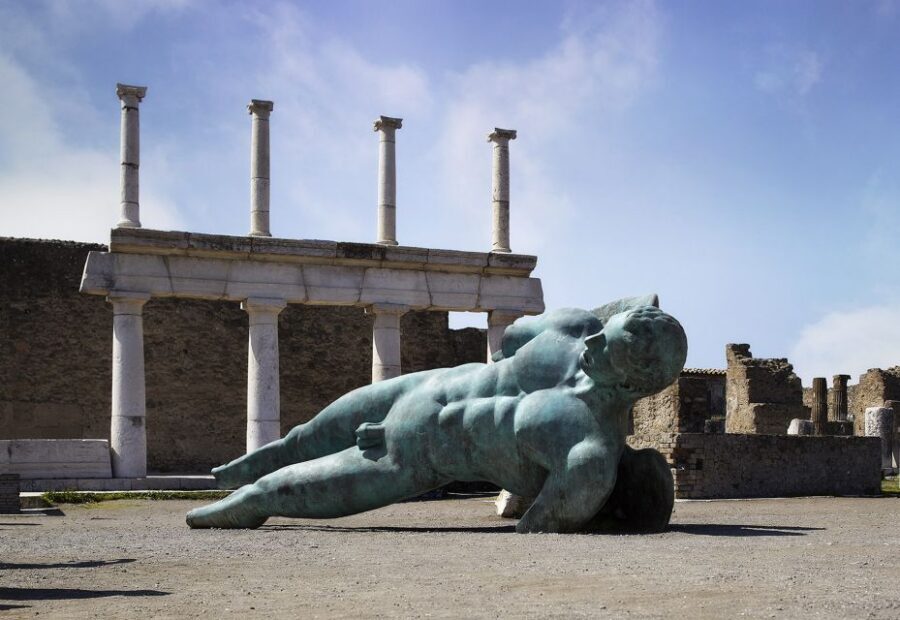
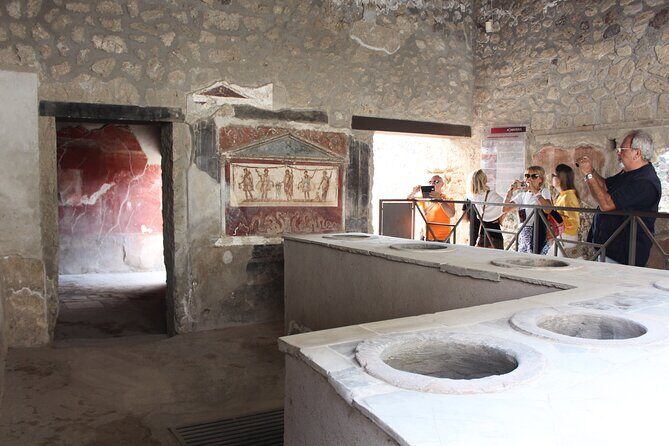
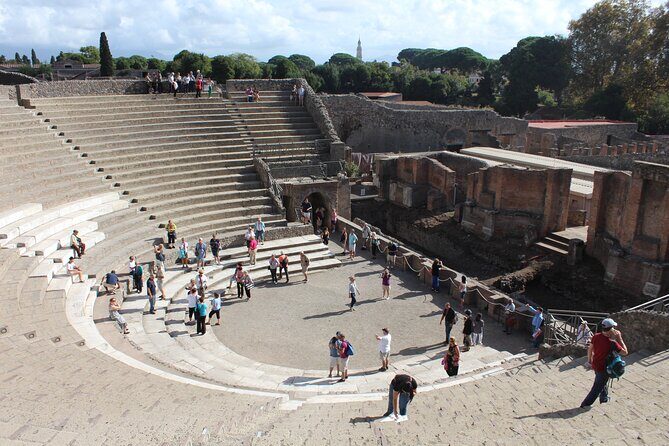
The walk begins in the excavated core of Pompeii, with key area coverage that includes parts tied to the Ercolano Door and the Temple of Iside region, plus the theatre area. From there, your guide leads you along ancient streets so you can understand how the city functioned—where people gathered, where they worked, where they worshiped, and where they relaxed.
Here are the main types of places you’ll get oriented to:
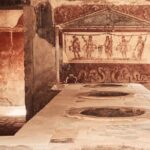
- Houses and workshops, which help you picture what daily life looked like
- The Foro, Pompeii’s civic center, where public life happened
- Public buildings and sacred sites, so religion and government don’t feel separate in your mind
- The baths, a huge part of social life in Roman cities
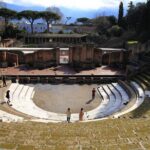
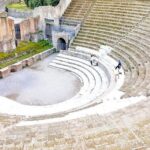
- Theatres and the amphitheatre, which show how entertainment worked
You’ll also hear about places beyond the densest city block. The tour information notes four necropolises with monumental tombs outside the city walls, plus suburban residences like the Villa dei Misteri. With the time limit, you might not walk every outside area in full depth, but you should come away with a clear mental map of what Pompeii looked like beyond the main excavations.
The 79 AD Story Behind the Ashes and the Shock of Preservation
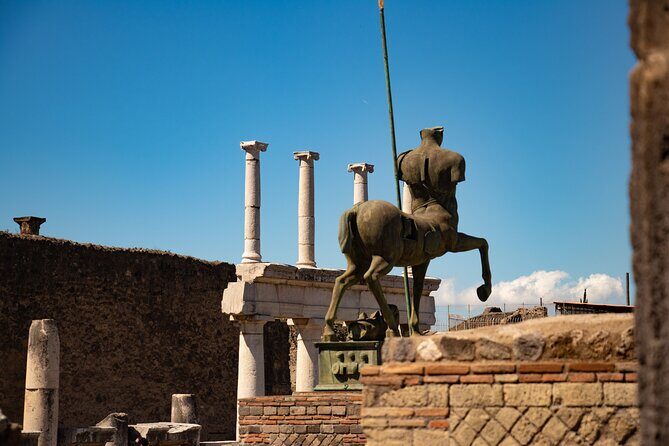
Pompeii can feel like a movie set—until you realize it wasn’t. The earthquake in 79 AD triggered the catastrophe that buried the city. The tour framework makes that story central, because it’s the reason you can still see so much.
The dramatic part is scale: ashes and lapilli about 6 metres high covered buildings. That layer protected interiors and created a kind of snapshot. It’s also why Pompeii doesn’t just look old—it looks strangely complete. You can often sense room layouts, how spaces connected, and how streets framed everyday movement.
A good guide also connects what you see outside with what you find in museums. The tour notes explain that evidence from Pompeii—things like furnishings, mosaics, paintings, and statues—are preserved in places such as the Antiquarium of Boscoreale and the Archaeological Museum of Naples. That’s useful for you. It means your visit isn’t limited to stone walls. You can understand that many details were moved for protection, and you’ll likely recognize why museum pieces matter once you’ve walked the city.
And yes, Pompeii is a UNESCO World Heritage site. But the practical value of that label is simple: it signals serious conservation and global attention, so you should expect rules and preservation-focused logistics.
Archaeologist-Guided Explanations in English (and Tips to Keep Going)
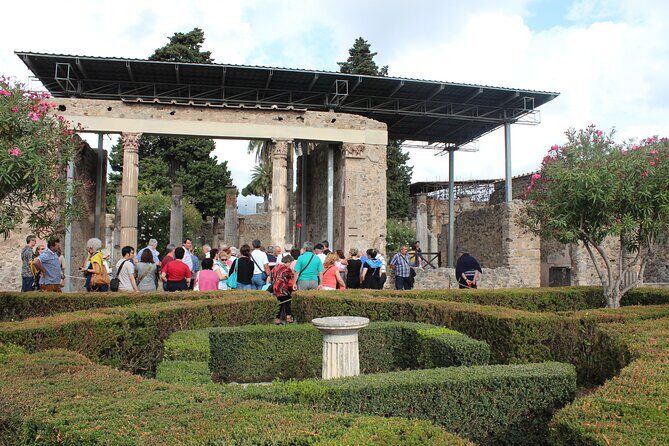
A big reason to book a guided Pompeii tour is that the city is visually rich and confusing at the same time. A professional archaeologist guide helps you read the site like a document instead of a pile of stone.
This tour is guided in English (and monolingual options are offered; Spanish may be available depending on the experience). The goal is clear communication. You’ll hear professional explanations tied directly to the spots you pass, instead of broad lectures that could fit any Roman city.
Small-group tech can help you hear better too. The tour includes audio devices for groups with a maximum of 5 participants. That’s a thoughtful detail. Pompeii’s open areas can be windy, and even a strong voice won’t travel far in stone streets.
One name came up in the experience notes: Marina. Her style is described as professional and clear, with explanations that feel agile rather than slow. That matches what you want in only two hours. You need enough context to understand what you’re looking at, then you can keep moving.
You’ll also get practical guidance for after the tour. One of the best parts of a good Pompeii guide is giving you a few smart suggestions for what to explore on your own afterward. That turns a 2-hour visit into a longer experience, even if you don’t have hours left.
Other private tours in Pompeii



Rules, Dress Code, Bag Limits, and Other Small Things That Matter
Pompeii has strict on-site standards, and this tour is built around them. Before you go, read your packing plan like it’s part of the itinerary.
Here’s what you need to follow based on the tour info:
- Dress code required: no disrespectful clothing, and shirtless is not allowed. If you don’t meet the requirements, entry can be refused.
- Bags and backpacks are restricted: maximum bag size is 30x30x15. Big bags must be deposited in the cloakroom.
- No intrusive objects: you’ll want to keep your day pack small and simple.
- ID card or passport required for entry.
- Pets are not allowed.
There are also tech and gear rules:
- No drone use (RPA)
- Don’t bring professional optical and audio equipment like cameras designed for large setups, microphones, or audio mixers
- Don’t use unauthorized transportation like bicycles or scooters
None of this is meant to ruin your day. It’s meant to protect the site and keep visitors moving safely. But rules can cost time if you’re not prepared, so it’s worth showing up with a lean kit: wallet, ID, water, sunscreen, and a small bag you won’t have to fight with at the cloakroom.
One last consideration: the tour info says it is not suitable for guests with impaired mobility and/or heart patients. If that applies, it’s better to choose a different format designed for slower movement and different pacing.
Price and Value: Is $40.43 a Good Deal for Pompeii?
At $40.43 per person for an about 2-hour guided visit, you’re buying three things: time savings, expert interpretation, and a smoother start.
First, you’re paying for the skip-the-line access. In Pompeii, those minutes can matter because you have only so much daylight and so much energy. Second, you’re not paying just for a walk—you’re paying for a professional archaeologist guide who turns the site into something you understand.
Third, the tour is designed to stay intimate. The experience notes say you can choose private or a max group size (with a max of 16 participants for the more personal option). Even outside the private choice, the experience has a maximum of 30 travelers. Smaller groups generally mean better questions and less waiting around in confusing corners.
There’s also a note that admission ticket is free as shown for the Pompeii stop. Even if you don’t break down every euro, that’s a real value point. It means you’re not stacking costs just to get in.
If you’re the type who likes to wander and read on your own, you can DIY Pompeii. But if you want to make sense of the Forum, bath areas, theatres, and the overall city layout without spending hours researching first, this price often feels fair.
Who Should Book This Pompeii Skip-the-Line Tour?
Book it if you:
- Want Pompeii context in a short time window
- Prefer English guidance and direct explanations tied to what you see
- Appreciate a small-group pace (private option or limited group sizes)
- Would rather walk with a plan than guess your way through the site
Avoid it or think twice if you:
- Need step-free access or have mobility limitations (the tour is stated as not suitable)
- Get stressed by strict entry rules and dress requirements
- Want to spend the day at one slow location rather than cover multiple Pompeii highlights
Should You Book This Pompeii Skip-the-Line Tour?
I’d book this if you’re going to Pompeii for the first time and you don’t want your visit to be a blur. The best part is the pairing of fast access with archaeologist-led clarity. In two hours, you can leave with a real sense of how the city worked—streets, public life, religion, entertainment, and what was preserved by the 79 AD burial.
I’d also book it if you like small-group energy. Private or limited sizes tend to make the route feel more human, and audio support can help too.
Only book with eyes open if you know you’ll be sensitive to start delays from security and timing issues tied to group flow. Also, check your outfit and bag size before you leave the hotel. Pompeii is strict, and you’ll save yourself hassle by following the rules the first time.
FAQ
How long is the Pompeii skip-the-line tour?
It lasts about 2 hours.
Where does the tour start?
The meeting point is Piazza Esedra, 80045 Pompei NA, Italy.
Does the tour include skip-the-line entry?
Yes. It includes expedited entry with skip-the-line access to the Pompeii ruins.
Is this tour private?
You can choose a private option, and there are also limited-group options. The experience notes an intimate setup with private or max 16 participants, and a maximum of 30 travelers overall.
What language is the tour offered in?
The experience is available exclusively in English (or Spanish) to maintain tour quality.
Are audio devices included?
Audio devices are provided for groups with a maximum of 5 participants.
Is hotel pickup included?
No. Hotel pickup and drop-off are not included.
What should I bring for the visit?
Wear good walking shoes (no flip-flops) and bring a hat and sunscreen. The tour also notes you should be ready with essentials like water.
Is the tour suitable for people with impaired mobility or heart conditions?
No. The tour information says it is not suitable for guests with impaired mobility and/or heart patients.