REVIEW · POMPEII
Pompeii tour with archaeologist
Book on Viator →Operated by Pina Esposito · Bookable on Viator
Pompeii makes more sense with an archaeologist. This 2.5-hour walk through the ruins (limited to 15 travelers) turns scattered stones into a real city with a clear timeline from early Pompeii to the eruption of 79 AD.
I especially love the pace: you hit the big narrative stops without getting lost in the maze. And I also like that the tour spends time where you’d otherwise rush past—like the Forum granaries and the plaster casts—so the tragedy isn’t just a headline.
One consideration: it’s a compact route with short stops, so if you want long, quiet time in just one area (or you hate walking), you may feel slightly rushed.
In This Review
- Key takeaways before you go
- Where you start (Villa dei Misteri) and why the end at the Forum helps
- Stop 1: The Foro di Pompei and Pompeii’s big story in small chunks
- Stop 2: Granaries of the Forum and the meaning behind the plaster casts
- Stop 3: The Basilica—Pompeii’s monumental “business and justice” building
- Stop 4: Temple of Apollo—religion, art, and original details
- Stop 5 & 6: Hotel Vittoria gateway + the Cave Canem mosaic
- Stop 7: Casa del Fauno—the largest house and the Battle of Alexander mosaic
- Stop 8: Thermopolium Regio VI, Insula VIII 8—ancient fast food and social life
- Stop 9: Temple of Vespasian—imperial cult in plain sight
- Stop 10: Via dell’Abbondanza—the city’s planning and street logic
- Stop 11 & 12: Theater district (Teatro Grande) and the Doric Temple’s early roots
- Stop 13 & 14: Stabian Baths and the Lupanar—comfort, crowds, and the street’s darker side
- Why the archaeologist guide feels worth it (especially with Pina Esposito)
- Price and value: $42.01 for a structured Pompeii day
- Who should book this Pompeii tour with an archaeologist?
- Should you book? My take
- FAQ
- How long is the Pompeii tour with an archaeologist?
- What language is the guide available in?
- What’s the meeting point for the tour?
- Where does the tour end?
- Is the entrance fee included?
- Are tickets mobile?
- How many people are in the group?
- Is the tour suitable for most travelers?
- Is the experience weather-dependent?
- Can I cancel and get a full refund?
Key takeaways before you go
- Small group size (max 15) helps you ask questions and keep the tour moving at human speed.
- Archaeologist-led storytelling links buildings to everyday life and major historical change in 79 AD.
- A strong mix of Pompeii themes: politics (Forum), religion (Apollo/Vespasian), home life (Casa del Fauno), and street culture (thermopolium, Lupanar).
- Ends at the Forum so you can keep exploring on your own after the tour wrap-up.
- Mobile ticket makes check-in simpler once you’re there.
Where you start (Villa dei Misteri) and why the end at the Forum helps
You’ll meet at Pompei Scavi – Villa dei Misteri (near the start of the excavation area). That matters because you begin with the part of Pompeii that sets the tone—public spaces and civic life—before you branch into homes, temples, and neighborhood streets.
The tour ends at the Forum of Pompeii. This is smart for your free time. You’ll likely want to keep going at your own pace once the guide puts context into place. Plus, the Forum is one of the easiest areas to “drop into” without feeling like you’re walking in circles.
Practical timing note: opening hours run from 9:00 AM to 7:30 PM, and the experience runs in that daytime window. Pompeii can roast in the afternoon, so earlier tours are often more comfortable.
If you're still narrowing it down, here are other tours in Pompeii we've reviewed.

Stop 1: The Foro di Pompei and Pompeii’s big story in small chunks
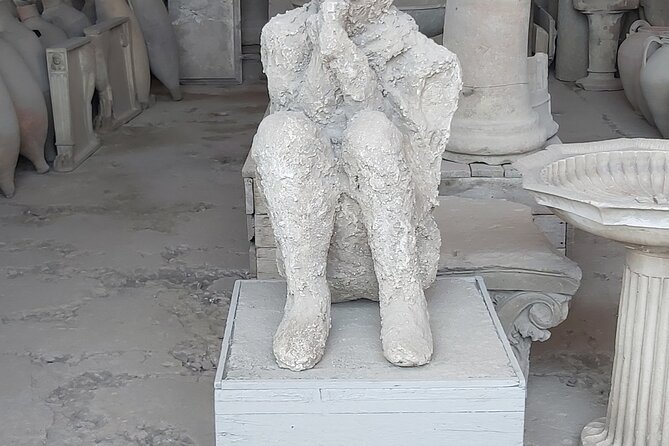
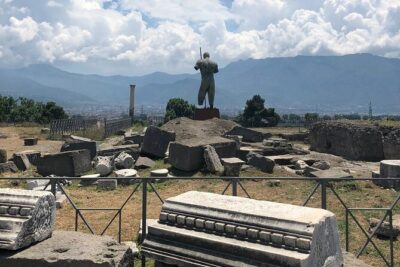
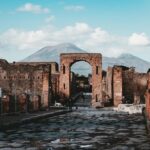
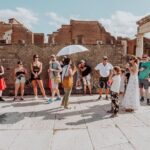
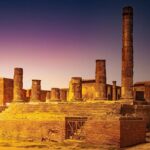
The tour begins at the Foro di Pompei, where your guide frames Pompeii from its origins through to the dramatic eruption in 79 AD. This is one of the best first stops because the Forum is where a Roman city showed off its order—power, commerce, and public gatherings.
In about 15 minutes, you get a clean “what this place is” foundation. That foundation helps later when you’re looking at temples, civic buildings, and even street layout. If you’ve ever visited Pompeii and felt like you were speed-reading wall after wall, this start helps you slow down mentally.
Stop 2: Granaries of the Forum and the meaning behind the plaster casts
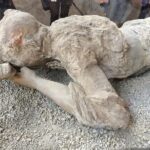
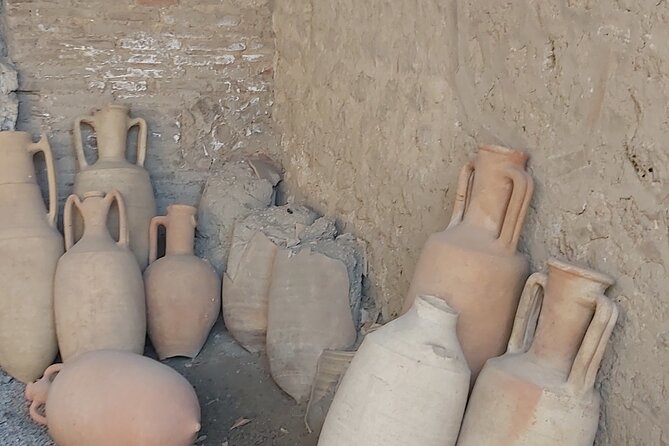
Next up are the Granai del Foro—the Forum granaries—plus the finds associated with them, including amphorae, sculptures, inscriptions, and plaster casts of victims.
This stop is short, but emotionally it’s the hardest one on the route. The value here isn’t shock value; it’s understanding how a city functions and how disaster hits daily life. When you learn what was stored, what was traded, and what the space was used for, the tragedy becomes connected to real routine.
If you prefer gentle pacing on sensitive topics, you may want to take a brief moment here before moving on. The guide moves fast, but you can still pause on your own.
Stop 3: The Basilica—Pompeii’s monumental “business and justice” building
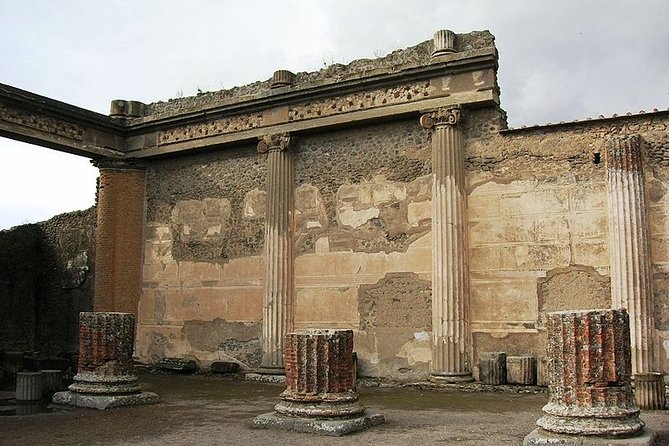
At the Basilica, you’ll learn why this building mattered. Basilicas were central to civic life in Roman cities, functioning as a major space for business, public activity, and legal matters.
What I like about covering this early is that it teaches you how Romans organized social life around buildings. You stop seeing the ruins as random fragments and start recognizing them as systems—designed for people, not just statues and temples.
Stop 4: Temple of Apollo—religion, art, and original details
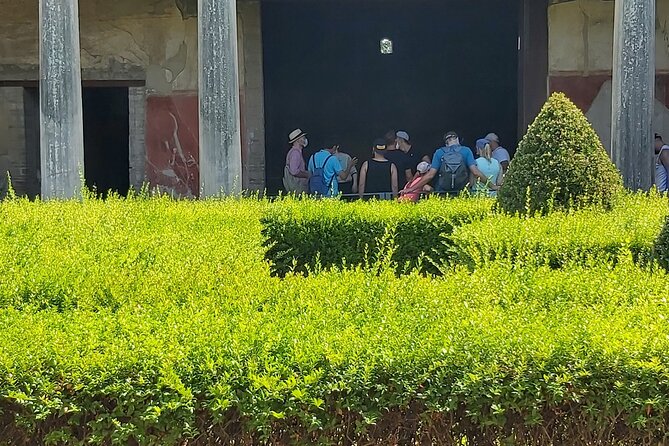
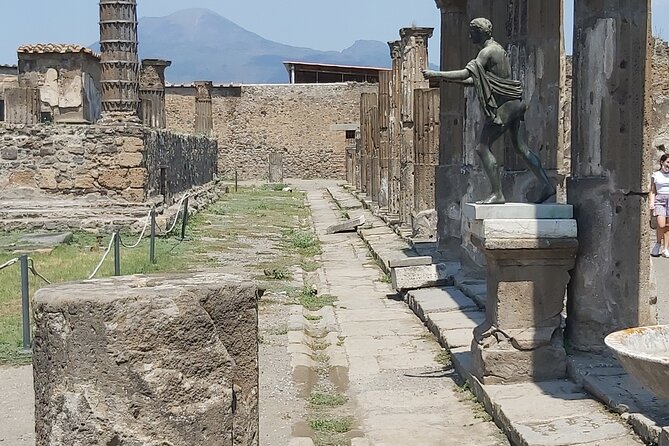
The Temple of Apollo gets 15 minutes, and that time counts. You’re not just told “this was a temple.” You’ll see how Apollo’s sacred spaces were filled with specific elements—sculptures, altar, fountain, inscriptions, columns, and even a Roman sundial mentioned as part of the temple’s original finds.
This is one of the stops where a guide can really separate “interesting” from “confusing.” The temple becomes a map of Roman religious architecture: where people stood, what symbols meant, and why inscriptions and public markers were built into sacred places.
Stop 5 & 6: Hotel Vittoria gateway + the Cave Canem mosaic
The route then moves to Hotel Vittoria, described as an ancient gateway to the city and the surrounding area. It’s only about 5 minutes, but it’s useful. It reminds you that Pompeii wasn’t sealed off. People came in, delivered goods, walked streets, and returned home.
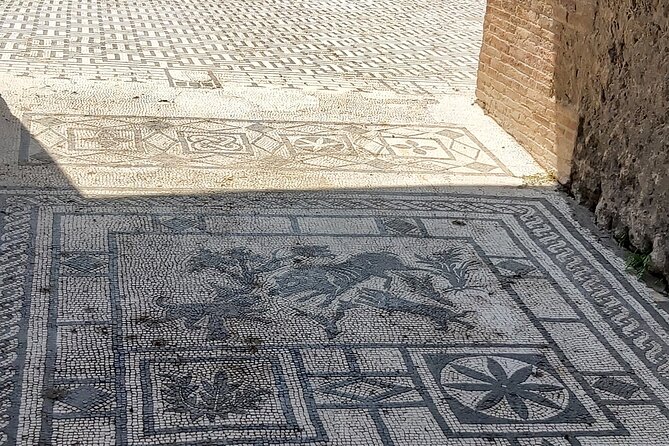
Then comes one of Pompeii’s most recognizable visuals: the Cave Canem mosaic at the entrance of the House of the Tragic Poet. Even if you’ve seen it in photos, having it explained on-site is different. The mosaic reads like a public message—part warning, part personality—tied to how homes advertised themselves to passersby.
Stop 7: Casa del Fauno—the largest house and the Battle of Alexander mosaic
Casa del Fauno is where the tour leans into spectacle and craftsmanship. You’ll learn about its place as the largest house in Pompeii, and about masterpieces found there, including a bronze sculpture of the dancing faun.
Then you hit the big one: the Mosaic of the Battle of Alexander, made with more than a million tiny colored tiles. Even in a short stop, the guide’s framing helps you notice why this mosaic is so famous: it’s not just decoration—it’s a statement of taste, wealth, and cultural identity.
Here’s the catch: because the stop is limited, don’t expect an ultra-slow “stand and stare forever” moment. But you will get enough context to look better, not just look longer.
Stop 8: Thermopolium Regio VI, Insula VIII 8—ancient fast food and social life
At the thermopolium, your guide describes one of the best-preserved examples of ancient quick-service eating. This is where Pompeii turns from “museum ruins” into daily life.
Thermopolia were street-front food places—likely busy, likely loud, and definitely part of the rhythm of the neighborhood. When you learn that this was not an isolated home scene but a public “grab food and keep moving” setting, Pompeii feels more human.
A small pacing note: this stop is about 10 minutes, so treat it like a snapshot. If food-history is your thing, you’ll probably want to spend extra time afterward on your own.
Stop 9: Temple of Vespasian—imperial cult in plain sight
Next is the Temple of Vespasian, also called the temple of Genius Augusti. This part of the tour is great if you want the political layer behind the religious-looking buildings.
The guide explains the importance of the Roman imperial cult, which helps you understand why an emperor’s memory and authority were woven into daily religious practice. You start connecting what you’re seeing to what Romans expected people to believe and publicly acknowledge.
Stop 10: Via dell’Abbondanza—the city’s planning and street logic
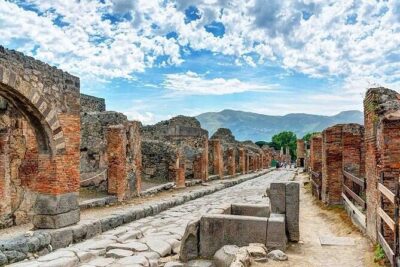
Then you walk Via dell’Abbondanza, one of Pompeii’s famous main streets, with commentary on the road network and urban plan.
In a place like Pompeii, street layout is where everything stops feeling random. When you understand the street structure, you can also understand how people moved: where foot traffic would concentrate, where services were likely clustered, and why some buildings sit where they do.
This stop also helps you “reorient” for the next cluster: theaters, baths, and the older temple area.
Stop 11 & 12: Theater district (Teatro Grande) and the Doric Temple’s early roots
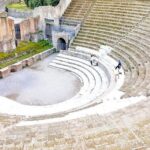
The tour goes into the theater area, including Teatro Grande, plus the broader theater district with references to other preserved theaters and the quadriportico idea. Roman theaters weren’t just entertainment; they were community spaces that reinforced social identity.
A little later, you also see the Doric Temple, described as the oldest temple in Pompeii, plus the Triangular Forum. This pairing works well because it shows two different kinds of “public meaning”: religious tradition that goes way back, and civic leisure that shaped community life.
The timing here is short stops, so use this part to get your bearings and learn what to look for if you return later.
Stop 13 & 14: Stabian Baths and the Lupanar—comfort, crowds, and the street’s darker side
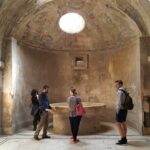
At the Stabian Baths (Terme Stabiane), you’ll learn about ancient thermal bathing and what a major bath complex meant socially. Baths were about hygiene, but also about meeting people and managing daily routines.
Then the tour turns to one of the most famous and debated stops: the Lupanar—Pompeii’s well-known brothel—with attention to the exceptional state of conservation in the bedrooms and erotic frescoes.
This section is where your personal preferences matter. If you don’t want to spend time on sexual imagery, you may find it mentally tiring. If you can handle it, it’s a rare chance to look at how Pompeii’s street economy worked, and how private transactions were made visible through art and space.
In either case, this stop can be fast, so it’s worth deciding in advance whether you want to pause, move on quickly, or ask the guide to steer the explanation toward the social and architectural angles.
Why the archaeologist guide feels worth it (especially with Pina Esposito)
This tour is led by Pina Esposito. The standout theme in the experience is how she brings interpretation, not just facts. The best tours help you read the site like a story. This one does that by connecting buildings to the way people lived before, during, and after catastrophic events.
Another big plus: the group stays small (up to 15 travelers). That means your questions don’t disappear into a loud mass of people. If you like to ask “why does this matter?” or “what would this look like in real life?” this format is built for you.
In past tours with her (as shared by guests), she’s also described as answering questions clearly and being attentive to practical needs during the walk, like breaks for water and using the restroom. That kind of organization doesn’t sound glamorous, but it can make the difference between enjoying Pompeii and feeling like you’re just surviving it.
Language options are also a plus: guided in Italian, English, or German. If English matters to you, this tour offers it.
Price and value: $42.01 for a structured Pompeii day
At $42.01 per person, this tour is priced like a “high-impact interpretation” add-on. For that money, you’re paying mainly for two things: expert guidance and a route that keeps you from wandering without context.
Here’s what to budget carefully: food, drink, tip, and entrance fee are not listed as included. So while many specific stops don’t require separate add-ons, Pompeii entry can still be a cost you’ll want to cover. If you’re traveling with a tight schedule, I’d plan your total day budget around that entry plus any snacks you’ll want between stops.
Also, Pompeii is easiest when you’re not racing. A 2.5-hour guided route gives you structure, but it’s short enough that you’ll likely want to return on your own afterward for slower viewing—especially around the mosaic masterpieces and the most scenic streets.
Who should book this Pompeii tour with an archaeologist?
This is a strong fit if:
- You want a guided route that prioritizes the most meaningful stops instead of letting you guess where to start.
- You care about historical context—how the Forum, temples, homes, and street life fit together.
- You like asking questions and prefer a group that isn’t huge.
- You want a “best of Pompeii” overview that still touches emotional and sensitive parts of the site.
You might choose something else if:
- You want a long, slow visit focused on just one or two areas.
- You don’t handle sexual imagery well, since the Lupanar stop is part of the standard route.
- You struggle with walking for the full 2.5 hours through uneven ground.
Should you book? My take
If you’re visiting Pompeii and want it to click fast, I think this tour is a smart buy. The route covers the narrative backbone (Forum and civic spaces), then expands into religion, daily life, and major architectural highlights like Casa del Fauno and the Battle of Alexander mosaic. The small group size and archaeologist interpretation help you see more than you’d get from reading plaques alone.
If you do book it, do two things: wear comfortable shoes, and bring a little curiosity about how Romans organized public life, faith, and even commerce. You’ll walk out with a clearer picture of a city that feels frighteningly real.
FAQ
How long is the Pompeii tour with an archaeologist?
It runs about 2 hours 30 minutes.
What language is the guide available in?
The guided tour is offered in English, and also Italian or German.
What’s the meeting point for the tour?
You start at Pompei Scavi – Villa dei Misteri, 80045 Pompeii, Metropolitan City of Naples, Italy.
Where does the tour end?
The tour ends at the Forum of Pompeii (Foro di Pompei).
Is the entrance fee included?
Food, drink, tip, and entrance fee are not included.
Are tickets mobile?
Yes, the tour uses a mobile ticket.
How many people are in the group?
The maximum group size is 15 travelers.
Is the tour suitable for most travelers?
Yes, most travelers can participate.
Is the experience weather-dependent?
Yes. It requires good weather.
Can I cancel and get a full refund?
Yes. You can cancel up to 24 hours in advance for a full refund.