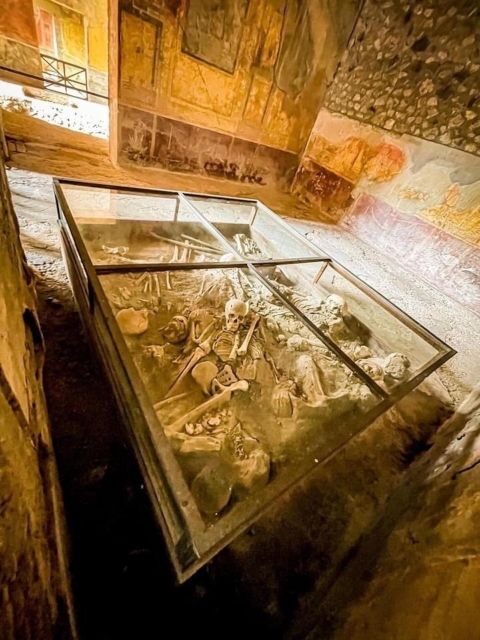
Roman villas, minus the usual crowds. That’s the appeal here: you get archaeologist-led context at Oplontis, then you continue into Stabiae’s quieter sites where the art and myth-scenes feel close and personal. I especially like the focus on Villa di Poppea frescoes and the practical skip-the-line approach, so you spend more time looking and less time waiting. One thing to consider: if a site’s opening hours change, the plan can shift—like swapping the Stabiae portion for extra time back at Oplontis.
This is built for people who want more than a quick walk-through. In this format, you’ll be learning how these Roman homes worked, what the wall art was trying to say, and why the 79 AD eruption still shapes what you can see today. It’s offered in English, runs about 3 hours, and ends after the archaeological promenade in Stabiae.
Logistics are simple enough to handle on your own day, since the meeting points are in Pompeii-area archaeology zones and it’s near public transportation. Just remember: this is a private tour for your group, and it doesn’t include meals, so you’ll want water and a plan for a snack break before or after.
In This Review
- Key things to know before you go
- Why Oplontis and Stabiae feel different from “just Pompeii”
- Stop 1: Villa di Poppea at Oplontis (the frescoes that steal the show)
- Stops 2 and 3 in Stabiae: Villa San Marco and Villa Arianna
- What the archaeologist and licensed guide add (beyond facts)
- Price and value: what $226.37 buys you in real time
- Meeting points, timing, and how to plan your day
- Who this tour suits best (and who might want a different plan)
- Should you book Villa Oplontis & Stabiae?
- FAQ
- How long is the Villa Oplontis & Stabiae tour?
- What language is the tour offered in?
- Where does the tour start and end?
- Are tickets included?
- Is transportation or meals included?
- Is the tour private?
Key things to know before you go
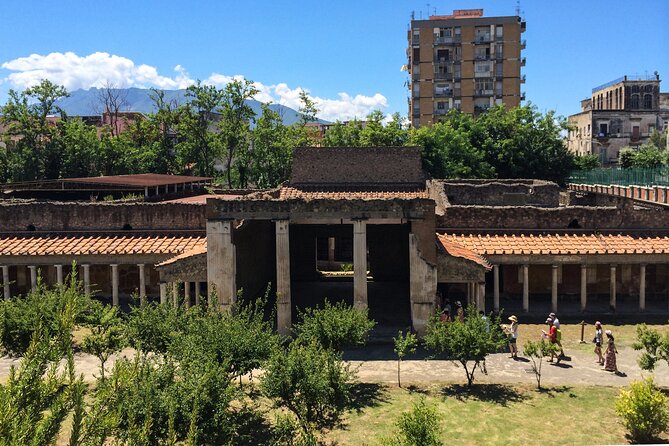
- Villa di Poppea at Oplontis is the art-star: expect hour-long, story-rich time focused on the famous frescoes.
- Stabiae is split into two short stops: Villa San Marco (about 30 minutes) and Villa Arianna (about 30 minutes).
- Skip-the-line tickets help you keep your day moving.
- A professional archaeologist leads the narrative, not just the walk.
- Private tour for your group, so your pace is more controlled than a big group bus tour.
Why Oplontis and Stabiae feel different from “just Pompeii”
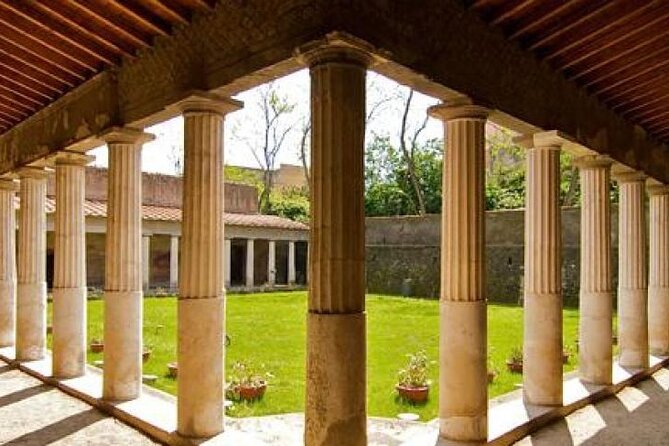
If you’ve already done Pompeii or you’re planning to, this tour is a smart counterweight. Pompeii can be intense—lots of streets, crowds, and a huge amount of scale. Oplontis and Stabiae are smaller and more focused, and that matters because villas are about people, taste, and daily life. You’re not only looking at ruins; you’re reading a house.
Oplontis (Torre Annunziata area) brings you face-to-face with the visual language of wealth: wall paintings, decorative programs, and carefully designed rooms. Stabiae, on the other hand, gives you another angle on the same disaster story—different villas, different artistic choices, and a different feel as you walk through the archaeological promenade.
Another practical win: the tour is about 3 hours, which is short enough to fit into a day with other sights. That’s not just convenience. A shorter, guided route usually means you remember more—because you’re not rushing from one stop to the next with your brain already tired.
You’ll also like the structure. The plan is built around three named villas—Villa di Poppea, Villa San Marco, and Villa Arianna—with a clear time split. That helps you know what kind of experience you’re buying: art-heavy at Oplontis, then Roman-room walking and myth imagery in Stabiae.
If you're still narrowing it down, here are other tours in Pompeii we've reviewed.



Stop 1: Villa di Poppea at Oplontis (the frescoes that steal the show)
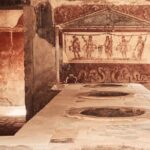
Stop one is Villa di Poppea in Oplontis, and this is the heart of the tour. You’re scheduled for about 1 hour, which is a good amount of time for a place where details matter. In a villa like this, the “wow” isn’t only the scale. It’s the way frescoes were used to shape mood, status, and storytelling inside the home.
What you’ll look for during your visit is the kind of imagery that makes Roman villas feel like rooms from another world—scenes painted with intention, not just decoration. The tour highlights the frescoes as truly unforgettable, and that tracks. Even when you know the general history of Vesuvius, the paintings help you imagine the living experience: color, drama, and the idea that art was part of everyday identity.
One practical note: the itinerary notes admission for this stop as not included, but the tour package states admission tickets for Oplontis are included. I’d treat this as a reason to confirm what you’ll receive in your confirmation message. In practice, you want clarity on whether you’ll show up with a pre-paid ticket or you’ll buy it on the day. Either way, skip-the-line is the goal, because waiting burns time you could spend reading the walls.
If you’re a detail person—someone who likes to track how rooms connect, how themes repeat, and how art aligns with the space—this is the stop that rewards you most. It’s also where a good guide makes the biggest difference, because the best observations often come from small visual cues you’d otherwise miss.
Stops 2 and 3 in Stabiae: Villa San Marco and Villa Arianna
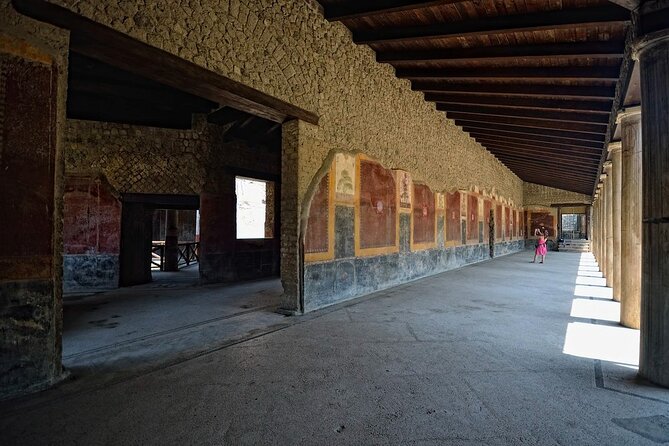
After Oplontis, you move to Stabiae and slow down into two focused visits.
Villa San Marco is scheduled for about 30 minutes, and the feeling here is different from Oplontis. Instead of being primarily “fresco appreciation,” you’re walking through ancient rooms and letting the layout guide your imagination. Stabiae is ideal for this because the rooms and passages help you picture how a family actually moved through space—how light might have hit walls, how different areas could serve different purposes, and how the house functioned as a system.
Then comes Villa Arianna, also about 30 minutes. This stop is called out for a myth painted on a wall, and that detail is exactly why this villa matters. Myth subjects in Roman art weren’t random. They were chosen to communicate culture, education, and taste. When you’re seeing a myth scene in its architectural setting, it stops being “a story” and becomes “a message inside someone’s home.”
The time split matters. Thirty minutes per villa sounds short, but for Stabiae it can work well because you’re not trying to do everything. You’re doing enough to understand what makes each villa distinct—one for room-by-room walking, the other for a specific myth image that helps you lock in the visual and thematic idea.
Also, both Stabiae admissions are described as free in the itinerary details. Even if the paperwork varies, the key benefit for you is that the tour plan keeps the day efficient: you’re paying for guided interpretation and time management, not for inflated add-ons.
One more consideration: if Stabiae has hour changes on the day, the plan may adjust. In at least one real-world situation, the Stabiae portion didn’t happen as scheduled, and the operator compensated by offering a more in-depth experience at Oplontis. That’s the kind of flexibility worth knowing before you pick a time slot—so I’d double-check with the company the day before if you’re traveling on a tight timetable.
What the archaeologist and licensed guide add (beyond facts)
A villa doesn’t need a lecture to be beautiful. But it does need help to be meaningful. This tour leans hard into that idea with a professional archaeologist and licensed guide, and you can feel the difference in how you look.
Here’s what the right guide tends to do in places like Oplontis and Stabiae:
- Point out small details you’d otherwise gloss over: how a figure is placed, what a scene seems to emphasize, and what the room’s function might suggest.
- Connect art to human life: Roman villas weren’t museums. They were homes, and the art was part of social identity.
- Help you connect the eruption story to what you see: not just disaster as history trivia, but how 79 AD froze certain moments in time.
I also like the practical, human side mentioned by people who’ve done this tour: the guide tends to keep the pace moving while still offering time for photos as you walk along. That matters because at sites like this, you’ll want to step closer to the walls—and a good guide won’t treat your camera as an interruption.
Another small win: the tour uses a “walk with meaning” structure instead of a stop-and-rush approach. That’s a big deal when you’re dealing with frescoes and room layouts. If you’re alone, it’s easy to wander and end up with a collection of random impressions. With a guide, you get a thread you can follow.
And yes, you’ll likely hear the name Livio in conversations around this experience—there’s at least one standout guide called out for being generous with time and photos and for explaining details in a way that clicks fast.
Price and value: what $226.37 buys you in real time
At $226.37 per person for roughly 3 hours, this isn’t a bargain-basement add-on. But it also isn’t a huge splurge for what you’re getting—if you care about interpretation.
Here’s what’s included:
- Guided tour by a professional archaeologist and licensed guide
- Admission tickets for Oplontis and Stabia villas
- Skip-the-line tickets
That combination changes the math. The biggest invisible cost at archaeological sites is time lost to queues and confusion. Skip-the-line helps you protect your schedule, especially if you’re visiting as part of a longer day in the Vesuvius zone.
You’re also paying for translation of the site into something you can understand: how to look at frescoes, how to read a myth subject, and how to connect rooms to the life lived inside them. That’s hard to quantify, but it’s what turns “I saw walls” into “I understand what those walls were for.”
Not included is private transportation and meals. That means if you’re coming from Naples or another nearby base, you should already have your transit figured out. If you’re planning to use public transport, aim to build buffer time around the meeting points so you don’t feel rushed.
If you’re already the type of traveler who wants to spend money on quality time with a guide, this price starts to look fair. If you just want photos and a quick lap, a self-guided visit could be cheaper. The tour’s value is in the how you see it, not only in access.

Meeting points, timing, and how to plan your day
The tour starts at Scavi di Oplontis – Villa Poppea at Via Sepolcri, Torre Annunziata, and ends at Scavi di Stabia – Villa San Marco at Passeggiata Archeologica in Castellammare di Stabia. That one-way feel is useful, but it does mean your logistics need attention.
Because the end point is in Stabiae after the archaeological promenade, plan your next move accordingly. Don’t schedule a train with a hair-thin buffer. Instead, treat the end time as the end time. If you finish a little late, you’ll be glad you left slack.
The tour is offered in English and runs about 3 hours. You’ll want water and comfortable shoes because you’re walking through archaeological spaces. There’s no mention of special ramps or step-free routing, so if you have mobility concerns, I’d ask the operator directly how they handle the terrain in real conditions. The info given says most travelers can participate, but archaeological ground is often uneven.
Also: this is a private tour/activity, meaning only your group participates. That tends to make the experience smoother—less waiting for a large bus group to reassemble and more room for the guide to adapt pacing to questions.
Who this tour suits best (and who might want a different plan)
This experience fits best if you’re one of these travelers:
- You love Roman villas, frescoes, and art that has context
- You’ve done Pompeii already or you’re doing it next and want a more focused counterpoint
- You prefer a guided route where a guide points out the “small stuff” that makes sites come alive
- You want a shorter, higher-quality archaeological day, not a full marathon
It may be less ideal if you’re purely after big scenery and sweeping views, because the tour’s core strength is the interiors and wall art experience. Also, if you hate surprises and schedule changes stress you out, consider that site hours can force adjustments. Having that in mind helps you plan better.
Finally, if you’re the type who reads room labels and likes to understand what you’re seeing before you arrive, an archaeologist-led tour is exactly the right format.
Should you book Villa Oplontis & Stabiae?
If you care about frescoes, Roman domestic life, and interpretation that helps you look smarter, I think you should book it. The biggest reasons are simple: art-forward time at Villa di Poppea, a guide who can explain details, and skip-the-line efficiency for a 3-hour outing.
Before you click confirm, do one practical thing: verify whether your time slot is stable for Stabiae, since hours changes can affect the exact stops. If you do that, this tour is a strong way to experience Vesuvius-area archaeology without getting lost in the chaos of bigger sites.
FAQ
How long is the Villa Oplontis & Stabiae tour?
It’s approximately 3 hours.
What language is the tour offered in?
The tour is offered in English.
Where does the tour start and end?
It starts at Scavi di Oplontis – Villa Poppea (Via Sepolcri, Torre Annunziata) and ends at Scavi di Stabia – Villa San Marco (Passeggiata Archeologica, Castellammare di Stabia) after the Stabiae archaeological promenade.
Are tickets included?
The tour package states that admission tickets for Oplontis and Stabia villas are included and that skip-the-line tickets are included. The stop details also show mixed wording for Oplontis, so it’s smart to confirm what you’ll receive in your booking confirmation.
Is transportation or meals included?
No. Private transportation and meals are not included.
Is the tour private?
Yes. It’s described as private, with only your group participating.