REVIEW · POMPEII ARCHAEOLOGICAL SITE
Pompeii 3-Hour Walking Tour
Book on GetYourGuide →Operated by Askos Tours · Bookable on GetYourGuide
Pompeii is startling on foot. In a focused 3-hour private walk, you get an archaeologist guide who stitches together how this city worked before Vesuvius and what it became after the ash burial. I like two things most: the practical, site-by-site explanations (including how the ruins were rediscovered in the 18th century) and the chance to see the plaster casts of people and animals preserved at death.
You’ll cover the civic center, the bath culture, the entertainment areas, and intimate homes, not just the postcard stops. One thing to weigh: it’s a walking tour in any weather, and the rules don’t allow umbrellas or backpacks, so plan for comfort and simple gear.
From start to finish, this tour is built for people who want more than a pass-by look. If you’ve ever wondered what Roman life felt like day to day, this is the sort of route and guidance that turns ruins into lived-in places.
In This Review
- Key things you’ll get from this Pompeii tour
- Arriving in Pompeii With Less Friction
- The 79 A.D. Story, Plus How the Ruins Were Rediscovered
- Marina Gate and Villa of the Mysteries: Starting With the City’s Edges
- Temple of Apollo and the Civic Core: Forum Life in Motion
- House of Menander, House of the Faun, House of the Vettii: Seeing Wealth Up Close
- Baths and Social Rhythm: Forum Baths and Sarno Baths
- The Lupanar and Everyday Edginess Without the Shock Tourism
- Theaters and Amphi-Life: Teatro Grande, Odeion, and the Amphitheater
- Plaster Casts: When the Site Turns Personal
- Price and Value: What $508.15 Really Buys You
- Who This Private Pompeii Walk Is Best For
- Practical Tips for a Smoother 3 Hours
- Should You Book This Pompeii Private Walking Tour?
- FAQ
- How long is the Pompeii 3-hour walking tour?
- Is this a private tour?
- Do starting times vary?
- Is Pompeii admission included?
- Will I skip the ticket line?
- What languages are available for the live guide?
- Is the tour wheelchair accessible?
- What should I bring?
- What items are not allowed?
- Does the tour run in rain?
Key things you’ll get from this Pompeii tour
- Skip-the-line entry so you spend less time waiting and more time seeing
- Archaeologist-led storytelling that connects streets, buildings, and Roman routines
- A tight “best-of” route: Forum, baths, the Lupanar, theaters, and major houses
- Death casts in plaster that make the catastrophe painfully human
- UNESCO context for why Pompeii and Herculaneum matter worldwide
- Multiple languages (English and many others), with a private group setup
Arriving in Pompeii With Less Friction
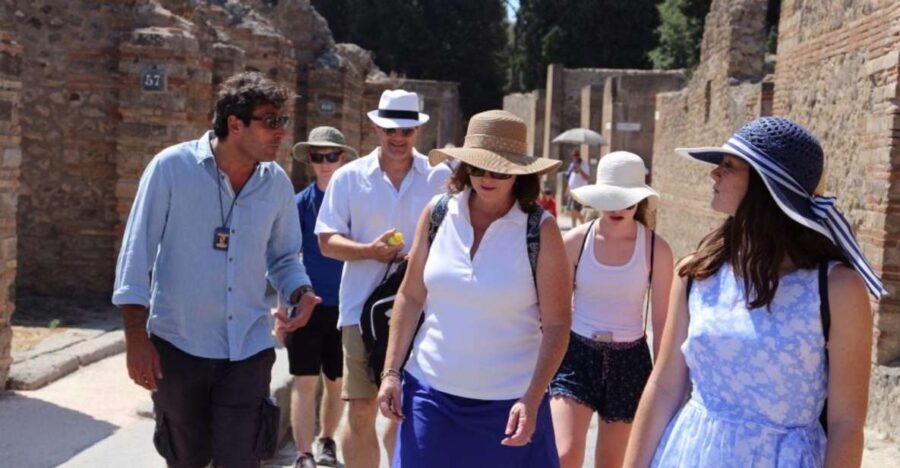
This is a private guided walking tour, and that alone changes the feel. Instead of being one more person in a crowd, you get guidance tuned to the rhythm of the site. You also get Pompeii admission fees included, and you skip the ticket line, which matters here because time gets eaten up fast at major attractions.
Your meeting point can vary depending on which option you book, with two specific starting locations on Via Villa dei Misteri (2 or 3). The tour ends back at the meeting point, so you’re not left figuring out transport right after a walking-focused experience.
The tour length is set at 3 hours. That’s short enough to keep you energized, but it’s long enough to see the major districts that make Pompeii feel like a whole city.
Other half-day Pompeii tours
The 79 A.D. Story, Plus How the Ruins Were Rediscovered
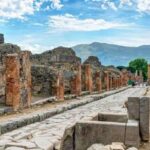
Pompeii’s power isn’t just the buildings. It’s the timeline—and your guide explains both ends of it. You’ll learn how the town was buried under ash and molten material after the eruption of Vesuvius in 79 A.D. Your walk also covers the later chapter: how Pompeii was rediscovered in the 18th century, when people realized the eruption hadn’t erased the city so much as sealed it.
That matters because Pompeii isn’t a “ruins in general” experience. It’s a snapshot of Roman society and daily life taken at a specific moment. You’ll also hear why UNESCO placed Pompeii and Herculaneum on the World Heritage list: a complete, vivid picture of everyday life and social structure, not just isolated monuments.
If you want the site to make sense quickly—without reading a guidebook cover-to-cover—this is the right approach. You start with the big story, then the route makes more and more sense block by block.
Marina Gate and Villa of the Mysteries: Starting With the City’s Edges
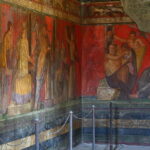
The walk begins with key entry points and representative areas, so you don’t get stuck only in the center. You’ll visit Porta Marina (Marina Gate), which helps you understand how people and goods likely moved in and out of Pompeii. Then you go to the Villa of the Mysteries, a standout for what it says about Roman culture and symbolism.
Even if you’ve seen photos of Pompeii before, the Villa of the Mysteries is the kind of stop that reminds you this was a real place, not a theme park. The best tours show you how to look: at spaces, at layouts, and at what the buildings were used for. That’s what you’re aiming for here.
Temple of Apollo and the Civic Core: Forum Life in Motion
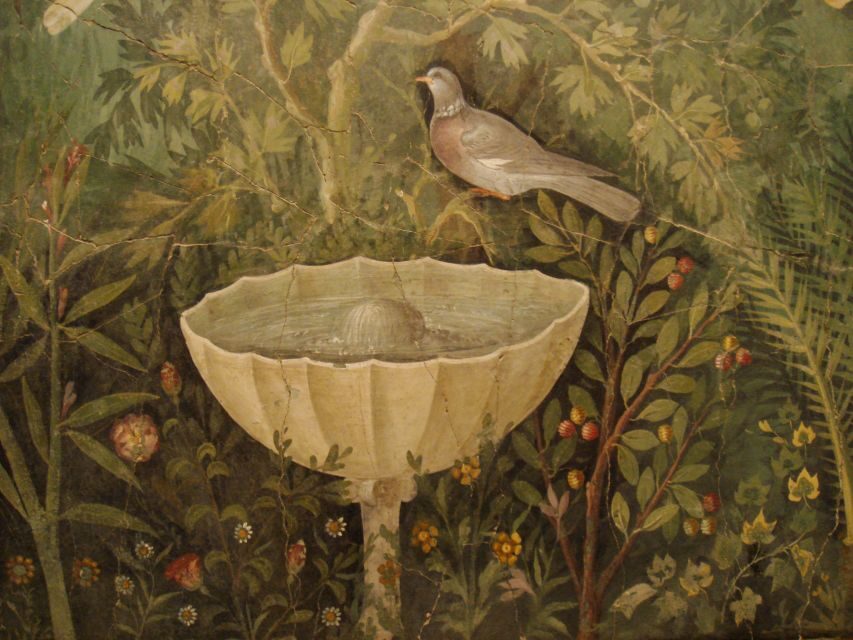
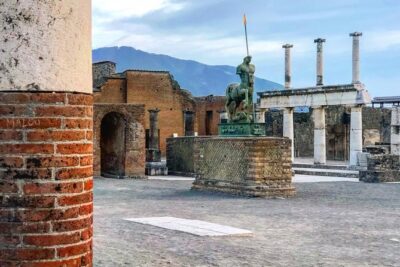
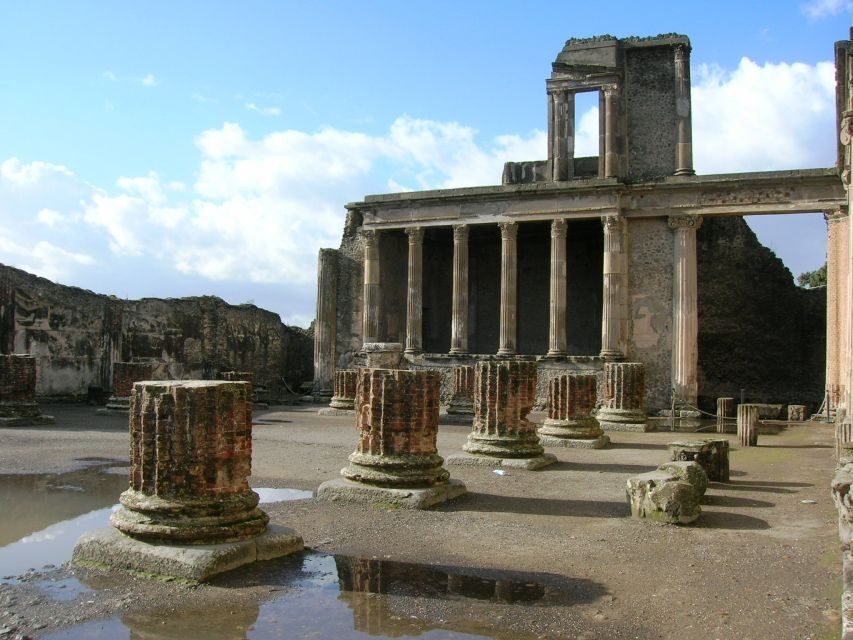
Once you move into the main civic area, the tone shifts from “how was the city laid out?” to “how did Romans function here?” You’ll see Temple of Apollo, then head into Foro Civile di Pompei (the civic forum) and the Basilica, which served as a court and meeting space.
This is where the guide’s archaeologist-level perspective pays off. You’ll learn how public space was organized for decisions, business, and public identity. It’s not just impressive architecture. It’s the machinery of daily governance and social status.
Along the way, you’ll encounter other important civic and religious elements included on the route, such as Triangular Forum and temple sites like Temple of Jupiter, Temple of Apollo, and Temple of Venus. Even when your eyes want to jump to dramatic walls, the route encourages you to connect purpose to place.
One practical note: the Forum area can feel busy underfoot because there’s a lot to look at. A private guide helps you avoid wandering mentally. You get a set of priorities, and you learn what to focus on when your brain wants to scan everything at once.
House of Menander, House of the Faun, House of the Vettii: Seeing Wealth Up Close
Pompeii isn’t only public buildings. The tour walks you through houses that show how Roman life split between public image and private comfort.
You’ll visit the House of Menander, then later the House of the Faun and the House of the Vettii. These stops matter because Pompeii’s homes aren’t “just rooms.” They show how people lived around courtyards, walked through daily routes, and decorated spaces to signal taste and standing.
If you care about art and design, your guide also works in details you might otherwise miss, like the way Pompeians used mosaics and painted elements to shape mood and identity. If you care more about daily routine, you’ll still get value, because these houses are also about movement, privacy, and what “home” meant in Roman terms.
Bonus stops included on the route can include the bakery and a termopolium (Capuano)—small public food-and-drink spots that help you feel how normal meals and quick breaks may have worked. These are the stops that turn “I saw a building” into “I understand how people passed time.”


Baths and Social Rhythm: Forum Baths and Sarno Baths

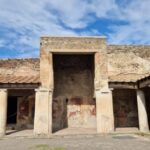
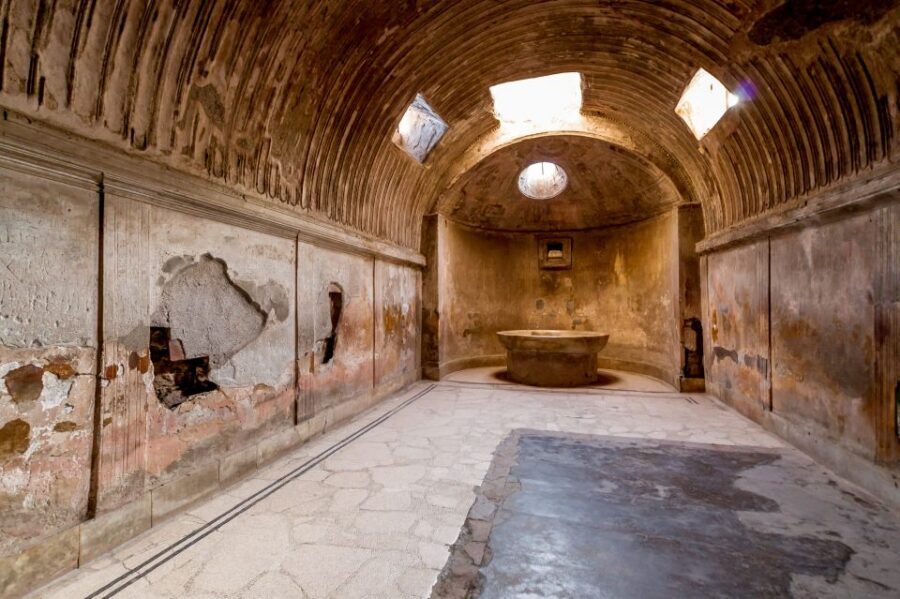
A Pompeii tour that skips baths misses a huge part of Roman life. Here, you get Forum Baths and Sarno Baths in the route, so you can see the scale and layout of places where bathing, social time, and practical routines overlapped.
Baths in Roman cities were more than hygiene. They were part of how people interacted, relaxed, exercised, and got on with the day. A good guide keeps you from treating the rooms as a museum diagram. You learn what these spaces likely felt like and how people moved through them.
This section also gives you a helpful pacing break. After temples and forums, the bath area shifts attention to comfort and daily habits. If you’re traveling with someone who worries Pompeii is too heavy, this is usually the part that makes the ruins feel normal again.
The Lupanar and Everyday Edginess Without the Shock Tourism
One of the most talked-about stops in Pompeii is the Lupanar (brothel). On this tour, it’s handled as an archaeological and social site, not as something to chase for shock value.
You’ll see the Lupanar as part of the broader picture of Roman daily life, including how commerce and entertainment existed side by side with civic religion and elite homes. It’s also a useful reminder that Pompeii wasn’t just fine living and grand architecture. It included hard work, routine business, and services people used.
A tour like this is at its best when the guide frames what you’re seeing. You should come away understanding what the space represented in the city’s social ecosystem.
Theaters and Amphi-Life: Teatro Grande, Odeion, and the Amphitheater
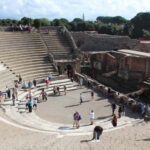
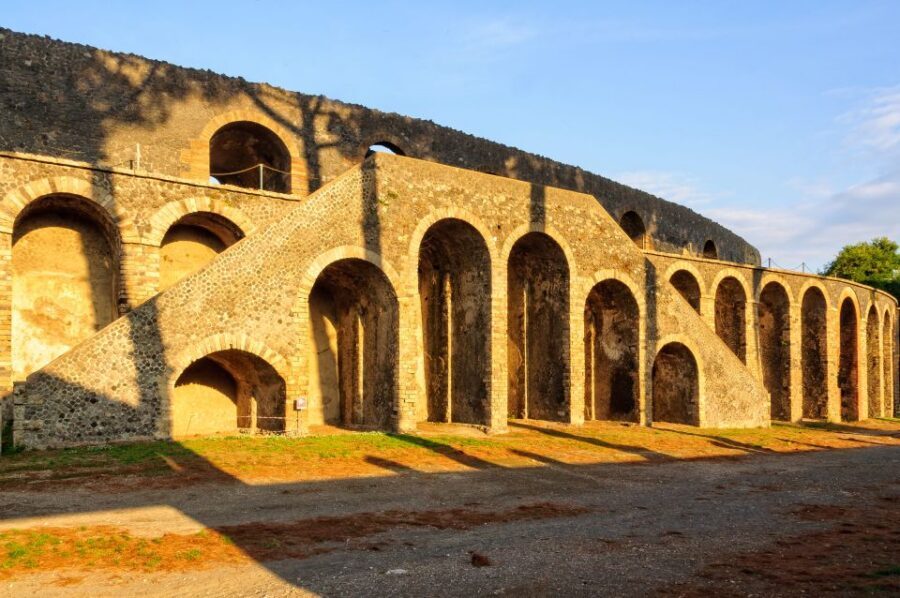
For many people, Pompeii’s theaters are the most visually dramatic structures. This tour includes major entertainment stops such as the Large Theatre (Teatro Grande), the Odeion (small theatre), and the Amphitheater.
Here’s what I think you should expect: these aren’t only “big rooms for shows.” Your guide connects them to Roman public life—how a city gathered people, how performances reinforced shared culture, and how crowds moved through the space.
The amphitheater stop also helps you see the city’s scale. Pompeii is compact in walking terms, but the public buildings show big-city ambitions. If you’re trying to understand the social hierarchy of entertainment—who sat where and why—you’ll get more out of this tour than if you were wandering alone.
Plaster Casts: When the Site Turns Personal
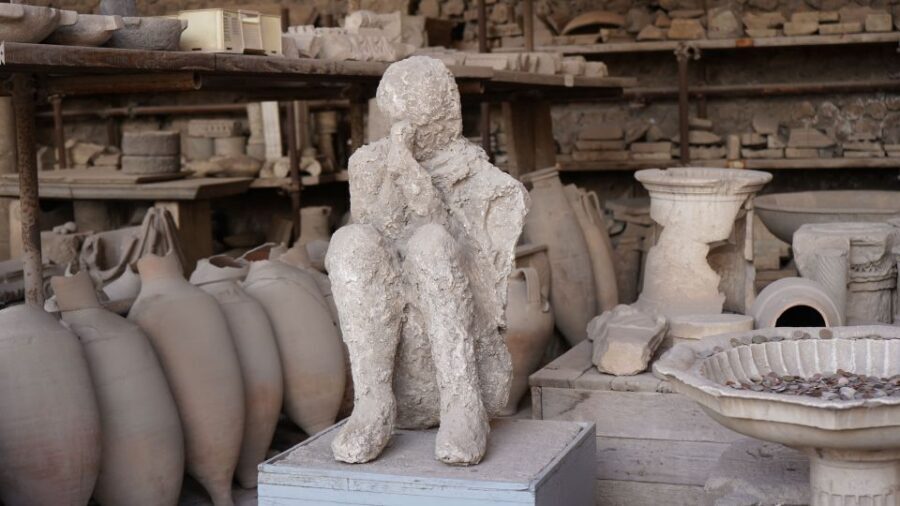
The included highlight of plaster casts of humans and animals is where Pompeii stops being architecture and becomes human reality.
Your guide explains what the casts represent and why they were made—how preservation and later discovery allow modern visitors to face the tragedy in a direct way. The effect is emotional, but it also has value for understanding scale. You see not only that the eruption was deadly, but that it caught people and animals in the middle of their lives.
This is the stop I’d protect on the route. Give it time. Stand where your guide tells you to. Let your brain switch from “wow” to “this is what happened.” It’s heavy, but it’s also where many visitors finally understand why UNESCO called this place a complete picture of daily life.
Price and Value: What $508.15 Really Buys You
At $508.15 per group for a private experience (listed as up to 1), the price is not cheap. But it’s also not just “paying for someone to walk next to you.”
You’re buying:
- a private archaeologist guide (not a large-group script),
- Pompeii admission included,
- skip-the-ticket-line entry,
- and a structured route through major districts in 3 hours.
For solo travelers, the “per group” pricing can look steep compared to shared tours. For couples or small parties, the value often becomes easier to justify because you’re not splitting the experience into strangers who may not share your interests.
If you’ll spend most of your time asking questions—about Roman daily life, architecture purpose, and what you’re seeing—this format usually feels worth it. If you prefer total freedom and don’t want a tight route, you might find a cheaper self-guided ticket better. But you’ll likely lose the “why” that turns Pompeii from ruins into a story.
Who This Private Pompeii Walk Is Best For
This tour fits best if you:
- want Pompeii to feel organized and meaningful, not random,
- like expert context for public spaces, homes, and social sites,
- enjoy comparing how Romans lived in public versus private settings,
- and want a 3-hour window that covers a lot without taking the entire day.
It’s also a good call if you’re visiting first-time and feel overwhelmed by scale. A guide keeps your focus sharp. You’ll see a lot of named stops like House of Menander, House of the Faun, House of the Vettii, Temple of Apollo, and more, but you’ll understand how they connect.
If you’re traveling with accessibility needs, the tour is listed as wheelchair accessible. Still, Pompeii is an archaeological site, so check your comfort level with walking surfaces when you’re deciding.
Practical Tips for a Smoother 3 Hours
Here’s how I’d set yourself up to enjoy it, not just survive it:
- Wear comfortable walking shoes. Pompeii involves steady walking and frequent stops.
- Bring passport or ID card (required for this activity).
- Keep your bag simple. Backpacks are not allowed.
- Umbrellas: the guidance recommends a small umbrella in rain, but umbrellas are listed as not allowed, so plan on a raincoat instead.
- No pets other than assistance dogs.
The tour runs in any weather condition, so dressing for conditions is part of doing it right.
Should You Book This Pompeii Private Walking Tour?
If you want Pompeii to make sense fast—how it worked, what each district tells you, and why the world still studies this moment in time—this is a strong book. The biggest win is the archaeologist-led storytelling paired with a route that hits the civic core, bath culture, entertainment spaces, major houses, the Lupanar, and the plaster casts.
I’d skip it only if you strongly prefer self-guided pacing, or if the idea of a structured 3-hour walk feels too intense. Otherwise, for many visitors, this format is the best trade: you see the major sites and still get the explanations that turn them from sights into understanding.
FAQ
How long is the Pompeii 3-hour walking tour?
The tour duration is 3 hours.
Is this a private tour?
Yes, it is a private group tour.
Do starting times vary?
Yes. Starting times can vary, so you need to check availability to see the options.
Is Pompeii admission included?
Yes, Pompeii admission fees are included.
Will I skip the ticket line?
Yes, the tour includes skip-the-ticket-line entry.
What languages are available for the live guide?
The live tour guide is available in Spanish, German, Russian, Chinese, English, Italian, Japanese, and Portuguese.
Is the tour wheelchair accessible?
Yes, the activity is listed as wheelchair accessible.
What should I bring?
You should bring a passport or ID card.
What items are not allowed?
Pets are not allowed (assistance dogs are allowed). Umbrellas and backpacks are also not allowed.
Does the tour run in rain?
Yes, it runs in any weather condition. The guidance recommends bringing a small umbrella and/or a raincoat if it rains.