REVIEW · POMPEII ARCHAEOLOGICAL SITE
Pompeii: Skip-the-Line Guided Archaeological Discovery Tour
Book on GetYourGuide →Operated by Towns of Italy · Bookable on GetYourGuide
Pompeii is crowded, so this plan cuts the wait. I like that you get a skip-the-line guided visit led by an archaeologist, and I also like the small-group setup with earphones, so you can actually hear the story as you walk. One thing to keep in mind: there’s still a required security check once you arrive, so entering may not be instant.
This is a tight, well-focused 2-hour route that hits big-name places without turning into a marathon. The tour runs in English or Spanish only, which helps the guide keep the pacing and explanations consistent.
You’ll be on your feet a lot and the pace is built for seeing Pompeii efficiently. It runs in all weather, so bring weather-ready basics and plan for real walking on ancient paths.
In This Review
- Key things to know before you go
- Piazza Esedra start: finding the Vox Kiosk in Campania
- Skip-the-line works, but security still takes time
- Pompeii in 2 hours: how the pacing really feels
- The archaeologist factor: what you’ll learn while you walk
- Stop-by-stop: the specific Pompeii highlights on your route
- Garden of the Fugitives: a quick photo stop with a story angle
- Forum Baths: Roman daily life, not just politics
- Amphitheater: entertainment in the open air
- Lupanare: a glimpse of Pompeii’s adult life
- House of the Vettii: elite living and preserved interiors
- Vetutius Placidus House and Thermopolium: food, commerce, and street routines
- What’s included beyond the street stops
- Earphones, monolingual groups, and how the guide’s voice lands
- Walking, dress code, and bag rules: the stuff that can ruin your day
- Price and value: is $42.19 worth it?
- Who this tour suits best (and who should skip it)
- Should you book this skip-the-line guided Pompeii tour?
- FAQ
- How long is the Pompeii skip-the-line guided archaeological discovery tour?
- Where do I meet the guide, and where does the tour end?
- What’s included in the ticket price?
- What languages are available?
- What should I wear or bring for entry to Pompeii?
- Is there anything that could delay entry even with skip-the-line?
Key things to know before you go
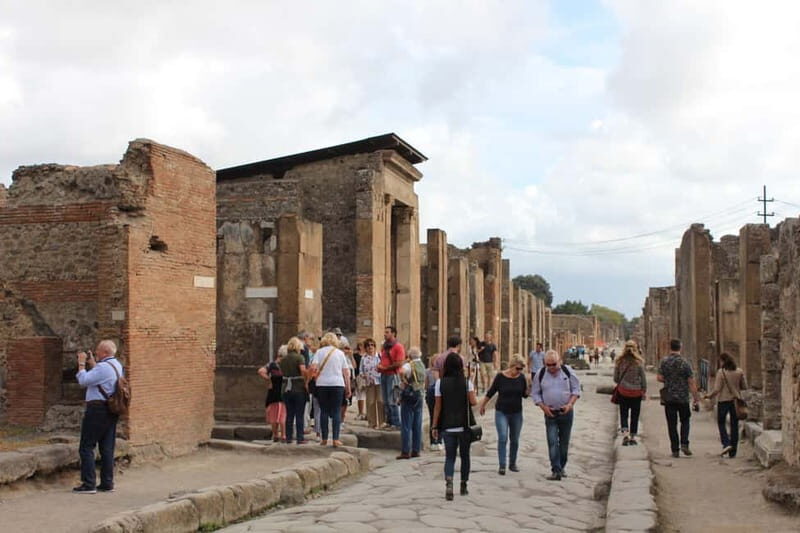
- Professional archaeologist guide, not a generic script: you’ll get context and interpretation as you move through the ruins
- Skip-the-line entry with express security check: you avoid the longest waits, but you still pass security
- Small group audio with earphones (max 5 people): clearer listening, even in busier areas
- English or Spanish only for the group: monolingual tours keep communication sharp
- Route covers major Pompeii highlights in 2 hours: Forum areas, theaters, villas, and more
Piazza Esedra start: finding the Vox Kiosk in Campania
Your tour begins in Piazza Esedra, in Pompeii. You’ll meet the guide at the Towns of Italy–Vox Kiosk, right next to Coffeeshop Vittoria. It’s easy to miss if you arrive late or wander without a plan, so I’d treat this like a train platform: arrive early and confirm the exact kiosk area.
The meeting point matters because the tour has a strict latecomer rule. If you’re not there when the tour starts, you won’t be able to join, and there’s no refund. That’s not meant to be tough; it’s because the group has only two hours and the guide can’t pause the whole plan for one person.
Once you’re checked in, you’ll return to Piazza Esedra at the end. No mystery ending somewhere else in the park.
Other skip-the-line Pompeii tickets and tours

Skip-the-line works, but security still takes time
This tour is built around priority entrance and an express security check. In practice, that means you should spend less time stuck in the longest entry lines. But the key word is still security: you’ll likely experience some form of inspection before you get into the archaeological area.
So if you’re the type who likes to stroll in five minutes before a start time, don’t. I’d aim to arrive about 15 minutes early (the tour asks for it, and it’s good advice). That buffer is what turns the experience into “smooth and organized” instead of “I’m rushing with sweaty shoes.”
Also note the tour operates in all weather conditions. If it’s rainy, you’ll still walk the route—so don’t plan on using the weather as an excuse to slow down.
Pompeii in 2 hours: how the pacing really feels
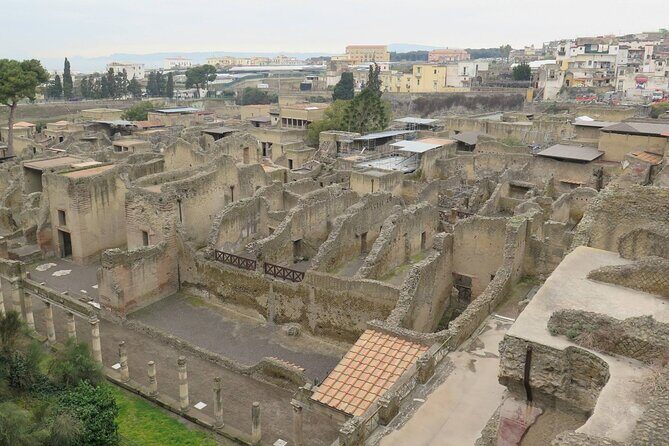
This tour is short by design. Two hours sounds fast because Pompeii is huge, but the trade-off is that you get an efficient route with major stops. The guide’s job is to help you connect the places you see, so you’re not just taking photos—you’re building a mental map.
Expect a mix of guided walking and short photo stops. Some areas are brief, and that’s normal for a condensed itinerary. The payoff is that you see a wide span of Pompeii’s life: public spaces, entertainment, and elite homes, plus the story of what happened during Vesuvius’ eruption.
If you’re visiting Pompeii for the first time, this can be an ideal “orientation tour.” It helps you know what to return to later with your own time.
The archaeologist factor: what you’ll learn while you walk
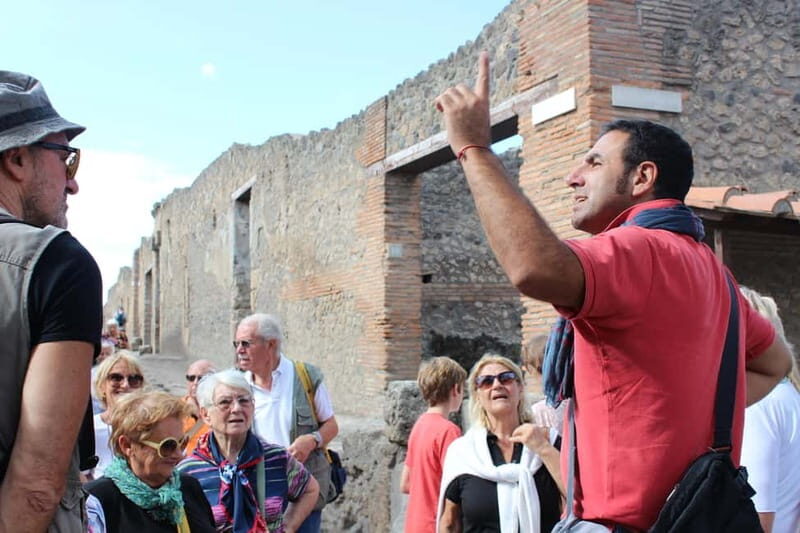
The biggest value here is the expert archaeologist guide. Pompeii can feel like random walls and street grids if you’re just browsing. With an archaeologist leading the walk, the ruins become evidence—how buildings were used, how people lived, and what the layout suggests about daily routines.
A few of the themes you can expect to hear about during the circuit:
- How the city worked as a social and political place
- What everyday food and street commerce looked like through the remains
- How elite residences differed from more public-facing areas
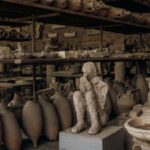
- The tragedy and aftermath through preserved casts and museum pieces
- Art and culture, including the collection of erotic material mentioned in the highlights
You’re not just being shown “pretty parts.” You’re being taught how to read Pompeii.
Stop-by-stop: the specific Pompeii highlights on your route
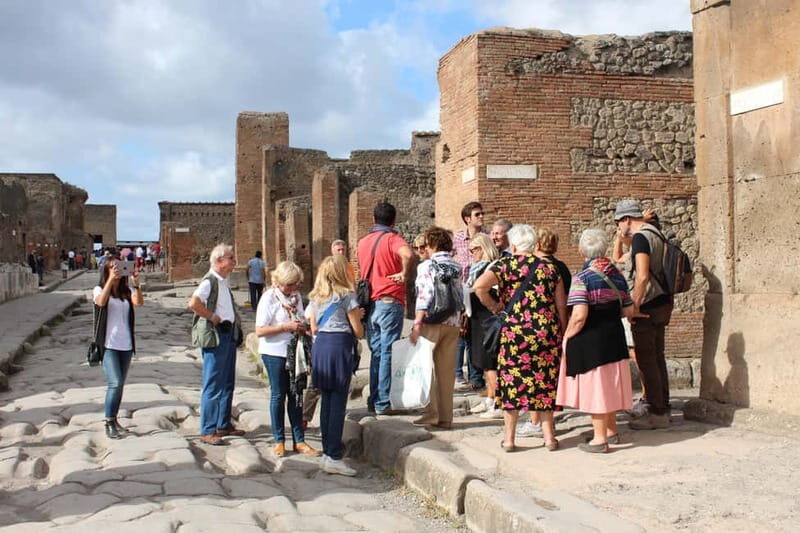
Below is what this tour is set up to show you, in the order it’s presented.
Other guided tours in Pompeii Archaeological Site

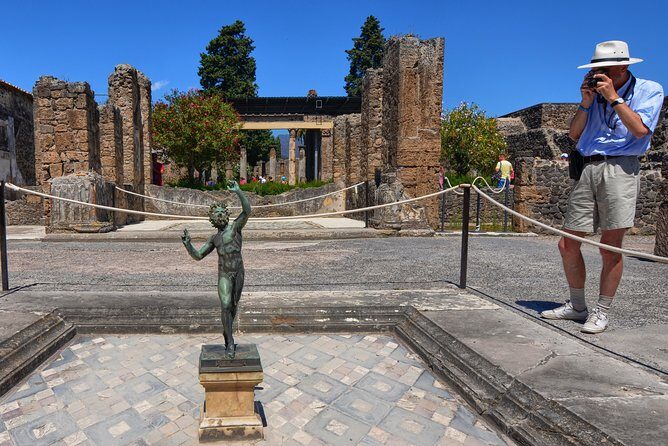
Garden of the Fugitives: a quick photo stop with a story angle
You’ll make a short stop at the Garden of the Fugitives. The time here is brief—think photo pause plus a bit of interpretation—so don’t plan on wandering around for long.
This is a good moment to reset your eyes. After the first guided stretch, you get a small break and a chance to frame shots with a calmer pace.
What to watch for: look for how the space connects back to the broader narrative of flight and survival around Vesuvius.
Forum Baths: Roman daily life, not just politics
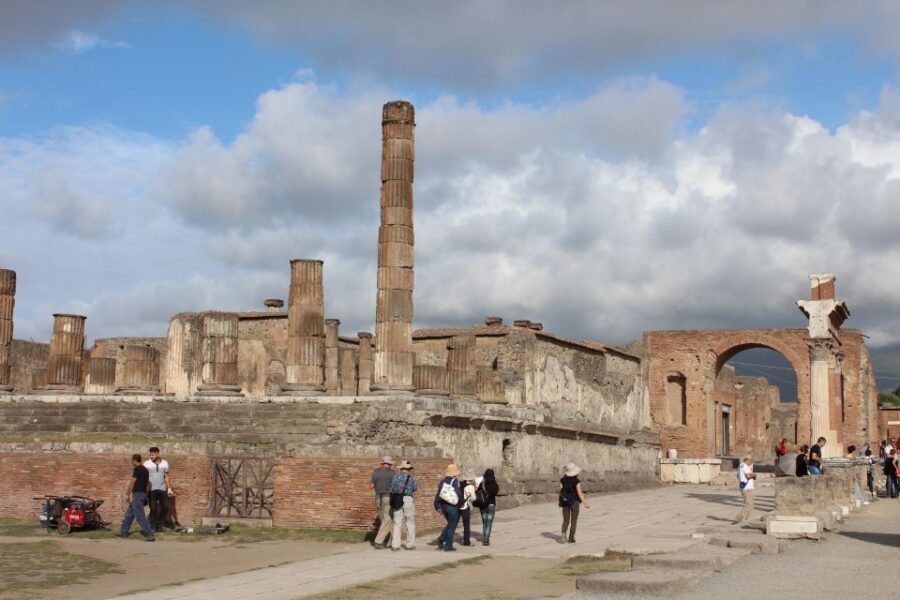
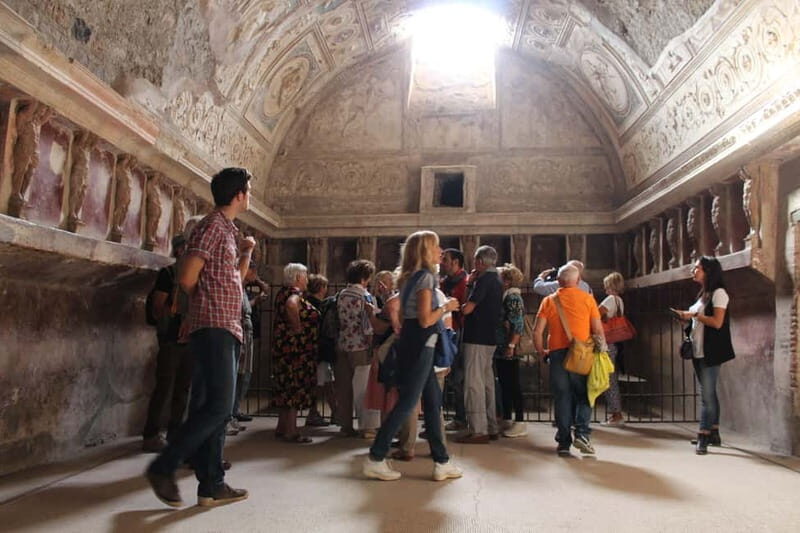
Next up: the Forum Baths, a prime spot for understanding how daily life played out in public buildings. Baths were social spaces as much as they were functional ones, and the ruins help you picture routines that weren’t about grand ceremonies—they were about getting clean, meeting people, and spending time.
Because this is a photo stop plus guided context, you’ll move fast. Still, it’s one of those places where the explanation can change how you read the walls.
Potential drawback: if you love lingering in one area, the “brief pause” style may feel too quick here. The tour’s value is coverage, not slow drifting.
Amphitheater: entertainment in the open air
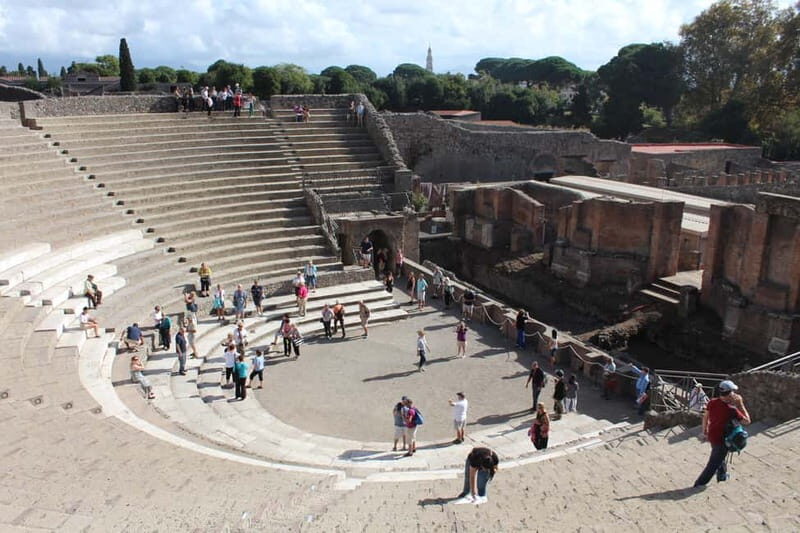
You’ll also visit the Amphitheater of Pompeii. This is one of the most photogenic stops, but it’s more than a backdrop for pictures. The guide’s explanation helps you connect what you see to how entertainment worked in Roman culture.
Even with limited time, you’ll get the sense of why these venues mattered. People gathered, watched performances, and used public events as social glue.
Photo tip: plan your shots at angles that show both the seating and the structure lines. If you only shoot straight-on, you may miss how it’s shaped for crowd viewing.
Lupanare: a glimpse of Pompeii’s adult life
The Lupanare (a well-known site linked to the city’s sexual economy) is another short stop with guided notes. The tour highlights that you’ll also learn about cultural aspects, and this is where that theme becomes visible in the ruins.
This isn’t the kind of stop you’ll enjoy if you’re squeamish about adult subject matter. But if you want Pompeii to feel real, not sanitized, it belongs in the conversation.
If you’re sensitive, it helps to know ahead of time that the itinerary includes this area.
House of the Vettii: elite living and preserved interiors
Then you reach one of the big attractions: the House of the Vettii. Here the tour shifts from quick photo pauses to a longer visit with guided guidance (the route lists around 10 minutes for this stop).
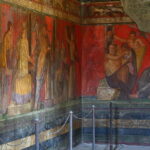
This is a chance to see how wealth shaped domestic space—particularly through preserved interiors and frescoes noted in the tour highlights. Walking through elite residences helps you understand the contrast between public Pompeii and private luxury.
What makes this worth your time: it turns Pompeii from an outdoor city into an indoor life story.
Vetutius Placidus House and Thermopolium: food, commerce, and street routines
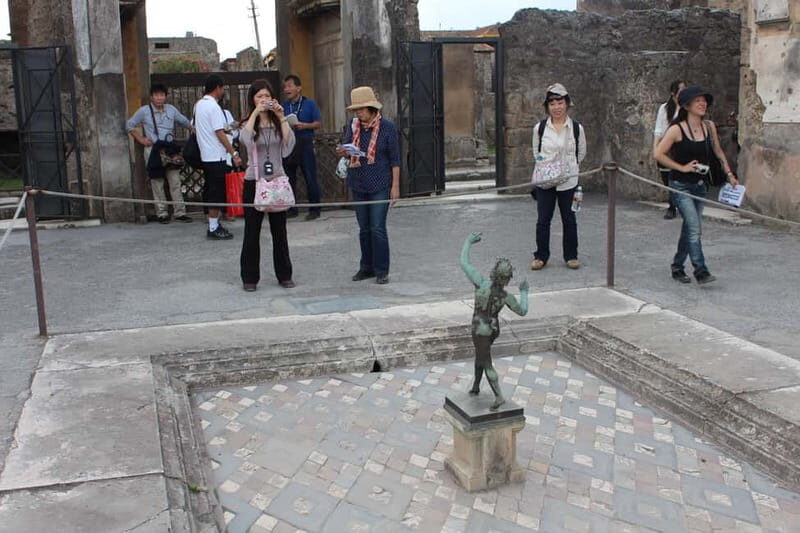
You’ll also visit the Vetutius Placidus House and Thermopolium. This is one of my favorite types of Pompeii stops because it’s about practical life. A thermopolium was a kind of Roman fast-food place—prepared food, served quickly, tied to street commerce.
Seeing a mix of house + food-business space makes the city feel functional. You start noticing how people moved, ate, and interacted.
This is also where you can get a stronger sense of daily rhythm: Pompeii wasn’t only buildings and big events. It was meals, neighbors, and work.
What’s included beyond the street stops
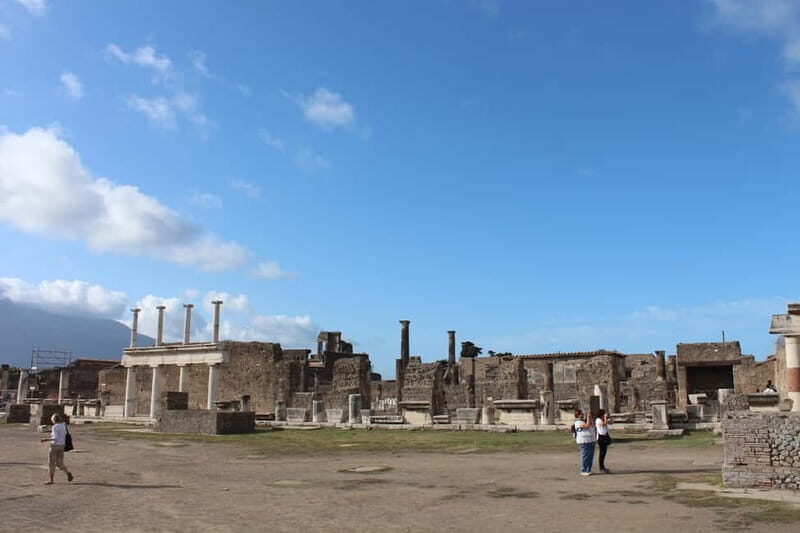
Even though the stops list looks specific, the tour’s highlights point to additional content you’ll encounter during the guided portion, including:
- Moving plaster casts of Vesuvius’ victims (used to help you grasp the human tragedy and the eruption’s impact)
- An erotic art collection mentioned as part of the experience
- Visits to the major sites within the ancient city circuit during your guided walk
These elements are why a guide matters. Without context, it’s easy to think you’re just touring archaeology. With an archaeologist, you get interpretation and a clearer timeline for what happened and what those objects represent.
Earphones, monolingual groups, and how the guide’s voice lands
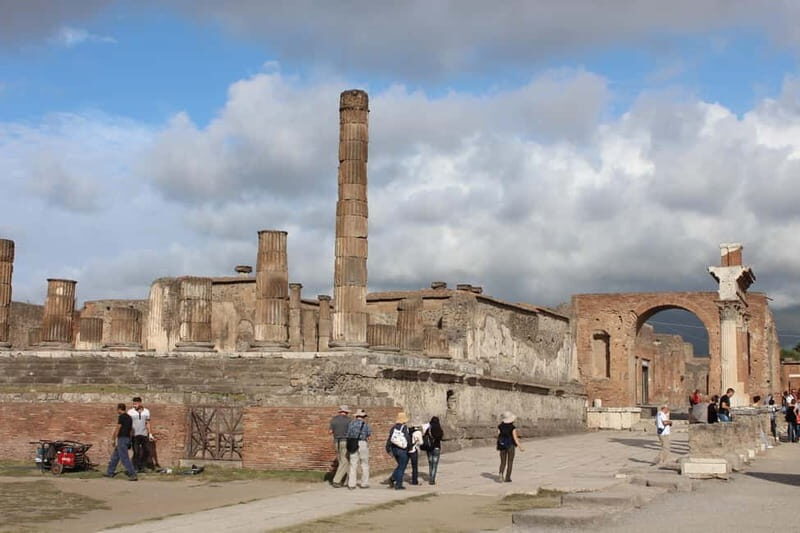
This is one of those small details that changes everything: earphones are provided for groups of max 5 people. That means you can focus on listening without craning your neck or competing with background noise.
And the tour is monolingual. You’ll be in English or Spanish only, which helps the guide keep explanations consistent and avoids mid-sentence translation confusion. If you’ve ever been in a bilingual group at a site like Pompeii, you know how quickly it can slow down.
If language matters to you, this setup is a real quality advantage.
Walking, dress code, and bag rules: the stuff that can ruin your day
Pompeii isn’t hard because it’s complicated. It’s hard because it’s strict and physical.
Bring the basics:
- Passport or ID card
- Good walking shoes (no flip-flops)
- Hat and sunscreen if the weather is kind
Dress code is required to enter the Pompeii Archaeological Park. You shouldn’t show up in anything that the operator considers disrespectful, and you shouldn’t go shirtless. If you fail the dress rules, your entry can be refused. That’s not negotiable.
Bag rules also apply. No backpacks or big bags are allowed, and there’s a max size listed for bags (30x30x15). Expect that bigger items may need to be deposited in the cloakroom.
Also in the rules: pets aren’t allowed, and drone use isn’t allowed. There are limits on professional optical and audio equipment too.
If you travel light, you’ll have a calmer time.
Price and value: is $42.19 worth it?
At $42.19 per person for a 2-hour guided tour with priority entry and an archaeologist guide, you’re paying for three things that matter at Pompeii:
- Time saved at the entrance
Skip-the-line helps you spend more time inside the ruins and less time watching other people shuffle forward.
- Expert interpretation
An archaeologist guide is the difference between sightseeing and understanding what you’re looking at. With Pompeii, that interpretive layer is often what you remember afterward.
- Condensed, major-stop coverage
You’re not trying to cover Pompeii on your own in a single day. Instead, you’re getting a fast “greatest hits” route that sets you up to plan a return visit later if you want.
If you’re short on time in Pompeii or you want a first visit that actually makes sense, this price can be reasonable value. If you prefer wandering alone at your own pace for hours, you might feel the route is too tight. For a short visit, though, it’s a smart way to get more out of the ruins.
Who this tour suits best (and who should skip it)
This is a strong fit if you:
- Want an expert-led first look at Pompeii
- Care about hearing the story, not just taking photos
- Prefer a structured route over figuring out the best highlights yourself
- Like small groups with earphones
It’s not a good match if you have mobility limits or health concerns that make walking difficult. The tour specifically notes it’s not suitable for wheelchair users and people with back problems or mobility impairments, plus people with heart problems.
If that applies to you, you’ll likely want a different format with less walking and better accessibility planning.
Should you book this skip-the-line guided Pompeii tour?
I’d book it if you want Pompeii to feel guided and readable in a short window. The combination of skip-the-line access, an archaeologist guide, and earphones in a max-5 group is the winning formula here. You get major sites, plus context like the plaster casts and cultural collections mentioned in the tour highlights.
Skip it if you hate walking, need accessible routes, or want a slow, open-ended visit where you can linger for long stretches. This is a structured circuit.
If you’re torn: plan on this as your orientation tour. You’ll leave knowing what you saw—and what you might want to revisit on your own time.
FAQ
How long is the Pompeii skip-the-line guided archaeological discovery tour?
It lasts 2 hours.
Where do I meet the guide, and where does the tour end?
Meet at the Towns of Italy–Vox Kiosk in Piazza Esedra, Pompeii, next to Coffeeshop Vittoria. The tour ends back at Piazza Esedra.
What’s included in the ticket price?
You get the skip-the-line Pompeii ruin ticket, a professional archaeologist guide, and earphones for groups of up to 5 people.
What languages are available?
The tour is monolingual and runs in English or Spanish.
What should I wear or bring for entry to Pompeii?
Bring an ID or passport. Wear comfortable walking shoes and follow the required dress code for the Pompeii Archaeological Park. No shirtless or disrespectful clothing is allowed.
Is there anything that could delay entry even with skip-the-line?
Yes. There is still a compulsory security check even with skip-the-line express entry.