REVIEW · POMPEII
Pompeii Small Group with an Archaeologist and Skip The Line
Book on Viator →Operated by ELIANA SANDRETTI · Bookable on Viator
Pompeii sings louder with a real archaeologist. This small-group tour in Pompeii moves fast at the entrance and then takes you through the big-hitters—so you can actually enjoy the ruins instead of spending your best time waiting in a line. With an archaeologist guide leading the way, the walking feels purposeful and the stories feel tied to the site itself.
Two things I really like: the skip-the-line setup that gets you inside quickly, and the fact that you’re not just looking at stones. You’ll visit major stops—Teatro Grande, the Stabian Baths, the Forum area, and Casa del Fauno—while an on-site archaeologist helps you connect what you’re seeing to everyday life in Pompeii.
The main thing to consider is time. This is about 2 hours, and a couple of the stops are brief, so if you like to linger, you may want to plan extra time on your own after the tour.
In This Review
- Key Highlights Worth Planning For
- Skip-the-Line at the Pompeii Entrance: What It Actually Changes
- Meet the Archaeologist Guide: Why This Tour Feels Different
- The 2-Hour Route Logic: Theaters, Forum Buildings, and City Life
- Stop-by-Stop: What to Look For (And Where You May Want More Time)
- Teatro Grande and the Small Theater
- Granai del Foro: The Victims’ Casts
- Stabian Baths (Terme Stabiane): Frescoes That Actually Command Attention
- Forum of Pompeii, Basilica, and the Temple of Jupiter
- Gladiator Barracks Area and Lupanar
- Casa del Fauno: Pompeii’s Big “Wow” House
- Price and Value: Is $217.69 Worth It?
- Timing, Heat, and Comfort Tips for a Short Pompeii Day
- Who Should Book This Pompeii Small-Group Tour
- Should You Book This Tour?
- FAQ
- How long is the Pompeii Small Group tour with an archaeologist?
- What language is the tour offered in?
- How big is the group?
- What’s included in the price?
- Is skip the line included?
- What stops are covered during the tour?
- Where does the tour meet?
- Is food or transport included?
- What if weather is bad?
- Are service animals allowed?
Key Highlights Worth Planning For
- Skip-the-line admission so your entry time doesn’t eat your visit
- Archaeologist guide leadership, including Eliana Sandretti as a named provider
- Up to 10 people for a calmer pace and easier questions
- A smart “greatest hits” route across theaters, baths, forum buildings, and houses
- Standout fresco stop at the Stabian Baths (Terme Stabiane)
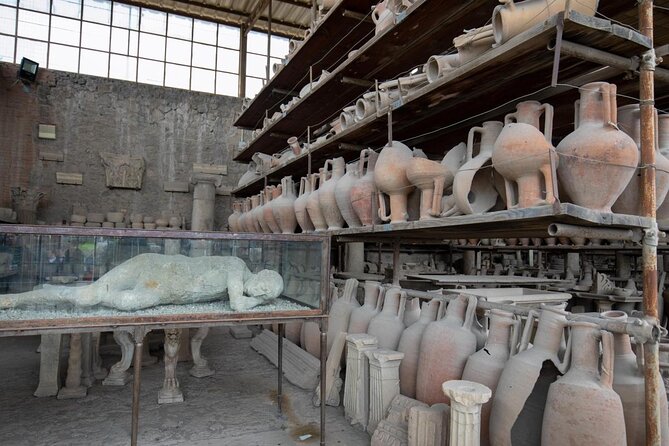
- Casts of victims at the Granai del Foro for an unforgettable, sobering stop
Skip-the-Line at the Pompeii Entrance: What It Actually Changes
Pompeii can feel like a race against the clock, especially in warmer months. The biggest practical win here is that you arrive with your ticket handled, so you’re not stuck hunting for paperwork or trapped in long entry queues. That matters because you only have about 2 hours on the tour route, and every minute counts.
Once inside, the tour keeps you moving between key parts of the archaeological park. You’re not trying to map the site from scratch. You also avoid the common problem of getting overwhelmed: Pompeii is huge, and without a plan you can end up seeing half the city at random.
One small note: the meeting point is Ristorante Suisse, Piazza Esedra, 10/13, 80045 Pompei NA. It’s close to public transport, which is handy if you’re coming in from Naples or hopping between stops. The tour ends back at the same meeting point, which makes it easier to plug into your day.
If you're still narrowing it down, here are other tours in Pompeii we've reviewed.


Meet the Archaeologist Guide: Why This Tour Feels Different
This isn’t a “walk and read plaques” experience. The tour is led by an archaeologist & tour guide (the provider listed is Eliana Sandretti). Some guides are named in the tour experience details you shared, including Dario, Francisco/Francesco, Anna, and Eliana. That variety is a good sign: it means you’re getting real people who work with the site and can answer questions on the spot.
Eliana Sandretti specifically stands out in the feedback because she’s described as having worked as an archaeologist at Pompeii since she was 18. Guides with that level of connection tend to explain what you’re looking at in human terms, not just academic ones. In plain terms: the place stops being a museum and starts feeling like a real city that held real routines—performances, bathing, shopping, legal disputes, and private life under one roof.
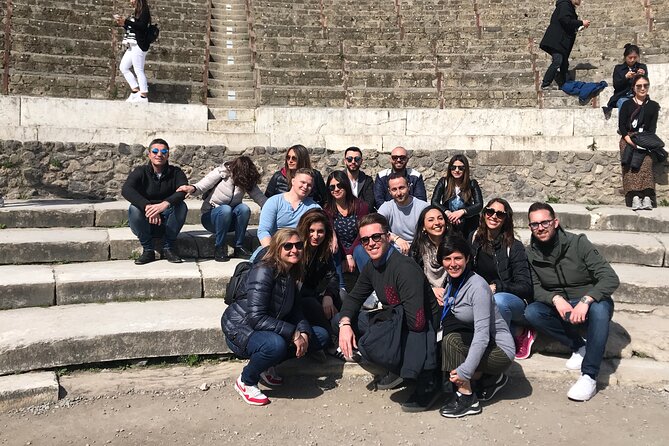
You’ll also notice the pacing style. Guides are described as making sure groups don’t get left behind and that questions are welcome. That’s huge at Pompeii, where the details can be easy to miss if you’re doing it solo and moving too quickly.
The 2-Hour Route Logic: Theaters, Forum Buildings, and City Life
This tour is built like a fast sampler of Pompeii’s main neighborhoods. You’ll start at the Pompeii Archaeological Park with skip-the-line entry, then move into the civic and entertainment parts of the city before finishing with a major house.
Here’s what the flow is really doing for you:
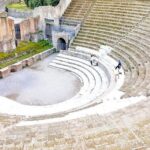
You’ll begin in the area connected to performances. First comes the small theater, described as the designated place for musical and singing performances. Even if you’ve never cared about ancient entertainment, it’s a smart starting point. It gives you an immediate sense of how Pompeiiers gathered and shared culture.
Then you step into Teatro Grande, where Greek-Roman comedies and tragedies were performed. That pairing matters. The guide can help you see how the city’s public life wasn’t only religion and politics. It was also art, drama, and spectacle.
Next you move toward the center of civic life: the Granai del Foro. This is where you’ll see barns of the forum area and the casts of the victims who died during the eruption of 79 AD. That stop changes the mood fast, in the right way. It’s sobering, and it also gives the rest of the route more emotional weight.
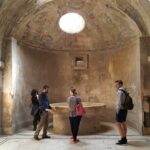
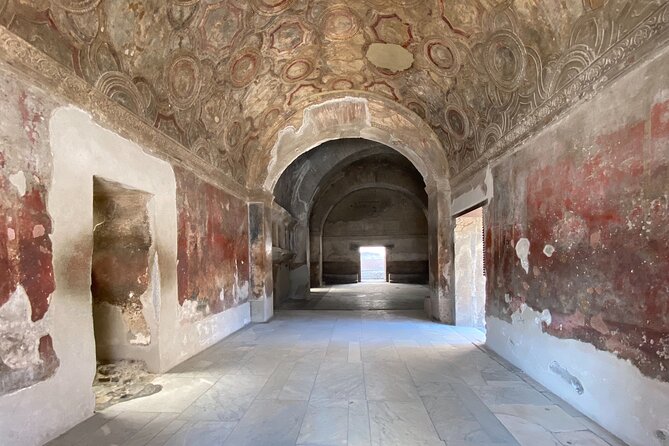
After that, you shift to daily routines with the Stabian Baths (Terme Stabiane). The focus here is the colorful frescoes. Baths are one of those Pompeii categories that make the city feel modern—people relaxing, socializing, doing the same kinds of things that still draw crowds today. The frescoes are the star of this stop, and the guide helps you look instead of just glance.
From there, you enter the heart of city governance and law: Foro di Pompei (the main square), then Pompei La Basilica, described as the ancient seat of the court where justice was administered. If you’ve ever wondered how Roman towns actually ran day-to-day, this is where that question starts to get answered.
Finally, you get a strong finish with religious space and elite domestic life: the Temple of Jupiter (with Vesuvius as its backdrop), the Quadriporticus of the theatres area with the Gladiator Barracks and training apartments, and then the more personal side of the city with stops like Lupanar (the old Red Light District) and Temple of Venus. The tour closes at Casa del Fauno, one of Pompeii’s richest and most luxurious residences.
Stop-by-Stop: What to Look For (And Where You May Want More Time)
Small tours succeed when they help you prioritize. This one hits a lot of Pompeii’s top locations quickly, so knowing what to focus on at each stop keeps you from feeling rushed.
Teatro Grande and the Small Theater
At the theaters, the best approach is to let the guide frame what you’re seeing and then slow your eyes down just for a moment. The small theater is tied to musical and singing performances, while Teatro Grande is tied to Greek-Roman comedies and tragedies. If you listen for the contrast—music versus drama—you’ll understand why these spaces mattered to public life.
Drawback to plan for: theater stops are short. If you’re the type who wants to read every angle of stonework, you might feel like you’re glancing. The advantage is that you don’t waste your time getting lost in details.


Granai del Foro: The Victims’ Casts
This stop can hit harder than you expect. You’re looking at casts of victims who died during the eruption of 79 AD, located at the forum barns area. The guide’s job here is to keep it respectful and clear, not sensational.
If you want a moment of quiet, take it. You’re allowed to pause. Then keep walking, because the contrast between the forum’s public role and this tragedy is part of what makes Pompeii so unforgettable.
Stabian Baths (Terme Stabiane): Frescoes That Actually Command Attention
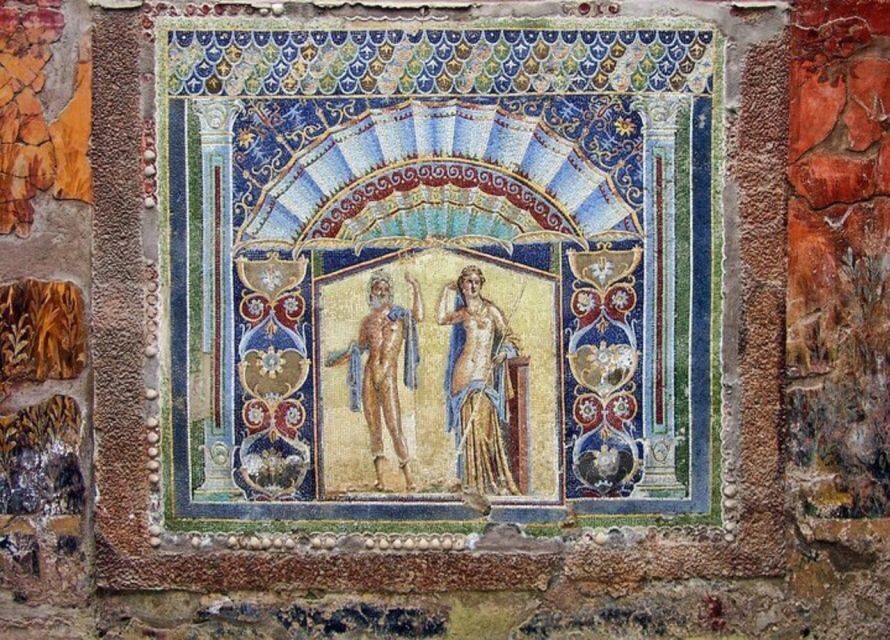
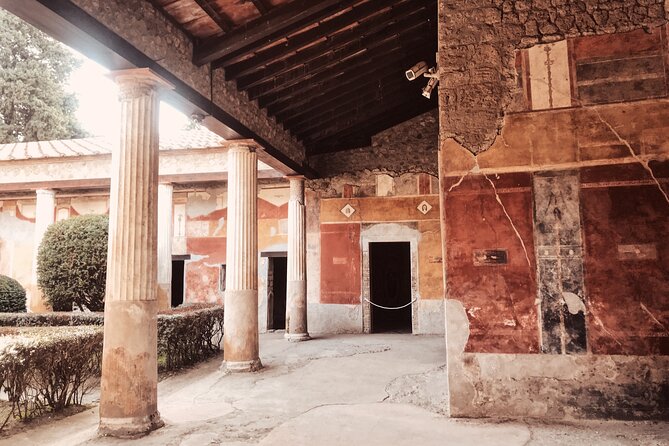
The Stabian Baths are one of the most visual stops on the route because of the colorful frescoes. When guides point out the fresco details, it’s a reminder that Pompeii wasn’t only ruined walls. It was decorated spaces with identity—taste, style, and social signals.
One caution: frescoes can be hard to see well in harsh light. Take a second to adjust your angle and step away from crowds when you can. The guide can help with where to stand.
Forum of Pompeii, Basilica, and the Temple of Jupiter
The Foro di Pompei gives you the main square layout and sets the scene for public life. The Basilica then explains the court setting—justice was administered there. If you’ve only seen Pompeii through the lens of ruins, this part makes it feel like a functioning city with systems and rules.
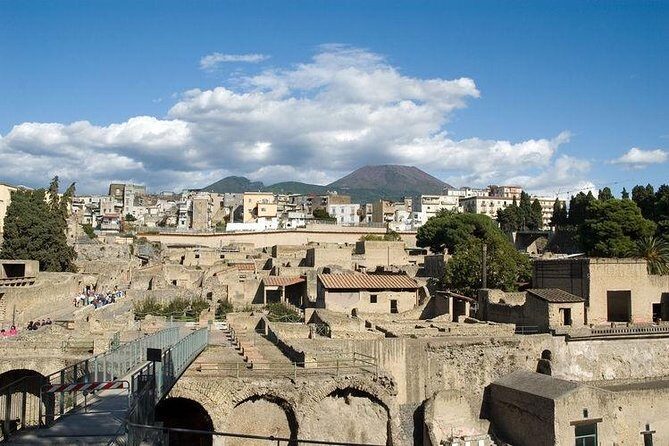
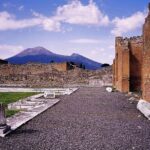
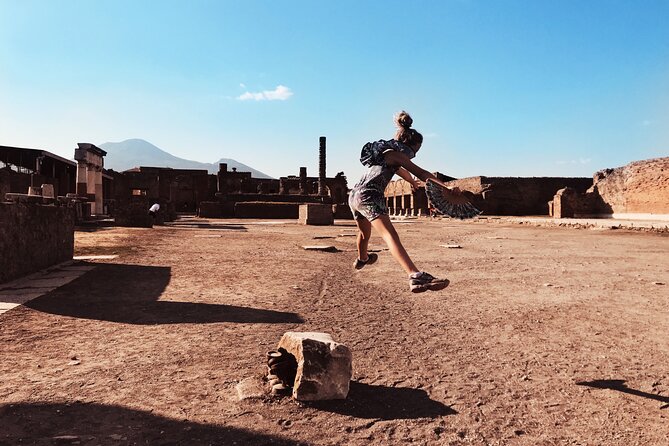
Then you get the big visual payoff at the Temple of Jupiter, with Vesuvius as its backdrop. Even if you’ve seen photos before, seeing it in person gives scale to what the city faced.
Gladiator Barracks Area and Lupanar
The Quadriporticus of the theatres area includes the gladiator barracks, including apartments and where gladiators trained. That’s a smart contrast to the temple and forum stops: you see entertainment, but also discipline and work.
The Lupanar is the old Red Light District. It’s not the kind of stop where you linger for pleasure. You go to understand the city’s social structure and how different functions existed side by side.
Casa del Fauno: Pompeii’s Big “Wow” House
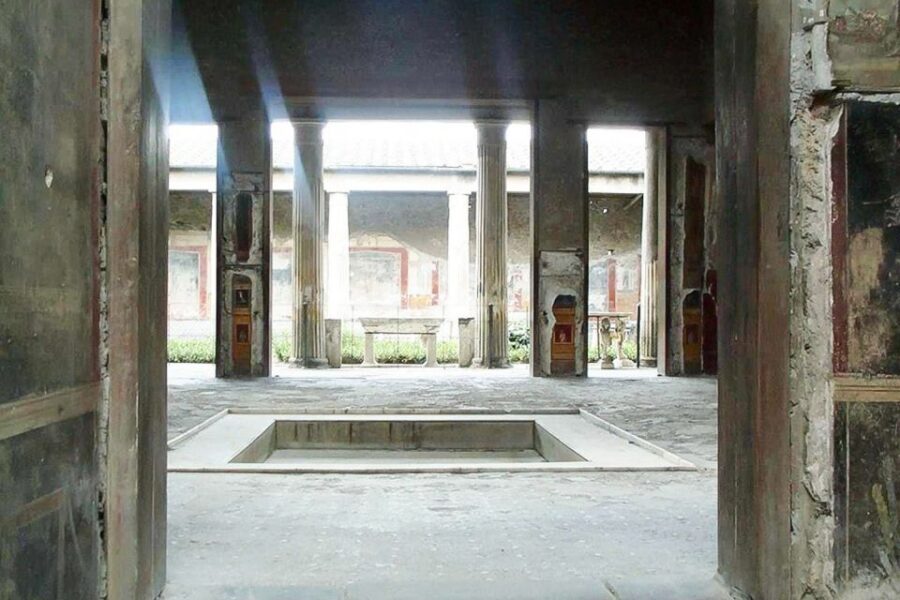
Casa del Fauno is described as one of the richest and most luxurious residences in Pompeii. That makes it a perfect end point. After you’ve seen the city’s public spaces and its different social layers, the house gives you a last, satisfying perspective shift.
If you love houses and domestic design, you’ll likely wish the tour had more time here. But even with limited time, you’ll leave with a clear mental picture of wealth and everyday luxury in 79 AD Pompeii.
Price and Value: Is $217.69 Worth It?
At $217.69 per person for about 2 hours, this isn’t a budget tour. So you should judge it by what you’re actually getting for that money.
You’re paying for four main things:
First, the skip-the-line benefit. In Pompeii, saved entry time is often the difference between seeing “high points” and missing them.
Second, you’re paying for an archaeologist-led experience. When the guide is tied to the site, you’ll hear better explanations and you can ask questions when something doesn’t make sense.
Third, you’re getting a curated route that covers many of Pompeii’s top areas without you doing the planning headache. Pompeii is too large to “wing it” if your time is limited.
Fourth, admission tickets are included and the tour covers “main attractions of Pompeii” plus entry fees and taxes for those ticketed stops. So your cost isn’t just guide time; it’s also the park admissions packaged into the experience.
My practical take: this is worth it if you have limited time in Pompeii and you want meaning, not just photos. If you’re the kind of traveler who prefers to wander for hours with no structure, you might do fine on your own. But if you want an organized, guided sweep that respects your time, the value makes sense.
Timing, Heat, and Comfort Tips for a Short Pompeii Day
Pompeii is outdoors. That means your biggest enemy isn’t complexity—it’s heat and sun.
The feedback you shared repeatedly points to the need to come ready for hot conditions. I’d plan on water, sunscreen, and some kind of hat or shade. Wear shoes you trust on uneven stone. You’ll be moving continuously, and the tour is designed to keep you on a route.
If you have flexibility, there’s a smart timing tip in the shared guidance: if possible, go later in the day. One person mentioned a tour starting at 4 pm with fewer crowds, and they had a calmer experience. Even if you can’t change your start time, thinking about when you visit can help you manage stress and save energy.
And here’s a very real comfort detail: hearing can sometimes be tough around crowds and when the guide is a few steps away. If you have hearing challenges, bring your best “focus mode.” Don’t be shy about repositioning yourself toward the front of the group.
Who Should Book This Pompeii Small-Group Tour
This is a strong match if you want:
- a small group atmosphere (up to 10 travelers)
- a 2-hour overview that still feels personal
- a guide who can answer questions and explain what you’re seeing in context
- a quick hit across theater culture, forum governance, baths and frescoes, and an elite house
It’s also a good option if you’re traveling as a couple and want a relaxed pace without the churn of a huge bus group. If you’re traveling with a young child, it can be helpful because a guide may be used to adjusting pace and helping with movement through harder areas.
If you only want to spend a few hours in Pompeii total, this tour is built for that reality. But if your idea of a perfect Pompeii day is slow wandering and repeat visits to one house or one neighborhood, you may find the 2-hour structure limiting.
Should You Book This Tour?
Yes, if your goal is simple: get in, see the most important Pompeii sights, and learn what you’re looking at without spending your day figuring out a route.
Skip booking only if you’re happy to self-tour with no guide and you have enough time to cover Pompeii at your own speed. At your stated duration, this tour is meant to be a focused sampler. If that’s what you want, it’s a great way to make Pompeii feel real fast.
FAQ
How long is the Pompeii Small Group tour with an archaeologist?
It’s about 2 hours (approx.).
What language is the tour offered in?
The tour is offered in English.
How big is the group?
The group is capped at 10 travelers.
What’s included in the price?
The tour includes an authorized tourist guide and assistance, admission tickets for the main attractions, an archaeologist and tour guide, and fees/taxes for the entrance ticket.
Is skip the line included?
Yes. You get fast-track skip-the-line tickets to enjoy more time inside Pompeii.
What stops are covered during the tour?
The tour visits major sites such as Teatro Grande, the Granai del Foro (including casts of the victims), the Stabian Baths (Terme Stabiane) frescoes, Foro di Pompei, the Basilica, the Temple of Jupiter, the gladiator barracks area, the Lupanar, the Temple of Venus, and Casa del Fauno, along with additional nearby theatre-related areas.
Where does the tour meet?
It starts at Ristorante Suisse, Piazza Esedra, 10/13, 80045 Pompei NA, Italy, and ends back at the meeting point.
Is food or transport included?
No. Food & drinks and transport are not included.
What if weather is bad?
The experience requires good weather. If it’s canceled due to poor weather, you’ll be offered a different date or a full refund.
Are service animals allowed?
Yes, service animals are allowed.