REVIEW · POMPEI CAMPANIA
Pompeii: Skip-the-Line Entry & Audioguide
Book on GetYourGuide →Operated by TOURISTATION · Bookable on GetYourGuide
Pompeii feels frozen in time. This skip-the-line entry gets you into the Pompeii Archaeological Park fast, then lets you explore major ruins at your own speed using an audioguide.
You’ll start in the heart of the city and work your way through the streets, water system, public spaces, and Roman homes—while Mount Vesuvius looms in the background.
I especially like two things: the skip-the-line entry (so you can begin almost right away) and the freedom of walking with an audioguide instead of being rushed in a group. The included paper city map also helps you keep your bearings without stopping constantly.
One thing to consider: a couple booking experiences flagged possible awkward moments around documents or add-ons, like being asked for a passport deposit or confusion about what audio access includes. If that would bother you, plan to read the fine print before you hand anything over.
In This Review
- Key takeaways before you go
- Pompeii in Two Hours: What Skip-the-Line Really Buys You
- Finding the Meeting Point at IBT Center/Touristation (Chalet Donna Lucia Area)
- How the Audioguide Helps You See Pompeii Without Being Tethered
- Forum First: Reading Pompeii’s Public Heart
- Streets, Water, and Daily Business: Aqueducts, Fountains, Baths
- Roman Homes and Shops: Frescoes and the Feeling of Normal Life
- Amphitheater and Theater: Performance Spaces You Can Still Read
- Mount Vesuvius Views: Photos, Timing, and How to Not Rush
- What’s Included—and What’s Not: Villa dei Misteri
- Price and Value at $53: When It’s a Smart Buy (and When to Check)
- Rules, Restrictions, and Small Planning Notes That Matter
- Who This Pompeii Tour Fits Best
- Should You Book? My Practical Recommendation
- FAQ
- How long is the Pompeii skip-the-line entry and audioguide?
- Where is the meeting point?
- What does the ticket include?
- Is Villa dei Misteri included?
- Which languages are available for the audioguide?
- Do I need to bring a passport or ID?
- Are pets allowed?
- Can I bring luggage or large bags?
- Is smoking allowed?
- Is the booking refundable?
Key takeaways before you go
- Skip-the-line entry helps you beat the worst entry bottlenecks
- Audioguide languages span Italian, English, French, Spanish, German, Portuguese, Chinese, and Japanese
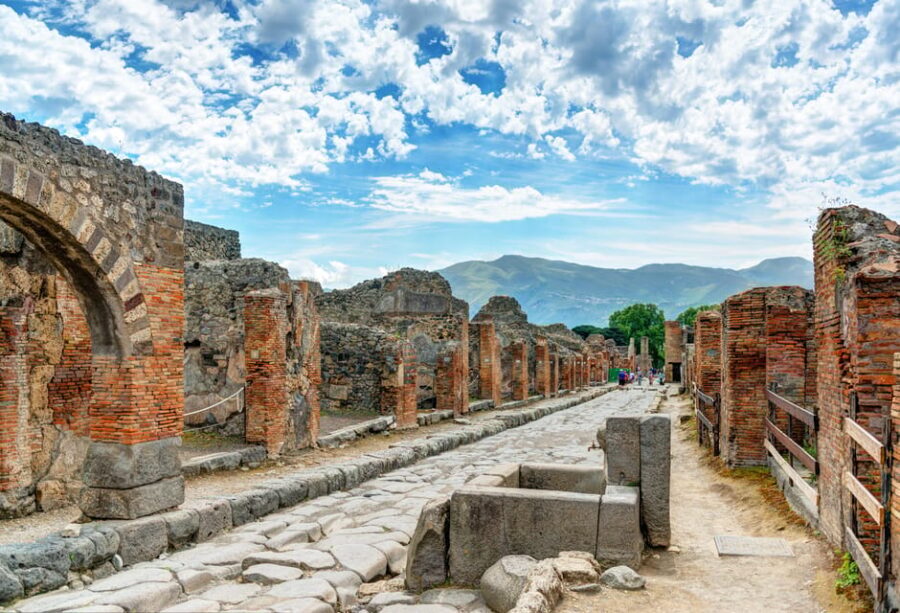
- Forum-focused route gets you into Pompeii’s public center early
- Roman daily life stops include streets with aqueduct/water remains, baths, homes, and businesses
- Big performance venues include the amphitheater and dramatic theater areas
- Villa dei Misteri isn’t included, so decide if you want it separately
Pompeii in Two Hours: What Skip-the-Line Really Buys You
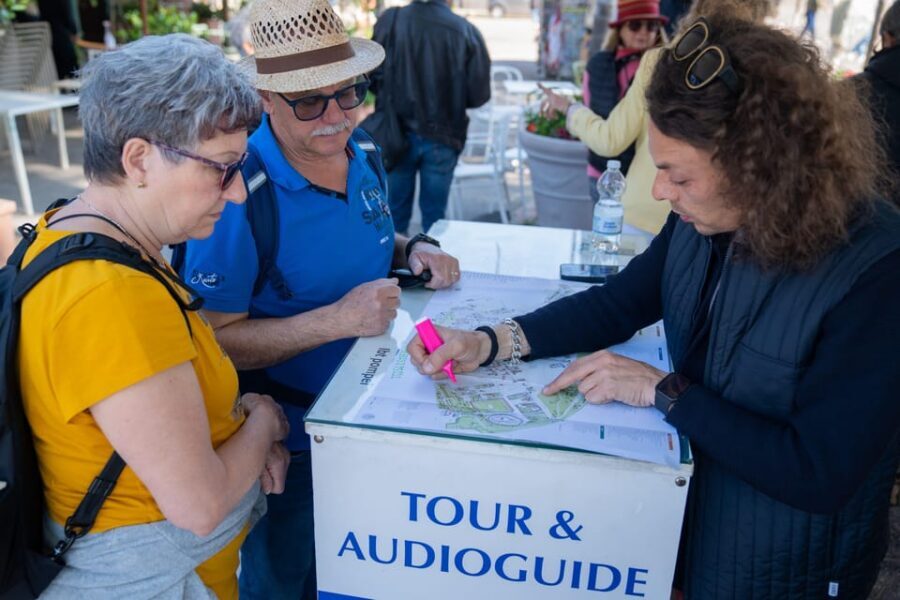
For $53 per person, the main value here is time. Pompeii is an open-air site, and once you’re inside, you can’t “zoom” like you would in a museum. The bottleneck is usually at the entrance. With skip-the-line entry, you’re trading impatience for movement—getting your feet on ancient pavement sooner.
You’re looking at about 2 hours at a comfortable touring pace, though the listing notes a broader window (2 hours up to 1 day) based on available starting times. Practically, that means you should treat this as a “high-impact highlights” visit: enough to see key areas without feeling like you’re chasing every last corner.
This format works especially well if you like a steady rhythm—watch the ruins, stop when something catches your eye, then keep going. Pompeii rewards slow looking, and an audioguide fits that style better than a nonstop script.
Other skip-the-line Pompeii tickets and tours


Finding the Meeting Point at IBT Center/Touristation (Chalet Donna Lucia Area)
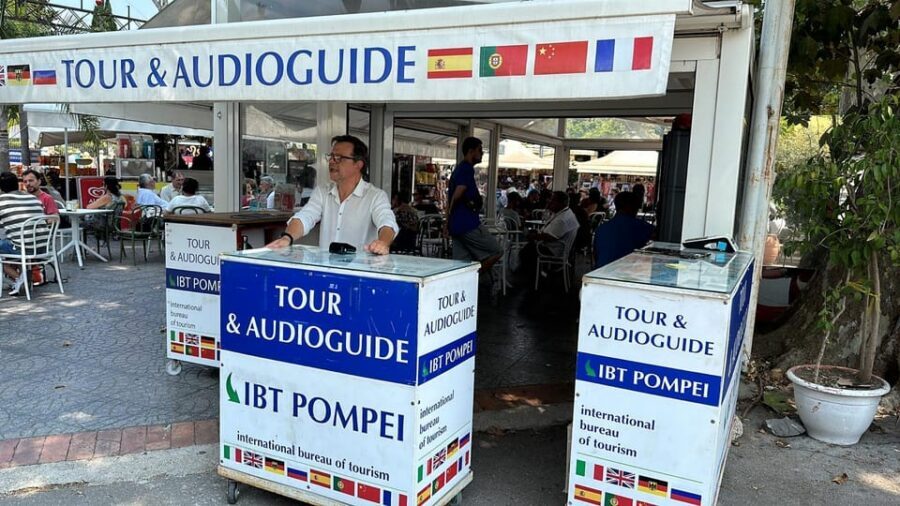
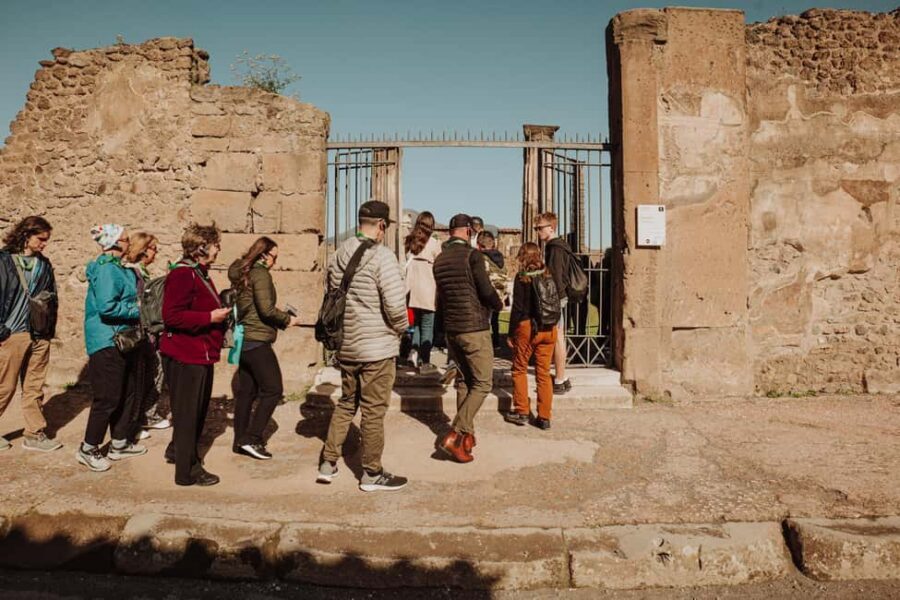
Your meeting point is the IBT Center/Touristation next to Chalet Donna Lucia. That matters because Pompeii visits can go sideways fast when people lose time before entry. Plan to arrive with buffer time so you’re not standing around while your allotted starting window gets tighter.
Also note the requirement: ID is required for all participants (passport or ID card). If you forget it, you’ll likely delay yourself at the worst possible moment—right at the start.
One practical tip: keep your documents accessible. Even if the process looks simple, you don’t want to be digging through bags while everyone else is lining up.
How the Audioguide Helps You See Pompeii Without Being Tethered
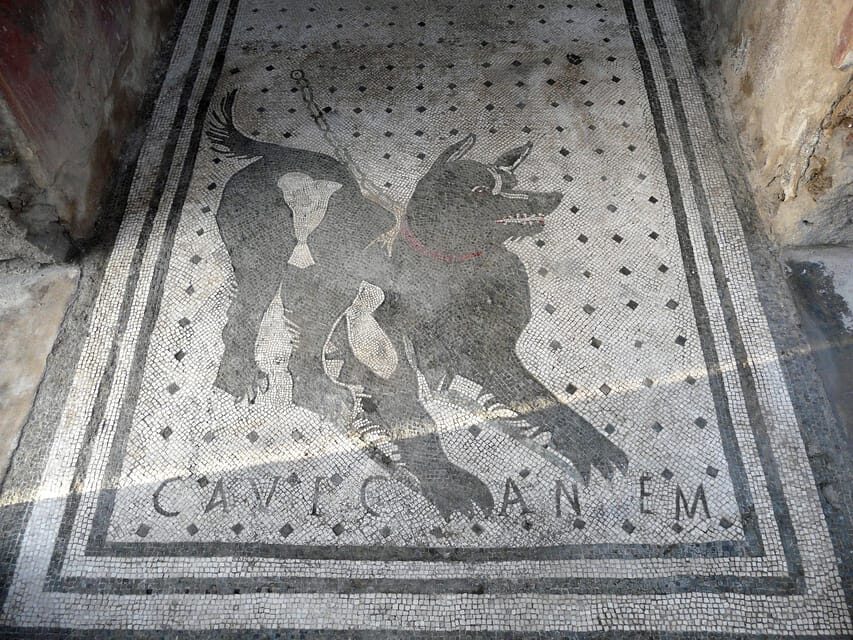
The audioguide is included, and it comes in multiple languages: Italian, English, French, Spanish, German, Portuguese, Chinese, and Japanese. That’s a big deal for Pompeii, because the site is sprawling and the ruins can feel like disconnected pieces if you don’t have context.
With an audioguide, you control the pacing. You’ll get explanations tied to what you’re looking at—like how the central forum functioned, how water systems worked, or what you’re seeing in Roman homes and businesses. Instead of trying to memorize a map, you can listen, look, and decide your next turn.
You’ll also receive a paper city map. I like having something in hand in Pompeii because signal can be inconsistent in open-air areas, and you don’t want to rely on your phone for every navigation decision.
One caution from real-world booking experiences: some people have run into confusion around what audio access includes and whether extra devices are needed. Before you go, double-check what your specific ticket bundle covers so you don’t get surprised at the start.
Forum First: Reading Pompeii’s Public Heart
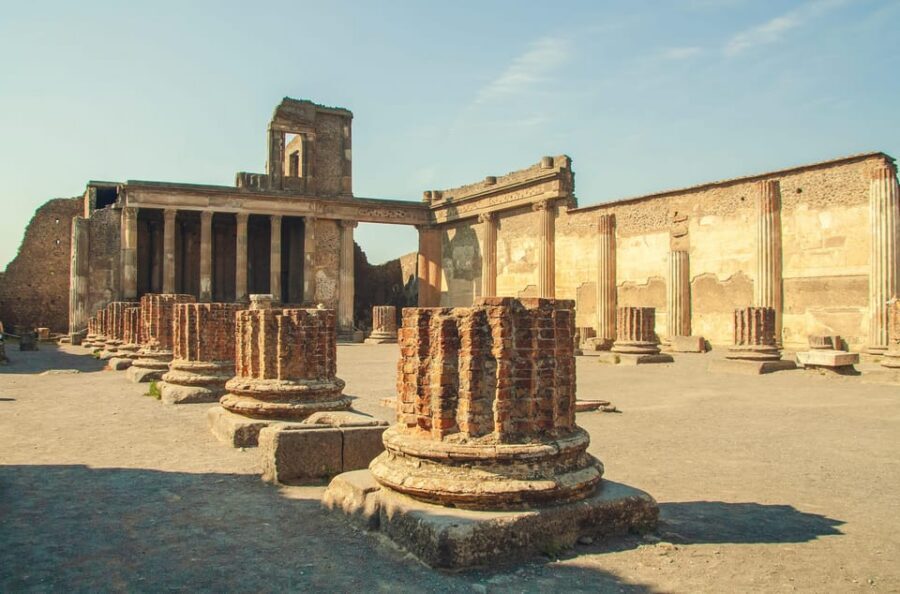
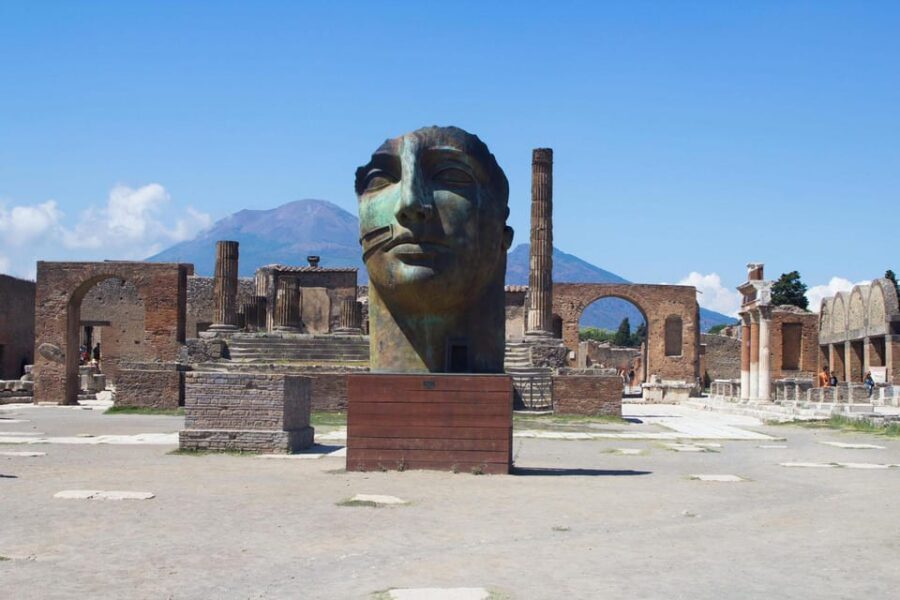
Your route begins with the central forum. This is smart. If you start with side streets or residential areas, Pompeii can feel like a patchwork. Starting at the forum helps you understand what was “public,” what was “power,” and what was “the center of daily life.”
You’ll stroll around the forum and notice how much still survives—columns and doorways, plus the sense of how people once moved through the city’s core. And in the background, Mount Vesuvius becomes a constant visual anchor. Even if you know Pompeii historically, seeing the ruins with Vesuvius looming is one of those moments that makes the whole place feel real.
What to watch for as you listen: the forum isn’t just a “square.” It’s where civic life happened. The audioguide gives you the building context so you’re not just collecting photos—you’re understanding the space.
Streets, Water, and Daily Business: Aqueducts, Fountains, Baths
After the forum, you’ll wander the streets where the remains of the city’s water infrastructure still show up. This includes aqueduct remnants, fountains, and other water-related features.
Why I think this stop style is valuable: in many ruins, you end up staring at walls. Pompeii gets more interesting because it shows systems. Water mattered for public health, daily routines, and social life. Seeing what’s left of fountains and aqueducts helps you picture life beyond the dramatic “big eruption” story.
From there, you’ll move through areas tied to:
- Public baths
- Private houses
- Businesses
- Statues and building remains
Even when you can’t identify every room, you can read patterns: entrances, thresholds, and the way spaces connect. The audioguide ties those patterns to what you’re looking at, so it doesn’t feel like wandering through background scenery.
Other Pompeii entry tickets and audio guides





Roman Homes and Shops: Frescoes and the Feeling of Normal Life
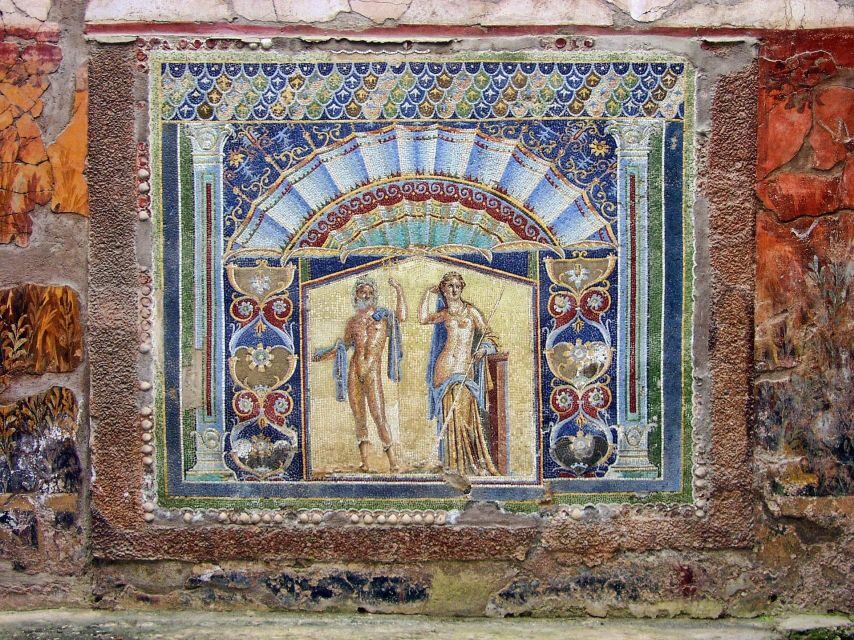
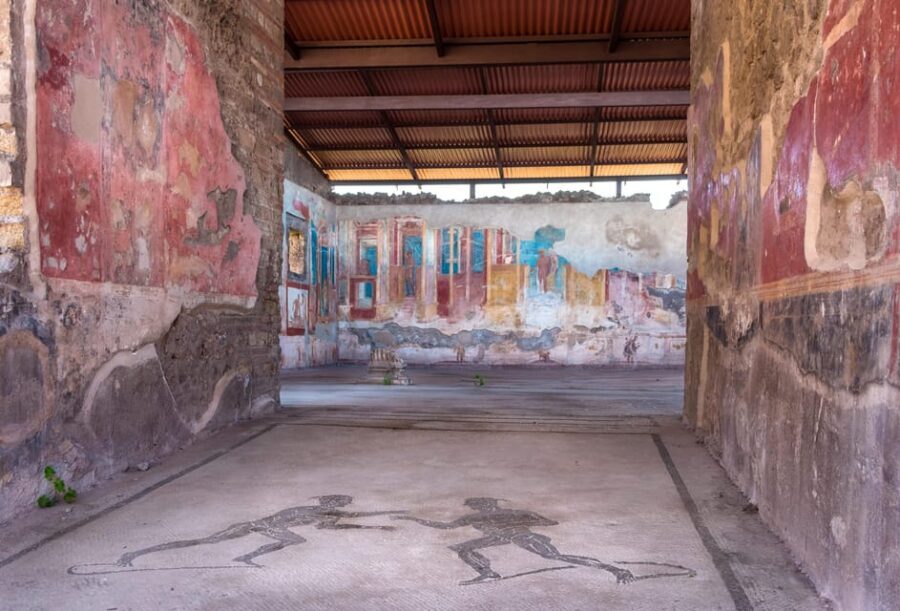
One of Pompeii’s most striking qualities is that it’s not only ruins—it’s rooms, with traces of decoration. You’ll see remains of colorful frescoes in homes and businesses, and that detail matters because it turns the city from “ancient stones” into lived-in spaces.
As you walk, keep your eyes on the surfaces that look like they once held paintings, and on the doorways and shop-front type openings. The audioguide helps you connect those visuals to the way people used these spaces.
This part is also where Pompeii becomes very personal for many visitors. You start thinking in everyday terms: where someone might have worked, where a household might have stored things, and what kinds of spaces were meant for neighbors to see and pass through.
If you’re short on time, this is also where you’ll get the best return from spending extra attention—because the emotional impact of seeing color and domestic layout is hard to fake with quick stops.
Amphitheater and Theater: Performance Spaces You Can Still Read
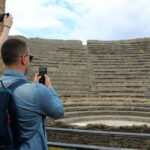
Pompeii includes dramatic venues, and your walk covers the amphitheater and the theater areas. Even in ruined form, these spaces tell you a lot. You can feel the purpose: crowds gathering, people looking outward, and community events happening in the open.
When you reach these areas, slow down for two reasons:
1) The shape of a venue helps you understand its scale.
2) The audioguide helps translate the stones into crowd behavior.
If you like architecture and public entertainment, this is one of the most satisfying stretches of the visit. It’s also an easy place to take a breather and regroup, since you’re less likely to get direction changes and more likely to settle into “look and listen” mode.
Mount Vesuvius Views: Photos, Timing, and How to Not Rush
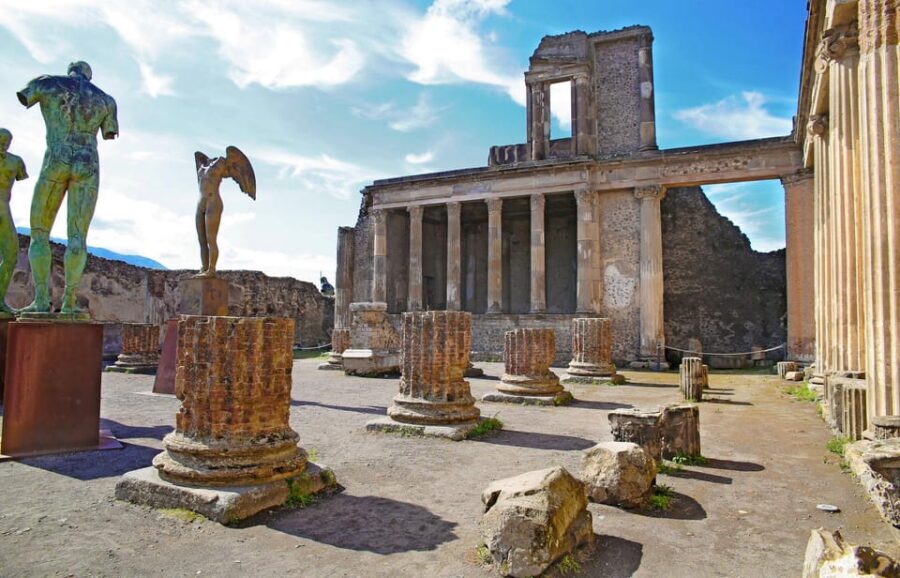
With Mount Vesuvius looming in the background, you’re set up for standout photos during multiple points of the walk—especially near the forum and along streets where sightlines open up.
Practical photo advice: don’t treat the view like a single “must take” shot. Build in tiny pauses. Pompeii changes with light, and the “Vesuvius behind ruins” effect can look dramatically different depending on the angle and time of day.
Also, don’t rush the audioguide chapters just to finish quickly. The best moments are usually the ones you stop for without realizing you’re stopping.
What’s Included—and What’s Not: Villa dei Misteri
Included in your ticket:
- Skip-the-line entry to Pompeii Archaeological Park
- Audioguide
- Paper city map
- Guided tour only if that option is selected
Not included:
- Entrance to Villa dei Misteri
That’s a big decision point. If Villa dei Misteri is on your must-see list, you’ll need a separate plan. If it’s not, you can treat this visit as a tight, high-value tour focused on Pompeii’s central ruins, water-related infrastructure remains, homes and businesses, and the main performance venues.
Price and Value at $53: When It’s a Smart Buy (and When to Check)
At $53 per person, this is priced for convenience: you’re paying to remove the entrance-line friction and you’re getting an audioguide included.
Whether it feels like great value comes down to two things:
- How much time you lose if you were to arrive and buy entry on the spot
- Whether the audioguide access in this bundle matches what you expect (some people report add-on confusion, so it’s worth checking details up front)
One booking experience compared pricing to a different amount listed elsewhere on site and felt the bundled price didn’t match. I can’t confirm those exact figures for your purchase, but the lesson is simple: if you’re cost-sensitive, check current on-site pricing and what’s included with audio before you finalize. In many cases, skipping lines + included audio makes the math easy. In others, the difference can feel less impressive.
The good news: you’re not paying for a “bus tour.” You’re buying time efficiency inside a place where pacing really matters.
Rules, Restrictions, and Small Planning Notes That Matter
Pompeii has clear boundaries for visitor comfort and safety. Here’s what you should keep in mind from the start:
- Bring your passport or ID card
- Pets are not allowed inside the archaeological area
- Smoking is not allowed
- No luggage or large bags
- Alcohol and drugs are not allowed
A helpful nuance: small dogs are permitted inside the archaeological area, but they must be kept on a leash and carried when inside buildings. If you’re traveling with a dog, this is something you’ll want to follow carefully to avoid issues at entry.
Also, the experience isn’t refundable, so decide based on your trip timing and your confidence that you’ll be able to use the ticket.
Who This Pompeii Tour Fits Best
I’d point this one toward travelers who:
- Want the biggest Pompeii highlights without committing to a full day
- Prefer self-paced walking, but still want context from an audioguide
- Like mixing “public spaces” (the forum) with “everyday life” (homes, businesses, baths)
- Are comfortable navigating an open-air site with a map and audio support
You might want a different approach if:
- You have a strong interest in Villa dei Misteri and it’s a top priority
- You strongly dislike any process that involves document deposits or uncertainty around audio access
- You want a fully guided, stop-by-stop narrative throughout every zone (this visit is built around audioguide independence, not constant guiding)
Should You Book? My Practical Recommendation
Book this Pompeii skip-the-line entry with audioguide if you want a smart first visit. The skip-the-line part helps you start strong, and the audioguide is the right tool for Pompeii because it turns the ruins into a story you can follow while you walk.
If you’re mainly chasing the single most famous annex (Villa dei Misteri), then you should plan separately. If you’re cautious about document handling or want clarity on whether extra audio equipment is ever needed, confirm details before you arrive so you don’t start the day tense.
Overall, it’s a good-value way to see Pompeii’s core experience—forum, streets, water remnants, domestic life traces, and major performance spaces—without spending your whole day stuck in lines.
FAQ
How long is the Pompeii skip-the-line entry and audioguide?
The duration is listed as 2 hours (with availability that may extend up to 1 day based on starting times).
Where is the meeting point?
You meet at the IBT Center/Touristation next to Chalet Donna Lucia.
What does the ticket include?
It includes skip-the-line entry to the Pompeii Archaeological Park, an audioguide, and a paper city map. A guided tour is included only if you select that option.
Is Villa dei Misteri included?
No. Entrance to Villa dei Misteri is not included.
Which languages are available for the audioguide?
The audioguide is available in Italian, English, French, Spanish, German, Portuguese, Chinese, and Japanese.
Do I need to bring a passport or ID?
Yes. You should bring your passport or ID card. ID is required for all participants.
Are pets allowed?
No pets are allowed inside the archaeological area. Small dogs are permitted with restrictions: they must be on a leash and carried when inside buildings.
Can I bring luggage or large bags?
No. Luggage or large bags are not allowed.
Is smoking allowed?
No. Smoking is not allowed.
Is the booking refundable?
No. The activity is listed as non-refundable.