REVIEW · POMPEI CAMPANIA
Pompeii: Guided Tour & Skip the Line Ticket
Book on GetYourGuide →Operated by Enjoy Pompeii · Bookable on GetYourGuide
Pompeii turns into real life fast. This guided tour takes you into a city preserved by the Vesuvius eruption, then helps you understand what you’re actually looking at. I especially liked the skip-the-line entry, and the fact it stays small-group sized so questions don’t get lost in the crowd.
My two favorite parts were the way the guide connects daily Roman life to the ruins, and the clear explanation of the day Vesuvius erupted and sealed Pompeii under ash. I got a much better sense of the Forum and the homes you pass, not just a checklist of sights.
One consideration: this is a walking tour on uneven ancient surfaces, so it’s not a good fit if you use a wheelchair or you struggle with motion sickness. If you’re expecting lots of sitting time, plan something else for your schedule.
In This Review
- Key Points at a Glance
- Pompeii in Two Hours: What You’re Actually Buying for $60
- Meeting Point at Ristorante Bar Sgambati and How the Tour Starts
- Skip-the-Line Entry: The Real Time Saver
- The Pompeii Story: Vesuvius, Ash, and Why These Streets Still Feel Alive
- Walking Ancient Streets: How the Route Helps You Understand Daily Life
- The Forum: Pompeii’s Public Gathering Place
- House of the Tragic Poet and House of the Golden Cupids
- Stabian Bath: Relaxation and Routine in Stone
- How You’ll Feel During the 2-Hour Walk
- Photo Stops and the Guide’s Personal Touch
- Languages, Guides, and Why Names Matter
- Who This Tour Is Best For
- Price vs Value: Does $60 Make Sense?
- What to Bring So the Tour Feels Easy
- Timing Tips: How to Get the Most Out of a Short Pompeii Visit
- Should You Book This Pompeii Guided Tour?
- FAQ
- How long is the Pompeii guided tour?
- Is a skip-the-line ticket included?
- Where do we meet for the tour?
- What parts of Pompeii does the tour cover?
- What languages are available for the guided tour?
- Is the tour suitable for wheelchair users?
- What should I bring with me?
- What is the refund policy if plans change?
Key Points at a Glance
- Skip-the-line entry through a separate entrance so you spend less time waiting at the gates
- Guided walk focused on highlights, including the Forum plus major houses and baths
- Learn the Vesuvius story in plain terms, tied to what you can see on-site
- Meet at Ristorante Bar Sgambati, which makes the start point easier to pin down
- Small-group feel, with guides who stay responsive and can help if you’re running late
- Good guide-to-you interaction, including help with photos at photogenic stops
Pompeii in Two Hours: What You’re Actually Buying for $60
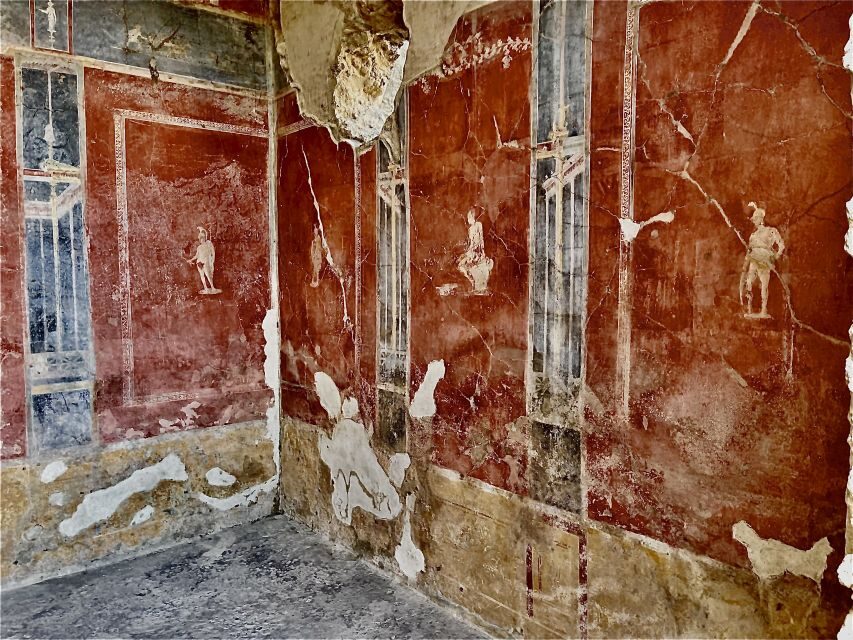
At $60 per person for about two hours, you’re not just paying for entry. You’re paying for interpretation. Pompeii is big, and without context it can feel like you’re reading signs while your feet keep moving. With a guide, you get meaning while you walk.
The other half of the value is the skip-the-line ticket. Lines can eat up your best daylight hours around Naples and the surrounding area. By using a separate entrance, you keep the tour closer to its intended pace, and you start absorbing the site sooner.
You’ll also notice the tour is designed for focus. Instead of sprinting through everything, it leans into a set of standout stops: public spaces like the Forum, plus famous houses and baths that show how Romans ate, relaxed, worked, and showed off status.
Other guided Pompeii tours we've reviewed

Meeting Point at Ristorante Bar Sgambati and How the Tour Starts
The tour begins at Ristorante Bar Sgambati. That matters because Pompeii day plans can go sideways when people guess a meeting place. Here, you have a named starting point, which makes it easier to coordinate with your guide and stay calm.
Guides are known to handle latecomers in a practical way, including reaching out if people have trouble finding the right spot. That kind of support can be the difference between a smooth afternoon and a stressful scramble.
Once you’re together, the tour gets moving right away. In the experience I saw described through guide behavior, tours can start quickly once the group is ready, then finish on time. That punctual rhythm is great if you’ve got dinner reservations back in town.
Skip-the-Line Entry: The Real Time Saver
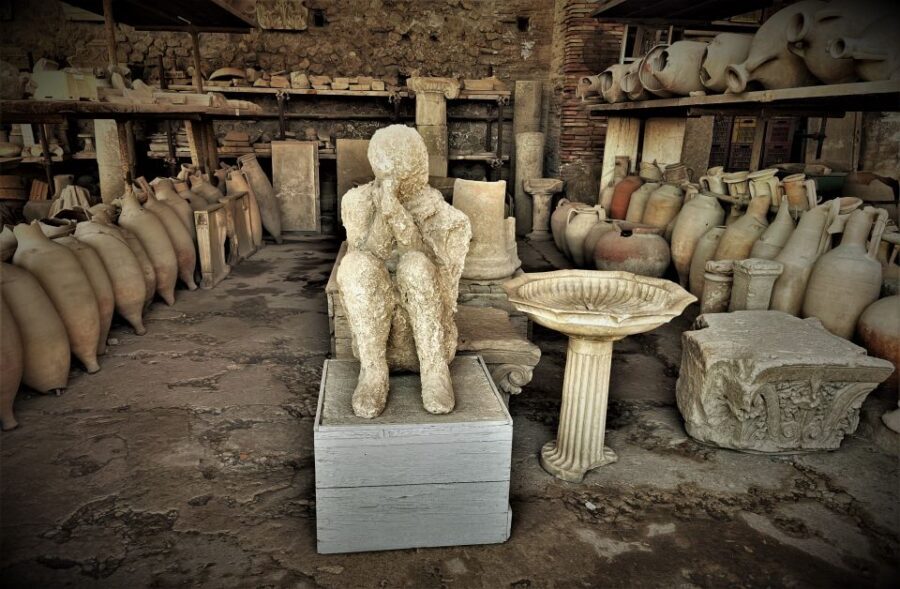
A skip-the-line ticket isn’t a luxury here. Pompeii is a high-demand site, and waiting around before you even enter can drain your energy. With the separate entrance, you reduce that idle time and move straight into the atmosphere of the ruins.
This is especially important for a tour that’s only about two hours. When the duration is short, every minute counts. Skip-the-line helps you avoid the common problem of spending more time queued up than actually seeing Pompeii.
Once inside, you’ll still walk. But you’ll be walking on purpose, with the guide shaping the route so you hit meaningful highlights rather than aimlessly wandering.
The Pompeii Story: Vesuvius, Ash, and Why These Streets Still Feel Alive
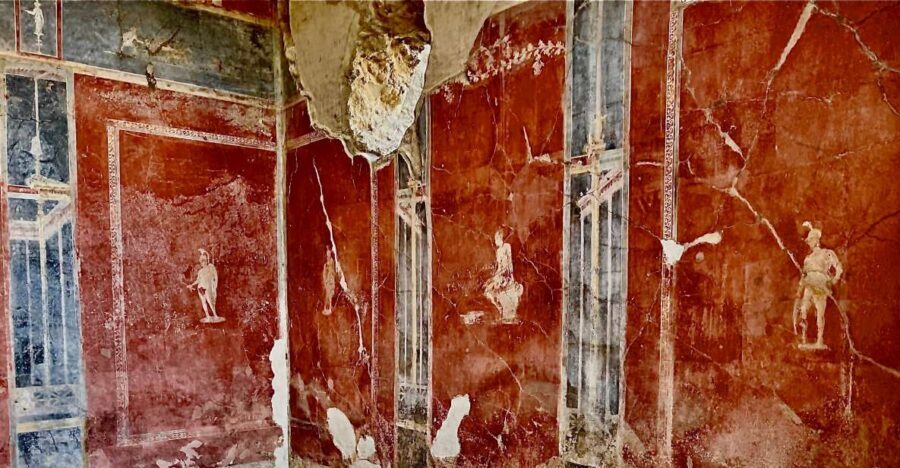
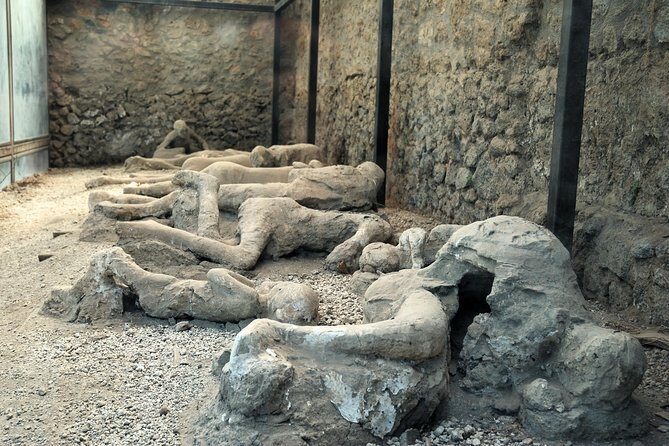
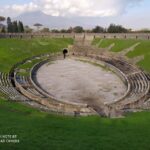
Before you even reach the biggest landmarks, you’ll get the core explanation: Pompeii was buried under volcanic ash after the catastrophic eruption of Mt. Vesuvius in 79 AD. That’s the big picture, but the value is how the guide connects it to what you see in front of you.
You’ll hear how ash preserved structures and everyday spaces, and how that preservation lets modern visitors infer how people lived. It turns the site from a pile of old stones into a snapshot of Roman life that was interrupted.
If you’ve visited other ancient sites, you might be used to speculation. Pompeii is different because the layout and many details remain. A good guide helps you interpret those details without overcomplicating them, so you can look and understand at the same time.
Walking Ancient Streets: How the Route Helps You Understand Daily Life
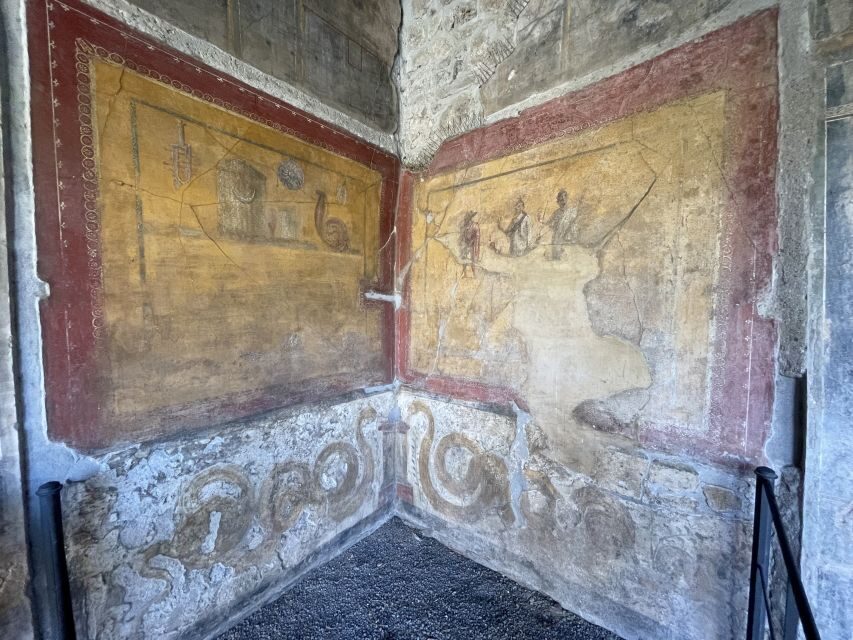
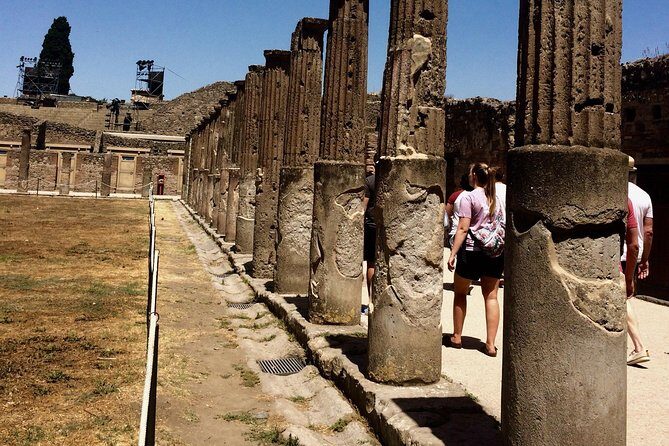
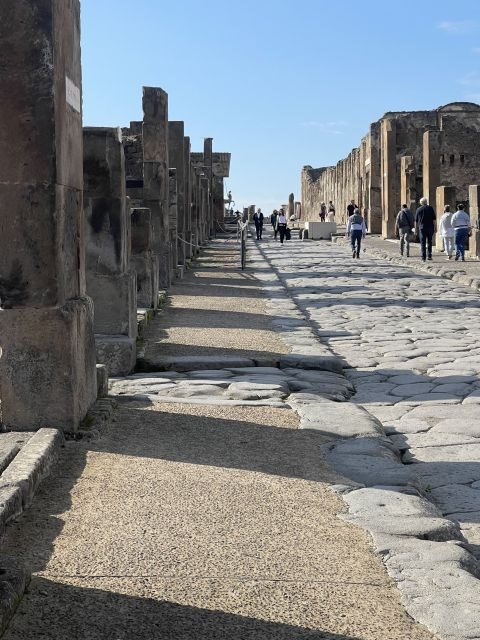
The tour centers on walking the ancient streets that Romans once used. That walking piece isn’t just for exercise. It helps you grasp scale: where people moved, how neighborhoods connected, and how public and private areas differed.
As you move along the route, the guide’s job is to point you toward what matters. You’ll learn what buildings were for and what the design suggests about daily routine—public roles in some spaces, domestic life in others.
You also get a sense of continuity and change. Even though the eruption is the headline event, the tour isn’t only tragedy. It highlights how structured Roman life was, from gatherings in public squares to relaxation and routine inside homes and baths.
Other skip-the-line Pompeii tickets and tours




The Forum: Pompeii’s Public Gathering Place
The Forum is one of those stops you feel right away. This was the city’s public gathering place, and it’s where civic life and visibility mattered. In a guided format, the Forum becomes more than an open area with stone remains.
Your guide will help you understand why this space mattered socially and politically. You’ll also see how the Forum fits into the daily rhythm of the city, not just as a landmark but as a functional hub.
A key benefit of the guided approach is that you don’t have to guess what you’re looking at. You can focus on questions: What would people do here? Why was it arranged this way? How does it compare to what we think of as city life today?
House of the Tragic Poet and House of the Golden Cupids
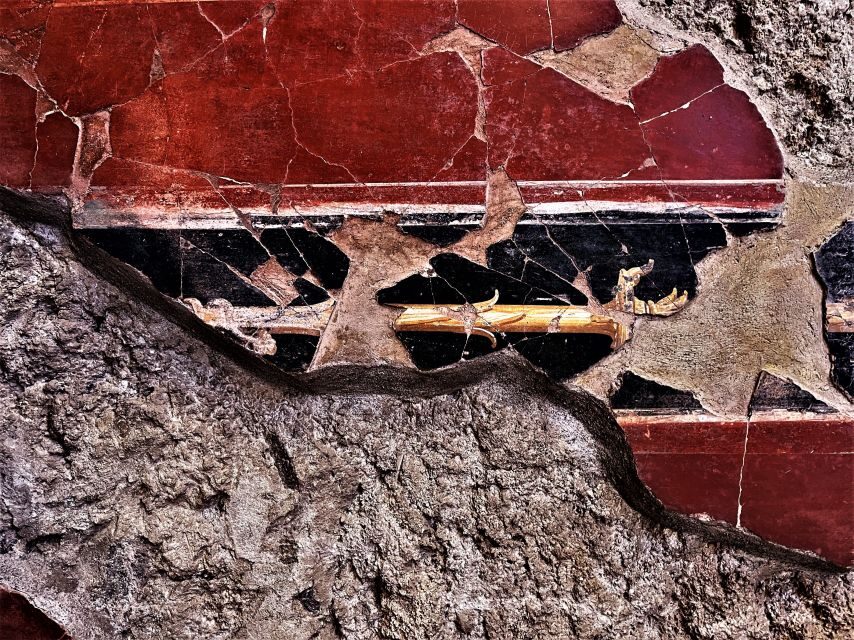
The tour includes The House of the Tragic Poet and The House of the Golden Cupids, both of which are strong choices for seeing domestic architecture up close. These are the kind of stops where ruins can look similar to other ruins—until someone tells you what to notice.
The guide’s explanation turns these houses into stories about status, taste, and routine. You’ll learn what different areas likely served, and how the arrangement would have supported everyday living.
These house visits are also where the tour can feel especially memorable because you start picturing rooms with people in them. Not as fiction, but as a reasoned guess based on layout and preserved elements.
If you’re visiting with kids, this kind of stop tends to land well too. In one case, the tour was described as a hit even for children aged 12 and 10, largely because it felt like a real-world walkthrough rather than a lecture.
Stabian Bath: Relaxation and Routine in Stone
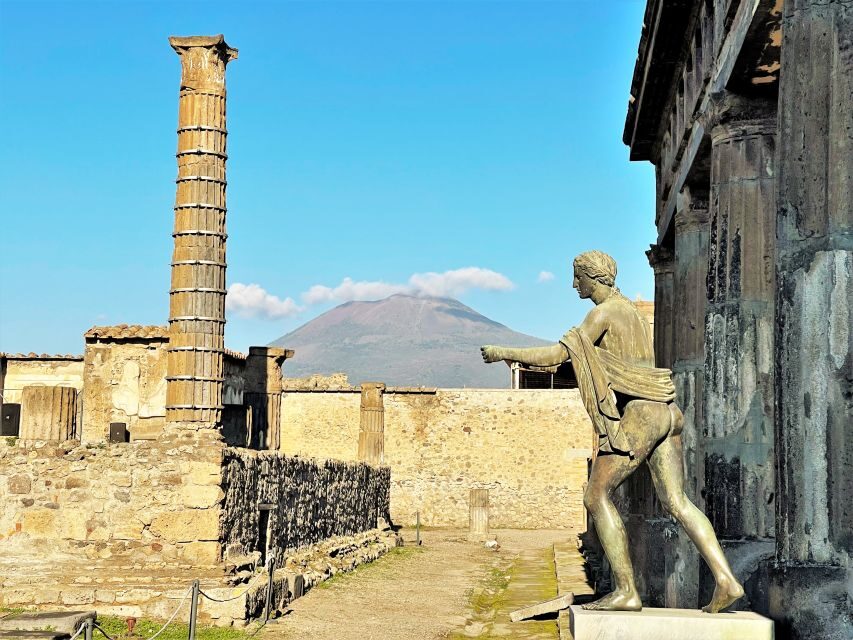
The tour also visits The Stabian Bath, a great contrast to the more formal mood of the Forum. Baths were social spaces as much as they were places for washing, and they reveal Roman habits in a way that’s hard to capture from photos alone.
A guided stop helps you interpret the layout and function without needing a handbook. You’ll see how bathing spaces were organized and how they supported routine and interaction.
If you’ve ever wondered why Romans invested so much in daily public spaces, baths are an answer. They show that hygiene, leisure, and social life weren’t separate ideas.
How You’ll Feel During the 2-Hour Walk
Two hours sounds short until you’re on-site. Then you realize Pompeii’s layout is the challenge, not the time. A timed guided tour is a smart way to get value without exhausting yourself.
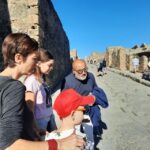
The pace is typically steady: walk, stop, explain, answer questions, then move on. Small-group format helps because you’re not stuck with a wall of silence while everyone waits for the guide to finish talking.
You should wear comfortable shoes and plan for uneven surfaces. This isn’t a casual stroll on a smooth path, and your feet will do most of the work.
Photo Stops and the Guide’s Personal Touch
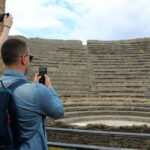
One of the more practical perks mentioned in the experience is that guides help with photos at photogenic spots. That’s not about turning ancient ruins into a backdrop. It’s about giving you angles and timing so you can actually capture what you saw.
In at least one case, the guide even helped with photos for a couple, including stepping in to take the picture. If you’re traveling with a partner and you don’t want to spend the day asking strangers to use your phone, that’s a real quality-of-life bonus.
The best part is that this doesn’t derail the tour. It’s a small part of the overall flow, wrapped into the route so you still get explanations and key stops.
Languages, Guides, and Why Names Matter
Tours here run with live guides in English and Italian. That matters because your enjoyment depends on comprehension, and Pompeii rewards curiosity.
Some guides are known for being responsive and for taking questions seriously. For example, Giulia was described as fantastic for answering questions about mythology, religious beliefs, and how people lived. Gennaro and Sasà were also specifically mentioned for being friendly, skilled, and easy to meet, with Sasà contacting people personally before the time.
Even if you don’t speak Italian, having an English-speaking guide keeps the tour focused on what you can understand right now, not what you’ll research later.
Who This Tour Is Best For
This is a strong pick if you want Pompeii highlights in a short window. If you only have part of a day, a focused route beats trying to self-tour and accidentally miss the stops that teach you the most.
It’s also a good fit if you like asking questions and want someone to connect the dots—especially around how the eruption preserved the site and what everyday Roman life likely looked like.
It’s not for people who need wheelchair access. It’s also not listed as suitable for those with motion sickness or pre-existing medical conditions. If any of those apply, choose a different format that offers more appropriate pacing or accessibility.
Price vs Value: Does $60 Make Sense?
Here’s the honest math. An entry ticket alone gets you inside. A guided tour gets you the why behind what’s left standing. Pompeii isn’t small, and it’s easy to spend time walking without learning much if you’re going solo.
You’re paying for two things: skip-the-line entry and a 2-hour guided walkthrough that targets high-impact spots like the Forum, major houses, and the Stabian Bath. For many people, that combination turns Pompeii from overwhelming into manageable.
If your priority is “see as much as possible,” you might be disappointed by the limited time. But if your priority is “see the right things and understand them,” this is priced like a practical solution.
Also remember: it’s not an all-in food experience. Food and drinks aren’t included, and that’s something to plan around so you don’t end up hungry midway through your day.
What to Bring So the Tour Feels Easy
Bring comfortable shoes and weather-appropriate clothing. Pompeii’s surfaces can be uneven, and you’ll be standing and walking more than you might expect for a short tour.
If you’re asked for ID, have your passport or ID card available. A copy is accepted, which is helpful if you’re traveling light.
Also consider bringing a light layer. Weather can shift quickly in the Campania region, and you’ll want to stay comfortable while you’re moving between exposed areas and shaded stops.
Timing Tips: How to Get the Most Out of a Short Pompeii Visit
If you’re trying to hit Pompeii and still enjoy Naples or Sorrento later, treat this tour as your core activity block. Two hours is long enough to make Pompeii feel real, but short enough that you can still continue your day if you plan well.
Arrive a bit early at Ristorante Bar Sgambati. Even a few minutes of buffer makes it easier to regroup, meet the guide, and settle before you start walking.
And don’t schedule a tight connection right afterward. You’ll want a little breathing room to exit, wander, and regroup without stress.
Should You Book This Pompeii Guided Tour?
Book this tour if you want a fast, focused Pompeii experience with skip-the-line access and clear guidance through the most important stops. It’s especially worth it if you care about understanding how Vesuvius preserved the city and you don’t want to spend your time guessing what you’re looking at.
Skip it if your main goal is maximizing quantity at any cost, or if walking for the duration is a problem for you. In those cases, you may be happier with a different pace or a more flexible format.
If you like historical sites best when someone helps you connect the dots, this is a smart way to get Pompeii done well without turning your day into a marathon.
FAQ
How long is the Pompeii guided tour?
The tour is listed at 2 hours, and the walk/visit time is shown as about 2.25 hours at the Pompeii Archaeological Site.
Is a skip-the-line ticket included?
Yes. The entry ticket is a skip-the-line ticket, and it includes access through a separate entrance.
Where do we meet for the tour?
The starting location is Ristorante Bar Sgambati.
What parts of Pompeii does the tour cover?
You’ll visit the Pompeii Archaeological Site and see highlights including the Forum, The House of the Tragic Poet, The House of the Golden Cupids, The Stabian Bath, and more.
What languages are available for the guided tour?
Guides are offered in English and Italian.
Is the tour suitable for wheelchair users?
No, it is not suitable for wheelchair users.
What should I bring with me?
Bring comfortable shoes, comfortable clothes, and weather-appropriate clothing. Also bring a passport or ID card (a copy is accepted).
What is the refund policy if plans change?
You can cancel up to 24 hours in advance for a full refund.
If you want, tell me your travel month and your starting city (Naples, Sorrento, Rome, etc.). I can help you time Pompeii so it fits your day without rushing.