REVIEW · POMPEI CAMPANIA
Pompeii Skip the Line Ticket + Guide Book with itineraries
Book on GetYourGuide →Operated by MOTORENT S.R.L. · Bookable on GetYourGuide
Pompeii is huge, and queues waste the day. This experience keeps things simple: you get a skip-the-line ticket plus a guidebook with practical itineraries so you can explore at your own pace. You also get an updated map to help you move between key areas without constantly guessing.
My favorite part is the freedom. You can do a quick circuit (two hours) or a slower, deeper wander (four or six), and the book nudges you toward the big highlights like frescoed houses, baths, temples, theaters, and the casts of the victims. One thing to consider: it’s not a live guided tour. If you want someone to explain every corner in real time, you’ll need to add that separately or be comfortable reading as you go.
In This Review
- Key points at a glance
- Skip-the-Line and Self-Guided: What You’re Actually Buying
- Finding Piazza Anfiteatro: The One Logistics Step You Shouldn’t Skip
- Choose 2, 4, or 6 Hours: Pick the Pace You Can Hold
- What You’ll See at Pompeii: Daily Life in Stone
- Frescoed houses and street life
- Spas and temples: how people reset their day
- Shops and the Thermopolis (street food)
- Theaters and brothels: entertainment and the adult world
- Casts of victims and the amphitheater
- The Map + Guidebook: Why This Works Better Than Wandering
- UNESCO and the Hermitage Stop: A Site Within the Site
- Practical Tips That Make Pompeii Feel Manageable
- Price and Value: Is $41 a Fair Deal?
- Who This Pompeii Visit Fits Best
- Should You Book This Pompeii Skip-the-Line Ticket?
- FAQ
- How long is the Pompeii visit with this ticket?
- What time can I enter Pompeii?
- Where do I meet the operator?
- Which entrance do I use?
- What’s included in the price?
- What’s not included?
- How many guidebooks are provided?
- What do I need to bring?
- Can I cancel or reserve flexibly?
Key points at a glance
- Skip-the-line entry so you spend more time inside Pompeii
- Self-guided itineraries for 2, 4, or 6 hours, with a matching map
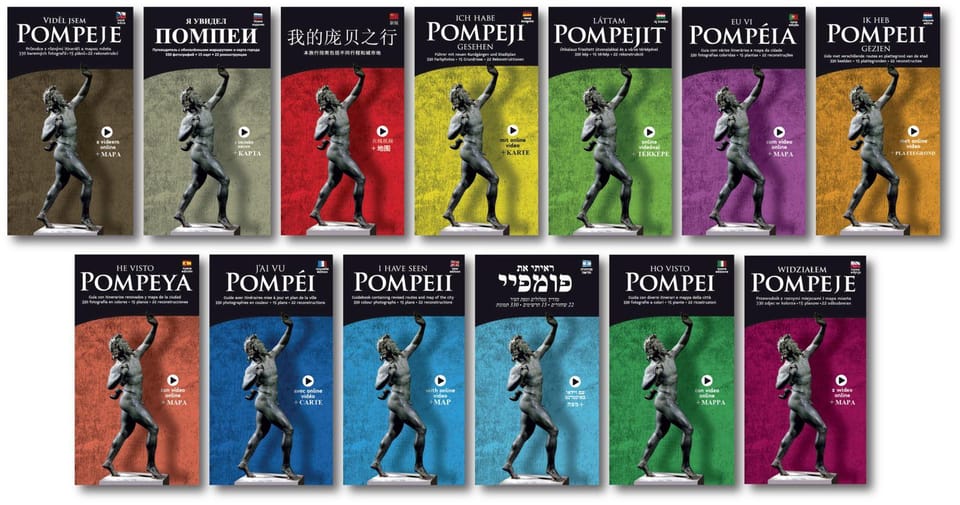
- Multilingual guidebook (13 languages), with one book provided for every two participants
- Clear meeting at VIA ROMA 123 and entry through Piazza Anfiteatro
- Covers major Pompeii sights, including the amphitheater, theaters, shops, and casts
- You’ll do it mostly on your own, with staff support for access rather than a full guide
Skip-the-Line and Self-Guided: What You’re Actually Buying
For Pompeii, the difference between “we’ll try to get there early” and a skip-the-line ticket can be the whole trip. With this ticket, your main job is to show up, get through entry quickly, and then use the provided materials to plan your walking route inside.
The guidebook is the other half of the value. Instead of hoping you recognize landmarks as you wander, you get an updated map plus a set of timed itineraries. That matters because Pompeii isn’t laid out for casual strolling—once you’re inside, you’ll quickly want a plan for where to go next.
What you don’t get is a full spoken guide. There’s no included guiding service for narration, so this works best if you enjoy learning from a book while walking.
Other skip-the-line Pompeii tickets and tours

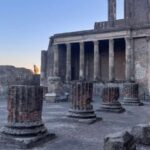

Finding Piazza Anfiteatro: The One Logistics Step You Shouldn’t Skip
Getting into Pompeii is easy when you use the right entrance. Your access point is the Piazza Anfiteatro entrance, and the operator meeting spot is at the information point on VIA ROMA 123, Pompei.
Here’s the practical trick: arrive with enough buffer that you’re not sprinting to match the timing of your day. Once you’re at VIA ROMA 123, show your voucher to the operator for smooth entry. That one step helps you avoid the typical “Where do I scan?” confusion that can happen at big sites.
Also note the site hours: you can enter from 9:00 am to 5:00 pm. Plan to be inside earlier rather than closer to closing—Pompeii rewards a calm pace.
Choose 2, 4, or 6 Hours: Pick the Pace You Can Hold
This experience is built around how much walking you want to do. The guidebook offers itineraries for two, four, or six hours, and you can match your route to your energy level and your travel style.
- Two hours: Ideal if you’re short on time but still want the main highlights. You’ll likely feel your pace pick up, and you’ll be moving between the most famous zones rather than lingering.
- Four hours: This is my sweet spot for Pompeii. It gives you time to slow down for stops that actually catch your eye—like the better-preserved areas and the scenes connected to daily life.
- Six hours: Best if you don’t mind longer walking and you like reading as you go. You’ll have more room to follow the guidebook’s suggested flow and take breaks without feeling rushed.
One practical consideration: Pompeii is a walking site with lots to see. If you’re not used to uneven ground, tight spaces, and heat, you’ll likely enjoy the shorter itinerary more.
What You’ll See at Pompeii: Daily Life in Stone
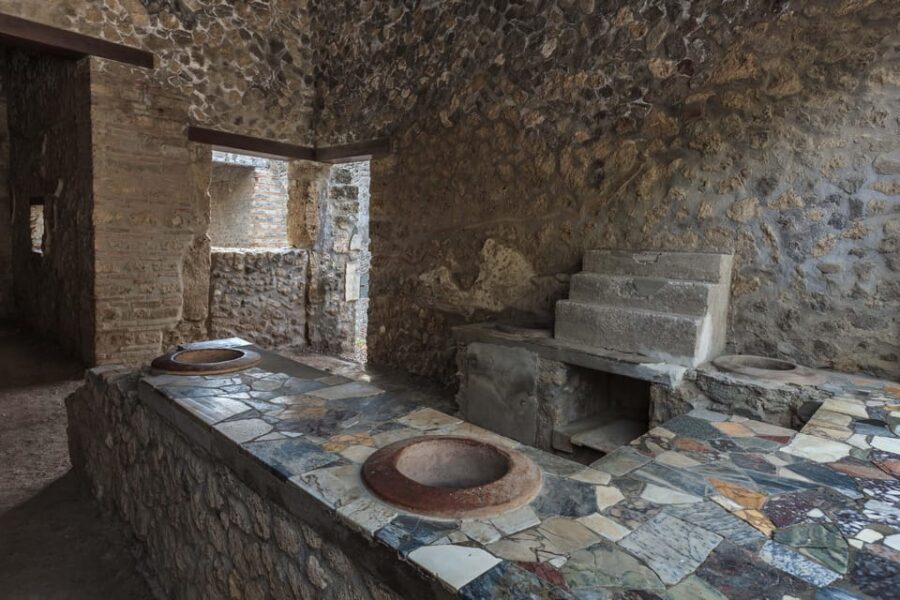
Pompeii works because it shows ordinary life with extraordinary detail. Instead of a museum display behind glass, you’re walking through neighborhoods, passing through structures that were built for real routines—eating, bathing, shopping, performing, and socializing.
Frescoed houses and street life
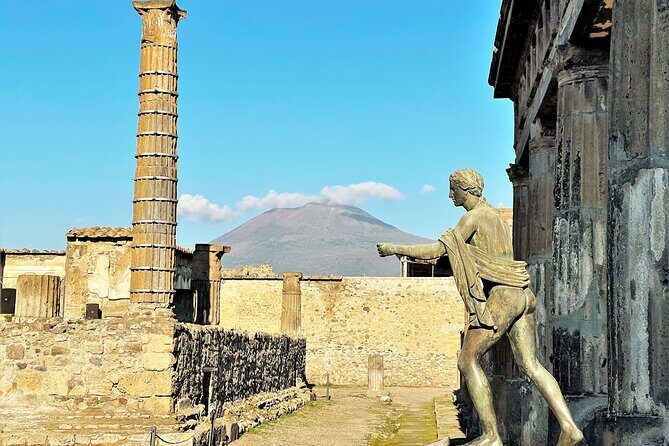
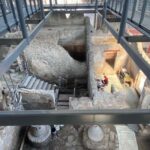
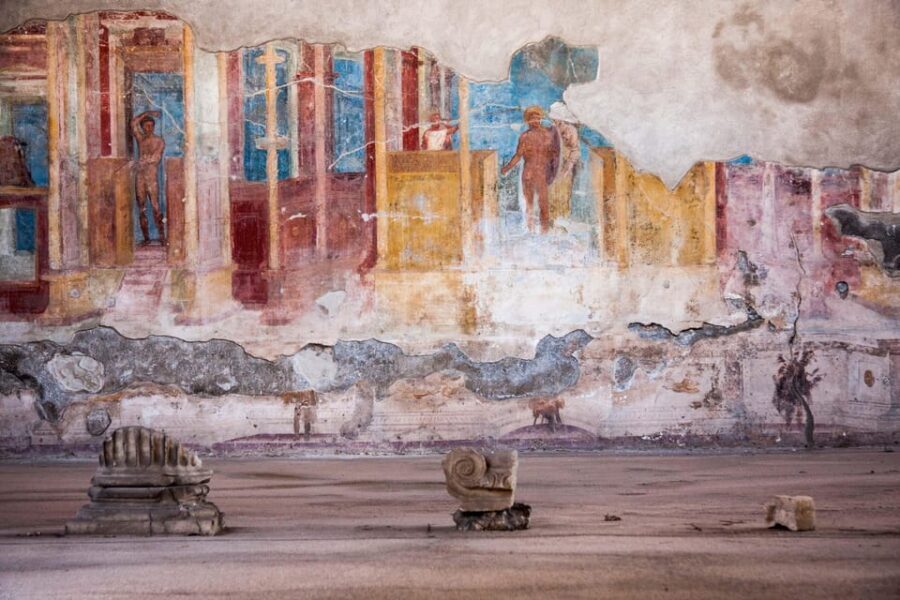
Expect to wander through millennial streets and see frescoed houses—colorful interiors and room layouts that make the city feel lived-in, not just historical. The houses help you understand the contrast between simple streets and the more curated spaces inside.
One drawback to be aware of: the site can feel like a maze if you don’t use the map. That’s why the updated map is a big deal; it helps you keep track of where you’ve been and what’s coming next.
A few more Pompei Campania tours and experiences worth a look



Spas and temples: how people reset their day
You’ll also encounter spas and temples. The baths are especially interesting because they show that leisure and hygiene were serious daily activities, not occasional treats. Temples add context for what the people valued and how the city organized public life.
If you’re doing the shorter itinerary, focus on the elements that match your curiosity. For many people, baths and temples are what make Pompeii feel like a functioning city rather than a ruin.
Shops and the Thermopolis (street food)
Don’t skip the shops and the Thermopolis—the ancient version of fast food, with coffee-like drinks and quick meals. It’s a reminder that even in antiquity, people wanted convenient ways to eat and socialize.
This part is great for travelers who like the “how did they live” side of history. It’s also a good moment to catch your breath, because it’s easy to pause and read about what you’re looking at.
Theaters and brothels: entertainment and the adult world
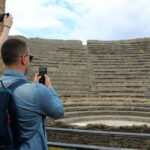
Pompeii doesn’t shy away from reality. You’ll see theaters and brothels, which give you a fuller picture of social life, not only the polite parts. The theaters connect to public performance and community events, while the brothel spaces highlight how the city handled pleasure and commerce.
If you find these topics uncomfortable, you can still handle them efficiently with the itinerary plan. You won’t be forced to linger.
Casts of victims and the amphitheater
The casts of the victims of the eruption are a powerful and emotional stop. They’re part of what makes Pompeii more than architecture—it’s the human story attached to the tragedy.
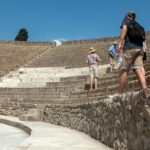
And you’ll get to see one of the best-preserved Roman amphitheaters. Even if you’re not a Roman history superfan, an amphitheater is visually clear: seating tiers, stage space, and the scale that tells you how big public events were.
The Map + Guidebook: Why This Works Better Than Wandering
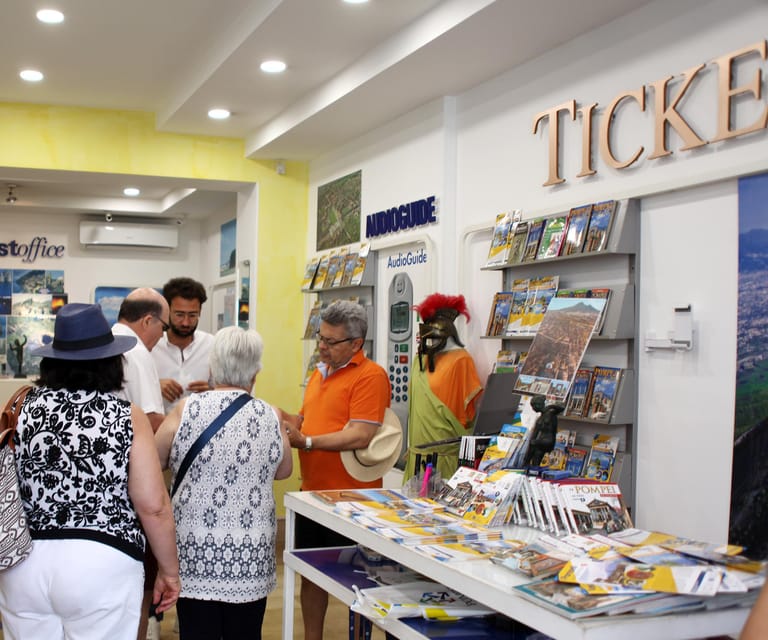
A lot of Pompeii visits fail for a simple reason: people get in, look around, and then lose their route. You start backtracking, you miss key zones, and the day feels like hard work instead of discovery.
Here, the updated map and the itineraries do the heavy lifting. You can use the suggested route as a backbone and then adjust on the fly when something pulls your attention. The guidebook is built for that exact rhythm: walk, read, check your position, then move on.
Also worth noting: the guidebook is provided in 13 languages, and the operator support/instructor language options include English, Italian, Spanish, and French. If you’re traveling with someone who prefers another language, you’ll still have a solution available in the materials.
UNESCO and the Hermitage Stop: A Site Within the Site
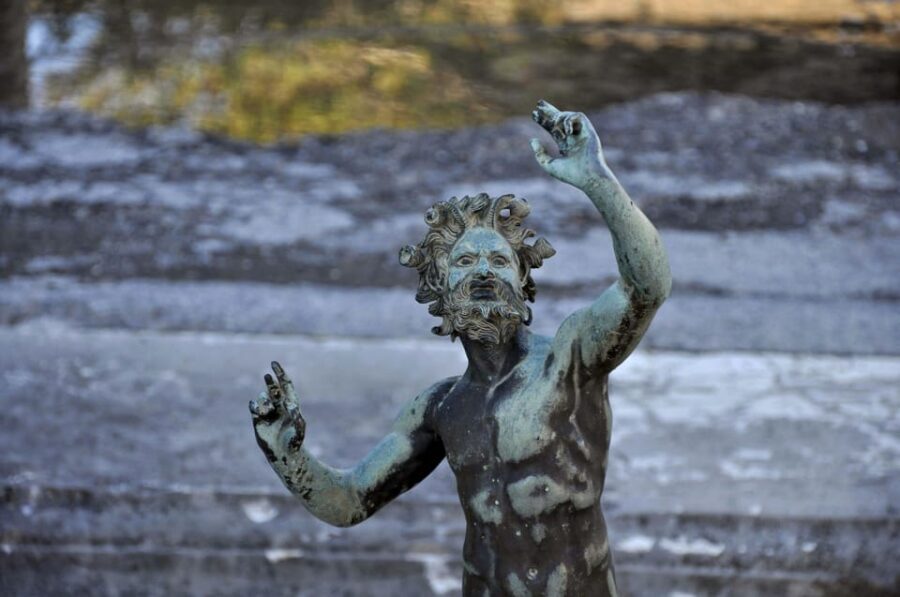
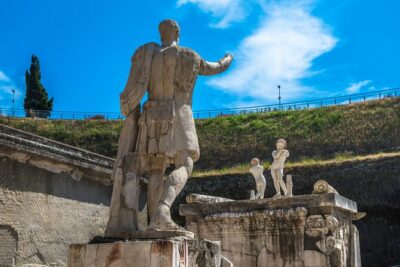
Pompeii is UNESCO-listed, and your route includes an UNESCO Hermitage site stop. The key value here is that the visit isn’t only about individual buildings; it’s also about understanding the archaeological importance of the wider area.
Practically, this means you’ll be moving through zones with cultural significance beyond the obvious ruins. Even if you only read a few lines in the guidebook at each stop, the overall flow helps connect the dots—what you’re seeing, and why it’s preserved.
Practical Tips That Make Pompeii Feel Manageable
This ticket is designed for independence, so your comfort matters. The basics are also the biggest upgrades:
- Wear comfortable shoes with grip. Pompeii’s surfaces can be uneven.
- Bring a sun hat and water. Even in shoulder seasons, the walking adds up fast.
- Use comfortable clothes you can move in for a few hours.
Timing helps too. Because entry runs until 5:00 pm, plan your day so you aren’t rushing at the end. A relaxed first hour often leads to a calmer rest of the route.
One more practical point: you receive one guidebook for every two participants. If you’re traveling with a friend or family member, plan who’s doing the reading and when you’ll share the book.
Price and Value: Is $41 a Fair Deal?
At $41 per person for a one-day Pompeii ticket with a guidebook and map, you’re paying for three things: (1) skip-the-line entry, (2) self-guided structure, and (3) multilingual printed guidance you can keep as a souvenir.
Is it worth it? In most cases, yes—especially if you like the freedom to set your own pace. The skip-the-line part can save you time that you’d otherwise spend waiting rather than sightseeing. And the guidebook reduces decision fatigue inside the ruins.
Where you should be cautious is if you might qualify for free or discounted admission on your own. There’s a lesson here from real-world complaints: a bundle can feel overpriced if your situation already gets you lower-cost entry. If that applies to you (for example, based on age or other eligibility), do the simple math before you buy.
Who This Pompeii Visit Fits Best
This is a strong match for:
- Couples and small groups who want to walk at their own speed
- Travelers who like reading on the move and don’t need a constant voice
- People who want a reliable route without paying for a full guided tour
It may be less ideal if:
- You want a live guide explaining every stop in depth
- Your group wants strict start-to-finish scheduling
- You’re expecting a hands-on tour director rather than an entry ticket plus guidebook
Should You Book This Pompeii Skip-the-Line Ticket?
If your goal is to maximize time inside Pompeii and you’re comfortable navigating with a map and a well-structured guidebook, I’d book it. The entry through Piazza Anfiteatro, the meeting point at VIA ROMA 123, and the timed 2/4/6-hour itineraries are exactly the kind of practical details that turn Pompeii from stressful to enjoyable.
Just double-check the value for your personal situation. If you’re likely eligible for free or reduced entry on your own, compare totals first so you don’t end up paying extra for what you could access cheaper.
If you want a self-guided day that still feels organized, this is a sensible way to do Pompeii.
FAQ
How long is the Pompeii visit with this ticket?
The ticket is valid for one day, and the guidebook offers suggested itineraries of two, four, or six hours.
What time can I enter Pompeii?
You can enter from 9:00 am until 5:00 pm.
Where do I meet the operator?
Meet at the information point at VIA ROMA 123, Pompei. You’ll use this voucher to access the archaeological park.
Which entrance do I use?
You access Pompeii through the Piazza Anfiteatro entrance.
What’s included in the price?
You get the entrance ticket, a guidebook in 13 languages, a map, and itineraries for two, four, or six hours.
What’s not included?
Transfer, a guide, and food and beverages are not included.
How many guidebooks are provided?
One guidebook is provided for every two participants.
What do I need to bring?
Bring a passport or ID card, comfortable shoes, a sun hat, water, and comfortable clothes.
Can I cancel or reserve flexibly?
Yes. You can cancel up to 24 hours in advance for a full refund, and you can reserve now and pay later.