REVIEW · POMPEI CAMPANIA
Pompeii: Skip The Line Entrance Tickets + Audioguides
Book on GetYourGuide →Operated by Pompeii Apartments · Bookable on GetYourGuide
One ticket, one device, and less time stuck at entrances. This Pompeii package is built for self-paced wandering, but with a real, structured audio route you can follow street by street. You get skip-the-line entry tied to Porta Marina Inferiore and a multilingual audioguide device authorized for tour operators by the Pompeii Archaeological Park.
I especially like how the audioguide works with numbered stops, so you’re not stuck guessing what you’re looking at. I also like the dedicated entry approach at Porta Marina Inferiore (Piazza Esedra), which is where you can save time if the site is busy. The main drawback to think about: the audio experience depends on your headphones (a standard jack is needed, and they’re not included) and on having the right device configuration—some people have reported issues with audibility and whether the guide was official.
In This Review
- Key Things to Know Before You Go
- Pompeii Skip-the-Line via Porta Marina Inferiore: what you’re really paying for
- Picking up your Artecard and audioguide at Villa dei Misteri station
- Priority access at Piazza Esedra: how the entrance works in practice
- How to use the numbered audioguide device (and avoid audio headaches)
- Exploring Pompeii at your own pace: houses, temples, theatres, and streets
- The included map and multilingual help: small things that matter
- Parking at Osteria Nonna Cherubina (if open): a rare bonus to know about
- Price and value: is $46 per person fair for this package?
- Who this Pompeii experience suits best
- Small practical cautions before you go
- Should you book this Pompeii skip-the-line + audioguide package?
- FAQ
- Where do I exchange my voucher for the Artecard ticket and audioguide?
- Which entrance gives the dedicated access line?
- Are headphones included with the audioguide?
- What languages are available for the audioguide?
- Do I need ID for the audioguide?
- Is food or alcohol allowed inside Pompeii with this package?
Key Things to Know Before You Go
- Artecard skip-the-line entry with a dedicated access lane at Porta Marina Inferiore
- Number-based audioguide device (English, Italian, Spanish, German, French) to match what you’re seeing
- Pickup is at Villa dei Misteri (EAV station “Pompei Scavi – Villa dei Misteri”), first floor
- Headphones are not included, so plan to bring standard jack ones
- You must return the device before the office closes, with ID used as a deposit
Pompeii Skip-the-Line via Porta Marina Inferiore: what you’re really paying for
This ticket bundle is designed to cut the most annoying part of Pompeii: getting through the entrance. Instead of lining up with everyone at standard gates, you use a dedicated access from the Porta Marina Inferiore entrance in Piazza Esedra. That’s the core value of the Artecard express setup—more time walking among the ruins, less time waiting.
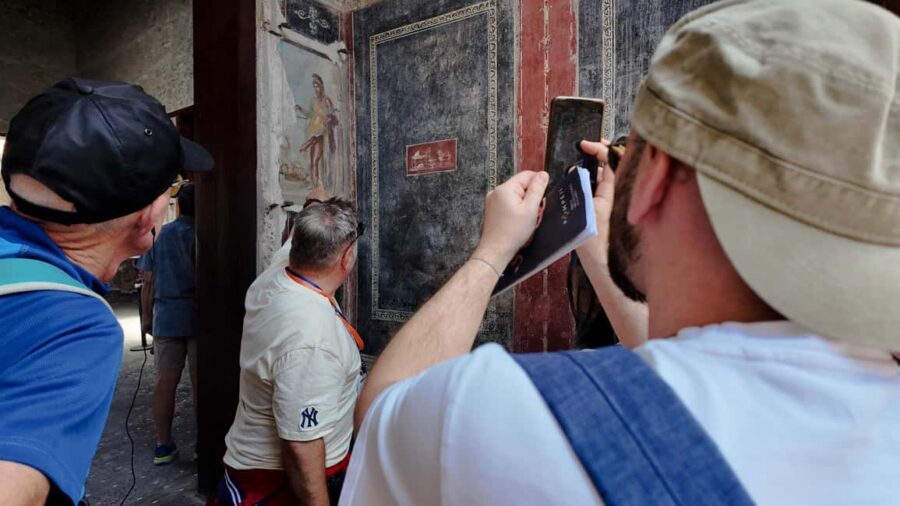
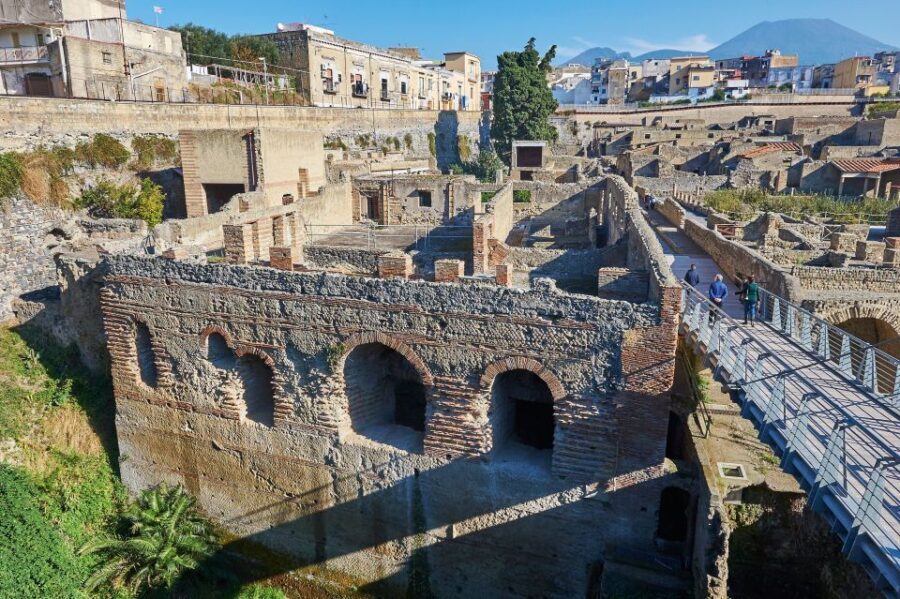
You’re also buying structure without a rigid tour group. The site stays yours to explore at your pace, but the audioguide device gives you an order to follow so the place doesn’t feel like random walls and streets. The audio covers houses, temples, theatres, and the city streets, with stories, myths, and details you might miss on your own.
One more thing: this service has a mixed feedback record overall (a 3.2 rating across four reviews). The good news is that the priority idea makes sense. The caution is that the exact audio setup matters, and the skip-line effect can feel less dramatic if you happen to arrive when lines are short or only one queue is operating.
Other skip-the-line Pompeii tickets and tours
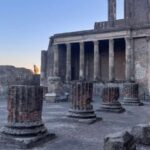
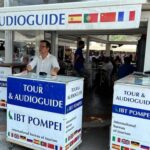
Picking up your Artecard and audioguide at Villa dei Misteri station

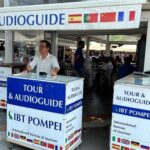
After you purchase online, you exchange your voucher at the provider office at Villa dei Misteri 1. It’s on the first floor of the train station Circumvesuviana called “Pompei Scavi – Villa dei Misteri,” and the office name shown for pickup is Tempio Travel.
This step matters more than it sounds. You’re not walking straight to the gate with a ticket in hand—you’re collecting the full Artecard ticket and the audioguide device first. If you want a smooth start, I’d arrive with a little buffer so you can ask questions at the office and confirm your language settings before you head to the entrance.
You also get multilingual assistance and an informative map at the office. Think of this as your “orientation kit.” Pompeii is easy to get turned around in, and a quick map check at the start can save you from backtracking later.
Priority access at Piazza Esedra: how the entrance works in practice
Once you’ve exchanged your voucher, you go to the Porta Marina Inferiore entrance in Piazza Esedra. The walk is described as only a few minutes. Then you enter through a dedicated access line designed to bypass the standard queues at other entrances.
If you’re hoping this will eliminate waiting completely, calibrate your expectations. The system is meant to speed things up, but it still depends on how the site is operating that day. One review experience noted confusion about the skip-the-line benefit when it didn’t look clearly different from other lines, which is a fair warning.
Still, for many visitors the advantage is real: dedicated lanes tend to keep things moving when the rest of the gates are congested. If you’re traveling in high season or on a weekend, using the correct entrance can be the difference between a calm start and a stressed one.
How to use the numbered audioguide device (and avoid audio headaches)
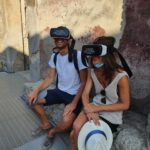
The audioguide is the heart of this experience. The device is described as officially authorized for tour operators by the Pompeii Archaeological Park, and it delivers explanations using numbers that correspond to the sights. That’s a big deal because it reduces the guessing game: you look around, you find the numbered reference, and the story matches what you’re viewing.
The device supports hands-free use, or you can use standard jack headphones. Headphones are not included, and one review specifically called out that the audio guide felt less fun without a headset setup. If you want the full benefit, pack your own headphones with the correct standard jack connection.
Also plan on an ID deposit. A valid ID is required as a deposit for the audioguide devices, and the deposit is returned when you hand the device back. You’ll also need to return the device before the office closes, so don’t plan a “we’ll figure it out later” finish.
Two practical tips to make the device work for you:
- Set your language before you leave the office area.
- Keep the device handy while you walk, so you can match numbers quickly rather than stopping to fumble.
One caution from feedback: some people reported that the audioguide didn’t play as expected and that certain numbers couldn’t be heard. If you notice something off early, it’s smart to raise it at the office pickup stage rather than waiting until you’re deep in the ruins.
Exploring Pompeii at your own pace: houses, temples, theatres, and streets
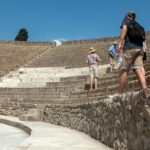
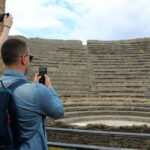
This is a self-paced format, which is great because Pompeii rewards slow wandering. You can linger where something catches your eye—then catch up on the next audio stop when you’re ready. The audioguide route is meant to cover the main categories of what you’ll see: houses, temples, theatres, and the streets connecting everything.
Here’s how I’d turn that into a smooth plan for your day. Start by using the map and letting the audioguide “set the order” for you. Then move station to station, using the numbered audio stops as your pacing tool. If you get tired, you don’t have to keep pace with a group—you just pause, reset, and continue.
Pompeii can be physically demanding. The package doesn’t list step count, but it does flag it as not suitable for people with heart problems or motion sickness. You should treat comfortable shoes as non-negotiable and expect lots of walking on uneven surfaces.
What you’ll get from the audio content is the cultural layer, not just the facts. The guide is described as telling stories, myths, and historical context, with explanations that feel tied to the spaces you’re standing in. That’s what helps Pompeii turn from a list of ruins into a place that feels lived-in.
A few more Pompei Campania tours and experiences worth a look




The included map and multilingual help: small things that matter
The map included with the package is more than a souvenir. When you’re on a huge archaeological site, a simple visual guide helps you connect streets to buildings without wasting energy backtracking. Because this experience is self-paced, the map becomes your safety net if you lose your flow.
The multilingual assistance at the office is also worth using. You can ask for help confirming the entrance direction to Porta Marina Inferiore and how the device pickup-to-entry flow works. That kind of quick guidance is easy to skip—until you’re standing at the wrong gate.
If you’re the type who likes a clean start, I’d do this in order: map glance, language check, then head to Piazza Esedra. You’ll spend less time correcting course and more time actually looking.
Parking at Osteria Nonna Cherubina (if open): a rare bonus to know about
There’s a conditional parking perk included: if it’s open and if available, you might find free parking (not gated) from 01/04 at Osteria Nonna Cherubina, in Via Andolfi 46, 80045 Pompei. This is the kind of “could save you money” detail that’s easy to overlook, so it’s good to know it exists.
The key word here is conditional. Because it depends on whether it’s open and whether spaces are available, don’t treat it like a guaranteed plan. If you’re driving, you’ll still want a backup option in mind.
Price and value: is $46 per person fair for this package?
At $46 per person, you’re paying for three things in one: Artecard entry with a dedicated entrance lane, a multilingual audioguide device, and an on-site support layer (map plus help at the office). The value is strongest if you care about two outcomes: saving time at the gate and getting context while you walk.
If you’re the kind of visitor who likes to linger, the audioguide can justify the price quickly. Pompeii is big, and stopping to read every sign can slow you down; the device helps you keep moving while still learning. Also, the guide covers multiple categories—houses, temples, theatres, and streets—so you’re not paying just for one “single highlight.”
Where value can drop is if the audio doesn’t work smoothly for you, or if you expected the skip-the-line effect to be dramatic. With a mixed rating and at least one reported issue around whether the audioguide was official and whether numbers were audible, it’s smart to bring your own headphones and do a quick device check early.
For first-time visitors, this package often makes sense because it adds structure without forcing a timed group tour. For repeat visitors, you might prefer a cheaper option, especially if you already know the site flow and don’t need audio guidance.
Who this Pompeii experience suits best
This package is a strong fit if:
- You want to explore at your own pace but still have a guided narrative structure.
- You prefer a numbered audio system over reading labels nonstop.
- You’re visiting in multiple languages and want English, Italian, Spanish, German, or French available on your device.
- You’d rather start at Porta Marina Inferiore and avoid standard queue chaos when you can.
It’s less ideal if:
- You’re very sensitive to noise or motion and would be uncomfortable with walking and uneven ground.
- You don’t want to handle headphone compatibility (because headphones are not included).
- You rely on the audioguide being perfect and fully audible without any troubleshooting.
Small practical cautions before you go
Bring passport or ID card because you need ID as a deposit for the audioguide device. Wear comfortable shoes and plan on comfortable clothes because you’ll be walking a lot. Food, alcohol, and drugs are not allowed, so plan meals accordingly outside the site area.
Also keep an eye on timing for returning the device. The instructions say devices must be returned before the office closes. If you’re the type who always stays “just one more stop,” set yourself a rough end time so you don’t end your visit scrambling at the finish.
Should you book this Pompeii skip-the-line + audioguide package?
I think you should book it if you want a smooth entrance via Porta Marina Inferiore and you’re comfortable using your own standard jack headphones with the audioguide device. At $46, the combo of entry + audio + map is a practical way to get context without committing to a group tour schedule.
Skip booking if you hate the idea of device troubleshooting or you absolutely need a guaranteed, plug-and-play audio setup with zero variables. If that’s your situation, consider an alternative where audio headsets are included and where pickup-to-device steps are clearer on-site.
My final advice is simple: bring headphones, exchange your voucher early, and do a quick device check before you walk into the archaeological park. When it works, it’s a very workable way to enjoy Pompeii your way.
FAQ
Where do I exchange my voucher for the Artecard ticket and audioguide?
You exchange your voucher at the office on the first floor of the Circumvesuviana station Circumvesuviana called Pompei Scavi – Villa dei Misteri, at Villa dei Misteri 1.
Which entrance gives the dedicated access line?
The dedicated access is from Porta Marina Inferiore, located in Piazza Esedra.
Are headphones included with the audioguide?
No. Headsets are not included, and the device can use standard jack headphones (not iPhone ones).
What languages are available for the audioguide?
The audioguide is available in English, Italian, Spanish, German, and French.
Do I need ID for the audioguide?
Yes. A valid passport or ID card is required as a deposit for the audioguide device, and it is returned when you give the device back.
Is food or alcohol allowed inside Pompeii with this package?
Food, alcohol, and drugs are not allowed.