REVIEW · POMPEI CAMPANIA
Pompeii VIP 3h Tour: Skip-the-line with your Archaeologist
Book on GetYourGuide →Operated by Grand Tour Experience · Bookable on GetYourGuide
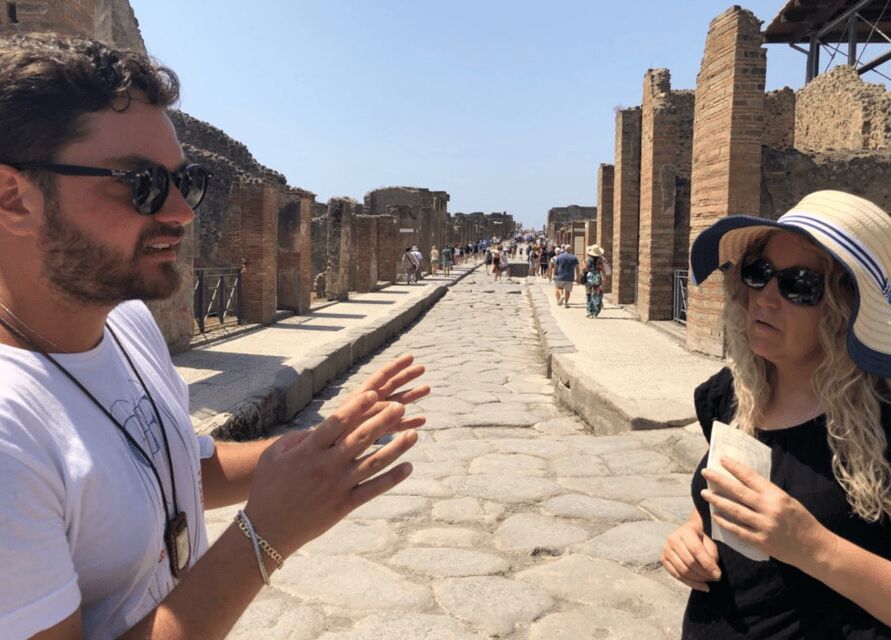
Pompeii hits different with a real archaeologist. This VIP 3-hour walk through the ruins is built around skip-the-line entry and the kind of on-the-ground explanation you only get when your guide is trained to interpret excavations, objects, and architecture. I especially like that you’re not just touring famous streets; you’re seeing Pompeii’s last opened houses and restoration work as part of the story, not as an afterthought.
I also like the “day-in-the-Roman-world” pace: you move from the civic center to homes, baths, and even the amphitheater without feeling rushed or lost. The one thing to plan for is the new ticket rule—your tour tickets require your full name and surname, and you must show an original ID or passport, so being on time really matters.
In This Review
- Key things to know before you go
- Pompeii VIP for 3 hours: what makes this tour work
- Skip-the-line at Porta Marina Superiore: your start point and first win
- Antiquarium and Porta Marina: seeing the eruption story as science
- Basilica, Forum, and Apollo Temple: where Roman public life lived
- Greater Decumano, baths, and the Lupanare: everyday routines, not just monuments
- Domus and restorations: why the recently opened houses matter
- Via dell’Abbondanza to the Garden of the Fugitives: the human scale of disaster
- Great Gymnasium and the amphitheater: training and spectacle
- Price and value: is $407.83 per group a fair trade?
- What to bring (so the ruins don’t beat you first)
- Is this tour for you? A straight match check
- Should you book Pompeii VIP 3h Tour with your archaeologist?
- FAQ
- How long is the Pompeii VIP tour?
- Where is the meeting point?
- What’s included in the price?
- Which languages are offered?
- Do I need to bring ID for the tickets?
- Is transportation included?
- Is food or drink provided?
Key things to know before you go
- Skip-the-line entry keeps your 3 hours focused on ruins, not queues
- Antiquarium stop shows real finds from later excavations, including a coin tied to eruption dating and a heavy golden arm cuff
- Freshly opened domus and restorations (like the House of Golden Cupids) help you see what archaeologists are still uncovering
- Garden of the Fugitives gives the eruption story a brutal, physical scale via body moulds
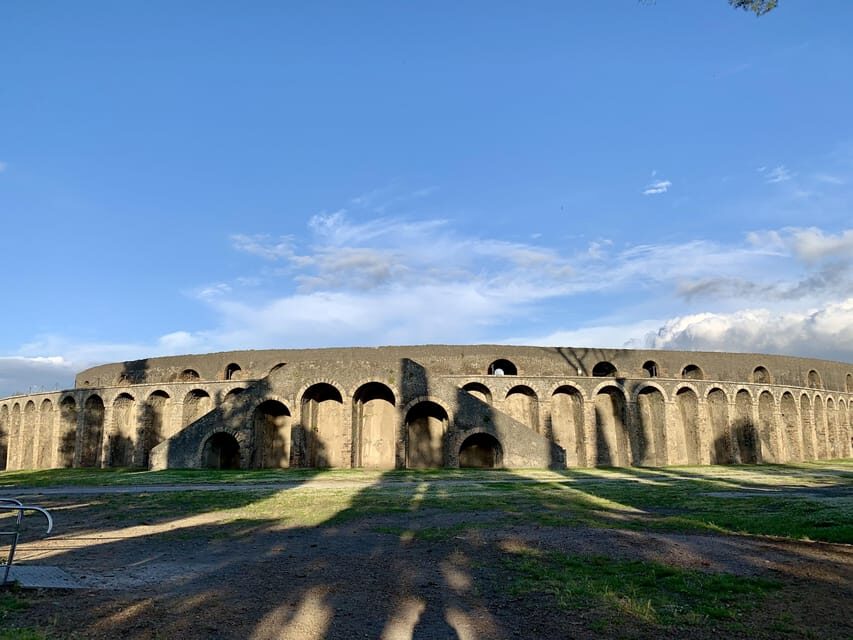
- Gymnasium and amphitheatre close the tour with how Romans trained and staged public spectacle
Pompeii VIP for 3 hours: what makes this tour work
A lot of Pompeii tours try to cram everything into one day. This one doesn’t. You get a tight route, but with enough stops that Pompeii feels like a place, not a checklist.
The big difference is the personal archaeologist angle. You’re not only hearing what things were; you’re hearing why scholars believe what they believe, based on the artifacts and the way the site was excavated. In plain terms, your guide helps connect the stones to evidence you can point to—coins, household items, architecture details, and restoration choices.
This format is also practical. With only 3 hours, you’re less likely to burn through energy early and then rush the later highlights. That matters because Pompeii is uneven underfoot, and you’ll want your focus for the homes and the human-scale stops.
One more thing I appreciate: this is a private group experience. Even if the group is small, you’ll spend more time asking questions and getting specific answers, instead of waiting for a group to catch up.
Other Pompeii tours with an archaeologist

Skip-the-line at Porta Marina Superiore: your start point and first win
Your tour starts at Porta Marina Superiore, right in front of the Hortus Bar, and it ends back there. That sounds simple, but it’s a big deal in Pompeii, where entry logistics can make or break your morning.
Because you have skip-the-line service, you start walking with momentum. You’re not negotiating with the busiest entrance moments, and you don’t waste prime daylight standing around. For a 3-hour tour, that time savings matters.
Do plan for one operational reality from the site’s current rules: your tickets are personal. You must send your full name and surname for all participants, and you need an original ID or passport when you’re there. If your paperwork is off or you show up late, the whole plan can wobble.
If you’re the kind of traveler who likes to get your bearings fast, the fixed meeting point helps. You meet, you enter, you begin. No hunting for your group at the gate.
Antiquarium and Porta Marina: seeing the eruption story as science
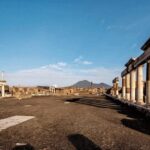
From Porta Marina, you start at one of the main entrance points and move into the area where your guide sets the stage. Then you reach the antiquarium, with a view of Vesuvius as you pass.
This stop is valuable because it turns Pompeii from scenery into evidence. You’ll see objects uncovered during the most recent excavations—exactly the kind of material that can shift what researchers think they know. One example your guide should explain is a coin that changed knowledge of the eruption date. That’s the sort of detail that makes the story feel less like legend and more like archaeology in action.
You’ll also hear about a heavy golden arm cuff found during later work. Even if you don’t remember every object name, you’ll get what matters: excavations keep producing data, and that data can revise dates, timelines, and interpretations.
A small travel tip: this early segment is a great time to ask your guide how they read Pompeii. If you understand their approach, the rest of the route feels clearer—especially when you move from civic spaces to private homes.
Basilica, Forum, and Apollo Temple: where Roman public life lived
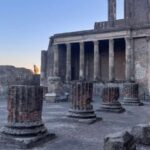
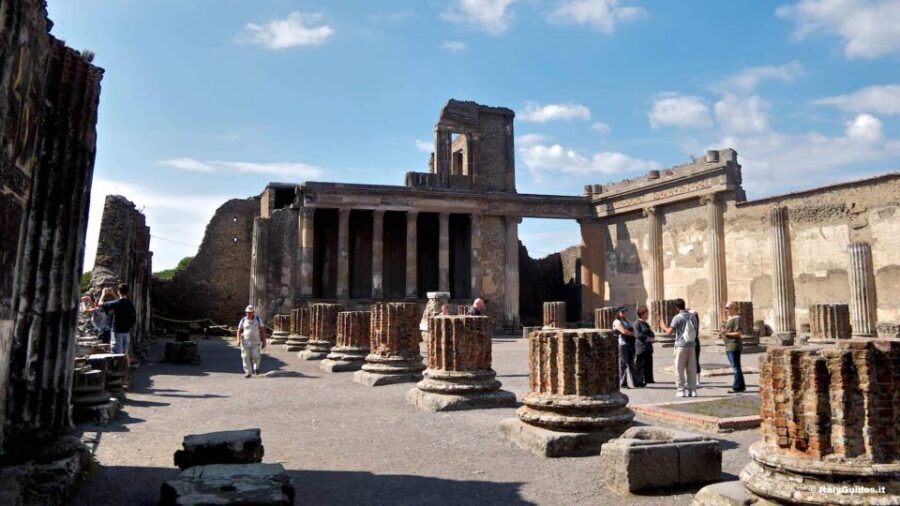
Next you’ll walk through Pompeii’s civic heartbeat: the Basilica, the forum area, and stops tied to major temples such as the Temple of Apollo.
The Basilica and Forum aren’t just “big ruins.” Your guide will connect the dots between architecture and how people used public space. You’ll cover the forum with the market and main temples, which helps explain how commerce, religion, and government mixed in one central zone.
At the Temple of Apollo, expect a more interpretive stop. Temples in Pompeii aren’t only about worship. They show what authorities and communities wanted people to believe and remember. Your archaeologist-style guide can help you understand why these spaces were built and maintained in the way they were.
Practical drawback to note: the forum and temple areas can feel like open-air marathons if you’ve come expecting shade all the way. Wear sunscreen, and bring a hat if you’re sensitive to sun. You’ll likely have some bright, exposed walking.
Greater Decumano, baths, and the Lupanare: everyday routines, not just monuments
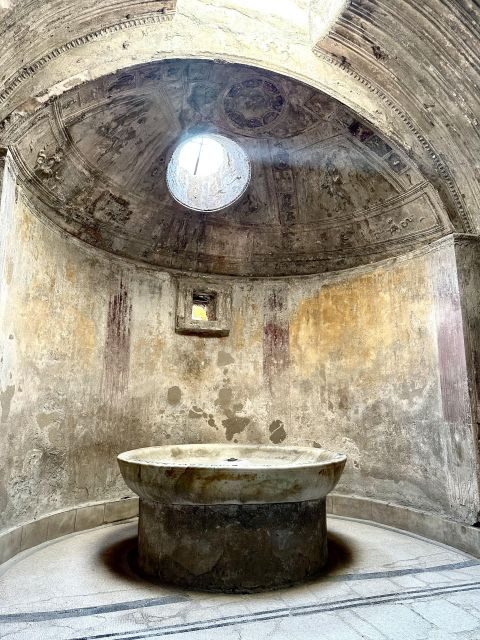
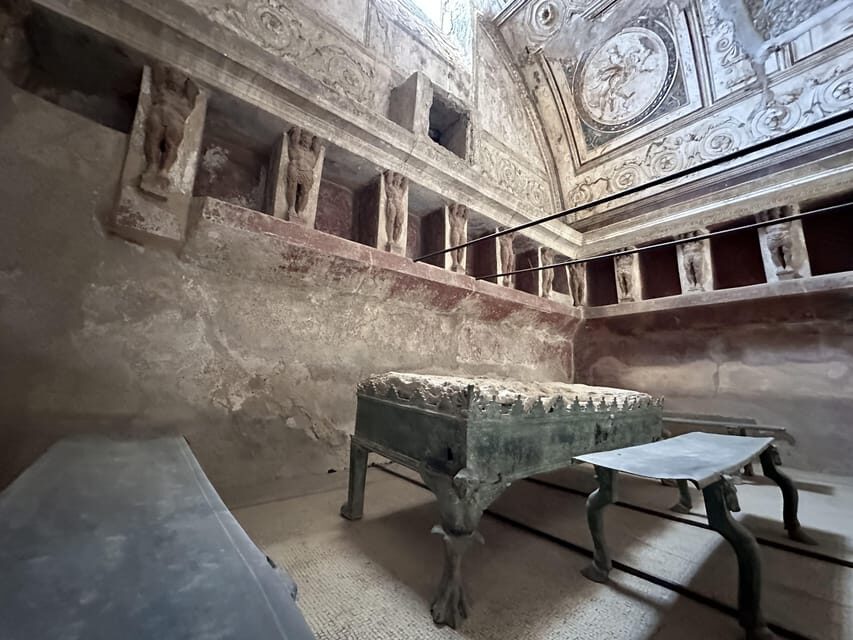
Then the route starts shifting from politics to daily rhythm, including the Greater Decumano and the thermal system. Pompeii’s baths are one of the best “real life” windows you can get from the site.
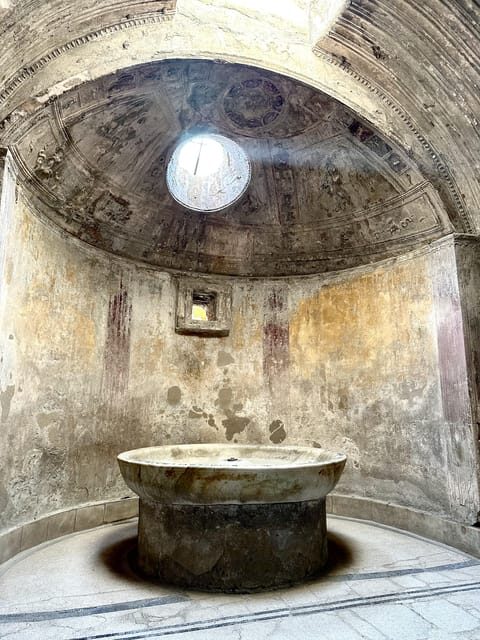
With the thermal system, your guide should help you visualize how water, heat, and movement worked. Even when you’re looking at stone remnants, these details can make it feel like a living place with routines: daily washing, social time, and practical maintenance.
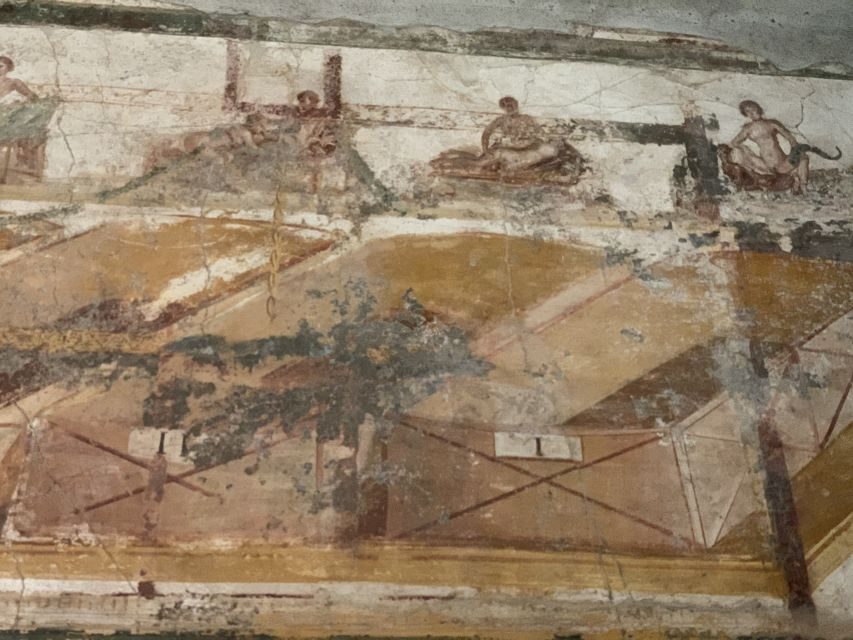
You’ll also see the Lupanare. This is one of those Pompeii stops people either approach with curiosity or discomfort—your guide’s job here is to keep it factual and contextual. The point isn’t scandal. It’s that Pompeii preserves places where people interacted, worked, and organized private life alongside public roads.
If you want Pompeii to feel human, this is the section that does it. You’re not only seeing what was important; you’re seeing how people spent time between major events.
Other skip-the-line Pompeii tickets and tours




Domus and restorations: why the recently opened houses matter
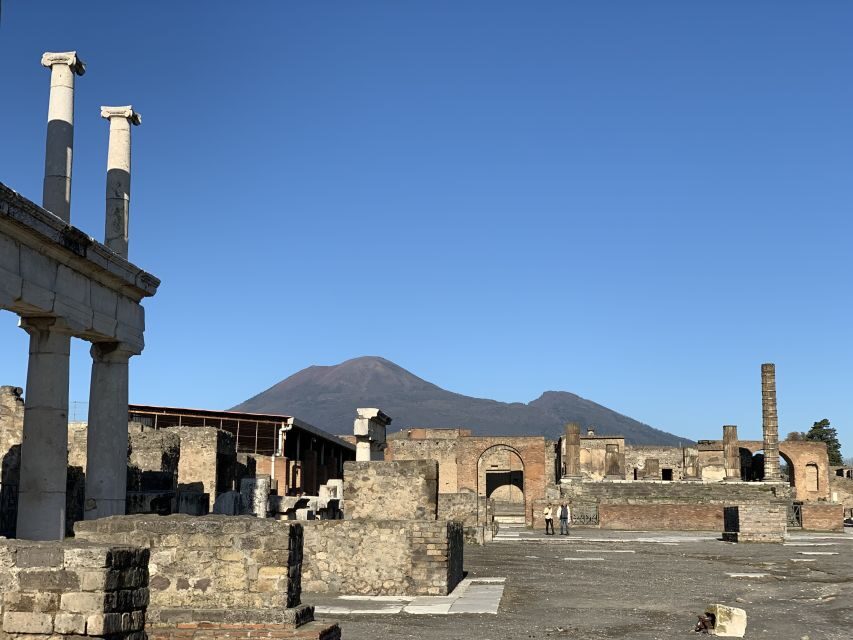
One of the tour’s biggest draws is that you’ll explore the most beautiful domus, including houses that have been opened more recently. That means you’re not just looking at old, fully-familiar viewpoints—you’re seeing parts of the site that are still evolving in what they reveal and how they’re presented.
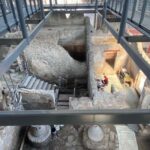
A highlight here is the House of Golden Cupids. Your guide will point out restorations and what’s been conserved, so you can understand the difference between original structure and later work. That matters because Pompeii is both a time capsule and a living archaeological project.
When you watch restorations being explained, you start to see the site as a negotiation between damage, discovery, and preservation. That’s the kind of context that makes the ruins feel current instead of frozen in the past.
Potential drawback: domus areas can be slower-paced visually because you’re looking at details—floors, wall remnants, room layouts, and conservation marks. If you’re the type who wants only grand exterior panoramas, you may wish you had more time. But if you like to understand how people actually lived, this is where the tour pays off.
Via dell’Abbondanza to the Garden of the Fugitives: the human scale of disaster
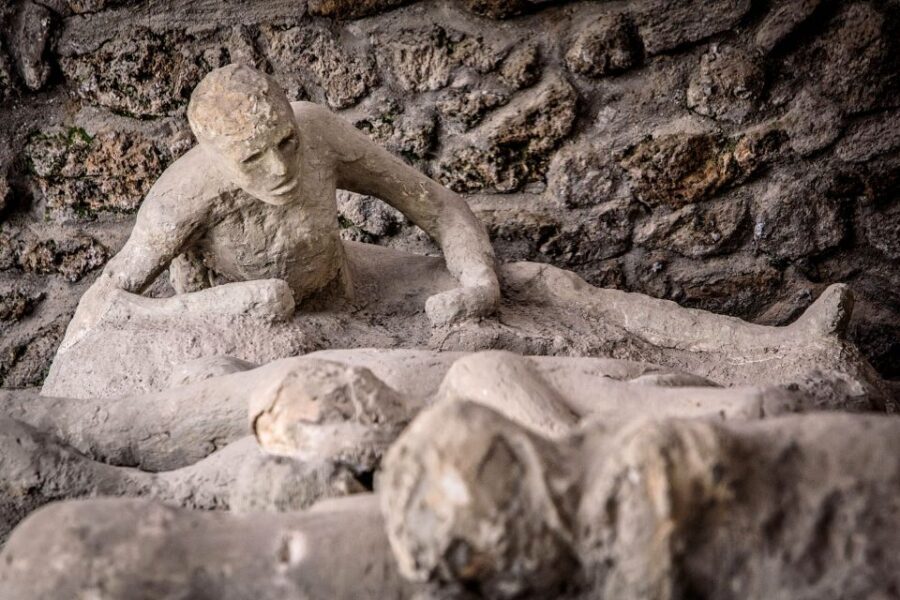
Next you’ll follow via dell’Abbondanza toward the Garden of the Fugitives. This is where the tour stops being about architecture and becomes about people.
At the garden, you’ll learn about those who tried to escape during the eruption but perished. What makes this stop especially intense is that you can see body moulds, which show the positions and shapes of individuals at the moment the disaster overtook them.
Your guide’s job matters here because it’s easy to turn this into a grim spectacle. A trained archaeologist helps you frame it as evidence: what the moulds indicate, what can and can’t be inferred, and how Pompeii’s tragic ending was captured by conditions that preserved these forms.
Travel consideration: this is also one of the stops where you’ll probably feel the emotional weight most. If you’re visiting with kids, or if you prefer lighter pacing, it might help to let your guide know what tone you want from earlier on.
Great Gymnasium and the amphitheater: training and spectacle
After the intense part of the route, the tour shifts again to spaces of routine and public life: the Great Gymnasium and then the Amphitheatre.
At the Great Gymnasium, your guide will point out daily objects exposed there. This is a smart contrast after the Garden of the Fugitives. Instead of only tragedy, you’re reminded that Pompeii had training schedules, routines, and physical spaces designed for work and play.
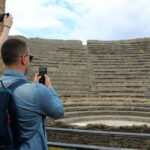
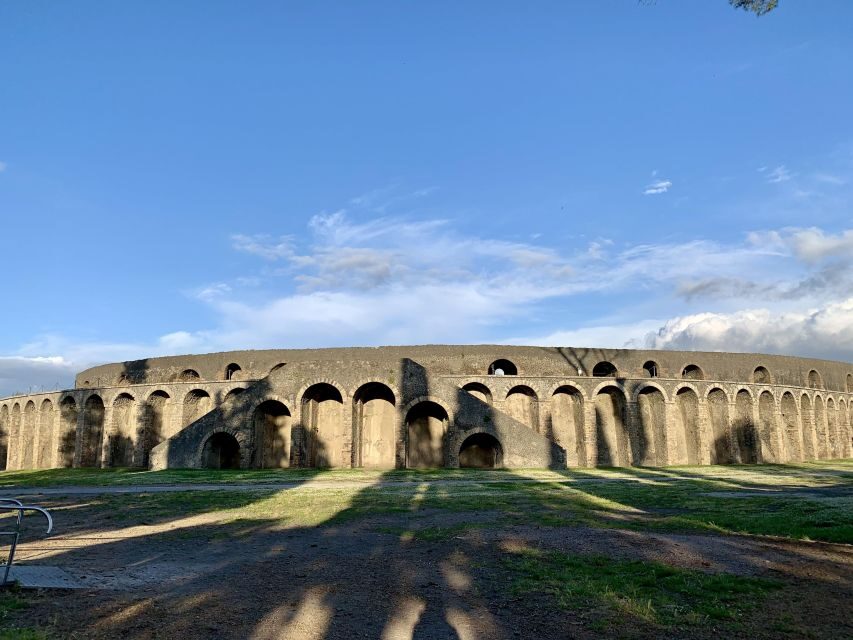
Then you reach the amphitheater, and it becomes a fitting final stop. It helps you connect the Roman love of public performance to the city’s layout. The amphitheater isn’t just a big hole in the ground; it’s built for crowds, sound, and spectacle, and that gives your earlier civic stops more meaning.
If you’re the type who likes a clear finish, this ending works well. You close with a place that feels instantly recognizable as a Roman “stage,” even when much of the original structure is gone.
Price and value: is $407.83 per group a fair trade?
The price for the Pompeii VIP 3h Tour is listed at $407.83 per group, up to 1. That phrasing is the key to the value question: this is priced for a private experience, so the cost only feels great when you’re actually getting the private attention you want.
Here’s what you’re buying that’s included:
- Admission tickets included
- Skip-the-line service
- Private guided tour
- Full assistance
- Personal archaeologist
In Pompeii, admission and entry logistics can be the hidden time-cost of a self-guided visit. This tour basically removes those friction points and replaces them with guided interpretation. If your goal is to understand what you’re seeing, skip-the-line matters more than it does in quiet sights.
The other value angle is the tour length: 3 hours. If you were to cover the same ground on your own, you’d likely spend extra time searching, orienting, and trying to decode details without a specialist. With an archaeologist guiding you, the hours get used on meaning.
My practical take: if you’re traveling as a solo visitor or with someone who really wants archaeology-level explanations, this can feel like a good deal. If you’re just looking for quick photos and don’t care about the evidence and restorations, you may prefer a less expensive group option.
What to bring (so the ruins don’t beat you first)
This tour doesn’t require special gear, but Pompeii punishes sloppy planning. Bring comfortable shoes with grip. The ground is uneven, and you’ll walk enough that blisters can derail your enjoyment.
Also pack sunscreen and comfortable clothes. Pompeii’s ruins mean you’ll have mixed sun exposure, and the early forum-to-domus route can include long stretches with little shade.
You’re not allowed pets, and alcohol and drugs are not permitted. That’s not just rules for compliance—it helps keep the tour environment respectful and focused.
Is this tour for you? A straight match check
This experience is a strong fit if you:
- Want Pompeii explained by a licensed archaeologist
- Prefer a smaller, private-style walk rather than a crowd march
- Love when the guide ties artifacts to timelines, like the eruption date coin you’ll hear about
- Want both public spaces and private homes, including recently opened domus
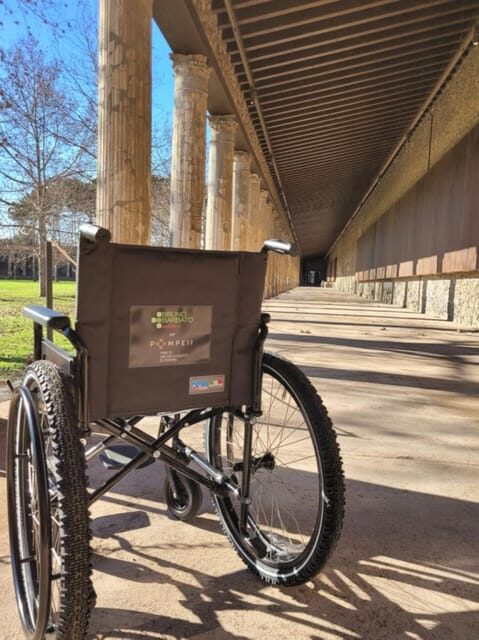
It’s also wheelchair accessible, which is a meaningful point if you need that flexibility.
If you strongly dislike walking on uneven ground or you want long unscripted wandering, the structured 3-hour route may feel a bit tight. Still, with a skilled guide, tight can be good.
Also note the tour language: it runs in English, French, Spanish, and Italian. If you’re choosing between languages, pick the one where you’ll feel comfortable asking questions. That’s where private tours shine.
Should you book Pompeii VIP 3h Tour with your archaeologist?
I’d book it if you want Pompeii to feel like research you can walk through—starting at Porta Marina, moving through civic center and everyday spaces, then ending with the amphitheater. The combination of skip-the-line entry plus admission included plus a route that highlights recently opened areas and restorations is exactly what makes this tour feel premium without being gimmicky.
I’d think twice if:
- You only want broad overview photos and don’t care about how archaeologists interpret finds
- You’re likely to arrive late or you haven’t prepared the required ticket details for every participant
- You prefer longer pacing to linger in the quiet corners
If you do book, my best advice is simple: show up on time with your original ID/passport, wear shoes you trust, and come with one or two questions about what you want to understand most. Your archaeologist guide can turn Pompeii from ruins into a story backed by evidence.
FAQ
How long is the Pompeii VIP tour?
The tour lasts 3 hours.
Where is the meeting point?
You meet at Porta Marina Superiore, right in front of the Hortus Bar, and the tour ends back at the same meeting point.
What’s included in the price?
Admission tickets are included, and the tour includes a private guided experience with skip-the-line service plus full assistance and a personal archaeologist.
Which languages are offered?
The tour guide is available in English, French, Spanish, and Italian.
Do I need to bring ID for the tickets?
Yes. The ticketing system requires the full name and surname for each participant, and you must bring an original ID or passport. This applies to adults and kids.
Is transportation included?
No. Transportation isn’t included.
Is food or drink provided?
No. Food and drinks are not included, so plan accordingly.